 By The War Zone | Created at 2026-06-22 17:30:47 | Updated at 2026-06-22 19:03:33
1 hour ago
By The War Zone | Created at 2026-06-22 17:30:47 | Updated at 2026-06-22 19:03:33
1 hour ago
The TWZ Newsletter
Weekly insights and analysis on the latest developments in military technology, strategy, and foreign policy.
Satellite imagery reveals Russian progress in building protective shelters for its military aircraft, which now extends to long-range bombers, an unprecedented development for the Russian Aerospace Forces. The imagery reveals extensive work underway at Russia’s Engels Air Base, one of the country’s most important long-range aviation hubs, marking a significant shift after decades of leaving these high-value aircraft exposed on the flight line. The base has long been a key target for Ukraine, due to its central role in the cruise missile campaign waged by Russia against that country.
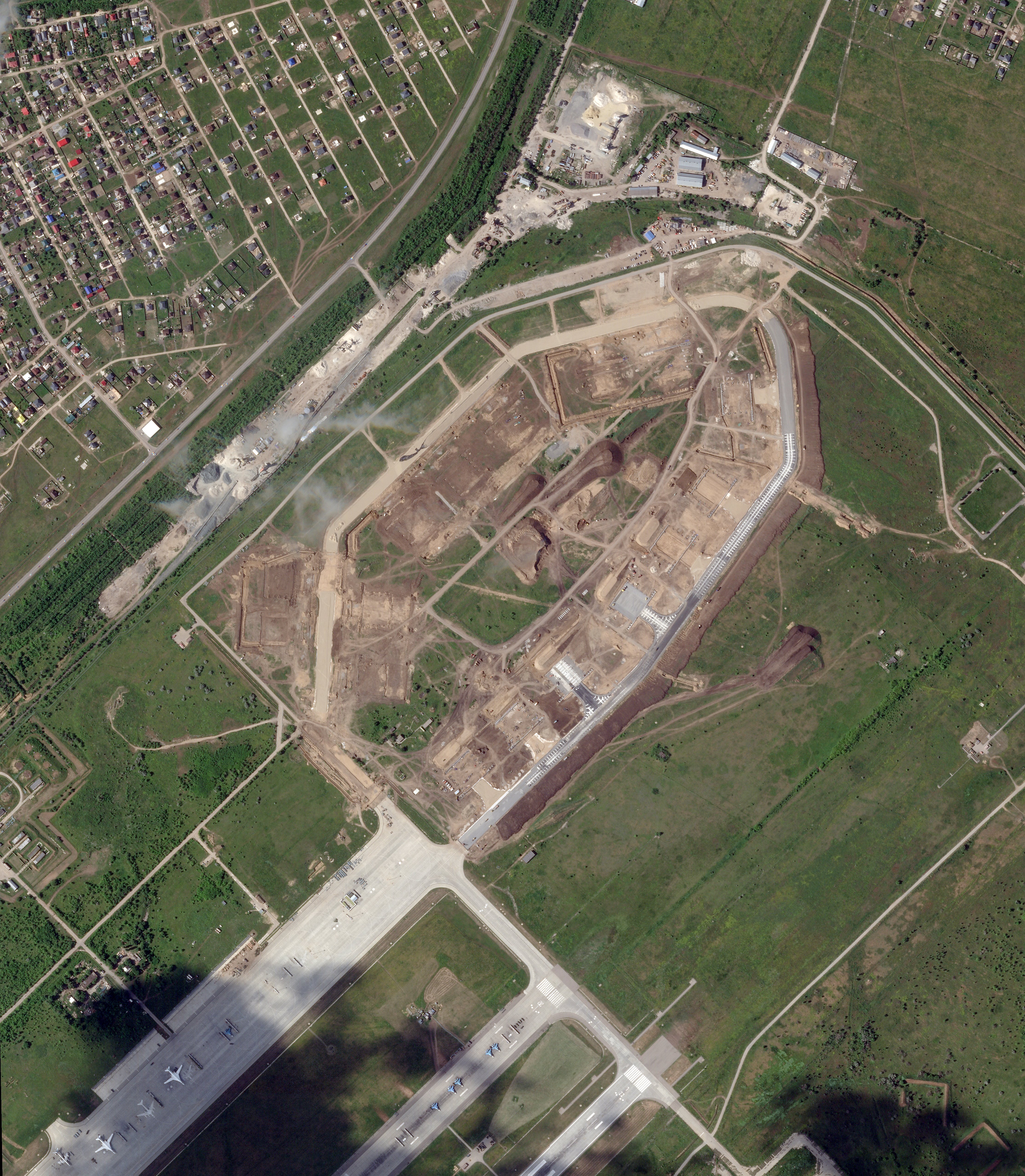
A satellite image taken on June 20, 2026, obtained by TWZ from Planet Labs, shows the extent of construction work on shelters at Engels Air Base in the Saratov region in the southeast of the country. Unlike previous protective shelters, which are sized for tactical aircraft, those at Engels are much larger, in keeping with the dimensions of the Tu-95MS Bear-H and Tu-160 Blackjack strategic bombers that are stationed there.
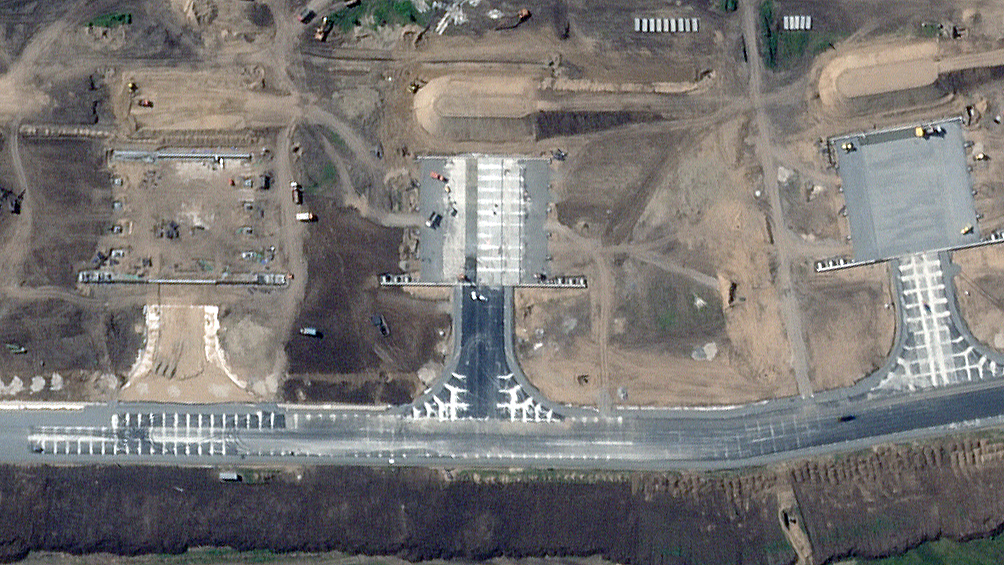 PHOTO © 2026 PLANET LABS INC. ALL RIGHTS RESERVED. REPRINTED BY PERMISSION.
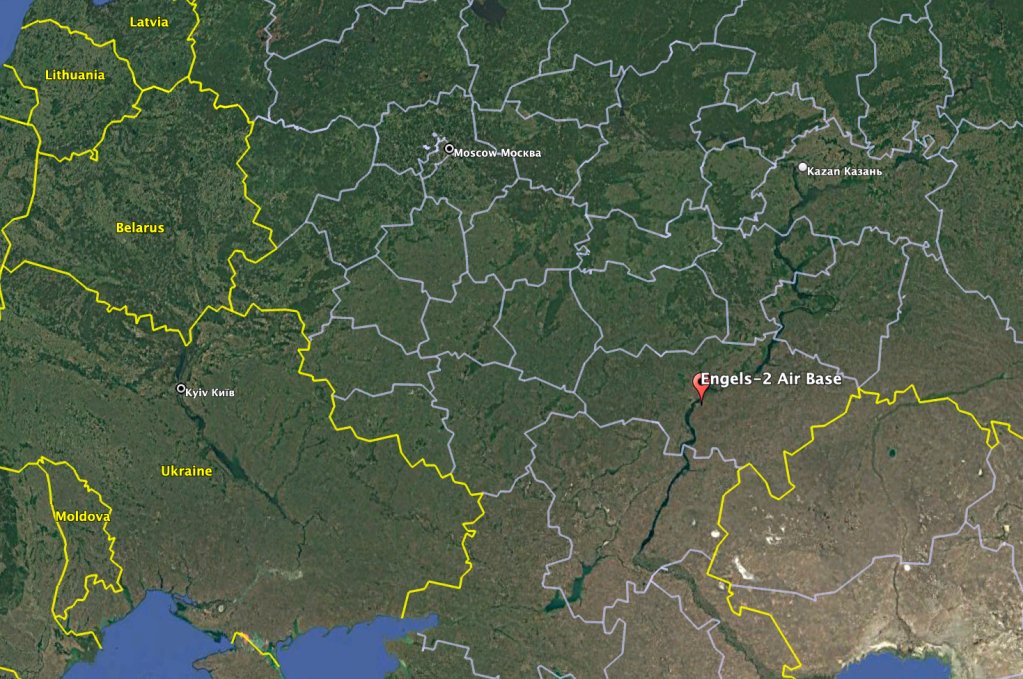
 Based on the available imagery, no fewer than 17 separate protective shelters appear to be under construction at the base, which is located around 300 miles from the nearest Ukrainian border.
 The approximate location of Engels Air Base within Russia. Google Earth
 Engels, also known as Engels-2, is one of the most important airfields of Russia’s Long-Range Aviation Branch. It is home to the 22nd Heavy Bomber Aviation Division, which is responsible for Russia’s only squadron of Tu-160s, plus another squadron of Tu-95MS bombers.
Both those types have been widely employed in the conflict in Ukraine and especially in the standoff strikes that have targeted Ukraine’s energy infrastructure, among other objectives, civilian and military, across the country.
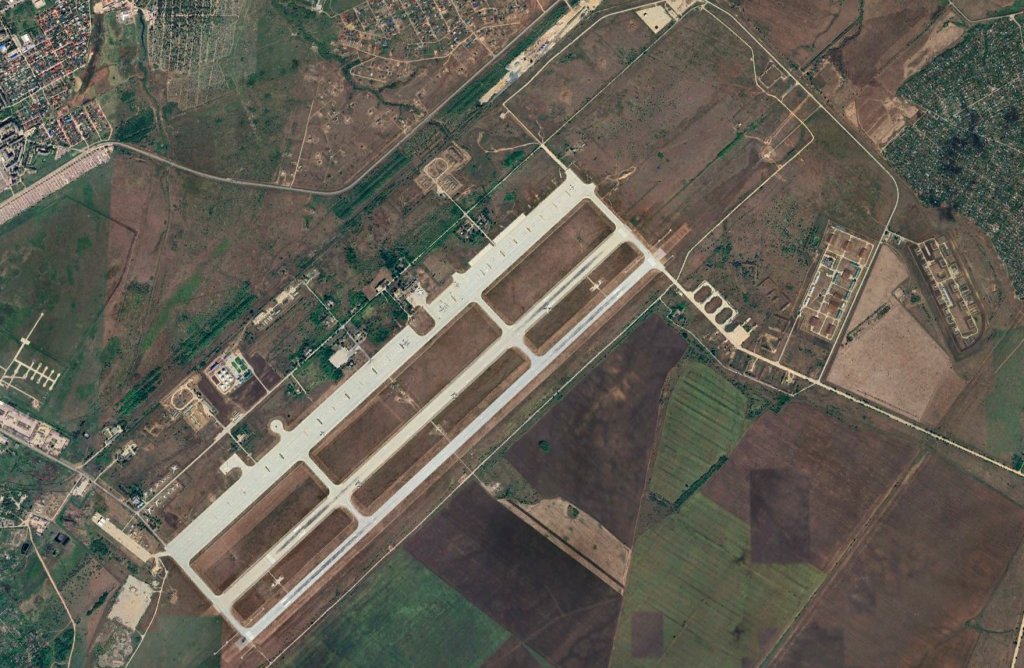
Between 2012 and 2017, Engels Air Base was reconstructed. In parallel to the main runway, which is around 11,500 feet long and 230 feet wide, a new runway of the same length and a width of 200 feet was built. Later, the parking area for aircraft was entirely reconstructed.
 A general satellite view of Engels — also known as Engels-2 — before the current construction program began. Google Earth
  The June 20th photo showing the massive construction project in the NE corner of the base. PHOTO © 2026 PLANET LABS INC. ALL RIGHTS RESERVED. REPRINTED BY PERMISSION.
 Reportedly, work on bomber-sized protected shelters began in April 2025, some months ahead of Operation Spiderweb, the large-scale Ukrainian drone strike against mainly bomber bases across Russia last summer, and which you can read about in our coverage here.
Soon after, a model of a Blackjack-sized aircraft shelter was shown to Russian Minister of Defense Andrei Belousov, as seen below.
Engels was not among the airbases targeted in Operation Spiderweb, but the potential vulnerability of the aircraft there was already clear.
As we wrote about at the time, Engels came under attack by long-range Ukrainian drones in March 2025, with a weapons storage area at the base apparently the primary target.
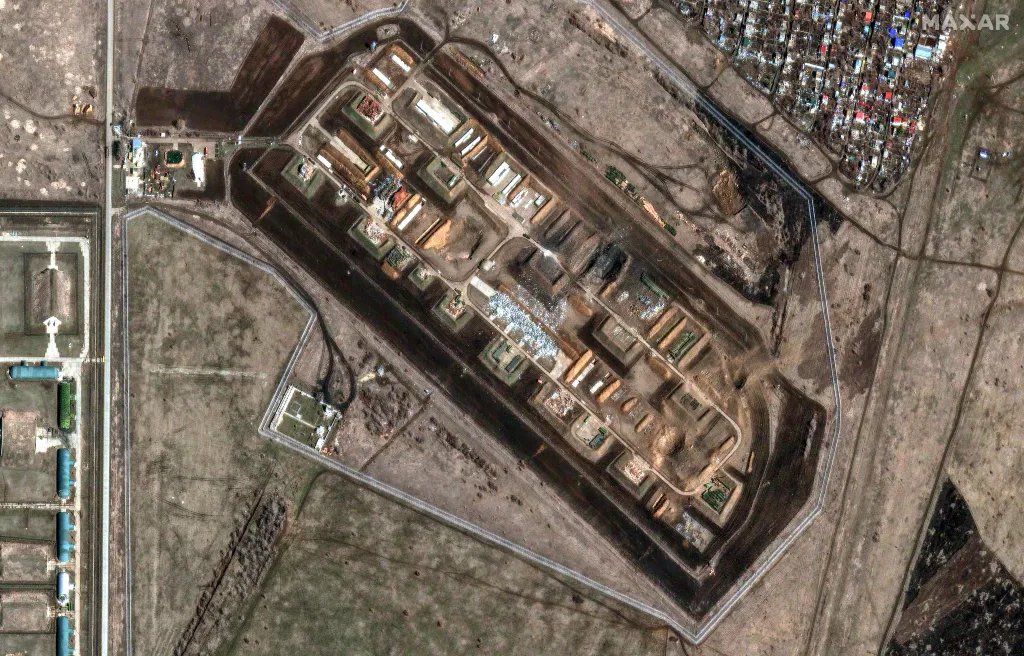 A satellite view of the damage caused by a Ukrainian drone attack on a weapons storage area at Engels in March 2025. Satellite image ©2025 Maxar Technologies
 In January of 2025, we reported on a huge fire close to Engels Air Base, caused by what Russian officials described as a “massive” Ukrainian drone attack. The strike was on the strategically important fuel storage tank farm for Engels, and the fire raged for several days after.
Russia’s Rosreserv fuel depot in Engels continued to burn today after a Ukrainian drone attack last night, with multiple additional storage tanks igniting throughout the day.
Within the last hour, the regional governor of Saratov declared a state of emergency. pic.twitter.com/EzhoQTgqK0
Earlier in the conflict, Engels was also attacked three times in the month of December 2022 alone. On at least one of those occasions, Russia stated that the airbase was attacked by Soviet-made jet-powered uncrewed aerial vehicles modified by Ukraine to carry explosives.
Attacks such as these have repeatedly underscored the ability of relatively slow and low-flying Ukrainian drones to fly deep into Russian territory and strike strategic military targets. Meanwhile, Operation Spiderweb presented a new dilemma — short-range drones launched covertly, in mass, from locations much closer to airbases.
Amid continued questions about the efficiency of local air defense capabilities, Russia has embarked on various initiatives to try to protect its aircraft on the ground at their bases.
From the start of the conflict, Russian airbases have dispersed their aircraft for protection, although this is not so straightforward for bombers, with their more intensive demands on space, crews, maintenance facilities, weapons, and others. One of the runways at Engels has been used as a dispersed parking area for years now.
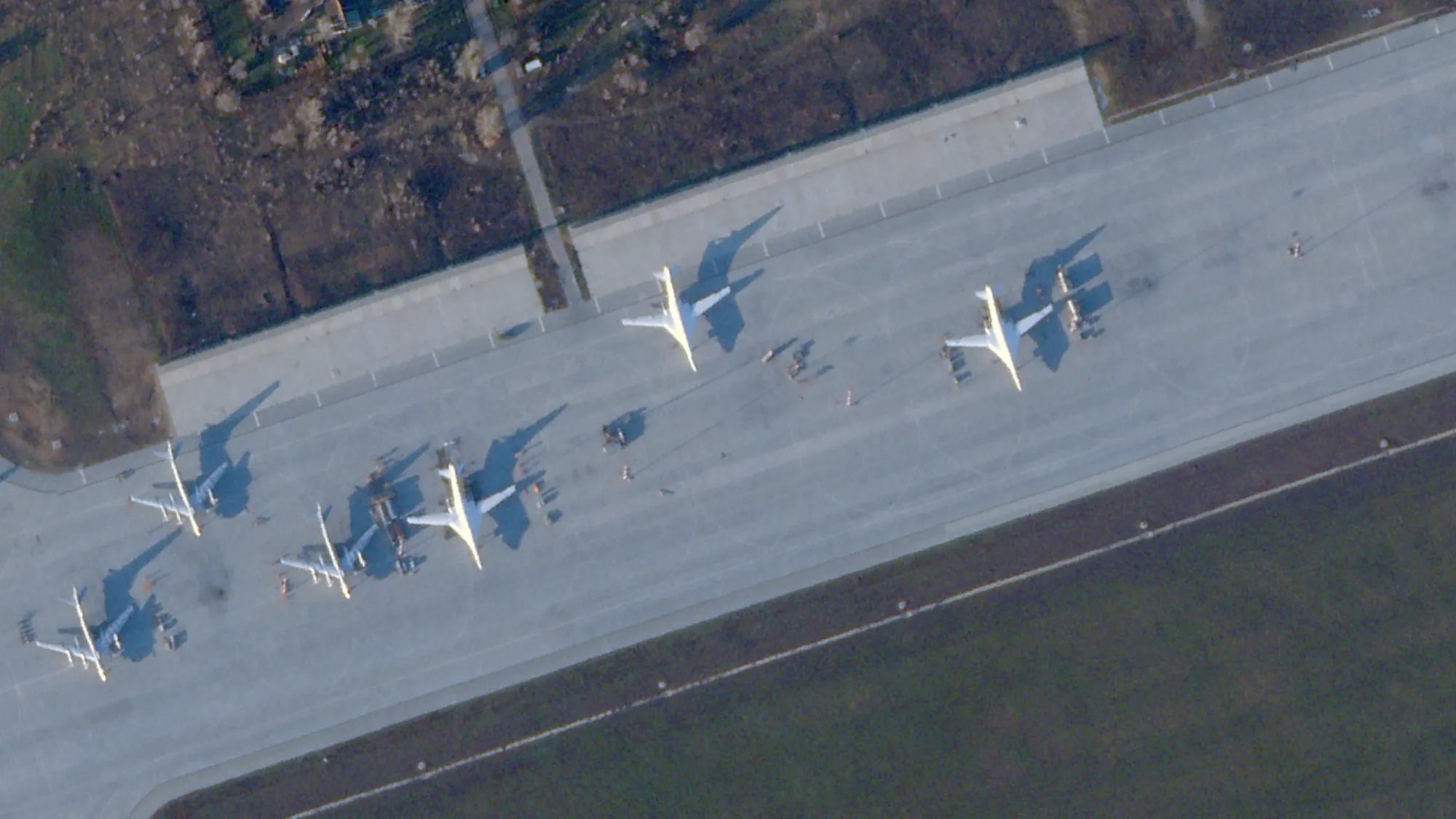 Bombers seen out in the open at Engels in November 2022. Visible here are, from left to right, three Tu-95MSs and three Tu-160s. PHOTO © 2022 PLANET LABS INC. ALL RIGHTS RESERVED. REPRINTED BY PERMISSION
 Russia has also taken further precautions at its airbases. To begin with, they installed blast walls between active aircraft. This was an attempt to contain any damage to one aircraft in an attack, designed to prevent both fire and shrapnel from spreading.
More recently, construction work at multiple bases has been adding many dozens of new hardened aircraft shelters to better shield aircraft from drone attacks and other indirect fire. At the start of this effort, however, the shelters were sized to accommodate smaller tactical jets, and the bombers were not provided with the same kinds of protection. This may also have been a reflection of the specific vulnerability of airfields closer to Ukraine to the U.S.-supplied Army Tactical Missile System (ATACMS) short-range ballistic missiles, which began to be used against Russian airbases in late 2024.
Instead, bomber bases were provided with discarded aircraft to serve as decoys. More unusual measures included placing vehicle tires on the upper surfaces of aircraft and painting aircraft silhouettes on concrete airfield surfaces. The tires, specifically, were intended to confuse image-matching seekers on Ukrainian-operated standoff weapons. TWZ was first to spot the strange coverings atop a couple of bombers at Engels in August 2023.
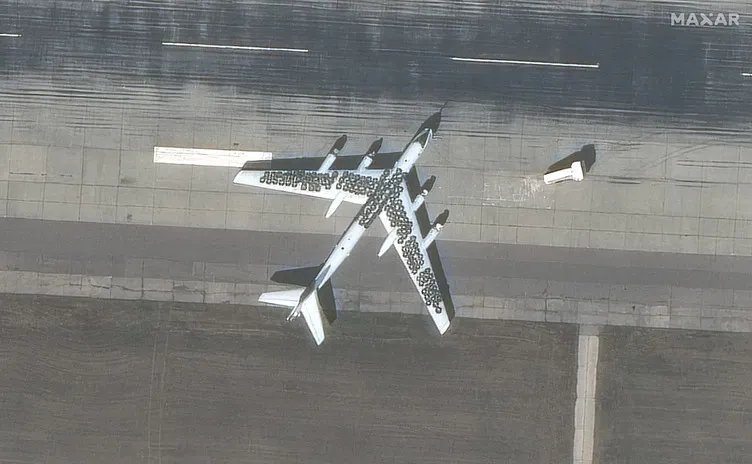 A Tu-95MS long-range bomber with tires on the wings and top of the center fuselage at Engels Air Base in August 2023. Satellite image ©2023 Maxar Technologies
 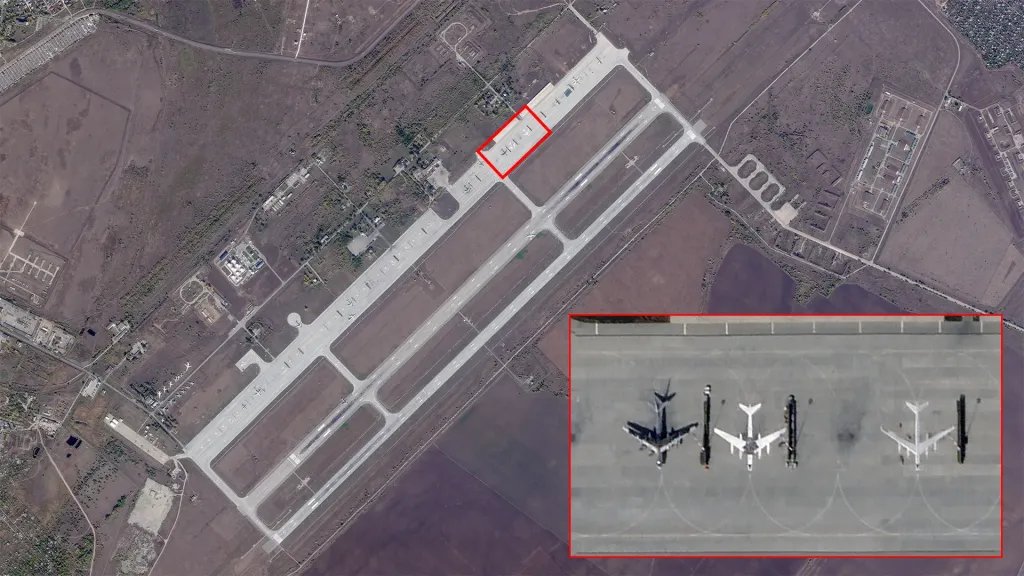 Painted decoys of Tu-95MS bombers at Engels Air Base. PHOTO © 2023 PLANET LABS INC. ALL RIGHTS RESERVED. REPRINTED BY PERMISSION
 Now, imagery from Engels confirms that the shelters are being extended to Russia’s bombers, too. This marks a significant change in Russian bomber operations, with these aircraft previously having been left essentially unprotected on their airfields, including undergoing maintenance in the open.
At this stage, it’s not clear what level of protection the bomber shelters might offer. The most robust tactical aircraft shelters are understood to utilize steel frames with prefabricated concrete elements on top, which may not survive a direct hit by a large cruise missile, but could defend against many types of drone and cluster munitions strikes.
Another shelter type, this time using curved sections of sheet metal, has also appeared at some Russian tactical airbases, but likely serves as little more than a drone screen against near-field attacks by smaller FPV and ‘bomber’ drones.
 A metal hangar at Marinovka Air Base in Russia shows extensive shrapnel damage after a Ukrainian drone strike. via Telegram
 Even if the bomber shelters are on the more fragile side, they could provide some degree of protection, especially against smaller drones, as well as shielding operations — and even the presence of bombers — from observers, complicating targeting.
As well as bearing the brunt of long-range cruise missile strikes against Ukraine, Russia’s bombers are a far more precious asset than tactical jets, the most important of which remain in series production.
In contrast, the Tu-95MS (and the Tu-22M3 Backfire-C) have been out of production for decades, while efforts to restart Tu-160 production have moved only very slowly so far.
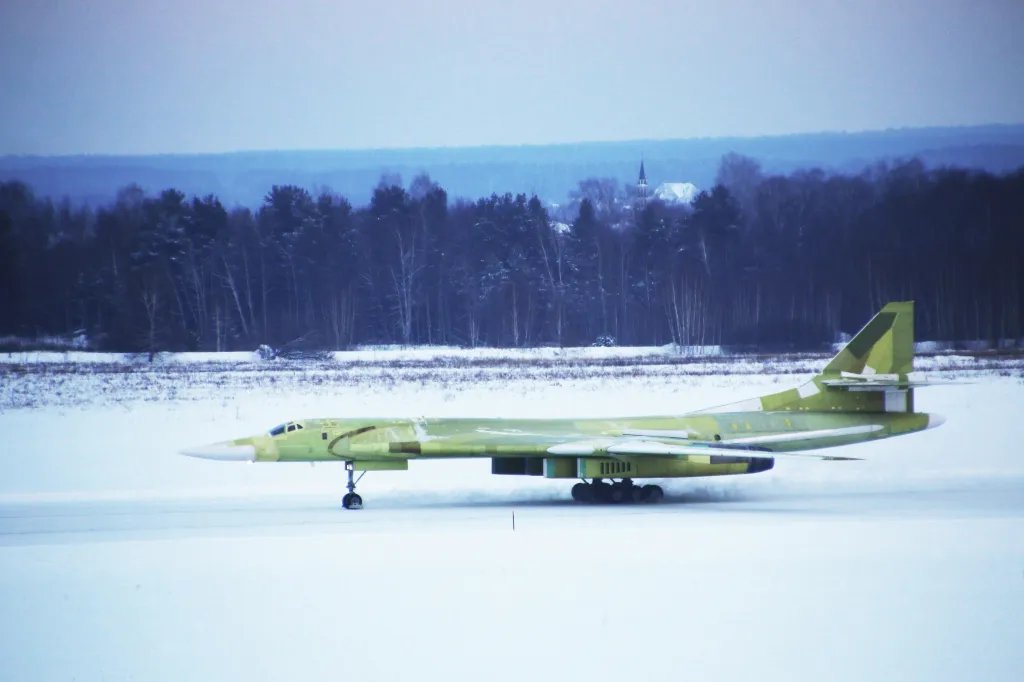 The first newly manufactured Tu-160M at the Kazan Aviation Plant in the Republic of Tatarstan, western Russia, where it flew in early 2022. UAC
 At the same time, these aircraft are a key element of the country’s strategic military posture, forming one arm of Russia’s nuclear-delivery forces.
The need to provide adequate protection to aircraft — especially for the U.S. military — is something that TWZ has addressed before. Aircraft shelters with varying degrees of hardening are now very much back on the agenda globally, in response to evolving drone and missile threats. There is a growing debate within America’s armed forces and Congress about the value of building new defensive infrastructure for its aircraft, as well as investments in new active air and missile defense and tactics, techniques, and procedures. Except for a few forward deployment locations, the United States does not invest in robust shelters for its combat aircraft, including its bombers. The risks of this situation, including at home in the continental U.S., were highlighted across the media when Barksdale AFB was swarmed recently by drones, with the base’s prized B-52 bombers left largely defenseless on the apron.
Consistent Ukrainian drone (and also cruise missile) attacks have made it clear that Russia’s bomber bases are among the most prized targets for Kyiv. Ukraine’s ability to strike facilities of this kind by various means has now driven the expansion of the program to build protective shelters to Engels Air Base, something that is unprecedented for Russia, even going back to the Cold War. The construction marks a new doctrine of force protection for the Russian bomber fleet, which has suffered losses that are very hard to replace. With Moscow now coming under mass air attack in broad daylight, it appears the threat from long-range strikes is now growing at what is clearly an alarming rate for Russia.
Contact the author: [email protected]