By The Rio Times | Created at 2026-08-08 07:11:59 | Updated at 2026-08-08 07:54:33
53 minutes ago
By The Rio Times | Created at 2026-08-08 07:11:59 | Updated at 2026-08-08 07:54:33
53 minutes ago
Somalia · GEOPOLITICS
Key Facts
—US funding cut: On 1 July 2026, the United States told the African Union it would stop funding the UN Support Office in Somalia (UNSOS) after 31 December 2026.
—UNSOS budget: UNSOS, the logistical backbone for the AU mission, runs on roughly $500 million to $502 million annually.
—AUSSOM funding gap: The African Union Support and Stabilization Mission in Somalia needs $196 million for 2025, but pledges total only $48.6 million.
—Blocked UN resolution: Washington opposed a plan under UN Security Council Resolution 2719 to cover 75 percent of the mission budget through UN assessed contributions.
—Inherited debt: The AU mission carries an estimated $100 million debt burden from earlier operations, compounding the current cash shortage.
—Troop arrears: Troop-contributing countries went up to 15 months without allowances in late 2025, according to the United Nations.
A US decision to halt funding for the UN logistics office that sustains the African Union mission in Somalia is forcing an early Somalia troop exit rethink, with the entire security and political transition now in question as the money runs out at the end of 2026.
One-stop reference
Company Intelligence
Every listed company in Latin America — financials, ownership and structure for 1,450+ companies across 26 exchanges, in one place.
The funding trigger that changed everything
On 1 July 2026, the United States formally notified the African Union that it would not provide funding for the UN Support Office in Somalia beyond 31 December 2026. Reuters reported that the move would likely end UNSOS support for the AU mission from the start of 2027.
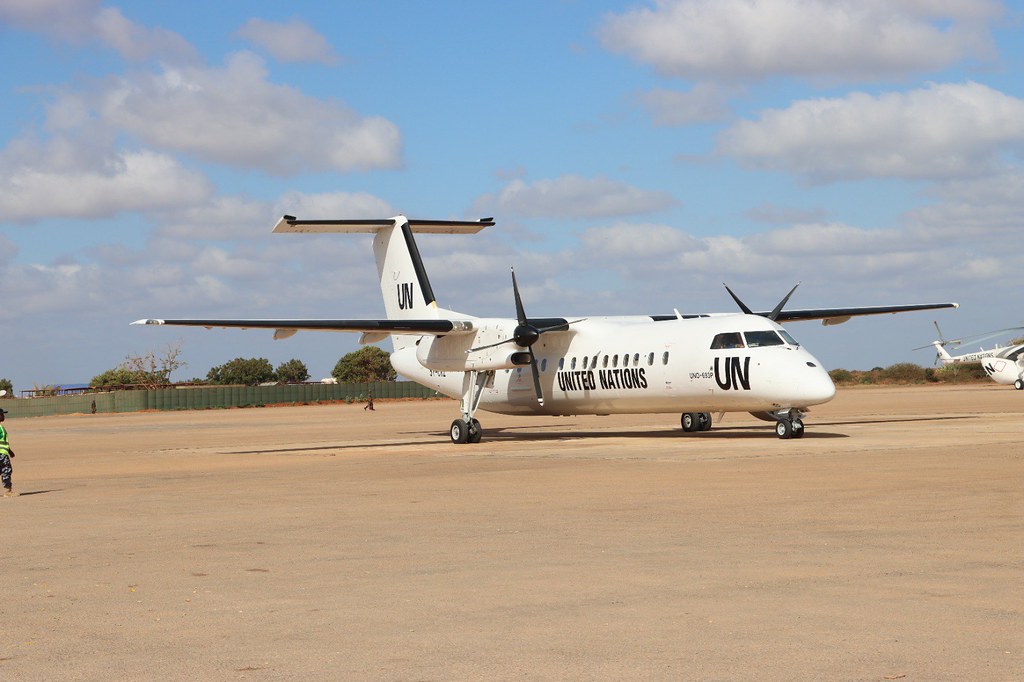
UNSOS is not a peripheral player. It is the logistical backbone that delivers fuel, food, transport, medical care and stipends to the African Union Support and Stabilization Mission in Somalia, known as AUSSOM, which replaced the earlier ATMIS transition force.
The UNSOS budget runs at roughly $500 million to $502 million annually. Without it, the mission cannot function, and the political architecture built around externally subsidised peace enforcement begins to crumble.
A Somalia troop exit rethink driven by empty coffers
The numbers paint a stark picture. The AUSSOM budget for 2025 stands at $196 million, yet pledges total only $48.6 million, leaving the mission at roughly a quarter of its required funding.
In late 2025, the UN Secretary-General’s office reported that only $24.6 million had been pledged against the $196 million needed. Troop-contributing countries were effectively paying from their own pockets, with some going 15 months without allowances.
The mission also carries an inherited debt burden of around $100 million from earlier operations. The combined effect is that AUSSOM is already operating on financial life support, and the UNSOS cut removes the ventilator.
Washington blocks the multilateral fix
The crisis was not inevitable. UN Security Council Resolution 2719, adopted in 2023, was designed to allow Security Council-authorised AU peace missions to receive 75 percent of funding from UN assessed contributions and 25 percent from AU sources.
However, the Security Council failed to approve the funding arrangement in May 2025, largely because the United States opposed the proposal. Washington’s objection reflects a broader scepticism about multilateral burden-sharing that persisted under both the Biden and Trump administrations, according to Africa Confidential.
The result is that the old model of pooled Western financing for African security is unravelling, and no replacement architecture has been agreed. Somalia is the first place where the consequences are becoming visible.
Al-Shabaab and the security vacuum risk
The funding crisis is not an abstract budgetary problem. As early as June 2024, Reuters reported that the Somali government had asked peacekeepers to slow their withdrawal because of fears of an Islamist resurgence.
Analysts cited in later reporting warn that an abrupt or partial withdrawal could allow Al-Shabaab to exploit gaps in central and southern Somalia. The group could threaten Mogadishu and other urban centres, reversing years of hard-won security gains.
The UN had already warned in March 2023 that declining contributions put the mission in a “dire financial situation” and posed a significant risk to the transition to Somali security forces. That warning now looks prescient.
The great-power contest behind the cheque
Somalia sits on a strategic corridor linking the Red Sea, the Gulf of Aden and Indian Ocean shipping routes. That geography makes it attractive to outside powers, and the funding vacuum is accelerating a shift from multilateral coordination to bilateral competition.
Türkiye has become increasingly important in Somali training and security assistance. Gulf states such as the United Arab Emirates and Qatar compete for influence through ports, contracts, political financing and security links.
China, while not the main actor in the troop-funding dispute, could benefit from any rift between Mogadishu and Washington, according to one geopolitical assessment. Ethiopia and Kenya remain highly sensitive because instability in Somalia directly affects their border security and counter-insurgency posture, as explored in Africa: The New Scramble.
What comes next for Somalia’s security model
The European Union and the United States have long been the main external backers in Somalia. The EU has contributed about €2.8 billion and the US about $1.6 billion in bilateral support to troop-contributing countries, plus another $2 billion through UNSOS.
One report puts total US security assistance to the mission at about $3.6 billion since 2007. But donor fatigue is real, and European and American backers increasingly question how long Somalia can rely on external peacekeeping rather than building self-sustaining forces.
A DIIS analysis argues that if AUSSOM is forced to withdraw or shrink, Somalia could shift toward more bilateral and less coordinated security arrangements involving Kenya and Ethiopia. That would weaken AU legitimacy and turn the mission into a political project rather than a conflict-resolution tool.
Frequently Asked Questions
Why did the United States cut funding for the Somalia mission?
Washington notified the AU on 1 July 2026 that it would stop funding UNSOS after 31 December 2026, reflecting broader US scepticism about multilateral burden-sharing and opposition to a UN-assessed financing model.
How large is the AUSSOM funding gap?
The mission needs $196 million for 2025, but pledges total only $48.6 million, leaving it at roughly a quarter of required funding with an additional $100 million in inherited debt.
What happens if AU troops leave Somalia early?
Analysts warn that Al-Shabaab could exploit security gaps in central and southern Somalia, potentially threatening Mogadishu and reversing years of gains made by the AU mission and Somali forces.
Connected Coverage
For deeper analysis of how great-power competition is reshaping security arrangements across the continent, read Africa: The New Scramble.
Sources
This article was produced by The Rio Times’ automated newsroom system. How we use AI · Report an error
The Rio Times · Power Map
See who really holds power in Latin America
Click to open the Power Map →