By The Rio Times | Created at 2026-06-17 11:11:46 | Updated at 2026-06-17 14:52:52
3 hours ago
By The Rio Times | Created at 2026-06-17 11:11:46 | Updated at 2026-06-17 14:52:52
3 hours ago
Energy · Commodities
—The deal. Spain’s Repsol signed an agreement to study a new oil area in Venezuela called Horcón.
—The shift. It is a bet on fresh ground to explore, not the restart of an existing oilfield.
—The horizon. A planned offshore drilling campaign would run from 2028 into the early 2030s.
—The race. Repsol is competing with Chevron, Shell and Eni for the world’s largest oil reserves.
—The opening. The push follows the easing of United States sanctions after a change of power in Caracas.
—The catch. Washington keeps tight control of the money, and the deal is only a first step.
The new Repsol Venezuela oil deal marks a shift from reclaiming old assets to staking out new ground, a sign of how fast the country’s energy sector is reopening.
A new bet on Venezuela’s oil
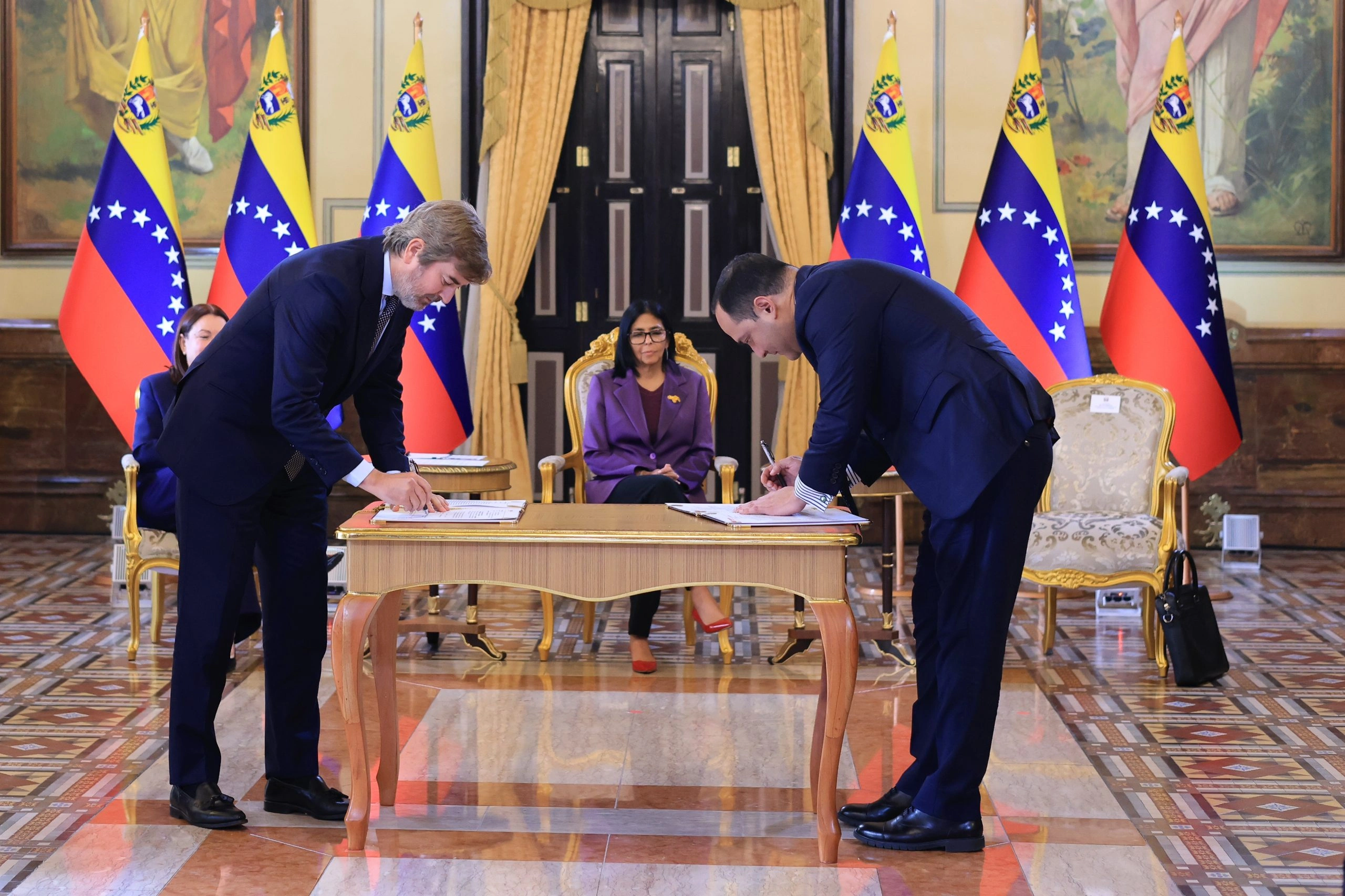
The Spanish energy company Repsol has signed an agreement with Venezuela’s government and its state oil company to study the development of a new oil area southeast of Lake Maracaibo, the historic heart of the country’s oil industry.
The area, called Horcón, sits between two fields that Repsol already holds. The deal also covers studies of offshore gas, with a drilling campaign that planning documents suggest would run from 2028 into the early 2030s.
For readers new to the story, the signal matters more than the single block. Until recently, Western firms were mostly trying to restart old oilfields in Venezuela.
Now they are beginning to stake out fresh ground to explore, a more confident kind of move that points to longer-term intentions.
Why this Repsol Venezuela oil deal is different
Earlier this year Repsol regained control of an existing joint venture and pledged to lift its output. That was about reviving production that already existed, a lower-risk way back into the country.
The Horcón agreement is a step beyond that. Exploring new ground and planning a multi-year drilling campaign is a long-horizon commitment, the kind a company makes only when it expects to be in a country for the long run.
It is also a bet on gas as well as oil. The two sides said they would deepen studies of offshore gas reservoirs, an area where Venezuela holds large untapped potential and where Repsol already has experience.
Repsol is no newcomer. It has operated in Venezuela since the early 1990s, staying through years of turmoil, which gives it the local knowledge and infrastructure that newer entrants would take years to build.
Live Market IntelligenceCommodities — Live Market BoardInside: market breadth, the sector heatmap, currencies & rates, the Latin America scoreboard and the full instrument board.Rio Times · Live Market Intelligence
Commodities — Live Market Board
Global
Jun 17, 2026 · 08:11
Brent crude · benchmark
79.20
+0.30%
+3.60% over 12 months
Market breadth · 15 names
67% advancing
10 ▲ advancing5 declining ▼
Currencies, rates & key inputs
Full instrument board
| GOLD | 4,352 | +0.48% | +28.49% | 4,331 | 4,370 | 4,336 | 26,508 |
| SILVER | 70.07 | +0.24% | +88.92% | 69.90 | 70.62 | 69.57 | 8,367 |
| BRENT | 79.20 | +0.30% | +3.60% | 78.96 | 79.71 | 77.77 | 6,969 |
| WTI | 75.57 | -0.63% | +0.98% | 76.05 | 76.06 | 74.09 | 56,568 |
| COPPER | 6.54 | +0.80% | +36.26% | 6.49 | 6.55 | 6.48 | 11,463 |
| LITHIUM | 83.60 | -0.57% | +128.29% | 84.08 | 84.75 | 83.39 | 360,580 |
| IRON ORE | 161.91 | — | +70.68% | 161.91 | 161.91 | 1 | |
| SOY | 1,153 | +2.04% | +7.36% | 1,130 | 1,157 | 1,145 | 22,192 |
| CORN | 415.25 | +0.36% | -3.77% | 413.75 | 416.00 | 412.25 | 21,297 |
| WHEAT | 610.50 | +2.43% | +11.20% | 596.00 | 612.00 | 602.75 | 13,875 |
| COFFEE | 270.90 | -2.29% | -19.34% | 277.25 | 263.60 | 258.45 | 6,004 |
| SUGAR | 14.24 | +3.04% | -11.44% | 13.82 | 14.33 | 14.21 | 12,887 |
| COCOA | 4,320 | +4.30% | -56.55% | 4,142 | 4,395 | 4,230 | 4,652 |
| ORANGE JUICE | 147.45 | -4.69% | -41.85% | 154.70 | 159.00 | 146.30 | — |
| COTTON | 78.54 | +4.71% | +20.74% | 75.01 | 78.45 | 77.55 | 4,668 |
| BEEF | 249.13 | -0.60% | +11.59% | 250.63 | 249.45 | 242.95 | 38,932 |
| CATTLE | 367.63 | +1.68% | +21.19% | 361.55 | 367.90 | 360.20 | 9,892 |
| USD/BRL | 5.09 | +0.06% | -7.26% | 5.09 | 5.09 | 5.08 | — |
Largest moves today
COTTON
78.54
+4.71%
ORANGE JUICE
147.45
-4.69%
COCOA
4,320
+4.30%
SUGAR
14.24
+3.04%
WHEAT
610.50
+2.43%
COFFEE
270.90
-2.29%
SOY
1,153
+2.04%
CATTLE
367.63
+1.68%
The session read
The Brent crude rose 0.30%, with breadth positive — 10 of 15 names higher. COTTON led, while ORANGE JUICE lagged.
From The Rio Times
Related coverage · 17 Jun 2026
Embraer’s Order Book Hits a Record as the World Buys Its Jets
Read →
A race for the world’s biggest reserves
Venezuela holds the largest proven oil reserves on the planet, estimated at more than three hundred billion barrels. Years of mismanagement and sanctions had left much of that potential stranded and the industry in decline.
That has changed quickly. Following the capture of the former leader and a change of power in Caracas early this year, the United States eased sanctions and issued licences letting a select group of Western majors operate again.
Those names read like a roll-call of the industry: Chevron, Shell, Eni and Repsol among them. Each is now manoeuvring for position, and the Horcón deal is Repsol‘s latest move in that contest.
Chevron, the most active United States operator, has been expanding its joint ventures, while the European firms lean on decades of continuity. The competition is effectively a scramble for the best ground before rivals lock it up.
The strings attached
The reopening is not a free-for-all. The American licences come wrapped in conditions designed to keep Washington in control of the cash that Venezuelan oil generates.
Royalties and taxes owed to Venezuela must pass through an account controlled by the United States rather than flowing straight to Caracas, and the permits are reviewed every few months.
Firms owned or controlled by Russia, China or Iran remain shut out, and each fresh investment deal needs its own separate approval. The opening is real but tightly managed.
For Repsol, the Horcón signing is an agreement of intent, not a finished project. It commits the company to study and assess, the first move in what would be a long and capital-heavy process.
Why it matters for investors
The direction of travel is what counts. Western majors moving from cautious restarts to new exploration suggests growing confidence that Venezuela’s reopening will hold long enough to justify big, slow-burning bets.
If Venezuela’s output keeps recovering, it adds barrels to a global market already unsettled by conflict elsewhere, with consequences for prices far beyond Latin America.
The risks remain heavy, from political uncertainty to a workforce thinned by years of emigration. Drilling that would not start until 2028 leaves plenty of time for conditions to change.
Still, the pattern is unmistakable. One of Europe’s largest energy companies is betting that Venezuela’s next chapter is worth exploring, quite literally, for the decades ahead.
Frequently Asked Questions
What is the Repsol Venezuela oil deal?
It is an agreement Repsol signed with Venezuela’s government and state oil company to study developing a new oil area, called Horcón, southeast of Lake Maracaibo. It also covers offshore gas studies, with a possible drilling campaign running from 2028 into the early 2030s.
Why is it significant?
It marks a shift from Western firms merely restarting old oilfields to staking out new ground to explore, a longer-term commitment. It deepens a race between Repsol, Chevron, Shell and Eni for access to the world’s largest oil reserves as United States sanctions ease.
What are the conditions on these deals?
The United States licences require royalties and taxes to pass through a Washington-controlled account, are reviewed every few months, and bar firms owned by Russia, China or Iran. Each new investment needs separate approval, so the opening is real but tightly managed.
The Rio Times · Power Map
See who really holds power in Latin America
Click to open the Power Map →