By The Rio Times | Created at 2026-06-17 11:56:49 | Updated at 2026-06-17 14:53:09
3 hours ago
By The Rio Times | Created at 2026-06-17 11:56:49 | Updated at 2026-06-17 14:53:09
3 hours ago
Markets · Politics
—The vote. Colombia chooses its next president in a runoff on Sunday, June 21.
—The right. Abelardo de la Espriella offers deregulation, lower taxes and a smaller state.
—The left. Iván Cepeda offers a bigger welfare state funded by taxing the wealthiest.
—The nuance. Neither plan is as pure as the labels suggest, and both promise some spending and some restraint.
—The backdrop. The next president inherits a widening budget deficit and a strong currency.
—The stake. Polls point to a close, deeply polarised race with no clear favourite.
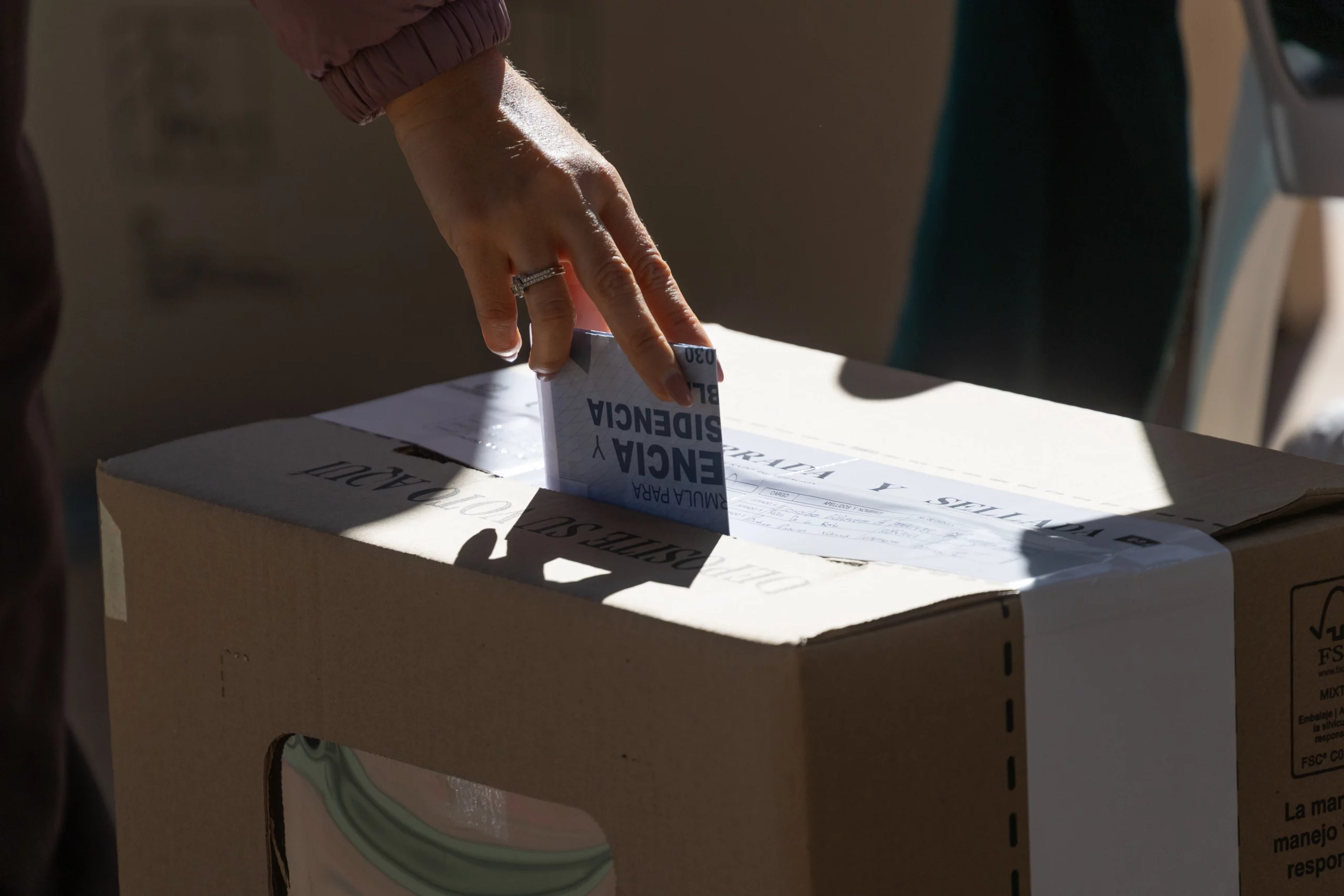
The Colombia election economy debate comes down to two very different ideas of what the state should do, and on Sunday voters will choose between them.
A choice between two models
On Sunday, Colombians vote in a runoff to choose the successor to President Gustavo Petro, the country’s first left-wing leader. The winner takes office in August for a four-year term.
The two candidates offer sharply different visions of how the economy should work. For foreign readers, the simplest way to understand the choice is as a contest between a smaller state and a larger one.
On the right is Abelardo de la Espriella, a lawyer and political outsider who topped the first round. On the left is Iván Cepeda, a veteran senator from the governing movement who finished a close second.
What the Colombia election economy plans contain
De la Espriella pitches himself as the market-friendly choice. He promises to cut government spending, lower taxes, reduce regulation and ease the restrictions that he says deter private investment.
He wants to revive the oil and gas industry, reversing the current government’s push away from fossil fuels, and to roll back a labour reform passed in 2024 that business groups blame for raising employment costs.
Cepeda, by contrast, would expand the welfare state. He proposes to widen the tax base and tax the wealthiest Colombians more heavily, using the proceeds to fund social programmes and support for the poor.
His plan leans on backing small businesses, domestic production and what he calls the popular economy, the vast informal sector of street vendors and tiny enterprises that employs much of the country.
Neither label is pure
The neat left-right framing hides some surprises. De la Espriella is no textbook free-marketeer: alongside his deregulation pitch he has promised mortgage subsidies and higher spending on health care.
He has also built his campaign around a hard line on crime, pledging to construct a wave of large new prisons modelled on those in El Salvador, an approach that would itself cost money.
Cepeda, for his part, has paired his welfare ambitions with a promise of some fiscal restraint, saying he would trim overall government spending even as he redirects money toward social priorities.
He has also stepped back from an earlier idea of convening an assembly to rewrite the constitution, a signal aimed at reassuring centrist voters and investors wary of deeper institutional upheaval.
The numbers the winner inherits
Whoever wins faces a difficult fiscal picture. The budget deficit is projected to widen toward seven per cent of national output this year, up from a little over six per cent in 2025, according to local analysts.
That leaves limited room for grand promises on either side. Big new spending or sweeping tax cuts both have to be reconciled with a deficit that markets and ratings agencies are watching closely.
One bright spot is the currency. The Colombian peso has strengthened markedly, trading near its strongest levels in years against the dollar, helped by a broad weakening of the United States currency.
Investors have read the campaign through the lens of the state oil company, the most election-sensitive stock on the local market, whose fortunes are tightly bound to the next government’s energy policy.
Why it matters for investors
For outside investors, the runoff is a fork in the road. One path points toward lighter regulation and a revived oil sector; the other toward a more active state and a larger social safety net.
Markets have so far leaned toward reading a de la Espriella win as the more business-friendly outcome, but the contest is close and the result is far from settled.
Polls point to a tight, deeply polarised race, with the country split almost evenly between the two visions. Whoever wins is likely to govern a nation where half the electorate opposed them.
That division is the real backdrop to the economic debate. Ambitious plans on either side will have to pass through a divided congress and a sceptical public before they reach the real economy.
Frequently Asked Questions
What is the Colombia election economy debate about?
It is the choice in the June 21 runoff between two economic models. Abelardo de la Espriella offers deregulation, lower taxes and a revived oil sector, while Iván Cepeda offers a larger welfare state funded by taxing the wealthiest and supporting small business.
Is either candidate a clear free-marketeer or socialist?
Not quite: De la Espriella pairs deregulation with promises of mortgage subsidies and more health spending, while Cepeda combines welfare expansion with pledges of some fiscal restraint. Both plans are more mixed than the left-right labels suggest.
What does the winner inherit?
A widening budget deficit projected to approach seven per cent of output this year, which limits room for big promises. On the positive side, the peso is trading near multi-year highs, and the oil company remains central to the country’s fiscal health.
The Rio Times · Power Map
See who really holds power in Latin America
Click to open the Power Map →