By The Rio Times | Created at 2026-10-05 12:46:50 | Updated at 2026-10-05 13:47:28
1 hour ago
By The Rio Times | Created at 2026-10-05 12:46:50 | Updated at 2026-10-05 13:47:28
1 hour ago
SPAIN · ANALYSIS
Key Facts
- —Why it matters The result could shift Spanish corporate diplomacy, migration rules and Madrid’s push for the EU-Mercosur trade agreement.
- —The numbers A DYM poll published on 24 September 2026 (fieldwork 16-21 September, before the snap election call) projects PP at 144-148 seats and Vox at 58-61 seats, a combined 202-209 seats, above the 176-seat majority threshold.
- —What it means for you US investors with exposure to Spanish banks, utilities and infrastructure groups in Latin America should prepare for a possible shift in Madrid’s diplomatic and regulatory posture after 29 November.
Spain’s snap election 2026 on 29 November will decide whether Pedro Sánchez can rebuild a governing majority or whether the conservative Partido Popular takes power, potentially with Vox. For US readers, the vote matters because Spanish companies are among the largest European investors in Latin America, and a change in Madrid could alter migration, visa and trade policy across the region.
Spain is Europe’s main corporate bridge to Latin America, with banks, utilities and infrastructure groups operating from Mexico to Argentina. This analysis explains what triggered the early vote, who is competing, and what the outcome could mean for Spanish investment, remittances, visas and the EU-Mercosur agreement. It draws on the Europe Intelligence Brief published by The Rio Times on Monday 5 October 2026.
How a Housing Defeat Became an Election Date
On Friday, 2 October, Spain’s Congress rejected two emergency housing decrees proposed by Sánchez’s minority government.
The decisive rupture came from Junts, the Catalan separatist party whose parliamentary support had been essential to Sánchez. Junts argued the housing package lacked sufficient legal and policy rigour.
He said the purpose was to seek a broader governing majority rather than continue negotiating each major law with parties that could defeat or condition it.
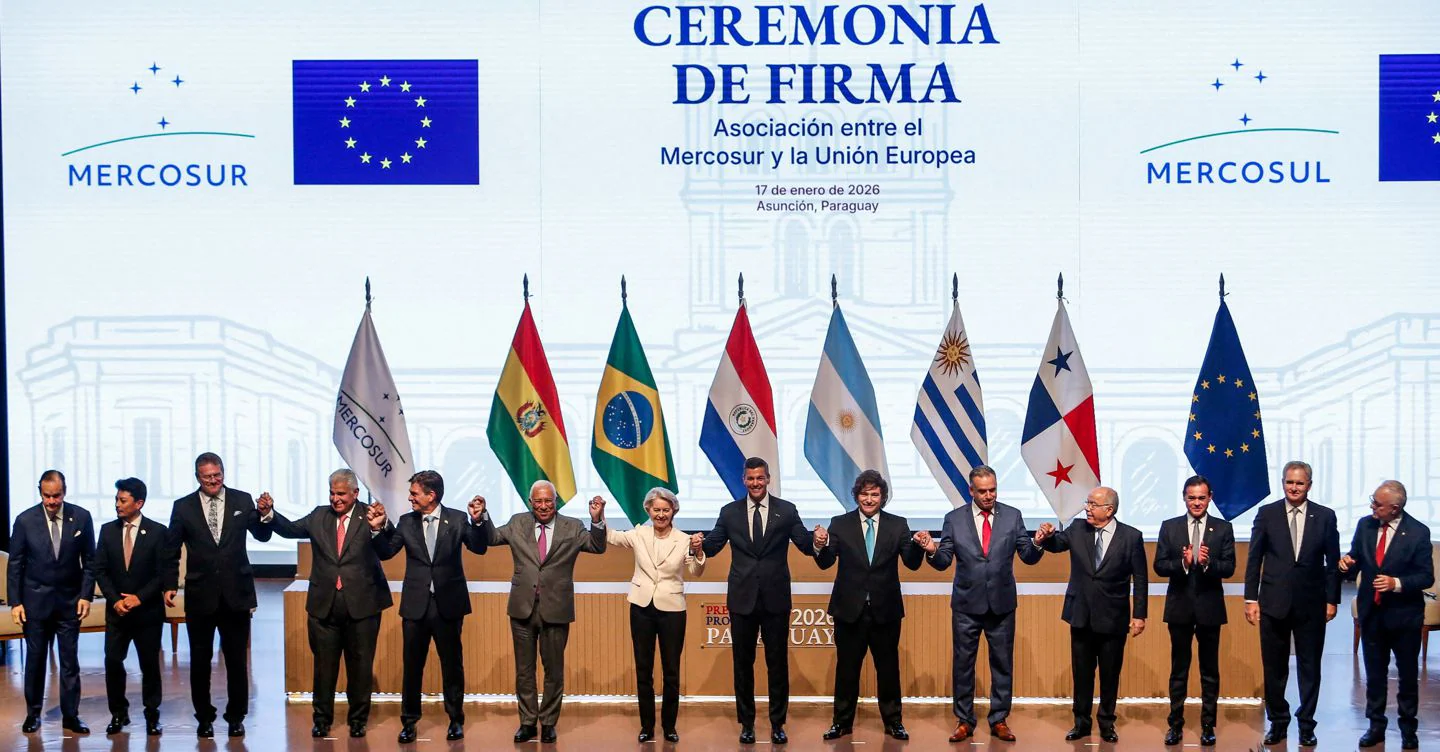 The EU-Mercosur signing ceremony in Paraguay, January 2026. (File photo)
One-stop reference
Company Intelligence
Every listed company in Latin America — financials, ownership and structure for 1,450+ companies across 26 exchanges, in one place.
The Numbers: A Right-Wing Lead, Not a Settled Result
Polls published before and immediately after the announcement show the Partido Popular ahead of PSOE, with the combined right above the governing left. But the figures differ materially by pollster and fieldwork dates, and the campaign had only just begun.
A DYM poll published on 24 September 2026 projected these results:
- PP: 34.7% of the vote, or 144-148 seats.
- PSOE: 26.3%, or 102-105 seats.
- Vox: 17.3%, or 58-61 seats.
The combined PP-Vox projection was 202-209 seats, above the 176-seat absolute majority threshold in the 350-seat Congress of Deputies.
These numbers should not be treated as forecasts. Spain’s provincial electoral system means small differences in vote distribution can produce large differences in seats.
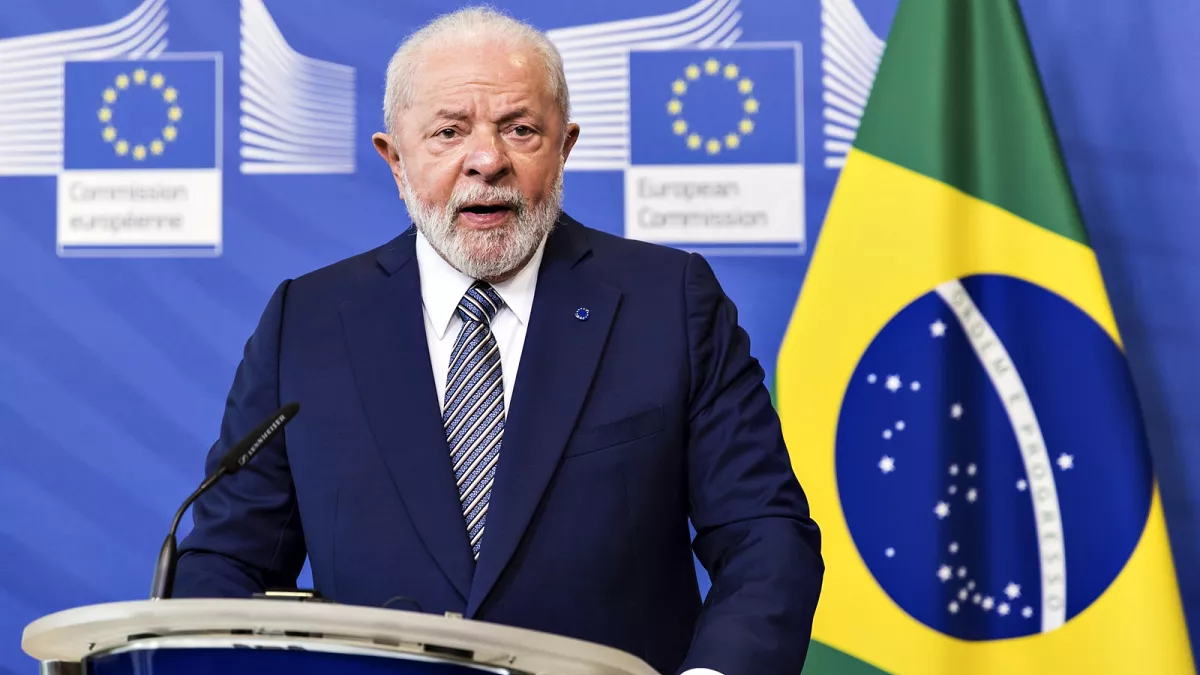 President Lula of Brazil at a press event with the European Commission.
 The Actors and What Each Wants
The election pits two broad blocs against each other, but the final composition of any government will depend on regional parties and coalition arithmetic.
PSOE, led by Pedro Sánchez, is Spain’s centre-left Socialist party.
Partido Popular (PP) is the main centre-right opposition party. It leads the polls and would likely place greater emphasis on business diplomacy, competitiveness and investment protection in Latin America. Its leader has not been confirmed in the available research for this analysis.
Vox is the right-wing nationalist party. It has generally advocated a tougher approach to immigration and national identity. A PP-led government dependent on Vox could face pressure for stricter enforcement and reduced irregular migration, although final policy would depend on coalition negotiations and EU legal constraints.
Sumar and Podemos are left-wing formations that may run separately or negotiate a joint arrangement. Their unresolved alliance structure is one of the main uncertainties for the left’s electoral arithmetic.
Junts is the Catalan separatist party whose rejection of the housing decrees triggered the crisis. Its future role in any governing coalition is uncertain, but its defection demonstrated the fragility of Sánchez’s previous parliamentary base.
Spanish Corporate Exposure in Latin America
Spain is one of Europe’s most important corporate investors in Latin America.
A change of government could matter even without a formal Latin America policy. The relevant issues include Madrid’s willingness to support Spanish firms in regulatory disputes, export-credit and development-finance backing for infrastructure projects, and relations with governments in Mexico, Brazil, Argentina, Chile, Colombia and Venezuela.
A PP-led administration would likely place greater emphasis on business diplomacy and investment protection. A PSOE-led government would be more likely to preserve its existing focus on social policy, development cooperation, climate policy and political dialogue. These are directional differences, not confirmed post-election programmes.
For US investors, the important point is that Spanish corporate risk in Latin America is not concentrated in one country. A Spanish bank or utility may have simultaneous exposure to several currencies and regulatory systems. A new government in Madrid can influence diplomatic support and EU coordination, but it cannot eliminate those underlying market risks.
Migration, Visas and Remittances
Spain’s migration policy is especially important for Latin America because many Latin American nationals benefit from shared language, established diaspora networks, preferential naturalisation rules for nationals of many Latin American countries, family-reunification channels, and student, work, entrepreneur and digital-nomad routes. Spain is also a gateway to the wider European Union.
A new government could influence the practical operation of these channels through staffing, consular resources, labour-market rules, enforcement priorities and regularisation policy. For Latin American nationals, one of the most consequential questions is whether Spain expands or narrows legal labour migration. Sectors with persistent shortages, including care work, hospitality, agriculture, construction, logistics and health services, create incentives for employers and regions to maintain migration channels even when political rhetoric becomes more restrictive.
Vox has generally advocated a tougher approach to immigration. PSOE and its progressive partners would be more likely to defend regularisation, integration and expanded legal routes. At the time of reporting, the exact migration platforms for the 29 November election had not been fully published.
The immediate effect on remittance volumes would probably be limited. Remittances depend more directly on migrant employment, wages, exchange rates, transfer fees and conditions in recipient countries than on the election itself. No source available for this briefing established a post-election remittance forecast. Readers should also distinguish remittances, which are household transfers, from foreign direct investment, which is capital deployed by companies.
The EU-Mercosur Dimension
The EU-Mercosur agreement is a major strategic issue for Spain.
Spanish interests include automotive and industrial supply chains, food and agricultural trade, infrastructure and engineering, telecommunications, banking and financial services, energy and renewable projects, and port, logistics and transport services. A Spanish government can lobby inside the EU for ratification and implementation, but trade agreements are negotiated and approved through EU institutions.
The election will not directly rewrite Spain’s foreign policy, but it could alter the tone and priorities of Madrid’s relationship with Latin America. A PP-led government would likely place greater emphasis on business diplomacy and investment protection in EU debates. A PSOE-led government would be more likely to preserve its existing focus on development cooperation and political dialogue.
What It Means for You
If you are a US investor or executive with exposure to Spanish banks, utilities, telecoms or infrastructure groups operating in Latin America, the 29 November vote could shift the diplomatic and regulatory support those companies receive from Madrid. A PP-led government would likely prioritise investment protection and business diplomacy, while a PSOE-led government would maintain its focus on social policy and development cooperation. Neither outcome eliminates the underlying market risks in Latin America, but the election could change how actively Madrid intervenes on behalf of Spanish firms in regulatory disputes.
If you are a US-based Latino professional or family member with ties to Spain, the election could affect visa processing, consular capacity and the practical operation of migration channels. A government that tightens migration controls or reduces legal pathways could affect the size and stability of migrant employment, while a government prioritising regularisation and labour-market integration could support more predictable transfers.
What Is Not Known
Several important details were not yet available as of 5 October 2026. The exact migration platforms and candidate arrangements for the 29 November election had not been fully published.
The left-wing alliance structure was unresolved. The final composition of any PP-led government, including whether it would depend on Vox or regional parties, was also unknown.
The available research does not provide current official Spain-Latin America economic, migration, tourism, trade, remittance, investment or consular figures. It would therefore be unsafe to cite specific values for those categories. The official bodies that should supply such figures include the Instituto Nacional de Estadística, the Banco de España, the Ministry of Foreign Affairs, and the Ministry of Inclusion, Social Security and Migration.
What to Watch
The electoral calendar provides clear dates for the coming weeks. The campaign is scheduled to run from 13 to 27 November 2026. The provisional count would take place on election night after polling stations close at 20:00, while the newly elected Congress must meet within 25 days of the election.
Watch first whether Sumar and Podemos reach a joint-list agreement before the 16 October deadline for parties to notify electoral coalitions. That decision will shape the left’s seat arithmetic. Watch also whether the PP signals a formal coalition intention with Vox or seeks regional-party support instead. Finally, watch whether housing remains the dominant campaign issue, as it could mobilise younger renters and urban voters in ways that shift the polling numbers.
Why did Pedro Sánchez call a snap election in 2026?
The defeat exposed his inability to pass major legislation without the support of separatist and regional parties, particularly Junts.
When is Spain’s snap election in 2026?
Spain’s snap election will be held on Sunday, 29 November 2026.
Who is leading the polls for Spain’s 2026 election?
As of October 2026, the Partido Popular leads the polls. A DYM poll published on 24 September 2026 (fieldwork 16-21 September, before the snap election call) projected PP at 144-148 seats and Vox at 58-61 seats, a combined 202-209 seats, above the 176-seat majority threshold.
How could Spain’s election affect Latin America?
The election could alter Spanish corporate diplomacy, migration and visa policy, and Madrid’s push for the EU-Mercosur trade agreement. A PP-led government would likely prioritise business diplomacy, while a PSOE-led government would maintain its focus on social policy and development cooperation.
Will Spain’s election change remittance flows to Latin America?
The immediate effect on remittance volumes would probably be limited. Remittances depend more directly on migrant employment, wages, exchange rates and transfer fees than on the election itself.
What is the EU-Mercosur agreement and why does Spain care?
The EU-Mercosur agreement is a trade deal between the European Union and Argentina, Brazil, Paraguay and Uruguay.