By The Rio Times | Created at 2026-10-10 14:02:01 | Updated at 2026-10-10 15:19:56
2 hours ago
By The Rio Times | Created at 2026-10-10 14:02:01 | Updated at 2026-10-10 15:19:56
2 hours ago
LATIN AMERICA · LANGUAGE
Key Facts
- —The language Spanish has more than 630 million potential speakers worldwide, about 520 million of them native, according to the Instituto Cervantes 2025 yearbook.
- —In the US 44.9 million people aged five and over spoke Spanish at home in 2024, according to the US Census Bureau.
- —This list More than 80 Spanish words that start with S, grouped as nouns, verbs, adjectives, short words, false friends and regional terms.
- —Each entry The Spanish word, its English meaning and a short example sentence with a translation.
- —Pronunciation Across Latin America, z and soft c sound like s, a feature the Royal Spanish Academy (RAE) calls seseo.
- —Watch out False friends such as sensible (sensitive) and sobrenombre (nickname) look English but mean something else.
- —Regional words Saco can mean a jacket in Latin America, and soroche means altitude sickness in seven South American countries, according to the RAE dictionary.
Spanish words that start with S include some of the first a visitor needs: sí (yes), salida (exit) and señor (sir). In 2024, 44.9 million US residents aged five and over spoke Spanish at home, according to the Census Bureau.
This guide groups more than 80 of them by type, with meanings, examples and notes on Latin American usage.

Everyday Spanish Words That Start With S
These everyday Spanish words that start with S cover food, family, time and getting around. Spanish nouns are either masculine or feminine, so learn each one with el or la: el sábado, la semana.
The examples below show each word in a sentence a visitor could use in Mexico City, Lima or Buenos Aires.
- sábado — Saturday — El mercado abre el sábado. (The market opens on Saturday.)
- semana — week — Trabajo cinco días a la semana. (I work five days a week.)
- siglo — century — La catedral tiene casi tres siglos. (The cathedral is almost three centuries old.)
- sol — sun — Hace mucho sol en la playa. (It is very sunny on the beach.)
- sal — salt — ¿Me pasas la sal, por favor? (Can you pass me the salt, please?)
- sopa — soup — La sopa está muy caliente. (The soup is very hot.)
- sandía — watermelon — Compré una sandía en el mercado. (I bought a watermelon at the market.)
- servilleta — napkin — ¿Me trae otra servilleta? (Could you bring me another napkin?)
- sartén — frying pan — Calienta el aceite en la sartén. (Heat the oil in the frying pan.)
- silla — chair — Esta silla está libre. (This chair is free.)
- suelo — floor, ground — Las llaves están en el suelo. (The keys are on the floor.)
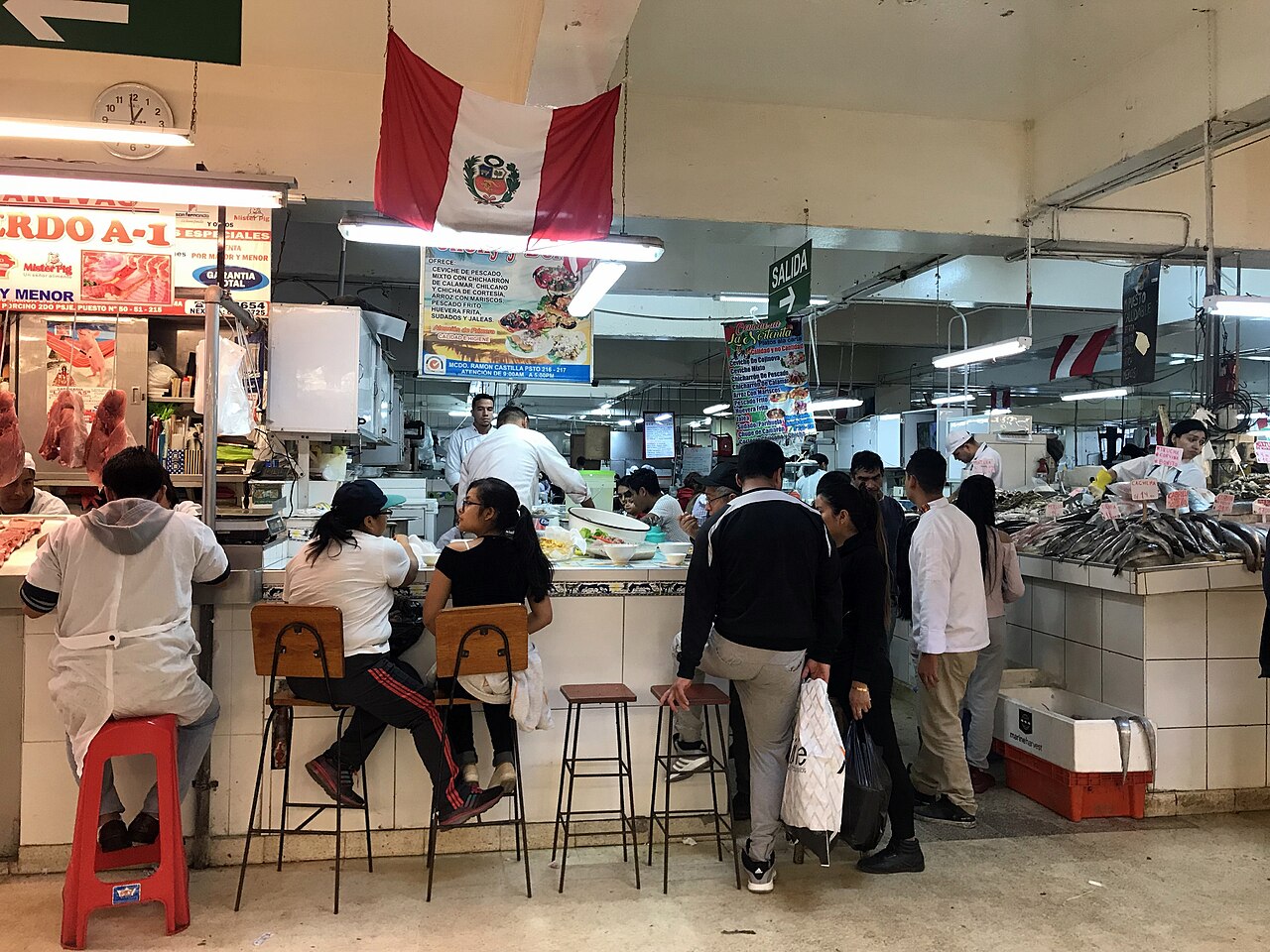
- salida — exit, departure — La salida está a la derecha. (The exit is on the right.)
- salud — health — El ejercicio es bueno para la salud. (Exercise is good for your health.)
- sangre — blood — Donar sangre salva vidas. (Giving blood saves lives.)
- sed — thirst — Tengo sed. ¿Hay agua? (I am thirsty. Is there any water?)
- sabor — taste, flavour — ¿De qué sabor es el helado? (What flavour is the ice cream?)
- sombra — shade, shadow — Sentémonos a la sombra. (Let’s sit in the shade.)
- salsa — sauce; also a style of dance music — Esta salsa pica mucho. (This sauce is very spicy.)
- sueño — sleep, dream — Tengo mucho sueño. (I am very sleepy.)
- sueldo — salary, wages — Me pagan el sueldo cada mes. (They pay my salary every month.)
- sobrino — nephew (sobrina: niece) — Mi sobrino vive en Lima. (My nephew lives in Lima.)
- suegra — mother-in-law (suegro: father-in-law) — Mi suegra cocina muy bien. (My mother-in-law cooks very well.)
- señor — sir, Mr, gentleman — Buenos días, señor. (Good morning, sir.)
- señora — madam, Mrs, lady — La señora Gómez es mi vecina. (Mrs Gómez is my neighbour.)
- sur — south — La Patagonia está en el sur. (Patagonia is in the south.)
- selva — jungle, rainforest — La selva amazónica es enorme. (The Amazon rainforest is huge.)
- sombrero — hat — Lleva un sombrero para el sol. (Take a hat for the sun.)
- supermercado — supermarket — El supermercado cierra a las diez. (The supermarket closes at ten.)
- semáforo — traffic light — Gira a la izquierda en el semáforo. (Turn left at the traffic light.)
- sello — stamp (as on a passport); for a postage stamp, the RAE dictionary records estampilla in Latin America — En la frontera ponen un sello en el pasaporte. (At the border they put a stamp in your passport.)
Spanish Verbs Beginning With S
Many verbs a learner needs first begin with S, such as ser (to be), saber (to know) and salir (to leave). Spanish also has a second verb for ‘to be’, estar, often used for where something is or how someone feels.
Several of these verbs change their stem when conjugated. Seguir becomes sigo (I follow), sentir becomes siento (I feel) and soñar becomes sueño (I dream).
Saber means knowing a fact or how to do something. Knowing a person or a place takes a different verb, conocer.
- ser — to be — Soy de Chicago. (I am from Chicago.)
- saber — to know (a fact, how to) — No sé dónde está el hotel. (I don’t know where the hotel is.)
- salir — to go out, to leave — El autobús sale a las ocho. (The bus leaves at eight.)
- sentir — to feel — Lo siento mucho. (I am very sorry.)
- seguir — to follow, to continue — Siga recto hasta la plaza. (Keep going straight to the square.)
- subir — to go up, to get on — Suba al tercer piso. (Go up to the third floor.)
- sacar — to take out — Voy a sacar dinero del cajero. (I am going to take money out of the ATM.)
- sentarse — to sit down — Siéntese, por favor. (Sit down, please.)
- servir — to serve, to be useful — ¿Para qué sirve esto? (What is this for?)
- soñar — to dream — Sueño con viajar a Cusco. (I dream of travelling to Cusco.)
- sonreír — to smile — Sonríe para la foto. (Smile for the photo.)
- saludar — to greet, to say hello — Saluda a tu madre de mi parte. (Say hello to your mother from me.)
- sufrir — to suffer — Sufre de dolor de espalda. (He suffers from back pain.)
- suponer — to suppose, to assume — Supongo que sí. (I suppose so.)
- secar — to dry — Seca la ropa al sol. (Dry the clothes in the sun.)
- salvar — to save, to rescue — El perro salvó al niño. (The dog saved the boy.)
- sumar — to add, to add up — Suma estos números. (Add up these numbers.)
- significar — to mean — ¿Qué significa esta palabra? (What does this word mean?)
Spanish Adjectives Beginning With S
Spanish adjectives usually come after the noun, and many change their ending to match it. That is why the example below says la receta es muy sencilla, with an a ending for a feminine noun.
Two adjectives need care. Seguro means both safe and sure, and solo means alone but can also mean only.
- simpático — nice, friendly — Tu hermano es muy simpático. (Your brother is very nice.)
- serio — serious — Es un problema serio. (It is a serious problem.)
- sencillo — simple, easy — La receta es muy sencilla. (The recipe is very simple.)
- seguro — safe, sure — ¿Es seguro este barrio? (Is this neighbourhood safe?)
- sano — healthy — Come sano y duerme bien. (Eat healthily and sleep well.)
- seco — dry — El desierto de Atacama es muy seco. (The Atacama Desert is very dry.)
- sucio — dirty — La mesa está sucia. (The table is dirty.)
- suave — soft, smooth, gentle — Esta manta es muy suave. (This blanket is very soft.)
- salado — salty — La sopa está un poco salada. (The soup is a bit salty.)
- sabroso — tasty — El ceviche está sabroso. (The ceviche is tasty.)
- solo — alone, on your own — Viajo solo. (I am travelling alone.)
- soltero — single, unmarried — Mi primo está soltero. (My cousin is single.)
- siguiente — next, following — Bájese en la siguiente parada. (Get off at the next stop.)
- sordo — deaf — Mi abuelo está un poco sordo. (My grandfather is a little deaf.)
- sabio — wise — Mi abuela es muy sabia. (My grandmother is very wise.)
Short Words and Phrases Starting With S
Short words do much of the work in a Spanish sentence. The accent matters here: sí with an accent means yes, while si without one means if.
A few set phrases are worth learning whole. They come up at the table, in shops and when friends wish each other well.
- sí — yes — Sí, claro. (Yes, of course.)
- si — if — Si llueve, nos quedamos en casa. (If it rains, we stay at home.)
- siempre — always — Siempre desayuno café. (I always have coffee for breakfast.)
- sin — without — Un café sin azúcar, por favor. (A coffee without sugar, please.)
- sobre — on, about — El libro está sobre la mesa. (The book is on the table.)
- según — according to — Según el mapa, es por aquí. (According to the map, it is this way.)
- sino — but (rather) — No es azul, sino verde. (It is not blue but green.)
- sin embargo — however — Es caro; sin embargo, vale la pena. (It is expensive; however, it is worth it.)
- ¡Salud! — cheers — ¡Salud por los novios! (Cheers to the bride and groom.)
- suerte — luck — ¡Mucha suerte en el examen! (Good luck in your exam.)
- sano y salvo — safe and sound — Llegaron sanos y salvos. (They arrived safe and sound.)
- sobre todo — above all, especially — Me gusta la fruta, sobre todo el mango. (I like fruit, especially mango.)
False Friends That Start With S
False friends are words that look like English ones but mean something else. Several Spanish words that start with S fall into this trap for English speakers.
Each entry below gives the real meaning, an example and the Spanish word for the English look-alike.
- sensible — sensitive, not sensible — Tengo la piel sensible. (I have sensitive skin.) For ‘sensible’, Spanish says sensato.
- suceso — event, incident — Fue un suceso histórico. (It was a historic event.) For ‘success’, Spanish says éxito.
- soportar — to bear, to put up with — No soporto el calor. (I can’t stand the heat.) To back a person or an idea is apoyar.
- sobrenombre — nickname, not surname — Su sobrenombre es el Flaco. (His nickname is Skinny.) A surname is an apellido.
- sano — healthy, not sane — Lleva una vida sana. (She leads a healthy life.) ‘Sane’ is cuerdo.
- simpático — nice, likeable, not sympathetic — Los vecinos son muy simpáticos. (The neighbours are very nice.) A sympathetic person is compasivo.
- salvar — to rescue, to save from danger — Los bomberos salvaron al gato. (The firefighters rescued the cat.) To save money is ahorrar.
- sopa — soup, not soap — Pedí una sopa de pollo. (I ordered chicken soup.) Soap is jabón.
Latin American S Words and Regional Meanings
The Royal Spanish Academy (RAE), Spain’s language academy, publishes the standard Spanish dictionary. It labels meanings that belong to particular countries or regions, and the words below carry those labels.
A traveller is therefore more likely to hear these meanings in the countries named than elsewhere. The list runs from Mexico and Cuba to Argentina and Uruguay.
- saco — jacket, blazer (Latin America and the Canary Islands); in Uruguay also a woman’s coat — Ponte el saco, que hace frío. (Put on your jacket, it is cold.)
- ponerse el saco — (Mexico) to take a hint personally — No te pongas el saco, no hablaba de ti. (Don’t take it personally, I wasn’t talking about you.)
- sencillo — small change, coins (Latin America) — ¿Tienes sencillo para el bus? (Do you have change for the bus?)
- soroche — altitude sickness (Argentina, Bolivia, Chile, Colombia, Ecuador, Peru and Uruguay), a word from Quechua — En Cusco me dio soroche. (I got altitude sickness in Cusco.)
- sancocho — a hearty stew of meat, cassava and plantain (Colombia, Ecuador, Panama, Peru, Puerto Rico, the Dominican Republic, Venezuela and others) — Los domingos hacemos sancocho. (On Sundays we make sancocho.)
- sombrilla — umbrella for the rain (Costa Rica, Cuba and Mexico); elsewhere a sunshade — Lleva la sombrilla, va a llover. (Take the umbrella, it is going to rain.)
How to Pronounce S in Latin American Spanish
Sound matters as much as spelling for Spanish words that start with S.
The Spanish S usually sounds like the s in the English word see. The RAE’s usage guide, the Diccionario panhispánico de dudas, describes it as a voiceless s sound with many regional variations.
In Latin America, z and c before e or i are pronounced like s, a feature called seseo. The same guide says seseo is general across Spanish America and fully accepted in educated speech.
As a result, casa (house) and caza (hunt) sound alike from Mexico to Argentina. So a word heard with an S sound may be spelled with C or Z: cielo (sky), cena (dinner), zapato (shoe).
In much of Latin America, an S at the end of a syllable is often softened to a breathy h sound. The guide notes that educated speakers in many of these regions tend to restore the full S.
English words that begin with an s and a consonant usually gain an e in Spanish. The RAE’s usage guide gives estrés for stress and escáner for scanner.
That is why many S words borrowed from English sit under the letter E in a Spanish dictionary. The same guide rejects spellings such as stres.
What It Means for US Readers
Spanish is the leading language other than English in American homes. Of the 74.1 million people aged five and over who spoke another language at home in 2024, 44.9 million spoke Spanish.
The Census Bureau found that 26.4 million of them also spoke English very well, and 18.4 million less than very well. For neighbours, patients and customers, a few words help.
Learning Spanish words that start with S is a practical first step for travel, work or volunteering. They appear on exit signs (salida), on menus (sopa) and in directions (siga recto).
For longer stays, guides to learning Spanish in Mexico, Colombia and Argentina go further. In Paraguay, Spanish shares daily life with Guaraní and Jopara.
Swearing is a separate subject, covered in this guide to curse words in Spanish across Latin America. More guides to the region sit on the Latin America page.
What Is Not Known
Speaker totals are estimates. The Instituto Cervantes, Spain’s public language institute, counts potential speakers, which include people with limited Spanish and language learners.
Its 2025 yearbook is the latest edition listed on its website as of October 2026. The Census Bureau’s latest national language table covers 2024, and its Spanish figure carries a margin of error of about 143,000 people.
The RAE’s regional labels show where a meaning is recorded, not how often people use it in each city. Slang also moves faster than dictionaries, so a new informal meaning may take years to appear.
Frequently Asked Questions
What are some common Spanish words that start with S?
Common Spanish words that start with S include sí (yes), sol (sun), semana (week), salida (exit), ser (to be), saber (to know) and simpático (nice).
How do you pronounce the letter S in Spanish?
Usually like the s in the English word see. In Latin America, z and c before e or i are pronounced the same way, a feature the RAE calls seseo.
What is the difference between sí and si?
Sí with an accent means yes, as in sí, claro (yes, of course). Si without an accent means if, as in si llueve (if it rains).
Which Spanish S words are false friends?
Several Spanish words that start with S are false friends. Sensible means sensitive, suceso means an event or incident, sobrenombre means nickname and sano means healthy. Soportar means to put up with; to support a person or an idea is apoyar.
How many people speak Spanish?
More than 630 million people are potential Spanish speakers, about 520 million of them native, according to the Instituto Cervantes 2025 yearbook. In the US, 44.9 million people aged five and over spoke it at home in 2024.
What does saco mean in Latin America?
In Latin America and the Canary Islands, saco can mean a jacket or blazer, according to the RAE dictionary. Its general meaning everywhere is a sack or bag.
Why do some English S words start with E in Spanish?
Spanish words do not normally begin with an S followed by a consonant, so borrowed words usually gain an e. The RAE’s usage guide gives estrés for stress and escáner for scanner.
Sources: Instituto Cervantes, El español en el mundo, Anuario 2025 (20 claves), 2025; US Census Bureau, American Community Survey 2024, table S1601, 2024 data; RAE, Diccionario panhispánico de dudas, seseo, consulted October 2026; RAE, Diccionario panhispánico de dudas, s, consulted October 2026; RAE, Diccionario panhispánico de dudas, estrés, consulted October 2026; RAE, Diccionario panhispánico de dudas, escáner, consulted October 2026; RAE, Diccionario de la lengua española, saco, consulted October 2026; RAE, Diccionario de la lengua española, soroche, consulted October 2026; RAE, Diccionario de la lengua española, sancocho, consulted October 2026; RAE, Diccionario de la lengua española, sencillo, consulted October 2026; RAE, Diccionario de la lengua española, sombrilla, consulted October 2026; RAE, Diccionario de la lengua española, estampilla, consulted October 2026; Cambridge Dictionary, Spanish-English, consulted October 2026.
This article was produced by The Rio Times’ automated newsroom system. How we use AI · Report an error · Editorial responsibility: Matthias Camenzind, Editor-in-Chief
The Rio Times · Power Map
See who really holds power in Latin America
Click to open the Power Map →