 By The Moscow Times | Created at 2026-10-19 14:15:11 | Updated at 2026-10-19 22:14:09
8 hours ago
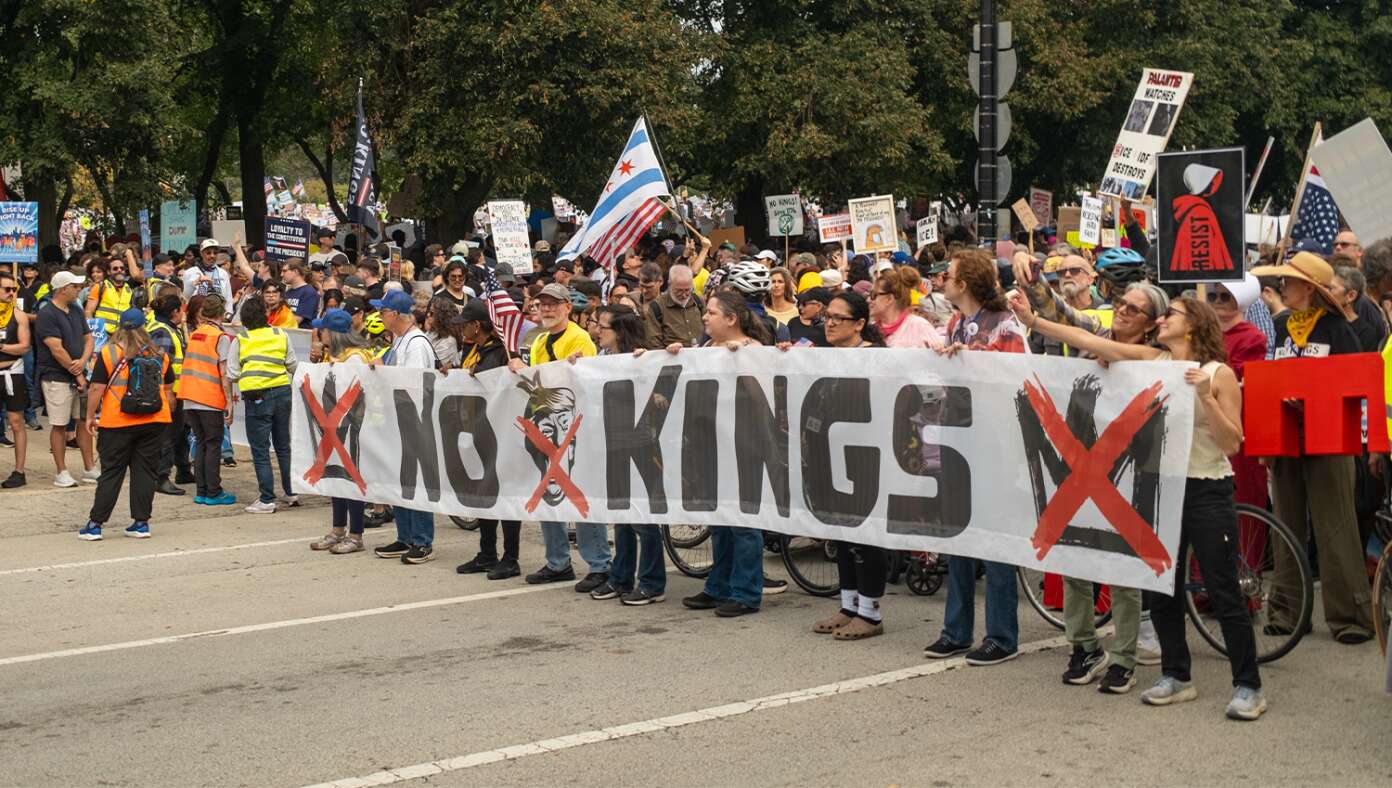
As France picks up the pieces from a weekend that saw violent riots amid wider mass protests over education and the cost of living, reactions in Russia have ranged from outright glee and xenophobia to more muted schadenfreude and patronizing finger-wagging toward its Western adversary.
On Monday, Kremlin spokesman Dmitry Peskov said that Europe was facing a “major crisis.”
“It’s hard to say whether [this] is a systemic or non-systemic crisis, but it’s clear that it’s a major crisis. These are disturbances that are, in fact, already bordering on chaos,” Peskov told reporters. “There is, of course, a clear sign of a crisis here, but, in any case, this is an internal matter for these countries.”
He dismissed accusations that Russia was involved in the protests, saying: “No one anywhere takes such absurd accusations seriously anymore. Not even in Europe itself.”
Elsewhere, Foreign Ministry spokeswoman Maria Zakharova on Sunday lambasted Europe’s “double standard” when it comes to dealing with protests.
Zakharova quoted Macron as saying that he would be “unyielding” in dealing with rioters who resorted to violence before asking where “human rights” and “freedom of expression” figured in the equation.
“In other words, when the French are ransacking Paris, it calls for uncompromising condemnation and tough measures, but when protesters in other countries are ransacking cities, we’re supposed to watch silently, re-reading the Élysée Palace’s angry press releases about the unacceptability of suppressing protests,” she wrote on Telegram.
“We need consistent standards, not the West’s endless double standards when it comes to human rights issues and interference in the internal affairs of sovereign nations,” she finished, alluding to Western condemnation of Russia’s crackdown on peaceful protests.
Responding to a question about the student protests on Friday, Zakharova accused the French government of stealing money from their own people to fund the “terrorist regime” in Kyiv.
“Guns and shells instead of school supplies and textbooks — these are the priorities of France’s political leadership today. While billions of euros are being channeled to support the neo-Nazi regime in Kyiv,” she said, repeating a debunked Kremlin talking point that claims Ukraine’s leadership has been co-opted by neo-Nazis.
Kremlin special envoy Kirill Dmitriev took to X over the weekend to call the unrest “The Suicidal Fall of Europe” and blame it on Europe’s migration policies.
“The West has fallen because of an inability to discuss and correct consequential mistakes on migration, energy, and warmongering,” Dmitriev wrote.
Along with his anti-migration rhetoric, Dmitriev reposted several videos showing burning buildings, clashes with police and general unrest.
Senator Alexei Pushkov, head of the Federation Council’s Information Policy and Media Relations Commission, called the scenes from France a “civil war.”
“There’s a civil war in France,” he wrote on Telegram. “They’ve played themselves into a corner with free migration. The country’s president — an irresponsible windbag — sees ‘Russians at the gates of Paris’ everywhere. But the Russians aren’t the French people’s enemies. They should look elsewhere for their enemies.”
State media reacts
RT editor-in-chief Margarita Simonyan posted three side-by-side videos of the protests in France, Italy and Albania on X with the caption, “These are, of course, flourishing countries — France, Italy, Albania — where people live in prosperity, happily hand over their money to Kiev [sic], and enjoy every democratic freedom imaginable to make their wishes known to the government.”
Simonyan also criticized those accusing Russia of meddling in the protests: “Former President of Estonia apparently believes Western Europe needs our help to make a mess out of their own countries. I think they can manage on their own.”
The Kommersant newspaper published a report titled “Robberies on every floor: Oct. 17 was a day of street violence in France.”
“By evening, the demonstrations of discontented protesters had broken up into bewildered activists and roving groups of looters who wandered the streets and attacked anything they could get their hands on,” Kommersant correspondent Alexei Tarkhanov wrote.
“The police can disperse a crowd, detain suspects, and clear the streets,” he continued. “It is much harder to convince people that the president is listening to their everyday problems. Until such a response is provided, the next demonstration may once again begin with slogans about the high cost of living and end with fires in the streets.”
Vedomosti took a similar line, claiming that the French far-right was taking a “win-win” position by opposing the riots.
“All of this can be described as a manifestation of the death throes of Macronism. Macron will leave office in seven months, but not before then. And in the meantime, a lot can still happen in France, including a recurrence of large-scale protests and unrest,” they wrote, quoting Arnaud Dubien, the director of Franco-Russian think tank Observo.
In an interview with the state-run TASS news agency, political analyst Ilya Graschenkov said the protests are a response to “very real” social and economic problems facing European countries.
“They have been building up for years, and the current protests may signal the beginning of a profound restructuring of the European political system,” he said.
He added that the protests could be viewed as an opportunity to influence Europe’s future, as there are “serious ideological differences between Donald Trump’s conservative administration and a significant portion of the European political establishment.”
The pro-Kremlin daily Izvestia focused on French Prime Minister Sébastien Lecornu’s announcement of a curfew in select cities, as well as the alleged theft of a Lionel Messi jersey and captain’s armband from a museum in Paris.
State-run outlets also published video showing protesters blocking the entrance to the Louvre.
On the Vesti news program, journalist Yelena Kondratyeva-Salgero also blamed the unrest on migration.
“Where people are marching with French flags, there won’t be smashed storefronts, burning trash piles, torched cars, or looting,” she said. “Those with their faces covered, wrapped in Palestinian keffiyehs, carrying Palestinian, Moroccan, or Algerian flags… [on their part] you’ll see riots, attacks on the police and attacks on journalists.”
A Message from The Moscow Times:
Dear readers,
We are facing unprecedented challenges. Russia's Prosecutor General's Office has designated The Moscow Times as an "undesirable" organization, criminalizing our work and putting our staff at risk of prosecution. This follows our earlier unjust labeling as a "foreign agent."
These actions are direct attempts to silence independent journalism in Russia. The authorities claim our work "discredits the decisions of the Russian leadership." We see things differently: we strive to provide accurate, unbiased reporting on Russia.
We, the journalists of The Moscow Times, refuse to be silenced. But to continue our work, we need your help.
Your support, no matter how small, makes a world of difference. If you can, please support us monthly starting from just $2. It's quick to set up, and every contribution makes a significant impact.
By supporting The Moscow Times, you're defending open, independent journalism in the face of repression. Thank you for standing with us.
Continue

Not ready to support today?
Remind me later.