 By The War Zone | Created at 2026-09-08 18:45:43 | Updated at 2026-09-08 19:37:44
1 hour ago
By The War Zone | Created at 2026-09-08 18:45:43 | Updated at 2026-09-08 19:37:44
1 hour ago
President Donald Trump has threatened to pursue a ban on U.S. sales of aircraft from Canadian firm Bombardier unless they move production south of the border. American officials have not elaborated on how such a total prohibition on domestic sales could take shape, but there are potential ramifications for the U.S. military, as well as commercial operators in the United States. The U.S. Army, in particular, has made Bombardier Global Express 6500-based ME-11B aircraft a cornerstone of its future aerial intelligence, surveillance, and reconnaissance (ISR) plans. For the moment, the U.S. Air Force flies its own fleet of E-11A Battlefield Airborne Communications Node (BACN) communications jets based on the Global Express family.
“NO MORE SELLING BOMBARDIER IN THE UNITED STATES!” Trump wrote in a post on his Truth Social social media platform yesterday. “If they want our Market [sic], they must build here, and stop treating America like a ‘piggyback.’ BUY AMERICAN.”
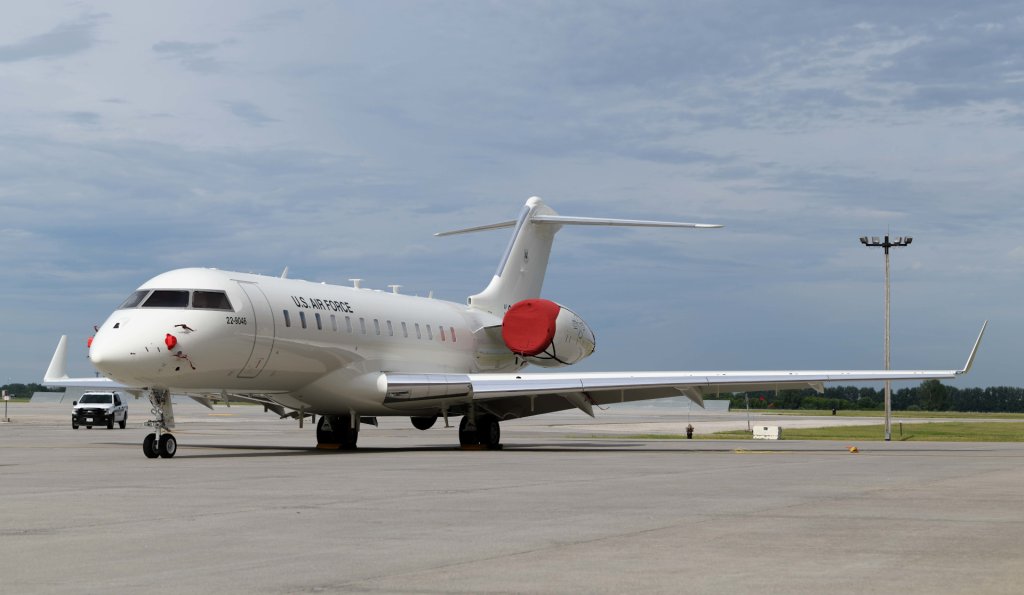 One of the US Air Force’s Bombardier Global Express-based E-11A BACN aircraft. USAF
 The post, which was subsequently reshared by U.S. Ambassador to Canada Pete Hoekstra, also reiterated Trump’s accusations that the Canadian government has been deliberately slow-rolling certification of certain jets from rival U.S. planemaker Gulfstream. Back in January, the President also said he would “decertify” Bombardier aircraft in the United States over this issue, which would prevent them from operating in the United States, but this threat has yet to materialize into reality. Aviation authorities in Canada did certify five specific Gulfstream business jets in March, but do not look to have issued broader type certifications since then. Canada’s demand for more fuel system icing testing, at least on G700 and G800 models, has been cited as a factor in the length of the certification process. The U.S. Federal Aviation Administration (FAA) previously granted Gulfstream a conditional certification for these types that required demonstration of full compliance with domestic aircraft fuel icing regulations no later than the end of this year.
 A stock picture of a Gulfstream G700 business jet. Gulfstream
 Bombardier and Gulfstream actively compete globally in the large and super midsize business jet categories. A number of airlines in the United States also continue to operate CRJ-series small airliners, which were Bombardier products until 2020, when the line was sold to Mitsubishi Heavy Industries (MHI) in Japan. Today, the Canadian planemaker has a substantial U.S. presence, centered primarily in Wichita, Kansas, but does not build complete aircraft in the United States. We will come back to this later on.
Trump has specifically targeted Bombardier several times across both of his terms amid larger trade disputes with Canada. During Trump’s first administration, the U.S. government notably injected itself into a spat between the Canadian firm and Boeing that ultimately upended a proposed order for F/A-18E/F Super Hornet fighters for the Royal Canadian Air Force.
How the Trump administration might now seek to block sales of Bombardier jets in the United States is unclear. If there is no legal mechanism for instituting an outright sales ban, U.S. authorities could try to decertify jets from the Canadian firm or implement prohibitive tariffs or other economic measures. In addition to retaliatory certification actions, Trump has also threatened to levy tariffs on Canadian aviation firms in the past. Any of these courses of action could draw legal action or other retaliation from the Canadian government.
All of this raises questions about potential impacts on the U.S. military. As mentioned, the U.S. Army is in the process of acquiring a fleet of Global Express 6500-based ISR planes, designated ME-11Bs, under its High Accuracy Detection and Exploitation System (HADES) program. The Army has already divested all of its older turboprop-powered ISR aircraft as part of the transition to HADES. The service has also been utilizing several contractor-operated ISR planes based on different Bombardier business jets in the interim.
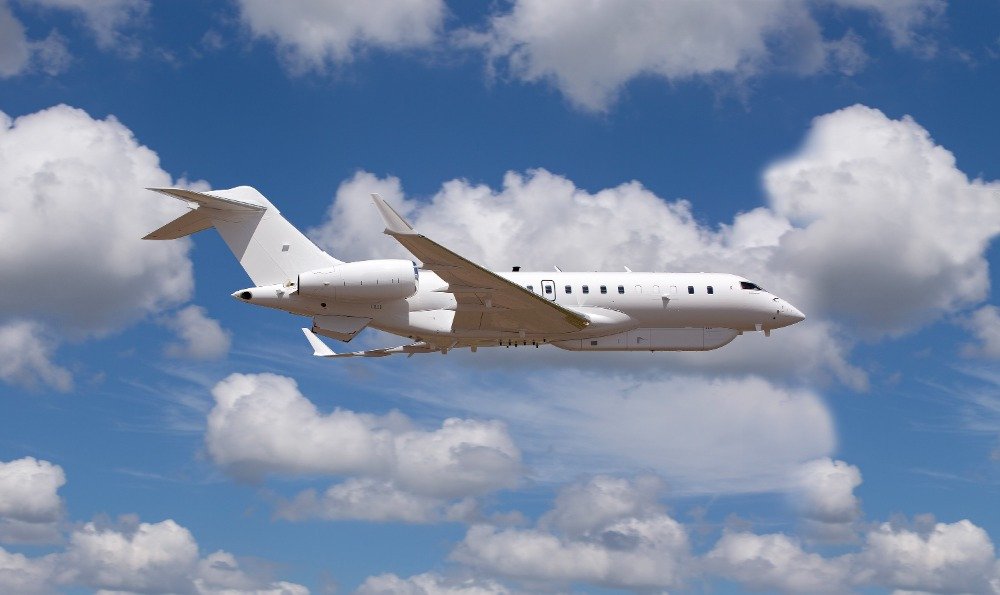 A Bombardier Global Express 6500-based Army Theater Level High-Altitude Expeditionary Next-Generation A-ISR (ATHENA) jet the Army has been utilizing as part of the transition to its new ME-11B HADES fleet. US Army
 There is also the aforementioned Air Force fleet of E-11As. However, this may increasingly be something of a moot point, as these aircraft are now set to be retired in the 2028 Fiscal Year and supplanted with new space-based communications capabilities. There is still a possibility that Congress could block that plan, at least for a time.
TWZ has reached out to the Army and the Air Force in light of Trump’s latest remarks.
It is important to note that the U.S. certification process for military and civilian aircraft is separate, and that the Trump administration could exempt the former from any new action against Bombardier. After Trump’s decertification threat in January, the White House had told multiple outlets that in-service aircraft would be exempted from any such actions, but would not clarify whether further exemptions would be made for future U.S. military acquisitions.
Upending Bombardier’s business in the United States might have additional downstream effects, including on supply chains that support commercial and military fleets. Disruptions could also negatively impact any future sales opportunities to the U.S. military. When it comes to the latter point, since Trump started his second term, there has been a broader push to recapitalize U.S. government executive aircraft fleets. This has already included the purchase of new Gulfstream G700-based C-39A executive jets for the U.S. Coast Guard.
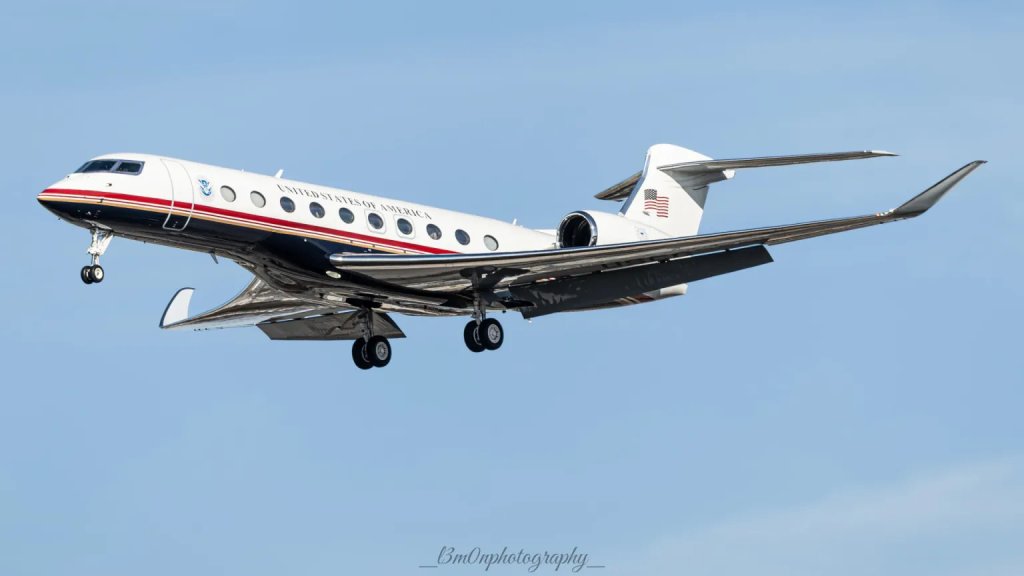 One of the U.S. Coast Guard’s new C-39A executive jets. Lemon Popp
 The Air Force is also working to acquire a successor to its existing Gulfstream-based C-37 executive jets, tentatively designated the C-37C. Multiple branches of the U.S. military operate a host of other Gulfstream-based aircraft, including special mission types like the Air Force’s EA-37B Compass Call electronic warfare jets.
All this being said, there is no guarantee that Trump’s latest threats against Bombardier will materialize, whether or not they might impact U.S. military fleets. The President has already faced public pushback, including from at least one member of his own party, citing the Canadian firm’s existing economic contributions to the U.S. economy through its aforementioned American subsidiary.
“The presence of Bombardier in Wichita supports a local workforce of more than a thousand employees, who contribute their talent and expertise to our nation’s defense and aerospace capabilities,” Senator Jerry Moran, a Kansas Republican, wrote in a post on X yesterday. “This afternoon, I reached out to the Trump administration to make certain the President is aware of the significant contributions of Bombardier to Kansas and the importance of its presence in Wichita to many Kansas workers at Bombardier and in the Bombardier supply chain.”
“I will continue working to see that Bombardier’s manufacturing operations not only remain in Kansas but continue to grow and create American jobs,” Moran added. “Kansas is home to a hardworking, skilled workforce, and I will continue welcoming leaders in aircraft and defense manufacturing to do business here in the Air Capital of the World.”

A New Era Begins in Wichita
“Bombardier’s American workers are based all around the United States with sites in Kansas, Texas, Arizona, Florida, Connecticut, Illinois, Delaware, California, Washington D.C. and New Jersey, as well as overall direct employment presence in more than 20 states,” Bombardier said in its own statement response to Trump’s comments, per NBC News. “Bombardier has also announced extensive plans to grow its defense activities as well as its service network and will, later this year, inaugurate a new facility in Fort Wayne, Indiana.
The threat alone of U.S. government action could still have negative impacts for Bombardier broadly. The company’s stock price fell by some seven percent after Trump’s post yesterday, though it has rebounded somewhat as of the time of writing.
Trump’s trade war with Canada more broadly is still escalating after a new round of talks collapsed last month. The President and other U.S. officials also continue to make remarks about the country becoming the United States’ 51st state.
Many questions remain to be answered about Trump’s new threats against Bombardier and how they could be implemented, if at all. The President has certainly created new uncertainty regarding the Canadian planemaker’s access to the American market without yet definitively clarifying when the U.S. military could be exempted.
Contact the author: [email protected]