 By The Epoch Times | Created at 2026-09-22 16:51:49 | Updated at 2026-09-22 17:26:25
38 minutes ago
By The Epoch Times | Created at 2026-09-22 16:51:49 | Updated at 2026-09-22 17:26:25
38 minutes ago
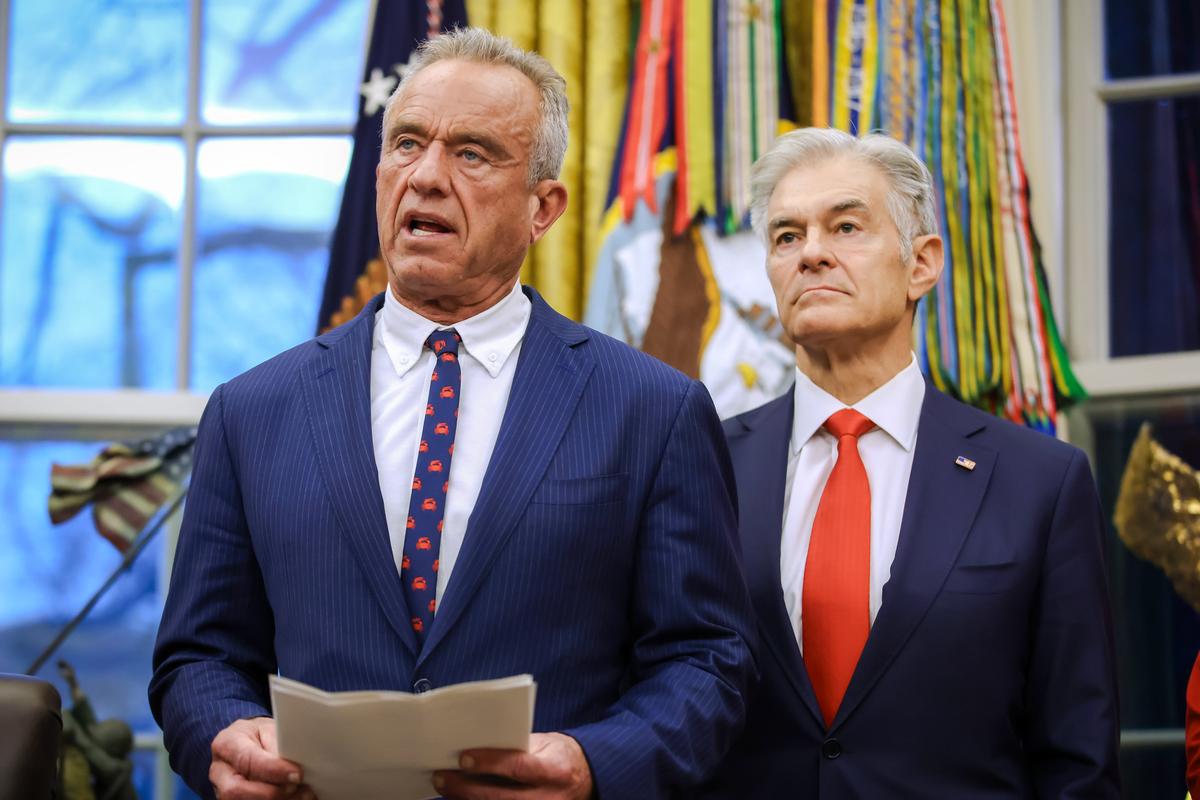
Health Secretary Robert F. Kennedy Jr. (L) speaks at the White House in Washington on Jan. 29, 2026. Samuel Corum/Getty Images
Federal health officials recently canceled about 315,000 policies under the Affordable Care Act, commonly known as Obamacare, according to a notice filed on Sept. 22.
The Centers for Medicare and Medicaid Services (CMS) on Aug. 31 canceled the plans, which covered more than 760,000 individuals, due to a lack of verified documentation establishing citizenship or legal immigration status, Health Secretary Robert F. Kennedy Jr. said in the document. Kennedy’s department oversees CMS.
The action was part of efforts to address “an ongoing pattern of unauthorized enrollment, unauthorized plan switching, and other fraudulent, unauthorized, or noncompliant enrollment activity involving a subset of agents and brokers participating in the Federally-facilitated Exchanges,” Kennedy wrote.
Officials have also, since January, terminated the ability of hundreds of agents and brokers to access health exchanges, or the Health Insurance Marketplaces, because they “submitted statistically implausible rates of plan year 2026 applications without identifying applicant information, such as a Social Security Number, at an implausible rate,” according to the notice.
Some 569 notices of intent to terminate exchange agreements were issued in July and August alone, Kennedy said.
The health insurance network was established under President Barack Obama in 2010 through the Affordable Care Act. A key part is the marketplaces, or exchanges, that provide a range of insurance options for people and families to enroll in, with subsidies sometimes offered based on income level.
The new notice was for codifying a Department of Health and Human Services rule to pause the registration of any agents and brokers that are not registered with the federally facilitated exchanges. The pause is being imposed immediately.
They will not be able to register until the moratorium ends on Feb. 1, 2027.
The rule is expected to prevent fraud and misuse of Americans’ private health information, reduce unauthorized enrollments, and prevent improper spending, officials said.
Kennedy estimated that the financial impact could reach up to $6.6 billion.
There are 84,012 registered agents with active enrollments. Even with the rule, there should be enough agents and brokers to assist the public during the upcoming open enrollment period, according to the notice.
Health officials have reviewed relevant laws and determined that they are imposing the rule without a period of first accepting public comments “because providing advance notice would be contrary to the public interest and impracticable,” Kennedy said.
The department is still welcoming public comment and will consider whether to retain, modify, or rescind the rule, depending on the feedback.