By The Rio Times | Created at 2026-09-18 17:11:35 | Updated at 2026-09-18 17:57:54
55 minutes ago
By The Rio Times | Created at 2026-09-18 17:11:35 | Updated at 2026-09-18 17:57:54
55 minutes ago
USA & Canada Intelligence Brief — Friday, September 18, 2026
One-stop reference
Company Intelligence
Every listed company in Latin America — financials, ownership and structure for 1,450+ companies across 26 exchanges, in one place.
Key Facts
—
United States government borrowing. The ten-year rate fell to 4.94 per cent on 17 September from 5.01 per cent the day before, on the Treasury’s own daily curve.
—
The Standard and Poor’s 500. The index closed at 7,637.76 on 17 September, up 85.95 points or 1.1 per cent, on Associated Press figures.
—
Canadian producer prices in August. Statistics Canada put industrial product prices up 13.5 per cent on the year on 17 September, against consumer prices at 3.0 per cent.
—
Canadian sales of American shares. Statistics Canada reported on 17 September that Canadian investors sold “an unprecedented $31.0 billion of US shares” in July.
—
The education grants ruling. Judge Angel Kelley struck down the Education Department’s grant policy on 17 September, covering over US$600 million across 109 terminated grants.
—
The two retaliation figures. The White House puts Canadian retaliation at about US$20 billion of American exports, and Canada’s finance department puts its own counter-tariffs at C$27.6 billion.
—
The Senate on Thursday. Senators confirmed a district judge by 49 votes to 45 and agreed to take up a college sports bill by 77 to 22.
—
Brent crude on Thursday. November Brent settled at US$104.82 a barrel on 17 September, down 0.95 per cent, and October West Texas Intermediate at US$101.91.
The Federal Reserve raised its target range to between 3.75 and 4.00 per cent on 16 September, and the rise took effect on 17 September. Lenders spent Thursday deciding that they believed it.
Statistics Canada published two releases the same morning that show where a trade war lands before it reaches a shop. Canadian factory-gate prices are rising more than four times as fast as Canadian consumer prices.
Read across the Federal Reserve’s statement and projections, the Treasury’s daily record of government borrowing rates, and the Census Bureau. Then three Statistics Canada releases, the Bank of Canada, the White House, Canada’s finance department, the Senate’s roll-call pages, and Reuters, the Associated Press, Axios, NPR and TIME.
Long Money Comes Back Down
The United States Treasury’s daily curve put the two-year government borrowing rate at 4.67 per cent on 17 September, against 4.74 per cent the day before. The ten-year rate fell from 5.01 to 4.94 per cent and the thirty-year rate from 5.35 to 5.29 per cent.
A rise in the policy rate that pushes long-term borrowing costs down is a market accepting the argument rather than fearing it. Lenders for thirty years now ask for six hundredths of a percentage point less than they did on Wednesday.
The Associated Press put the Standard and Poor’s 500 index at 7,637.76 at the close on 17 September, up 85.95 points or 1.1 per cent. It put the Dow Jones industrial average at 51,778.04, up 316.14 points, and the Nasdaq composite at 26,418.30, up 439.87 points or 1.7 per cent.
The Russell 2000 index of smaller American companies closed at 2,874.63, up 15.82 points, on the same Associated Press figures. The Dow regained 316.14 of the 631.21 points it lost the day before, so Thursday took back about half of Wednesday.
The Federal Reserve’s statement of 16 September records that the decision carried by twelve votes to nothing. This desk read that tally on the Federal Reserve’s own page and did not read a list of the names behind it.
The statement says inflation “remains elevated” and that the rise will support “a timelier return to the Committee’s 2 percent goal”. Its projections table of the same date puts the median federal funds rate at 4.1 per cent for the end of 2026.
That table records eighteen participants, of whom twelve place the rate at 4.125 per cent for the end of this year, four at 4.375 per cent and two at 3.875 per cent. The midpoint of the new range is 3.875 per cent, so sixteen of the eighteen sit above it — this desk’s reading of the published table, not a Federal Reserve statement.
Two more American readings arrived on 17 September and pointed in opposite directions. The Census Bureau put August housing starts at an annual rate of 1,275,000, which it calls 2.6 per cent below July, give or take 12.0 per cent.
That margin is wider than the change it measures, so the Census Bureau’s own release cannot say whether starts rose or fell. Building permits ran at 1,394,000 a year, 2.7 per cent below July and 3.5 per cent above August 2025.
Housing completions tell a firmer story at an annual rate of 1,128,000, which the same release puts 27.1 per cent below August 2025. A pipeline that is finishing far fewer homes than a year ago will tighten rents before it tightens prices.
The Federal Reserve Bank of Philadelphia put its factory index at 37.8 for September, down from 47.4 in August and above a forecast of 30.5 that the outlet InvestingLive reported. Its employment reading fell from 27.9 to 11.8 while its prices-paid reading rose from 40.9 to 48.6.
The United States Department of Labor put new claims for unemployment benefit at 196,000 in the week to 12 September, down from 206,000, with a four-week average of 203,250. Reuters, in a report by Lucia Mutikani datelined Washington, gave the moving holiday as the likely reason for so sharp a fall.
November Brent crude settled at US$104.82 a barrel on 17 September, down US$1.01 or 0.95 per cent, and October West Texas Intermediate settled at US$101.91. The London bullion market’s afternoon price for gold was US$4,368.10 a troy ounce on the same day, and the dollar index closed at 100.25.
Canada’s Two Price Levels
Statistics Canada reported on 17 September that its Industrial Product Price Index, or IPPI, which measures what Canadian factories charge at the gate, rose 1.3 per cent in August and 13.5 per cent over the year. Its Raw Materials Price Index, which measures what those factories pay for inputs, rose 3.1 per cent in the month and 22.8 per cent over the year.
Strip out energy and petroleum and the factory-gate index still rose 0.8 per cent in the month. Strip crude energy out of the raw materials index and it still rose 1.1 per cent in the month and 17.2 per cent over the year.
Canada’s consumer price index rose 3.0 per cent over the year to August, on the release Statistics Canada published on 14 September. Producer prices are therefore rising more than four times as fast as the prices Canadians actually pay.
That gap is the whole story of a tariff war in two numbers. Costs are already inside the factory and have not yet finished walking to the till.
The agency is careful about how much of this it will pin on trade policy. Its release says that “Although the IPPI does not measure the direct effect of tariffs on prices, tariffs may indirectly influence prices measured in the IPPI”.
The largest single contribution to the yearly rise came from unwrought gold, silver and platinum group metals and their alloys, up 46.3 per cent over the year. Refined petroleum rose 4.6 per cent in the month, diesel 9.6 per cent and plastic resins 10.7 per cent.
Prices for crude energy products rose 7.1 per cent in the month, and the release ties that to “The unravelling of the ceasefire agreement between Iran and the United States”. A Canadian price index is naming a Middle Eastern ceasefire as a cause, which is how far the thread runs.
Consumer prices carry the same energy signal more slowly, with gasoline up 22.8 per cent over the year to August against 25.7 per cent to July. Shelter costs rose 1.5 per cent over the year on the same release, which is what holds the headline rate at 3.0 per cent.
The Bank of Canada left its policy interest rate at 2.25 per cent on 2 September and next decides on 28 October. A central bank facing 3.0 per cent consumer inflation and 13.5 per cent producer inflation is being asked two different questions at once.
A third Statistics Canada release the same morning shows where Canadian savings went while that was happening. Its sentence reads: “In July, Canadian investors sold an unprecedented $31.0 billion of US shares, after investing $78.1 billion in the first half of 2026”.
Those figures are given in dollars the release itself does not label, and Statistics Canada reports them for a Canadian readership. Total Canadian holdings of foreign securities fell by $30.6 billion over the month.
Money moved the other way at the same time, with foreign investors adding $20.7 billion of Canadian securities in July. Federal government bonds took $22.7 billion of that while foreign investors reduced their Canadian money market holdings by $11.9 billion.
The net inflow into the Canadian economy came to $51.3 billion in July on the same release. Foreign purchases of Government of Canada bonds reached $104.0 billion in the first seven months of 2026, against $13.8 billion in the same period of 2025.
The share of outstanding federal government bonds held from outside Canada rose from 40.2 per cent to 46.5 per cent over those seven months. Canadians are selling American shares and the world is buying Canadian government debt, which is one trade war described from two sides of the same ledger.
Three Rulings Inside Two Days
Judge Emmet Sullivan of the United States District Court for the District of Columbia issued a twenty-page order on Wednesday 16 September warning the Attorney General of possible civil contempt. Axios reported the order on 17 September, and the case concerns the release and redaction of files on Jeffrey Epstein under a transparency act passed in November 2025.
The order says that courts have “the inherent power to enforce compliance with their lawful orders through civil contempt”, which applies where someone violates “an order that is clear and unambiguous”. Sullivan called a contempt finding premature for now, on the same Axios account.
He required the Justice Department to justify its redaction of emails for private judicial review and to review foreign-language material for relevance. He rejected the department’s position that such a review was “not practicable”, and held that handwritten notes by the Federal Bureau of Investigation may not be withheld merely because they resemble typewritten reports.
The Attorney General named in that order is Todd Blanche, whom the Senate confirmed by 50 votes to 49 on 8 August 2026. A department run by a one-vote confirmation is now being asked by a judge to show its working.
Judge Angel Kelley of the United States District Court in Boston struck down the Education Department’s policy on diversity grants on 17 September. Reuters reported that the policy had cancelled over US$600 million across 109 grants, forty of them held by institutions in the eight states that brought the case.
Kelley held the policy arbitrary and capricious under the Administrative Procedure Act, the American law that governs how federal agencies must make rules. Reuters quotes her opinion saying the directive “does not acknowledge the fact that thousands of teachers, as well as teachers in teacher-training pipelines, would be affected, upending the careers of much-needed educators”.
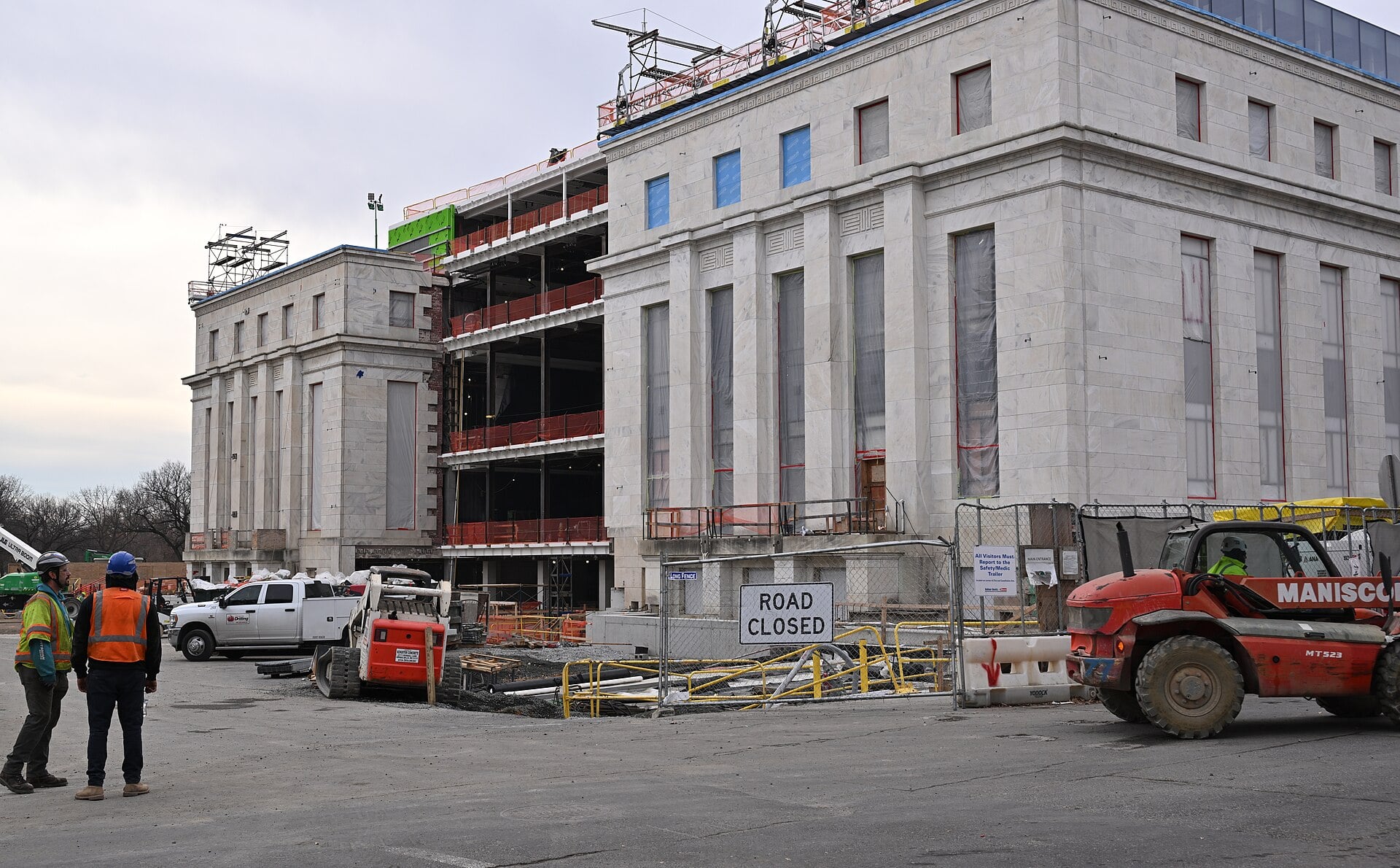
Judge Christopher Cooper, also of the District of Columbia court, ordered on 17 September that officials give thirty days’ written notice before any change to the John F. Kennedy Center for the Performing Arts. Axios and PBS NewsHour both date that order to Thursday 17 September.
The order covers changes “including but not limited to any demolition” of the main building and requires sworn statements about the closure. The centre had closed to the public the day before, on Wednesday 16 September, for what its management called at least seven days of safety assessment.
The case was brought by Representative Joyce Beatty of Ohio, a trustee of the centre, and PBS NewsHour puts the repair money Congress has allocated at US$257 million. Three federal judges in two days told the executive branch to slow down, which is a pattern rather than an incident.
The Purchasing Door And The Ban Date
The presidential memorandum signed on 16 September, titled “Restoring Reciprocity in Government Procurement”, has now had two days to be read. It directs officials to “identify and take all steps permitted by applicable law with respect to Canadian origin items…that can…be removed or made non-available for purchase”.
Its stated reason is that “Canada has unreasonably imposed new barriers to United States companies seeking to access the Canadian government procurement market”. The document names Canada and no other country, and puts the federal purchasing covered by the World Trade Organization’s procurement agreement at “over $280 billion annually”.
It sets no completion date, asking only that the Director of the Office of Management and Budget report progress “from time to time”, while the United States Trade Representative is told to “continue to monitor” Canadian practice. An instruction without a deadline is a lever kept in the hand rather than pulled.
The harder date is 29 September 2026, when American import bans on a revised list of Canadian goods take effect. The White House fact sheet of 8 September sets that date and rests the measures on Section 338 of the Tariff Act of 1930, at a rate of 50 per cent.
The same fact sheet records that rock salt and cement came off the list on 15 September and that all-terrain vehicles and further dairy products went on. A list still being edited eleven days before it bites is a negotiating instrument as much as a tariff schedule.
The two governments do not describe the retaliation against those measures with the same number. The White House fact sheet of 8 September puts Canadian retaliatory tariffs at “about $20 billion of U.S. exports”, while Canada’s Department of Finance puts its own counter-tariffs at C$27.6 billion of American imports.
Canada’s figure is stated in Canadian dollars and Washington’s in American dollars, and neither document the desk read shows how it was calculated. Readers should carry both numbers rather than choose between them.
Canada’s counter-tariffs took effect on 8 September at rates of 15, 25 and 50 per cent, matching the American rates they answer. They cover steel, dairy, appliances, agricultural equipment, pulp and paper and electronics, across more than 600 product classifications on the law firm Blakes’ count.
Alongside them Ottawa announced C$7.5 billion of new and enhanced support, on top of nearly C$25 billion already committed. That money includes a C$2 billion Canada Strong Diversification Fund, C$3.5 billion of rapid response support for workers and employers, and a C$1.5 billion regional tariff response initiative.
Liverpool First, Then Strasbourg
Mark Carney met the British Prime Minister Andy Burnham for the first time on Wednesday 16 September, at Everton’s Hill Dickinson Stadium in Liverpool. The Associated Press reported that the two men took that first meeting to a football match.
The Associated Press reported that they were expected to discuss “a Canadian-backed proposal to combine competing plans for an international defense bank that could help NATO allies finance increased military spending”. That came from a senior Canadian government official speaking on condition of anonymity, and the same report names “a potentially expanded Canadian role in the British-led Joint Expeditionary Force”.
The same report lists cooperation on drones, artificial intelligence, satellite communications, critical minerals and quantum technology among the expected subjects. A first meeting with a bank and a force on its agenda is not a courtesy call.
Carney went on to Strasbourg the next day and told the European Parliament on 17 September that Canada welcomes the offer Ursula von der Leyen had made to the same chamber on 16 September. The President of the European Commission had proposed that Canada become the European Union’s first associate member.
NPR reports Carney telling the chamber: “Canada and Europe are each strong. Europe and Canada are stronger together”. The same report carries his line that “This alliance is a positive process. That’s my response to the American president”.
His best-known lines ran consecutively: “We are not fair-weather allies. We do not pursue zero-sum deals”, in NPR’s report of the speech. The claim is that Canada stands with Europe in bad weather as well as good, which is the argument compressed into nine words.
TIME also quotes him saying that “Economic integration is now being weaponized, tariffs being used to exert pressure”. On the same TIME account he said he is not proposing a third bloc “in order to become a ‘great power’ rival, only with better manners”.
NPR reports Carney adding that “A stronger, more resilient Canada would be a more effective partner for the United States”. That is an argument addressed to Washington from a chamber in Washington’s absence.
Donald Trump had answered the proposal on Wednesday 16 September, the same day Carney was in Liverpool, speaking to reporters on his way to an event in North Carolina. TIME quotes him saying: “If they do that, if I think it’s at all a hostile act, I will put very serious tariffs or stop trading with Europe on many things”.
He had also called the proposal laughable, on the same TIME account. The French member of the European Parliament Nathalie Loiseau answered that “Democracy is under attack, the geopolitical order is ruined, so we have to team up”, in NPR’s report.
What associate membership would mean in law has not been set out by any document this desk could open. NPR reports only that the details of the partnership still need to be worked out, and that Carney intends to press European states that have not ratified the existing free-trade agreement.
One Chamber Works, The Other Is Away
The Senate held three recorded votes on 17 September, read here from the roll-call pages the Senate publishes for each one. Two concerned a single judgeship and the third concerned college sport.
At noon the Senate agreed to take up the Protect College Sports Act by 77 votes to 22, with one senator not voting. The bill is sponsored by Senator Ted Cruz of Texas and Senator Maria Cantwell of Washington, and would set national rules for paying college athletes.
At 12.54 in the afternoon senators voted 49 to 47 to close debate on the nomination of Kasdin Miller Mitchell to a federal district judgeship in northern Texas. At 1.59 they confirmed her by 49 votes to 45, with six senators not voting.
A judge confirmed by four votes on a Thursday afternoon is the quiet half of a week that produced three rulings against the administration. Both halves are how a federal judiciary gets made and used at the same time.
The Deseret News reports that all four Black Democratic senators voted against advancing the college sports bill. It quotes Senator Cory Booker saying the bill “jeopardizes college athletes’ health and safety” and grants a “broad-based antitrust exemption to the NCAA”.
The House of Representatives recorded no votes at all on 17 or 18 September, on the Clerk of the House’s own listing. Its last recorded votes were seven, on 16 September, covering a water resources bill, a ratepayer protection bill and an environmental rule disapproval among others.
The Senate itself met only for a formal session at nine in the morning on Friday 18 September, with no votes scheduled. Congress is winding down towards the midterm elections of 3 November.
There is no federal funding cliff at the end of this month, which is worth stating because the fiscal year ends on 30 September. The House passed the Senate’s continuing appropriations measure by 370 votes to 48 on 1 September, funding the government to 11 December 2026.
What This Means From Latin America
Brazil’s benchmark interest rate, known as the Selic, fell to 13.75 per cent with effect from 17 September. The United States raised into the same week, so the gap between borrowing at home and borrowing in dollars narrowed from the Brazilian side and widened from the American one.
What Canada offers this region today is less a policy than a warning about sequence. Producer prices at 13.5 per cent against consumer prices at 3.0 per cent describe a cost firms have paid and households have not, a position familiar across this region.
November Brent at US$104.82 a barrel is the freight cost that moves Brazilian soy, Chilean fruit and Peruvian copper northwards. Statistics Canada’s attribution of August’s crude rise to the Iran ceasefire is a reminder that the price of a Latin American harvest is partly set in the Gulf.
The disagreement between Washington’s US$20 billion and Ottawa’s C$27.6 billion is a small lesson in reading trade statistics. Two governments measuring the same dispute will report it in their own currency, on their own basis, and neither will show the working.
Foreign ownership of Canadian federal government bonds rose from 40.2 to 46.5 per cent in seven months while Canadians sold American shares. Capital looking for somewhere that is neither Washington nor its quarrel is a flow that reaches this region too.
What We Are Watching
- The American import bans of 29 September — the White House fact sheet of 8 September bars a revised list of Canadian goods from that date. The measures rest on Section 338 of the Tariff Act of 1930, at 50 per cent. It is the first hard date in the dispute, and it falls eleven days from today.
- The United Nations General Assembly high-level week — the United Nations lists the week as 18 to 28 September. The general debate runs from 22 to 28 September, with a climate meeting on 23 September. Several of this dispute’s participants will be in the same building.
- American personal income and outlays for August — the Bureau of Economic Analysis publishes it on 30 September, alongside the third estimate of second-quarter output. It carries the inflation measure the Federal Reserve prefers. It is the first such reading since the rise.
- The Canadian House of Commons sitting week — the chamber’s own calendar lists sitting days from 21 to 25 September. It is the first chance to ask ministers in public what Canada intends to do about 29 September.
- The Bank of Canada decision of 28 October — Governing Council held the policy interest rate at 2.25 per cent on 2 September and publishes a Monetary Policy Report with the next decision. It must weigh consumer inflation at 3.0 per cent against producer inflation at 13.5 per cent.
- The Federal Reserve meeting of 27 and 28 October — the committee’s own calendar lists those dates, with no new projections until the meeting of 8 and 9 December. Sixteen of eighteen participants placed the rate above the current midpoint in the September table.
- The next American consumer price reading — the Bureau of Labor Statistics publishes September’s index on 14 October. August’s reading put the headline rate at 3.4 per cent over the year with energy up 16.3 per cent.
Go deeper in the paid web dossier. It carries the deep dive on where a trade war shows up in prices and three ways the next six months can run. It also carries a health check of the continent, the North American calendar and today’s verification notes.
More from the Rio Times Intelligence Desk on 18 September 2026: Africa · Asia · Europe. For how these stories developed, see the USA & Canada Intelligence Brief for 17 September and 16 September.
North American politics and trade policy and their bearing on this hemisphere run through our pillar coverage of The United States & Canada. That section carries the daily record behind this brief.
Frequently Asked Questions
What did the Federal Reserve do, and how did lenders and shareholders answer?
It raised its target range for the federal funds rate to between 3.75 and 4.00 per cent on 16 September 2026, and the rise took effect on 17 September. The Federal Reserve’s own statement records that the decision carried by twelve votes to nothing. This desk read that tally on the Federal Reserve’s page, and did not read a list of the names behind it. The statement says inflation “remains elevated” and that the increase will support “a timelier return to the Committee’s 2 percent goal”. Borrowing costs then fell. The United States Treasury’s daily curve put the two-year government borrowing rate at 4.67 per cent on 17 September, against 4.74 per cent the day before. The ten-year rate fell from 5.01 to 4.94 per cent. The thirty-year rate fell from 5.35 to 5.29 per cent. The Associated Press put the Standard and Poor’s 500 index at 7,637.76 at the close on 17 September, up 85.95 points or 1.1 per cent. It put the Dow Jones industrial average at 51,778.04, up 316.14 points. It put the Nasdaq composite at 26,418.30, up 439.87 points or 1.7 per cent, and the Russell 2000 at 2,874.63, up 15.82 points. The Federal Reserve’s projections table of 16 September puts the median federal funds rate at 4.1 per cent for the end of 2026. It records eighteen participants, of whom twelve place the rate at 4.125 per cent, four at 4.375 per cent and two at 3.875 per cent. The midpoint of the range set that day is 3.875 per cent, so sixteen of the eighteen sit above it; that arithmetic is this desk’s reading of the published distribution and not a statement by the Federal Reserve.
Why are Canadian producer prices rising so much faster than Canadian consumer prices?
Because a tariff war reaches a factory before it reaches a shop. Statistics Canada reported on 17 September on its Industrial Product Price Index, the measure of what Canadian factories charge at the gate. It rose 1.3 per cent in August and 13.5 per cent over the year. Its Raw Materials Price Index, the measure of what those factories pay for inputs, rose 3.1 per cent in the month and 22.8 per cent over the year. Excluding energy and petroleum, the factory-gate index still rose 0.8 per cent in the month. Excluding crude energy, the raw materials index still rose 1.1 per cent in the month and 17.2 per cent over the year. Canadian consumer prices rose 3.0 per cent over the year to August, on the release of 14 September. Statistics Canada is careful about attribution and says that “Although the IPPI does not measure the direct effect of tariffs on prices, tariffs may indirectly influence prices measured in the IPPI”. Energy is the other driver. Prices for crude energy products rose 7.1 per cent in the month, and the release ties that to “The unravelling of the ceasefire agreement between Iran and the United States”. Unwrought gold, silver and platinum group metals and their alloys rose 46.3 per cent over the year, the largest single contribution to the yearly rise. Refined petroleum rose 4.6 per cent in the month, diesel 9.6 per cent and plastic resins 10.7 per cent. For a household the practical reading is that the cost is already inside the system and has not yet finished moving. For the Bank of Canada, which held its policy interest rate at 2.25 per cent on 2 September and decides again on 28 October, it is two questions at once.
What did the three American court rulings decide this week?
They went against the executive branch on three unrelated matters. Judge Emmet Sullivan of the United States District Court for the District of Columbia issued a twenty-page order on 16 September. It warned Attorney General Todd Blanche of possible civil contempt over files on Jeffrey Epstein, and Axios reported it on 17 September. The order says courts have “the inherent power to enforce compliance with their lawful orders through civil contempt”. That applies where someone violates “an order that is clear and unambiguous”, and Sullivan called a contempt finding premature for now. He required the Justice Department to justify email redactions for private judicial review. He told it to review foreign-language material rather than call it “not practicable”, and not to withhold handwritten notes by the Federal Bureau of Investigation merely because they resemble typewritten ones. Blanche was confirmed Attorney General by 50 votes to 49 on 8 August 2026. Judge Angel Kelley of the United States District Court in Boston struck down the Education Department’s policy on diversity grants on 17 September, in a case brought by eight states. Reuters reported that the policy had cancelled over US$600 million across 109 grants, forty of them in the plaintiff states. Kelley held it arbitrary and capricious under the Administrative Procedure Act. Judge Christopher Cooper ordered on 17 September that officials give thirty days’ written notice before changes “including but not limited to any demolition” of the John F. Kennedy Center for the Performing Arts. The case was brought by Representative Joyce Beatty of Ohio, a trustee of the centre. The centre had closed to the public the day before, on Wednesday 16 September, for what management called at least seven days of safety assessment, and PBS NewsHour puts the repair money Congress has allocated at US$257 million.
What changes for Canada’s trade with the United States on 29 September?
American import bans on a revised list of Canadian goods take effect that day. The White House fact sheet of 8 September sets the date and rests the measures on Section 338 of the Tariff Act of 1930, at a rate of 50 per cent. It records that rock salt and cement came off the list on 15 September, while all-terrain vehicles and further dairy products went on. A separate presidential memorandum of 16 September is titled “Restoring Reciprocity in Government Procurement”. It directs officials to “identify and take all steps permitted by applicable law with respect to Canadian origin items…that can…be removed or made non-available for purchase”. Its stated ground is that “Canada has unreasonably imposed new barriers to United States companies seeking to access the Canadian government procurement market”. That memorandum names Canada and no other country. It puts the federal purchasing covered by the World Trade Organization’s procurement agreement at “over $280 billion annually”, and sets no completion date. The two governments describe the retaliation differently. The White House fact sheet of 8 September puts Canadian retaliatory tariffs at “about $20 billion of U.S. exports”. Canada’s Department of Finance puts its own counter-tariffs at C$27.6 billion of American imports, and neither document the desk read shows how its figure was reached. Canada’s counter-tariffs took effect on 8 September at 15, 25 and 50 per cent. They cover steel, dairy, appliances, agricultural equipment, pulp and paper and electronics, across more than 600 product classifications on the law firm Blakes’ count. Ottawa paired them with C$7.5 billion of new and enhanced support, on top of nearly C$25 billion already committed. That includes a C$2 billion Canada Strong Diversification Fund, C$3.5 billion of rapid response support for workers and employers, and a C$1.5 billion regional tariff response initiative. Where we do not know, we say so, and we correct in the open when we are wrong.
Sources: Federal Reserve, United States Department of the Treasury, United States Census Bureau, United States Bureau of Labor Statistics, Bureau of Economic Analysis. Also Statistics Canada, Bank of Canada, Department of Finance Canada, House of Commons of Canada. Then The White House, United States Senate, Clerk of the House of Representatives, United Nations. And Reuters, Associated Press, Axios, NPR, TIME, PBS NewsHour, Deseret News, Blakes. Reporting window 14–18 September 2026.