By The Rio Times | Created at 2026-09-05 09:21:47 | Updated at 2026-09-05 10:00:21
1 hour ago
By The Rio Times | Created at 2026-09-05 09:21:47 | Updated at 2026-09-05 10:00:21
1 hour ago
VENEZUELA · POLITICS
Key Facts
- —What happened María Corina Machado publicly questioned the oil arrangement between Washington and Venezuela’s interim government.
- —What she said She said the wealth of the subsoil belongs to the Venezuelan people, not to what she called an illegitimate regime.
- —The real story Her objection is about legal authority to sign, not about whether foreign investment is desirable.
- —The catch She has no power to block any contract, and none of the parties has responded to her publicly.
- —Who she was talking about She described the current occupants of the presidential palace as enemies of the United States.
- —What comes next Contracts keep being signed, including a 25-year oilfield deal formalised the day after her remarks.
The opposition leader has put a direct objection on the record against the deals Washington is signing in Caracas. Her argument is about who has the right to sign them.
One-stop reference
Company Intelligence
Every listed company in Latin America — financials, ownership and structure for 1,450+ companies across 26 exchanges, in one place.
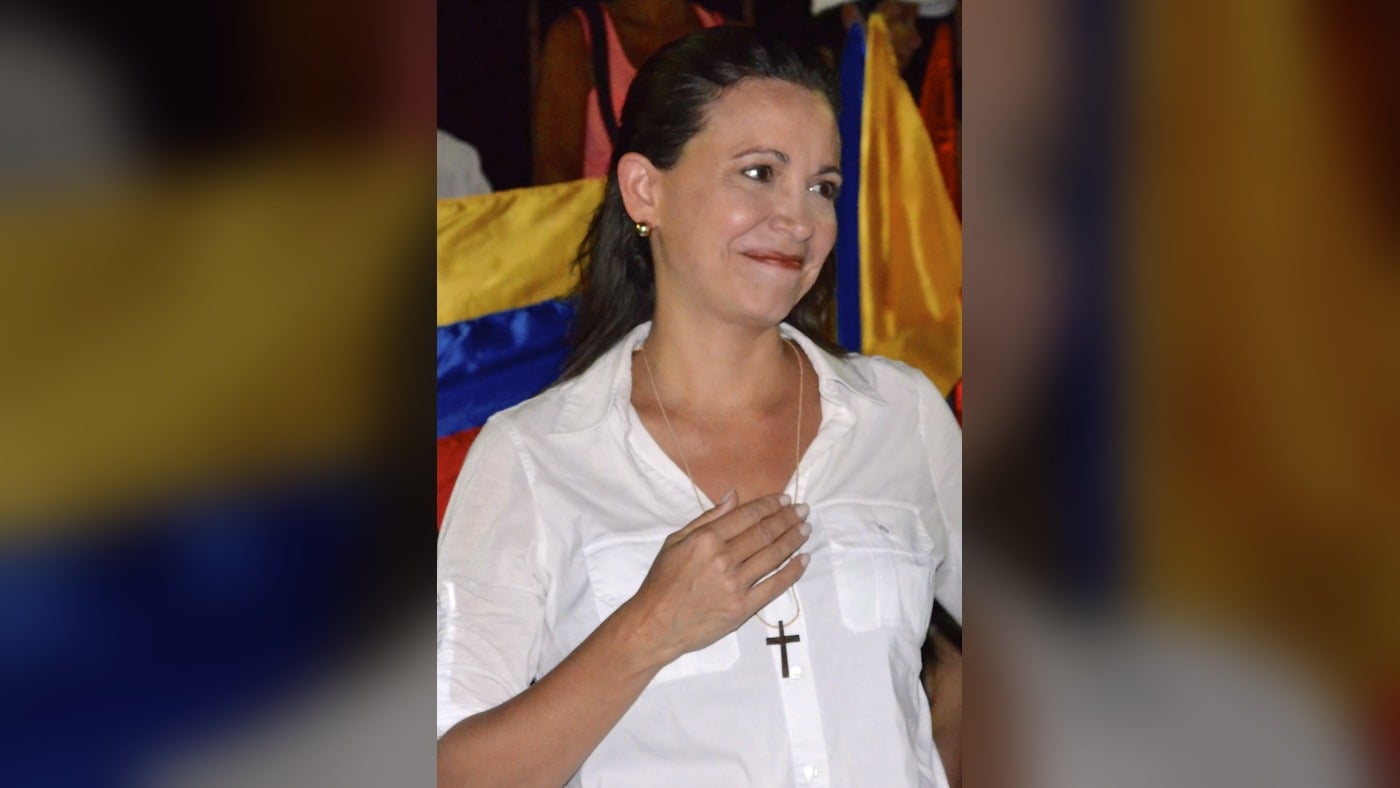
Venezuela’s opposition leader has objected in public to the deals being signed in Caracas. Venezuela oil wealth, María Corina Machado said, does not belong to the government negotiating it away.
The Guardian published her remarks on 3 September 2026. WION carried them the following day.
Her wording was precise and repeated. The wealth of the subsoil, she said, does not belong to an illegitimate regime.
It belongs to the Venezuelan people. That is the whole of her argument, compressed into one sentence.
What the Venezuela Oil Objection Is About
The United States has spent the past month signing agreements with Venezuela’s interim government. That government is led by Delcy Rodríguez.
The deals cover oil production, the electricity grid and a restructuring of the country’s defaulted debt. American officials have described a timeline for all three.
Machado is not arguing that foreign investment is wrong. She is arguing that this particular government has no standing to grant it.
In her words, the current occupants of the presidential palace lack the right or the democratic mandate to negotiate Venezuela’s natural resources. That is a legal claim as much as a political one.
The Sharpest Line
She went further than describing the government as illegitimate. She described its members as enemies of the United States.
That is aimed at Washington rather than at Caracas. It asks the American administration why it is dealing with people it spent years sanctioning.
The framing is uncomfortable for both governments. It puts the question of legitimacy back into a conversation that had moved on to contracts and timelines.
No response from the American administration or from the Venezuelan government has been reported. Neither has engaged with her publicly on this.
What Happened the Day After
Events did not pause for the objection. On 4 September, a 25-year contract for the Bare oilfield was signed in a ceremony broadcast on state television.
The parties were Colombia’s Grupo Gilinski, the oil company GeoPark and the state producer PDVSA. It is one of several agreements concluded in the past fortnight.
American companies have also signed. The energy secretary was in Caracas on 3 September discussing the electricity grid.
So the practical answer to Machado’s objection has been to keep signing. That is the position as it stands.
Why Her Objection Is Not Only Rhetoric
Venezuela oil contracts signed by a government whose legitimacy is contested carry a specific risk. A later government can seek to annul them.
Venezuela has done this before. Contracts from earlier periods have been renegotiated, nationalised or challenged in arbitration.
That history is why investors ask about legal certainty before they ask about geology. It is also why Machado’s words are read carefully by people who are not Venezuelan.
Nothing she said creates a legal obstacle today. It records an objection that could be cited later, which is a different kind of leverage.
Where the Opposition Stands
Machado remains the most prominent figure in the Venezuelan opposition. Her public role has continued through a period in which the political landscape changed sharply.
The interim government under Delcy Rodríguez is the counterpart Washington has chosen to deal with. That choice is the thing Machado is contesting.
She has not called for sanctions to be reimposed in the reported remarks. Her objection is narrower and is about consent rather than punishment.
For readers following Venezuela oil, the useful summary is short. The deals are being signed, the objection is on the record, and nobody in a position to decide has answered it.
More: Venezuela news in English, every day from The Rio Times.
Frequently Asked Questions
What did Machado say?
That the wealth of Venezuela’s subsoil does not belong to what she called an illegitimate regime but to the Venezuelan people, and that the government has no mandate to negotiate the country’s natural resources.
When and where did she say it?
Her remarks were published by The Guardian on 3 September 2026 and carried by WION on 4 September, in coverage of the US oil arrangement with Venezuela’s interim government.
Who is she objecting to?
The interim government led by Delcy Rodríguez, whose members she described as enemies of the United States, and by implication the American officials negotiating with it.
Can she block the deals?
No. She holds no office and no legal instrument to stop a contract. Her objection is a public record that could be cited by a future government or in arbitration.
Has anyone responded?
No response from the American administration or the Venezuelan government has been reported. A 25-year oilfield contract was signed the day after her remarks.
Sources: The Guardian, WION, Rio Times.