 By GB News (Politics) | Created at 2026-06-23 06:47:23 | Updated at 2026-06-24 01:49:22
19 hours ago
By GB News (Politics) | Created at 2026-06-23 06:47:23 | Updated at 2026-06-24 01:49:22
19 hours ago
“It goes all the way back to that weekend in February 2016 when David Cameron came back with his deal," ex-Vote Leave chief executive Lord Elliott recalled while speaking to GB News.
As the then-Prime Minister trudged back from Brussels following his threadbare renegotiation, Eurosceptic veterans were looking at how to change the country forever.
While the Britain Stronger In campaign had already secured the backing of the occupants of all four Great Offices of State, Vote Leave was courting other Cabinet ministers to publicly back Brexit.
Michael Gove, Chris Grayling, Iain Duncan-Smith, John Whittingdale, Theresa Villiers and Priti Patel were soon unveiled as the big beasts from the Tory frontbench defying David Cameron's orders.
However, Lord Elliott explained it was somebody outside of Westminster who tipped the balance in favour of the Vote Leave campaign.
When asked what moment he realised Vote Leave could win the 2016 referendum, the Tory peer explained: “It was when Boris came out for Leave, in truth.
"My calculation was that if we could set up a Leave campaign that would attract the likes of Boris Johnson, Gisela Stuart, and Michael Gove – the leading lights of politics like that – and be backed by business, like Business for Britain, I thought at that point we could win."
Despite Lord Elliott's praise for Boris Johnson, the ex-Vote Leave chief told GB News the then-future Prime Minister was somewhat more pessimistic about the likelihood of victory just minutes before polls closed on June 23, 2016.
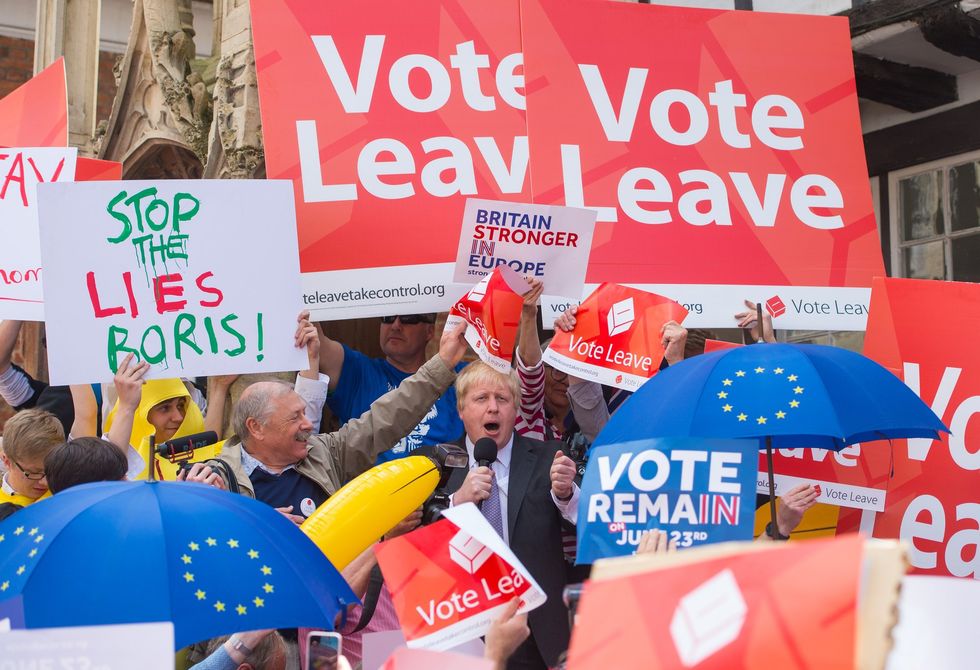
Boris Johnson was hailed as the man that secured victory for the Leave side

PA
He said: “The core group of us towards the end – myself, Dominic Cummings, Michael Gove, Boris Johnson, and Gisela Stuart – would either meet in person or talk on the phone once a day.
“In the final call, it was about 9.30pm, 9.45pm, just before the polls shut, and Gisela and I were up in Manchester, while everybody else was down in London.
“Boris and Michael were leaning towards the fact that we were going to lose.
"They weren’t sure we were going to win and were more thinking about the fallout with David Cameron and what would happen and how, in particular, the Conservative Party could be brought back together.
“But Gisela and I thought we’ve got a chance here; let’s not write it off, everything is to play for.
Lord Elliott discussed Brexit 10 years on with GB News

GB NEWS
"Needless to say, a couple of hours later, when the first results started to come in from Sunderland and the like, it became clear very quickly that we were overperforming in every area by around two, three, four percentage points from where we should have been, so we were on the course to victory."
More than 17.4 million Britons would vote to leave the EU, with 16.1 million wanting to keep the UK inside the Brussels bloc.
While Mr Johnson had plenty of time to come to terms with the victory following the declaration in Sunderland at 12.15am, the then-totemic London Mayor appeared somewhat sheepish when delivering his victory speech.
Opening his victory speech shortly after the Prime Minister announced his resignation, Mr Johnson said: "I know I speak for Michael [Gove] when I say how sad I am that he has decided to step down but obviously I respect that decision.
"I have known David Cameron for a very long time, and I believe he has been one of the most extraordinary politicians of our age.
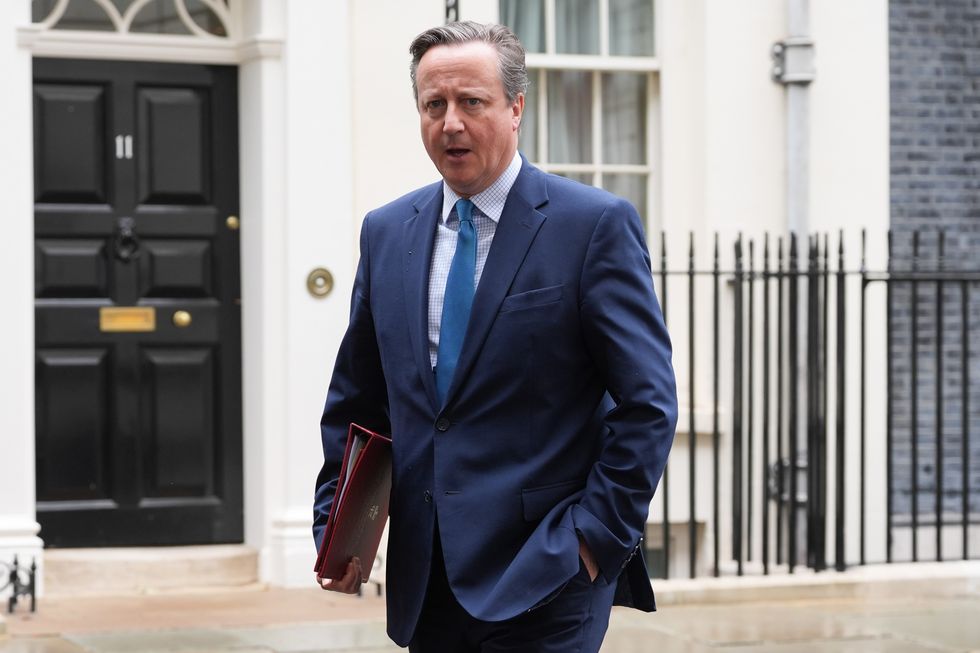
Lord Cameron took aim at both Boris Johnson and Michael Gove over Brexit
"A brave and principled man, who has given superb leadership of his party and his country for many years."
Lord Cameron, who shocked many by returning to Cabinet as Rishi Sunak's Foreign Secretary, has made no secret about his fury at Mr Johnson and Lord Gove backing the Vote Leave campaign.
He described Lord Gove as a "foam-flecked Faragist" and even alleged that Mr Johnson had only backed Brexit to "help his career".
However, Lord Elliott insisted that when it came to authenticity in the Brexit campaign, Mr Johnson managed to connect with voters much better than his Old Etonian rival.
Lord Elliott, who has documented Vote Leave's campaign in his new book Ten Years On: The Untold Story of Brexit, told GB News: “David Cameron said in his Bloomberg speech that Britain would be better off out of an unreformed EU.
"So, when he came back with nothing with his deal in February 2016, on his very own terms, we were better off out.
"He should have been for Leave, but the fact he then came out for Remain and campaigned really strongly for Remain meant that he was inauthentic, in a sense, in terms of his views and beliefs in terms of the EU.
“That shone through, and I think voters could see that, and the person they most wanted to hear from, of course, was Boris Johnson.
"He was the most popular politician in the country at the time, he was popular as Mayor of London, and crucially, he was the most important person people wanted to hear from on the Brexit debate."
David Cameron campaigning for the UK to remain in the EU

GETTY
Despite Mr Johnson's personal ratings tumbling during his stint as Prime Minister, the 62-year-old has rarely needed much convincing to take centre stage on the campaign trail.
He even managed to make a last-minute appearance to support Rishi Sunak on the eve of the 2024 General Election campaign.
However, Lord Elliott revealed Mr Johnson needed some coaxing to take the Brexit battle to his Tory friends in the Remain campaign.
“When he came out for Leave, that was a hugely important moment, but that wasn’t the end of the battle," he recalled.
"When he came out for Leave, he said, for example, he didn’t want to take part in debates, and at first it was a challenge to get him fully engaged in the campaign and fully on board with Vote Leave and on the battle bus, taking part in debates.
“He wasn’t reluctant in any way, but really gearing up the campaign after that point was hugely important. It really was an epic battle."

Mr Johnson has openly admitted he made the "agonisingly difficult" decision to back Brexit after writing two columns for both sides of the divide.
However, Lord Elliott pointed out that many of the architects of the Brexit movement had been campaigning to force a referendum for decades.
He said: “It really went back years, and you've got to understand Brexit through the prism of history, and you know, whether it's Dominic Cummings being involved in Business for Sterling back in the early 2000s or me being involved in the European Foundation with Bill Cash in the early 2000s – all that was going on.
“And, frankly, going way back to the early 1990s when he saw the Maastricht Treaty coming through and our relationship with the EU going from being the economic one to being a political one, Nigel Farage spent years campaigning in the wilderness under UKIP, and always countless by-elections when he wasn't somebody, he wasn't known in politics, he was just campaigning away and away for Brexit, that was a huge build-up to referendum day itself."