By The Rio Times | Created at 2026-10-05 12:46:55 | Updated at 2026-10-05 15:25:35
3 hours ago
By The Rio Times | Created at 2026-10-05 12:46:55 | Updated at 2026-10-05 15:25:35
3 hours ago
MEXICO · ECONOMY
Key Facts
- —The country Mexico is Latin America’s second-largest economy, with output of US$1.83 trillion and 132 million people in 2025, World Bank data show.
- —Why it matters Mexico was the largest US partner in goods trade in 2025, with US$871.6 billion of two-way trade, US Census figures show.
- —Who holds power The state runs oil and power through Pemex and CFE, while a few families hold sway in telecoms, mining, drinks and media.
- —The big names América Móvil, Femsa, Grupo México, Walmex, Banorte and Cemex are big private players, and several of them trade in New York.
- —The numbers Exports hit a record US$664.8 billion in 2025, and more than nine in ten of those dollars came from manufactured goods.
- —What it means for you Americans can buy several of these firms directly in New York, under tickers such as AMX, FMX, CX and TV.
- —Still open The review of the USMCA trade pact, US tariffs and the cost of propping up Pemex were unresolved in early October 2026.
The Mexico economy key players are few, and they matter to Americans: Mexico was the top US goods-trade partner in 2025. Two state energy companies, a central bank and a handful of business families sit at the centre of that economy.
This guide explains who they are, what they own and where US investors meet them.
The State Giants: Pemex and CFE
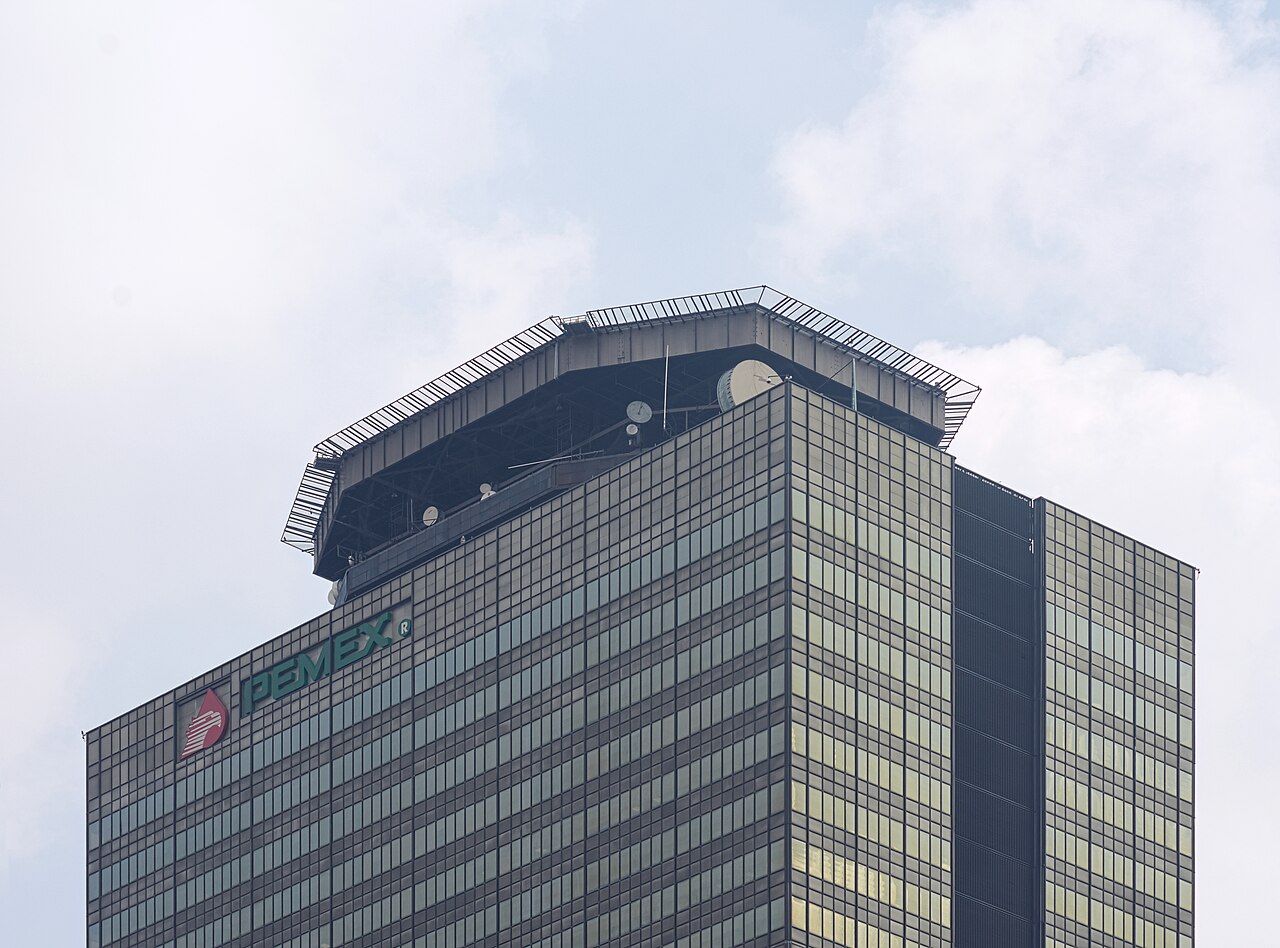
Petróleos Mexicanos, known as Pemex, is the national oil company and is wholly owned by the federal government. It calls itself Mexico’s largest company by revenue, citing a 2025 ranking by Expansión, a Mexican business magazine.
Its finances lean heavily on the state. In 2025 the government injected 395.3 billion pesos (US$21.7 billion) of fresh capital, Pemex told the US Securities and Exchange Commission (SEC).
That conversion, like the others in this guide, uses 18.21 pesos to the US dollar, the market rate on 4 October 2026. Pemex’s debt fell 22.6% in 2025, to 1.53 trillion pesos (US$84.1 billion), mainly thanks to debt-management deals.
Output is shrinking. Liquid hydrocarbon output, excluding private partners, averaged 1.62 million barrels a day in 2025, down 7.0%, as several large fields declined.
Crude exports fell 28% in volume, to about 581,000 barrels a day, and brought in US$13.0 billion in 2025. Since May 2026 the company has been run by Juan Carlos Carpio Fragoso, a financier named by President Claudia Sheinbaum.
Pemex has no shares on any stock market, so Americans meet it mainly as bondholders. Most of its debt is in US dollars, and it files an annual report with the SEC.
The Federal Electricity Commission (CFE) is the state-owned power company, led by Emilia Calleja Alor. A 2025 electricity law requires the state to supply at least 54% of the power fed into the grid each calendar year.
Who Sets the Rules: Banxico and the Ministries
Among the Mexico economy key players, the public referees matter as much as the companies. The Bank of Mexico (Banxico), the independent central bank, sets interest rates and issues the peso.
Its governor is Victoria Rodríguez Ceja, and its benchmark rate stood at 6.50% after a hold on 24 September 2026. Banxico had cut it from 7.00% in two quarter-point steps, in March and May 2026.
Taxes and spending belong to the Finance Ministry, known as Hacienda, led by Édgar Amador Zamora. The tax collector, the Tax Administration Service (SAT), sits under Hacienda.
Trade policy sits with the Economy Ministry under Marcelo Ebrard, a former foreign minister. In early October 2026 he was negotiating with Washington over US tariffs and the review of the USMCA trade pact.
For the wider political map, see the Rio Times guide to how Mexico’s government works.
Live Market IntelligenceMexico — Live Market BoardInside: market breadth, the sector heatmap, currencies & rates, the Latin America scoreboard and the full instrument board.Rio Times · Live Market Intelligence
Mexico — Live Market Board
BMV · Mexico City
Oct 5, 2026 · 09:38
S&P/BMV IPC · benchmark
64,531.68
+1.10%
L 65,405day rangeH 66,121
+12.17% over 12 months
Market breadth · 15 names
67% advancing
10 ▲ advancing5 declining ▼
Currencies, rates & key inputs
Sector heatmap · average move today
Financials
+1.18%
GFNORTE
Industrials
+0.77%
GAP, ASUR, OMA
Consumer Staples
-0.07%
WALMEX, FEMSA, BIMBO, KOF
Telecom
-0.37%
TELEVISA, AMX
Latin America scoreboard
IndexLastTodayStrength
IbovespaBrazil
192,114.55
+2.63%
S&P/BMV IPCMexico
64,531.68
+1.10%
S&P IPSAChile
10,916.57
+0.08%
S&P MERVALArgentina
2,767,663
+0.32%
MSCI COLCAPColombia
2,515.02
-0.59%
BVL S&P PerúPeru
59,751.67
+0.18%
Full instrument board
| IPC MEX | 64,531.68 | +1.10% | +12.17% | 63,828.60 | 66,121 | 65,405 | 108,886,187 |
| USD/MXN | 17.06 | -0.24% | -8.58% | 17.10 | 17.08 | 17.01 | — |
| WALMEX | 48.07 | -0.62% | -14.38% | 48.37 | 48.65 | 48.02 | 10,781,446 |
| GMEXICO | 223.28 | +0.35% | +73.59% | 222.50 | 226.18 | 222.17 | 1,325,556 |
| FEMSA | 201.19 | -0.24% | +25.67% | 201.67 | 206.71 | 199.56 | 750,706 |
| CEMEX | 19.32 | +0.89% | +19.10% | 19.15 | 19.35 | 19.04 | 14,327,054 |
| GFNORTE | 193.98 | +1.18% | +14.36% | 191.71 | 195.79 | 191.83 | 1,579,115 |
| BIMBO | 60.98 | -0.96% | +11.89% | 61.57 | 61.46 | 60.29 | 1,048,115 |
| TELEVISA | 9.71 | +0.21% | +12.78% | 9.69 | 9.75 | 9.60 | 577,851 |
| AMX | 19.80 | -0.95% | +12.53% | 19.99 | 20.05 | 19.70 | 58,058,525 |
| GAP | 366.23 | +0.43% | -21.21% | 364.68 | 370.85 | 362.82 | 226,946 |
| ASUR | 275.04 | +1.25% | -15.28% | 271.64 | 275.08 | 271.31 | 15,451 |
| OMA | 233.50 | +0.62% | -6.48% | 232.06 | 235.00 | 230.62 | 555,693 |
| KOF | 188.04 | +0.86% | +18.94% | 186.44 | 188.56 | 185.52 | 425,273 |
| GRUMA | 252.90 | +0.11% | -21.85% | 252.61 | 254.74 | 250.36 | 90,048 |
| KIMBER | 39.74 | +0.43% | +8.85% | 39.57 | 40.09 | 39.33 | 490,551 |
| AMX ADR | 23.38 | -0.23% | +22.25% | 23.43 | 23.49 | 23.06 | 1,347,445 |
Largest moves today
ASUR
275.04
+1.25%
GFNORTE
193.98
+1.18%
IPC MEX
64,531.68
+1.10%
BIMBO
60.98
-0.96%
AMX
19.80
-0.95%
CEMEX
19.32
+0.89%
KOF
188.04
+0.86%
WALMEX
48.07
-0.62%
The session read
The S&P/BMV IPC rose 1.10%, with breadth positive — 10 of 15 names higher. Financials led, while Telecom lagged.
From The Rio Times
Related coverage · 5 Oct 2026
Mexico’s Sonora Exports Hit a Record US$8.5 Billion in the Second Quarter
Read →
Carlos Slim and América Móvil
Carlos Slim Helú is Mexico’s richest person, according to Forbes. Its real-time ranking put his family’s wealth at about US$114.4 billion on 5 October 2026, 17th in the world.
His main asset is América Móvil, owner of Telcel, the mobile network, and Telmex, the fixed-line company privatised in 1990. The group operates in 23 countries and says it ranks first in Latin America in mobile, fixed-line, broadband and pay-TV connections.
The Slim family controls it through three blocks, the company’s annual SEC filing shows. On 31 March 2026 a family trust held 29.5%, and family members, including Carlos Slim Helú, held another 22.9% directly.
A holding company the family controls, Control Empresarial de Capitales, held 18.1%. Carlos Slim Domit chairs the board, with his brother Patrick Slim Domit as co-chairman.
Their brother-in-law, Daniel Hajj Aboumrad, is chief executive. The shares trade on the New York Stock Exchange (NYSE) as AMX.
The family also controls the Grupo Carso conglomerate and the bank Grupo Financiero Inbursa, which América Móvil calls affiliates under common control.
Germán Larrea and Grupo México
Germán Larrea Mota-Velasco’s fortune rests on copper. Forbes put his family’s wealth at about US$67.5 billion on 5 October 2026, 30th in the world.
He has been chairman and chief executive of Grupo México since 1994, according to Southern Copper’s SEC filings. The group has three divisions: mining, transport and infrastructure.
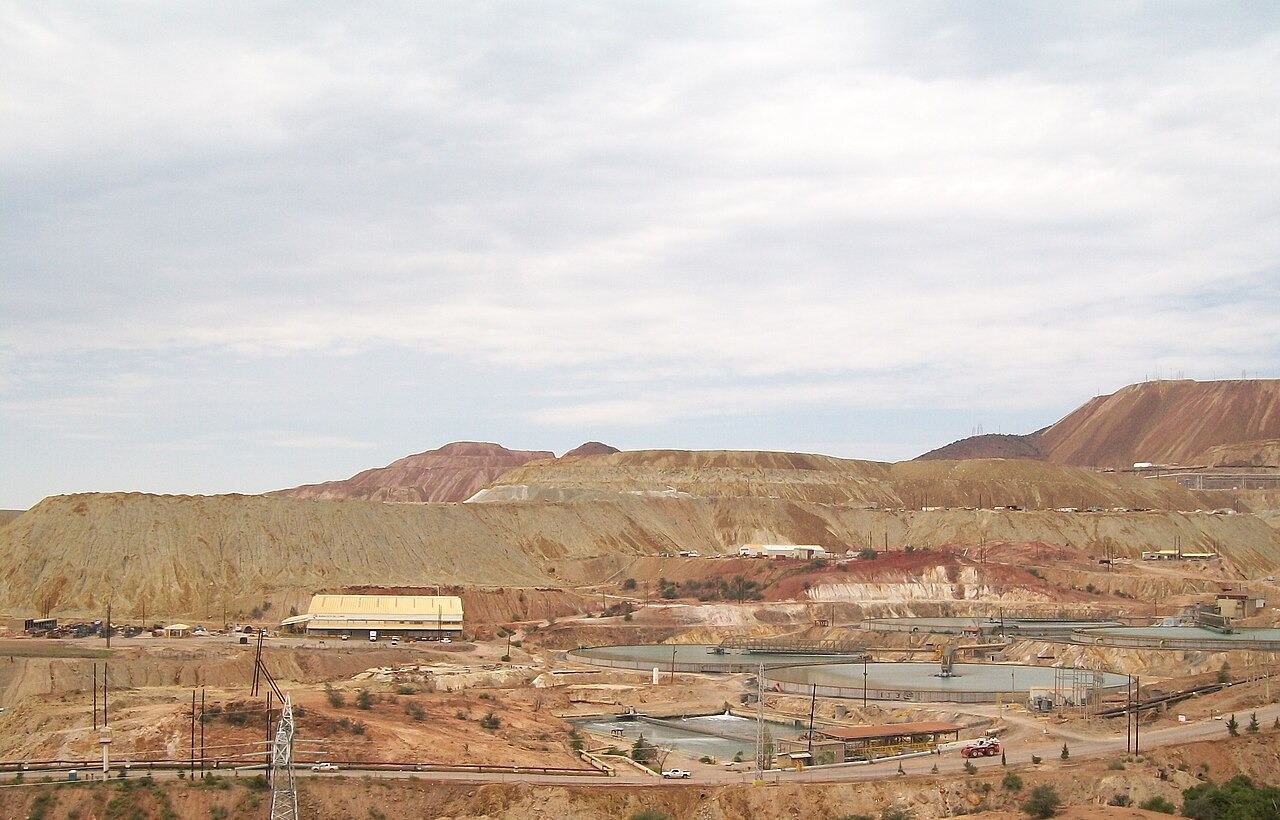
Its biggest asset is Southern Copper, a Delaware-registered miner listed on the NYSE as SCCO. Grupo México owned 88.9% of it at the end of 2025.
Southern Copper, which mines in Mexico and Peru, says it believes it holds the world’s largest copper reserves.
The group also owns ASARCO, a US copper business, and runs one of eight Class I freight railroads in North America. Its rail network covers 11,137 km (about 6,920 miles) of track in 24 Mexican states plus Florida and Texas, the company says.
Monterrey’s Business Families: Femsa and Cemex
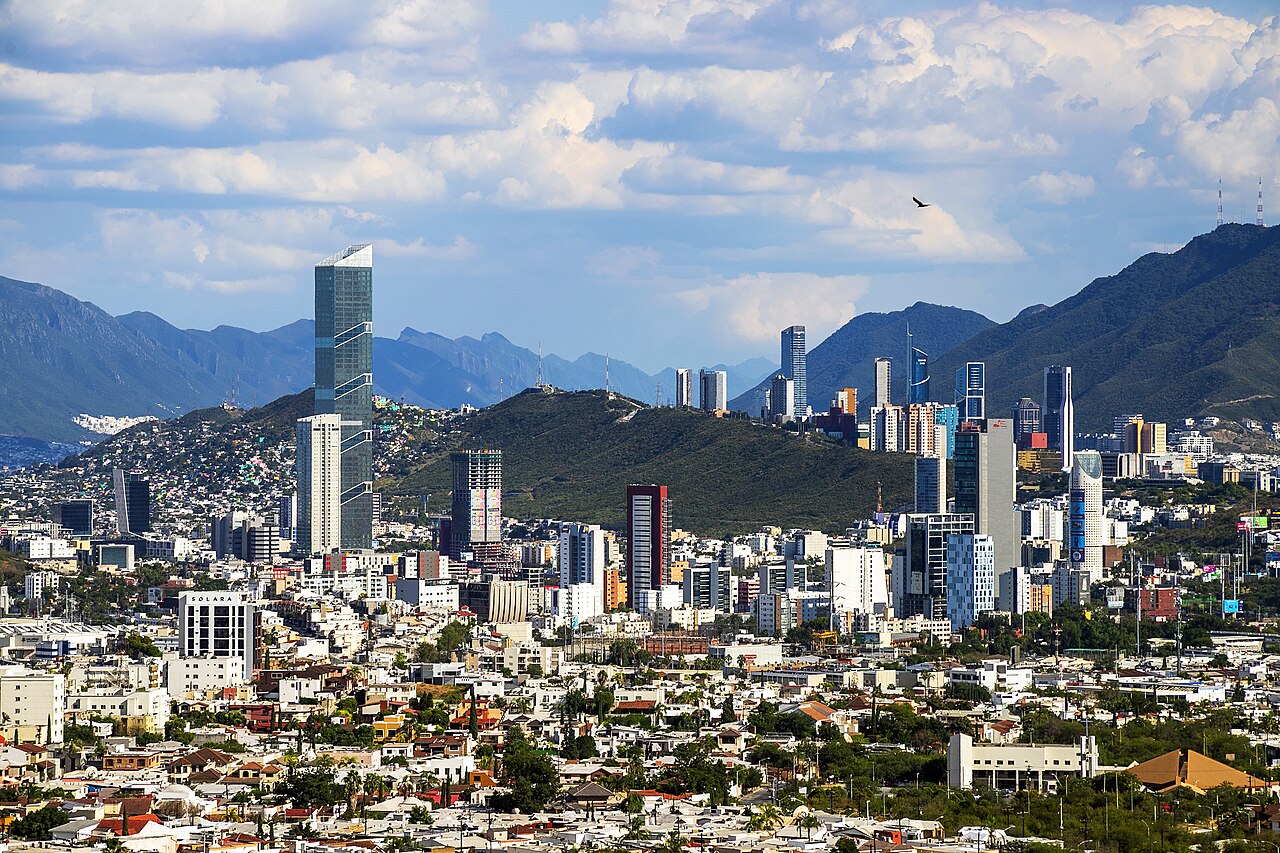
The Monterrey area, in the northern state of Nuevo León, is home to two more Mexico economy key players. Both report to the SEC and trade in New York.
Femsa runs OXXO, a convenience-store chain with 24,297 shops in Mexico at the end of 2025, plus 240 in the US. It also owns 47.2% of Coca-Cola Femsa, a bottler in which The Coca-Cola Company holds 27.8%.
Control rests with a voting trust of family shareholders, including the Garza Lagüera, Garza Garza, Baillères and Calderón Rojas clans. On 1 April 2026 the trust held about 40% of Femsa’s capital and 76.3% of its full-voting shares.
One notable outside investor is Microsoft co-founder Bill Gates, who held 8.19% of Femsa’s capital, according to the same filing. José Antonio Fernández Garza Lagüera became chief executive on 1 November 2025, succeeding José Antonio Fernández Carbajal, who now chairs the board.
Femsa trades on the NYSE as FMX. Cemex, the cement and concrete maker based in San Pedro Garza García near Monterrey, trades there as CX.
Cemex’s ownership, by contrast, is spread out. Its only known holders of 5% or more are two US fund managers, BlackRock and Dodge & Cox, its 2025 annual report says.
Rogelio Zambrano Lozano is executive chairman. Jaime Muguiro Domínguez, a Spaniard who joined Cemex in 1996, became chief executive in 2025.
Retail, Media and Other Family Fortunes
Retail and media add more names to the list of Mexico economy key players. Walmart de México y Centroamérica, known as Walmex, ran 4,265 stores and clubs in six countries at the end of 2025.
Its net sales passed 1 trillion pesos (US$55.1 billion) in 2025. At the end of 2025, Walmart Inc., the US retail giant, owned 71.2% through a Mexican holding company, Walmex’s report shows.
Grupo Televisa, the cable, broadband and satellite TV group, is controlled by Emilio Azcárraga Jean, directly and through a trust. It owns 44.3% of TelevisaUnivision, a US Spanish-language media company, counted on a fully converted basis in March 2026.
Televisa trades on the NYSE as TV. Ricardo Salinas Pliego runs a group built on the retailer Grupo Elektra, its lender Banco Azteca and the broadcaster TV Azteca.
After a long tax fight, his group is paying the SAT 32.1 billion pesos (US$1.76 billion) in instalments until July 2027. The Finance Ministry disclosed those terms in May 2026.
Forbes put the Salinas family’s fortune at about US$3.6 billion on 5 October 2026.
Alejandro Baillères Gual leads Grupo Bal, his family’s holding company, with stakes in an insurer and a pension fund manager. He also chairs the silver miner Industrias Peñoles, and Forbes put the family’s wealth at about US$16 billion on 5 October 2026.
The Banks: Foreign Giants, Banorte and Banamex
Mexico had 50 banks at the end of 2025, but the market is concentrated. Seven of them held 70.6% of all bank assets in October 2025, BBVA’s SEC filing shows.
The biggest is BBVA México, owned by Spain’s BBVA, which calls it the largest financial institution in Mexico by assets. It held 25.6% of all bank loans in October 2025.
The other six are Santander, Banorte, Banamex, HSBC, Scotiabank and Inbursa, the Slim family’s bank. Banorte describes itself as the country’s second-largest financial group.
Carlos Hank González has chaired Banorte since 2015, with José Marcos Ramírez Miguel as chief executive since 2014. Its shares trade over the counter in the US as GBOOY.
Banamex, long owned by New York-based Citigroup, is being sold off in stages. In December 2025 Citi sold 25% to a company owned by Mexican investor Fernando Chico Pardo and his family.
In February 2026 Citi agreed to sell another 24%, worth about US$2.5 billion, to investors led by General Atlantic, a US firm. It completed 22.6% of that in April 2026, with the last 1.4% due to close in the third quarter of 2026.
Together the sales cover 49% of Banamex, and Citi still plans a stock market listing for the bank.
New lenders are arriving as well. At the end of 2025, Nu, Revolut, Klar and Plata were awaiting a banking licence or ready to open, BBVA’s filing says.
What Mexico Makes and Sells
Mexico’s exports reached a record US$664.8 billion in 2025, up 7.6%, according to INEGI, the national statistics office. Manufactured goods made up US$608.8 billion, more than nine in ten export dollars.
Cars and car parts alone brought in US$185.8 billion, about 28% of the total, even after a 4.2% fall. Oil matters far less: oil exports dropped 26.4% to US$21.2 billion, roughly 3% of the total.
Sales abroad accelerated in 2026. From January to August, exports rose 29.3% to US$549.4 billion, led by a 45.0% jump in manufactured goods other than cars.
Most of it goes north. In 2025 the US bought US$534.3 billion of Mexican goods and sold Mexico US$337.3 billion, US Census data show.
That left a US goods deficit with Mexico of US$197.0 billion. Foreign money also keeps arriving, a trend known as nearshoring.
Foreign direct investment hit a first-half record of US$34.97 billion in January to June 2026, preliminary Economy Ministry figures show. The Mexico explainer sets these numbers in the wider story of the country.
What It Means for US Readers
For Americans, the Mexico economy key players are closer than they look. América Móvil (AMX), Femsa (FMX), Cemex (CX), Televisa (TV) and Southern Copper (SCCO) all trade on the NYSE.
Others reach US customers directly. OXXO had 240 US stores at the end of 2025, and Grupo México runs railways in Texas and Florida.
Pemex matters mostly to bondholders, whose dollar bonds depend on continued government support. Tariffs, the USMCA review and Pemex’s finances can all move the peso and these shares.
Follow new developments on the Rio Times Mexico page.
What Is Not Known
Several big questions hang over the Mexico economy key players. The outcome of the USMCA review and the US tariff talks was still open in early October 2026.
Their terms will shape how much more factory investment Mexico attracts.
Nobody knows when Pemex can stand without state cash. The company set a 2026 goal of about 1.66 million barrels a day of crude, above its 2025 output.
The timing and price of a Banamex stock market listing have not been officially set. It is also unclear whether the Salinas tax instalments will run to schedule until July 2027.
Rich-list figures move every day with share prices. The Forbes numbers here are a snapshot from 5 October 2026, not a fixed value.
Frequently Asked Questions
Who are the key players in Mexico’s economy?
The Mexico economy key players are the state firms Pemex and CFE, the central bank Banxico and the finance and economy ministries. On the private side, the Slim and Larrea families, the Femsa families, Walmart’s Mexican arm, Televisa and the big banks stand out.
Who is the richest person in Mexico?
Carlos Slim Helú, whose family controls América Móvil, Grupo Carso and Inbursa. Forbes put the family’s wealth at about US$114.4 billion on 5 October 2026.
Which Mexican companies can Americans buy in New York?
América Móvil (AMX), Femsa (FMX), Cemex (CX), Grupo Televisa (TV) and Southern Copper (SCCO) trade on the New York Stock Exchange. Banorte trades over the counter as GBOOY.
Is Pemex a listed company?
No, Pemex is wholly owned by the Mexican government and has no shares. It sells bonds to foreign investors and owed 1.53 trillion pesos (US$84.1 billion) at the end of 2025.
What does Mexico export most?
Manufactured goods, which made up more than nine in ten export dollars in 2025. Cars and car parts alone brought in US$185.8 billion, while oil was only about 3%.
Who owns Mexico’s big banks?
Spain’s BBVA runs the largest bank, and Santander, HSBC and Scotiabank are also foreign-owned. Banorte and Inbursa are Mexican, and Citi is selling down Banamex ahead of a planned listing.
Sources: Pemex, Form 20-F 2025 (SEC), 30 April 2026; América Móvil, Form 20-F 2025 (SEC), 28 April 2026; FEMSA, Form 20-F 2025 (SEC), 24 April 2026; Cemex, Form 20-F 2025 (SEC), 24 April 2026; Southern Copper, Form 10-K 2025 (SEC), 27 February 2026; Grupo Televisa, Form 20-F 2025 (SEC), 30 April 2026; Walmex, Reporte Anual 2025 (BMV), 2026; BBVA, Form 20-F 2025 (SEC), 20 February 2026; Citigroup, Form 10-K 2025 (SEC), 20 February 2026; General Atlantic, Banamex stake, 23 February 2026; INEGI, trade balance December 2025, 27 January 2026; INEGI, trade balance August 2026, 28 September 2026; US Census Bureau, trade in goods with Mexico, 2026; Banco de México, monetary policy decisions, 24 September 2026; World Bank, GDP and population data, July 2026; Banorte, investor relations, 2026; Grupo México, divisions, 2026; Forbes real-time billionaires, 5 October 2026; Citigroup, Form 10-Q Q2 2026 (SEC), 6 August 2026; Ley del Sector Eléctrico (Cámara de Diputados), 18 March 2025; Secretaría de Economía, foreign direct investment January-June 2026, 24 August 2026; Peñoles, shareholders’ meeting booklet 2026, 2026.
This article was produced by The Rio Times’ automated newsroom system. How we use AI · Report an error · Editorial responsibility: Matthias Camenzind, Editor-in-Chief
The Rio Times · Power Map
See who really holds power in Latin America
Click to open the Power Map →