By The Diplomat | Created at 2026-09-30 16:36:58 | Updated at 2026-09-30 20:49:06
7 hours ago
By The Diplomat | Created at 2026-09-30 16:36:58 | Updated at 2026-09-30 20:49:06
7 hours ago
From September 7 to 10, Brazilian Foreign Minister Mauro Vieira paid official visits to Singapore and Thailand. This followed his attendance at the 3rd Brazil-ASEAN Trilateral Meeting and the Conference of the High Contracting Parties to the Treaty of Amity and Cooperation in Southeast Asia, held in Manila, from July 22 to 24. Between these two events, the secretary-general of ASEAN, Kao Kim Hourn, was invited by the Brazilian government to visit the country on a working visit from August 17 to 22.
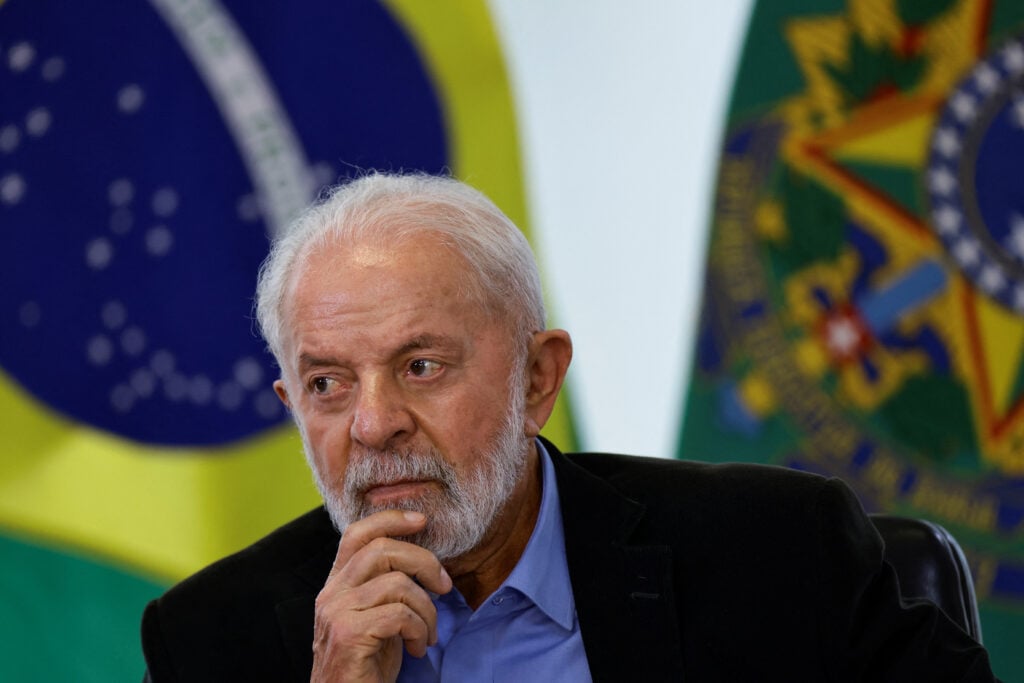
These events demonstrate the Brazilian government’s recent efforts to strengthen relations with ASEAN. It is worth remembering that, in 2025, Brazilian President Luiz Inácio Lula da Silva, made official visits to Vietnam, Indonesia, Malaysia, and attended the ASEAN Summit and East Asia Forum. Clearly, Brazil has clearly developed a strong interest in ASEAN and Southeast Asia, but why?
It is possible to say that one of the main reasons for such mobilization is the search for new markets. Since 2023, the Brazilian government has partnered with the private sector to expand its international client portfolio. According to the Ministry of Agriculture of Brazil, more than 500 new markets in 80 different countries opened for Brazilian agribusiness and fishing products. This is part of the new policy approach developed under Lula’s third term, with active participation of the Brazilian Trade and Investment Promotion Agency (Apex Brasil).
This strategy is especially important, as Brazil has come to the conclusion that the international scenario is now less predictable and increasingly protectionist than before, believing that is likely to remain so for an indefinite period of time. Indeed, Brazil is already facing challenges regarding the present and future of its economy.
In July 2026, the United States imposed additional tariffs of 25 percent and 12.5 percent on Brazilian products. The 25 percent tariff was related to an investigation by the U.S. Trade Representative (USTR) under Section 301 into alleged disadvantages to the U.S. market. Similarly, the 12.5 percent tariff was introduced in response to USTR investigations under Section 301 concerning forced labor. These measures affected over 4,000 items exported by Brazil to the United States, collectively worth some $14.9 billion.
Relations between the two countries have deteriorated as U.S. President Donald Trump holds right-wing views and has good relations with the Bolsonaro family, one of the most influential clans among Brazilian right-wing politicians and a political adversary of Lula and the left-wing Workers’ Party. Brazil’s federal government has stated that these tariffs are “not based on real facts” and are an attempt by the White House to influence Brazil’s domestic affairs and exert pressure on strategic assets such as rare earth reserves. Meanwhile, although interactions between the two leaders remain cordial, there is no truce or solution in sight.
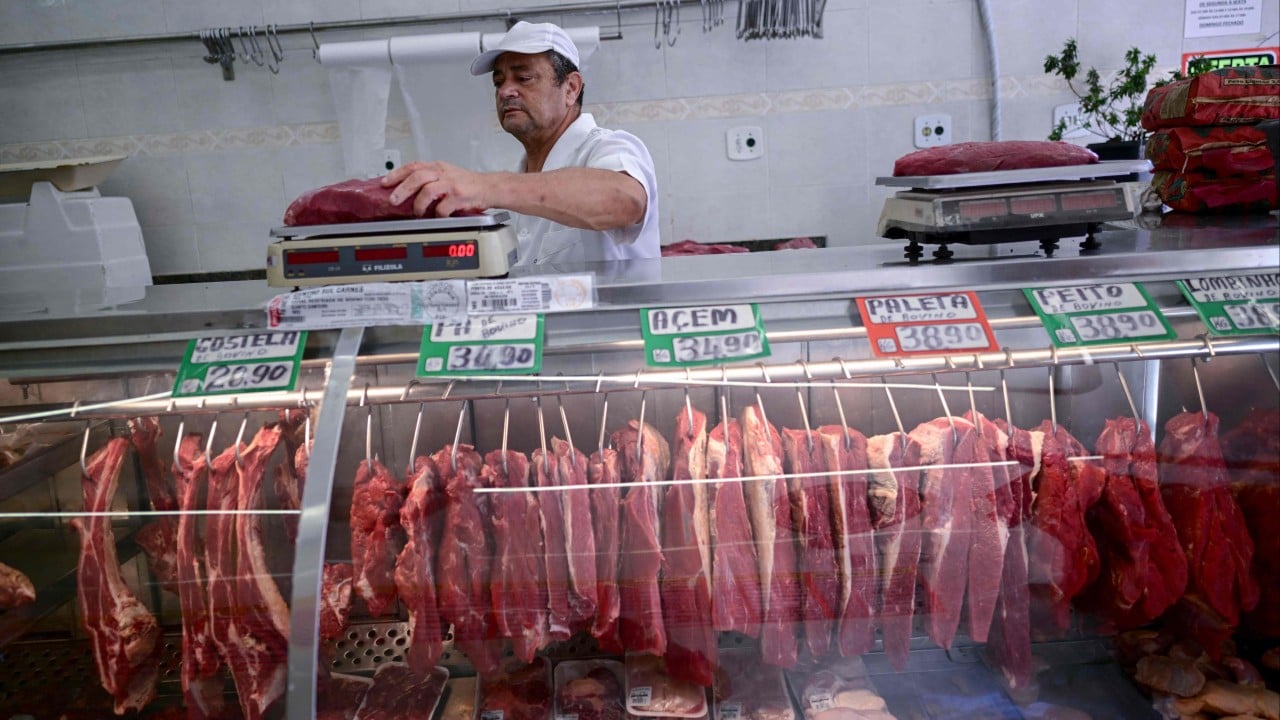
Moreover, in May 2026, the European Commission announced restrictions on the import of animal meat products from Brazil based on EU Regulation 2019/6, concerning antimicrobial usage and cattle growth procedures. This decision was made shortly after the EU-Mercosur agreement came into force on May 1. The Brazilian government viewed the measure as a consequence of internal politics between European countries and their agricultural business groups. The latter had opposed the new agreement between the two trading blocs over concerns about the expected entry of South American agricultural products onto the market. The new restrictions came into force on September 3.
In the long term, however, Brazil is also concerned about China’s intention to increase its food security and reduce its dependence on external partners. Food security became a major priority in China’s 15th Five-Year Plan, with measures established to increase domestic grain and meat production with the support of advanced technology. By 2025, Brazil’s exports to the Chinese market had reached $99.9 billion, accounting for 28.7 percent of all Brazilian exports. Of this total, $34.5 billion corresponded to soybeans and $9.7 billion to meat (red meat, pork, and poultry). If not addressed properly, an abrupt reduction in Chinese imports as China increases its self-sufficiency could pose a significant challenge to one of Brazil’s most important industries.
This scenario has increased the perception of Southeast Asia as a region of new opportunities for Brazilian companies. Information provided by Brazil’s Ministry of Foreign Affairs shows that trade between Brazil and ASEAN accounted for $38.4 billion in 2025, making the bloc Brazil’s fifth-largest trade partner, behind only China, the EU, the United States, and Mercosur. Furthermore, Brazil had a trade surplus of $10.3 billion with ASEAN during this period.
Vieira, Brazil’s foreign minister, stated that trade with ASEAN will eventually surpass that with the U.S. and EU in the “near future.” This would make the ASEAN bloc Brazil’s second-largest trade partner. This outlook is supported by concrete evidence. According to Brazil’s MFA, Brazilian trade with ASEAN has increased by around 15 percent a year since 2020, which is significantly higher than with traditional trade partners.
Indeed, trade has played a significant role in Lula’s visits to ASEAN countries. On each of his trips to the region, a business delegation accompanied the Brazilian president. Most of these delegates were from the agribusiness, food, defense, and aviation industries.
However, the rapprochement between Brazil and Southeast Asia was not only a consequence of commercial adversities; it was also a foreign policy strategy adopted by Brazil in order to strengthen diplomatic relations and trade ties. This was evident starting from Vieira’s trip to Indonesia, Cambodia, and the Philippines in 2023.
Therefore, the recent sanctions and restrictions on Brazilian products cannot be viewed as the only cause of Brasilia’s interest in ASEAN, although these developments have incentivized greater commercial diversification.
Brazil’s agriculture and food sectors see Southeast Asia as an opportunity to reach new markets and expand their client portfolio due to the region’s large population and growing purchasing power, which could boost the demand for food products, especially more expensive ones such as meat.
For example, JBS, a Brazilian multinational and the world’s largest meat processing company, recognizes OECD and FAO forecasts that global meat consumption will increase until 2034, led by countries such as Indonesia, the Philippines, and Vietnam. JBS was present during official visits to the region and has already announced investments and secured deals in Southeast Asia.
In March 2025, shortly after Vietnam announced that it would open up to Brazilian meat products, JBS announced a direct investment worth $100 million. These funds will be used to construct two meat processing plants in Vietnam for the production of imported Brazilian red meat, pork, and poultry.
Moreover, in August 2026, JBS formed a strategic partnership with Dantara Investment Management (DIM), the Indonesian sovereign wealth fund and investment agency. The partnership aims to establish a joint venture that will expand JBS’s business in the protein market in Indonesia, as well as in Southeast Asia, Australia, and New Zealand. JBS will transfer its Australian and New Zealand operations to the new subsidiary, which will form the basis of the joint venture, while DIM will invest $2.5 billion initially to acquire a 25 percent stake in the new partnership.
It is possible that other Brazilian food companies will follow JBS’s lead and expand into Asian markets as potential investments are disclosed and profits start to be announced.
But Brazil’s economic interest isn’t limited to the food sector. Since 2023, Brazilian aerospace corporation Embraer has been attempting to access the aviation market in Southeast Asia in order to expand its portfolio, which is currently focused on companies in the U.S. and Europe. According to Embraer’s Market Outlook, published in July 2026, the global market will require around 8,500 commercial aircraft with a capacity of 150 passengers by 2045, 1,050 of which will be delivered to the Asia-Pacific region.
To capture some of these orders, Embraer is promoting its E-Jets E2 line, which is designed for regional flights. Currently, only Scoot, a Singaporean airline, operates E-Jets in Southeast Asia, with nine E190-E2 aircraft leased from the U.S. company Azorra. In 2023, Embraer closed a deal with Malaysian airline SKS Airways for ten E195-E2 aircraft, but this was subsequently cancelled due to SKS’s financial difficulties, resulting in the airline ceasing operations in the country.
Since then, Embraer has been trying to find new Southeast Asian airlines to operate its jets. During Lula’s official visits, Embraer executives attended meetings with high-ranking officials to promote E-Jets as a solution for regional air connectivity. They also highlighted the possibility of establishing service and maintenance repair centers, offering direct investment opportunities in the chosen country, knowledge-sharing, and contracts with local manufacturers for supplying aircraft parts. A maintenance center in Southeast Asia would give Embraer a competitive advantage, making E-Jets more appealing to regional airlines. No formal agreements have yet been signed regarding the acquisition of E-jets or the establishment of a maintenance center.
The examples from JBS and Embraer are particularly notable, as they demonstrate that Brazilian companies are willing not only to export to Southeast Asia, but also to adapt their international strategies to the region. JBS’s new processing plants in Vietnam and its joint venture with DIM, for example, provide access to a growing market and strengthen its presence through intra-regional operations and production. The same applies to Embraer’s proposal for a maintenance and repair center, which would connect regional production to the company’s supply chain network. While the investment method does not prevent vulnerabilities to geopolitical or regulatory adversities, it can contribute to the diversification of trade relations and the creation of new growth opportunities.
From the Southeast Asian perspective, the conflict in the Gulf region has sparked concerns that over-reliance on a few suppliers would create dependence and compromise reliable energy supplies. Consequently, these countries have been searching for new suppliers, with Petrobras emerging as one of the available options. Since the war between the United States and Iran began, Brazil’s state-controlled oil company has increased its oil production, reaching 3.34 million barrels per day (bpd) in the second quarter. This figure represents a 14.1 percent increase compared to the same period in 2025 and a 3.4 percent increase compared to the first quarter of 2026. This was mainly driven by developments in Pre-Salt operations and the commissioning of new platforms.
Petrobras has since increased exports to Southeast Asia. From January to June, traditional clients such as Singapore and Indonesia increased their imports of Brazilian oil by 28 percent and 157 percent, respectively. New clients have also emerged, including the Philippines and Myanmar. From January to August 2026, Brazil exported the equivalent of $4.6 billion worth of crude oil and fuel oil to Southeast Asia.
It’s true that Brazil is concerned about the situation with its primary trade partners, and the shift toward ASEAN is an effective alternative for dealing with increasing sanctions and restrictions. However, Brazil’s interest in Southeast Asia is not merely a reaction to the current situation. The government’s strategy has included trade diversification since 2023, aiming to deal with a volatile, and increasingly protectionist, international environment.
This scenario provides an opportunity for ASEAN-Brazil relations, as Southeast Asian countries are also eager to reach new trade partners, attract investment, and connect with global supply chains. The cases of JBS, Embraer, and Petrobras exemplify this scenario and the opportunities arising from it, which allow Brazil and Southeast Asia to deepen relations beyond governmental diplomacy. Businesses are already identifying concrete opportunities in the region, while the increasing diplomatic dialogue helps to consolidate this connection.
This suggests that Southeast Asia could become a relevant component of a broader trade diversification strategy of Brazil. If Lula wins the October elections and secures a fourth term, Brazil is expected to continue its shift toward the East and possibly explore not only trade partnerships, but also deeper bilateral and multilateral partnerships with ASEAN countries. In many respects, ASEAN-Brazil relations remain at an early stage.