 By GB News (World News) | Created at 2026-10-05 17:20:45 | Updated at 2026-10-05 18:09:30
56 minutes ago
By GB News (World News) | Created at 2026-10-05 17:20:45 | Updated at 2026-10-05 18:09:30
56 minutes ago
A shark species could face a drastic cull as fishers and conservationists clash over the growing number of slow-moving predators becoming entangled in fishing gear and poaching fish.
The controversy has emerged in the Avannaata municipality of Greenland, where an earlier proposal to kill 1,000 sharks offered fishers 300 Danish krone (£34) for every shark heart.
The plan was later abandoned after the Greenland government questioned its legality, but conservationists fear a cull could return.
For fishers in the waters around Ilulissat, the sharks are a longstanding and costly problem.
Henrik Jensen, a 27-year-old halibut fisher from Greenland’s west coast, said: “When I accidentally catch a shark, I bring it to my dogs. I don’t let it back down because the sharks bully me and cut my lines.”
Mr Jensen said he has lost some 6,000 hooks this year alone, with losses sometimes reaching 30,000 Danish krone (£3,440) in a single day.
Other fishers say replacing damaged longlines can prevent them from completing trips.
Timotheus Petersen, chair of the fishing association in Kullorsuaq, said: "Our longlines are expensive – one costs 1,599 krone. When the sharks cut our lines, we cannot finish fishing. We have to spend more money and buy new gear."
The Greenland shark can grow to six or seven metres and can live for more than 400 years, often not reaching maturity until about 150

NATIONAL OCEANIC AND ATMOSPHERIC ADMINISTRATION
The Greenland shark is an exceptionally vulnerable animal. Growing to six or seven metres, it can live for more than 400 years, and may not reach maturity until about 150.
The species is still recovering from decades of targeted fishing for its liver oil, which ended in the 1960s.
“They are probably – biologically – the most sensitive species in the ocean to overfishing,” said Professor Nick Dulvy, a marine conservationist at Simon Fraser University in British Columbia.
An estimated 3,500 Greenland sharks are caught as bycatch globally each year, while the population remains in decline.
Conservationists argue that killing sharks in Greenland would also fail to address the underlying problem, as the animals travel enormous distances.
“Sharks removed in north-west Greenland would quickly be replaced by individuals arriving from other regions,” Oceans North Kalaallit Nunaat (ONKN) warned.
Fishing accounts for about a quarter of Greenland’s GDP, while fishers report rising costs, declining catches and increasing competition from offshore trawlers.
“If every Greenland shark in Baffin Bay vanished tomorrow, the inshore fishery in Avannaata would still face too many boats working a quota under pressure, rising costs and no alternative employment,” said Jenseeraq Poulsen, ONKN’s director.
Fishing accounts for about a quarter of Greenland’s GDP
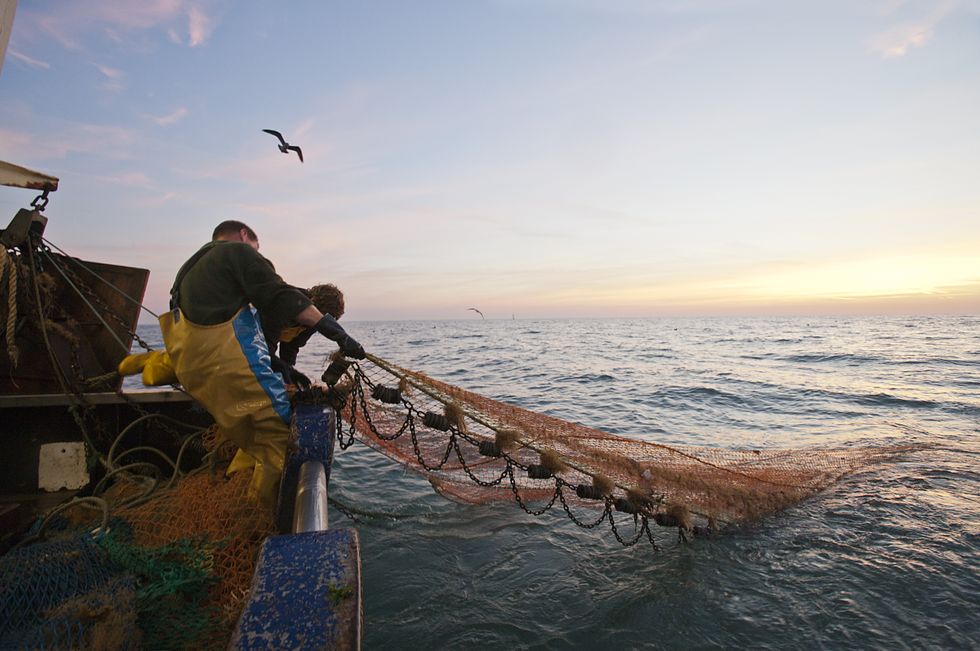
GETTY
“When margins are narrow, a longstanding nuisance becomes intolerable. The shark is the visible, tangible version of a problem whose real drivers are structural,” Mr Poulsen said.
Some fishers also point to lost or abandoned fishing gear, known as ghost lines, as a significant source of equipment damage and marine entanglement.
“There are more and more ‘ghost lines’ and they are too heavy to pull up by the machine we use,” Mr Jensen said.
Conservationists favour measures including ghost-gear removal, compensation for lost equipment and trials of acoustic shark deterrents.
Greenland’s fisheries ministry is also considering improved bycatch reporting, and potentially new regulations requiring more bycatch-friendly fishing equipment.