By Literary Hub | Created at 2026-10-05 12:47:19 | Updated at 2026-10-05 15:25:14
6 hours ago
By Literary Hub | Created at 2026-10-05 12:47:19 | Updated at 2026-10-05 15:25:14
6 hours ago
I like my fiction the way I like my reality TV: full of rich people behaving badly, all of whom are one wrong move away from total exposure. Fortunately for me, Rich People Behaving Badly is a whole supergenre—spanning thrillers, romance, literary fiction. I find this a little surprising, given the ultra-rich aren’t enjoying peak popularity (have they ever?). So why do we keep coming back to RPBB?
Article continues after advertisement
It’s not the vicarious thrill of peeking into a secret world, because we are only clicks away from access. I can track Taylor Swift’s jet crossing the Atlantic in real time, and if I want a proper look behind the pearly gates of wealth, there’s an entire economy of maybe-centimillionaires on TikTok who apparently have nothing better to do than walk me through their closets. Whatever else is scarce right now, access is not.
Scrolling is contact without consequence; the novel puts you in the room, where a wrong move gets you escorted out. Which raises the real question: what does that kind of wealth cost?
This is why the protagonist is almost never the rich person; it’s the guest. Nick Carraway, renting the small house next door. Rachel Chu. Tom and Cousin Greg. Suspense isn’t caused by the size of the estate; it’s not knowing which fork to use.
That’s the book I wanted to write. The Rally sends an ousted entrepreneur on a two-week trip across Europe with people for whom the entry fee is a rounding error. She has the invitation—not the money. The credentials—not the standing. And every mile is a chance for her to be exposed as someone who doesn’t belong—which, conveniently, is also how it feels to be pushed out of something you built.
These are the books that taught me how that anxiety works on the page, the definitive starter pack of Rich People Behaving Badly.
*
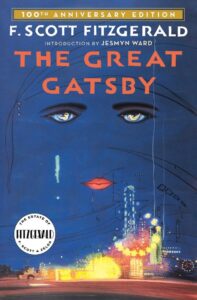
The Great Gatsby, F. Scott Fitzgerald
The O.G., Tom and Daisy are the original rich people behaving badly (literally: they “smashed up things”). Fitzgerald draws the whole class map into the geography—East Egg, where the old money summers, and West Egg across the bay, where Gatsby’s new fortune buys a mansion but never quite buys in. Fitzgerald gives us both halves of the guest position at once: Nick Carraway, Yale-educated and tolerated, and Gatsby, fabulously wealthy and being investigated. The guests in Gatsby have just enough standing to be in the room and not nearly enough to survive it.
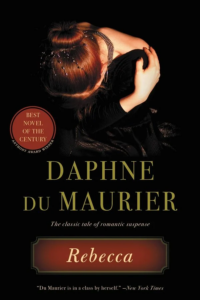
Rebecca, Daphne du Maurier
Three weeks ago she was a paid companion to a rich American bore in Monte Carlo. Now she’s the mistress of Manderley, unable to live up to the legacy of the first Mrs. de Winter. Du Maurier never gives her a first name; her whole identity is a position she’s borrowing. It’s the ultimate class-anxiety novel, dressed as a gothic romance: the wrong dress, the housekeeper’s flat politeness, the creeping certainty that the furniture is judging you and finding you common.
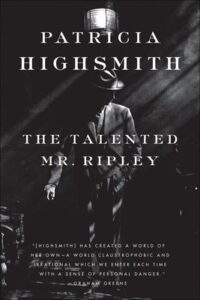
The Talented Mr. Ripley, Patricia Highsmith
The purest expression of the form, also to be enjoyed in the sublime film adaptation that clarified my life’s ambition to grow up and marry Jude Law. Tom Ripley is a small-time forger, hired by a shipbuilding magnate to go to Italy and retrieve his son, but the moment he sees Dickie Greenleaf’s life, he decides he’d rather have it than visit. Highsmith writes his class envy with total sensory precision: the rings, the shoes, the boredom of people who never have to convert money into anything. Read it, and you’ll notice how much of the anxiety is administrative—letters, signatures, hotel registers. Being found out, it turns out, is mostly a paperwork risk.
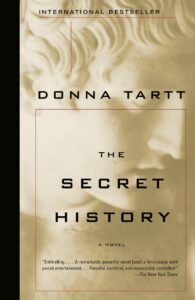
The Secret History, Donna Tartt
We’ve all read some version of the scholarship kid who lies his way into a golden circle, but Tartt writes it so well you’d be forgiven for assuming she invented it. Richard Papen, a working-class kid from California, wants nothing more than to be accepted by five extremely well-funded classmates at picturesque Hampden College. We learn in the opening pages that he was accepted enough to end up complicit in the murder of one of the group, which frees the novel to be about something better than a mere whodunit: the ongoing cost of maintaining a false origin story. Richard’s real terror isn’t the murder. Nobody has so perfectly captured how flattering it is to be chosen by people who are worse than you.
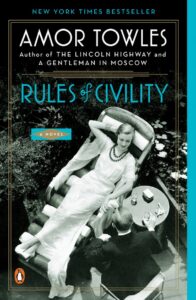
Rules of Civility, Amor Towles
A whip-smart Brooklyn girl from a working-class immigrant family, stationed in a Wall Street typing pool, meets a charming banker named Tinker Grey in a Greenwich Village jazz bar on the last night of 1937. The chance encounter tips her into the upper reaches of Manhattan society. What makes it more than a climbing story is that Tinker turns out to be a guest too—his old-money polish is being quietly financed by a wealthy patron. It’s all set against the most vivid Manhattan on this list: the city that has always been the great stage for the guest, where everyone is from somewhere else and busy becoming someone new.
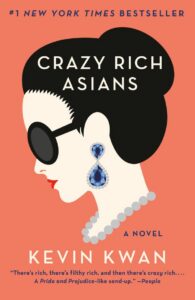
Crazy Rich Asians, Kevin Kwan
Pure joy, and it works so well because the details feel true, elevating the book into something like fieldwork. The footnotes are where Kwan puts information an outsider would never be given (where I first learned there are indeed mattresses that cost more than most people’s homes). Rachel Chu is an economics professor from a single-mother household who gets on a plane to a wedding in Singapore without being told that her boyfriend’s family owns a meaningful percentage of the country. Kwan runs the guest plot at full speed and adds a wrinkle: Rachel isn’t just at risk of being found unimpressive; she’s the subject of an actual investigation, because Nick’s mother hires someone to dig up a disqualifying secret.
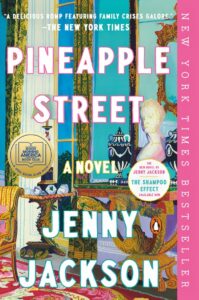
Pineapple Street, Jenny Jackson
The RPBB supergenre in a very specific subworld. Jackson gives you a whole clan of old-money Brooklyn Heights Stocktons, but the character who carries the thesis is Sasha, the middle-class New England girl who marries in and is instantly, permanently cast as the arriviste. It’s a beach read with a sharp eye for the machinery of inherited money: the tennis, the trust funds, the very particular cruelty of people who’ve never had to think about money toward the one person in the room who has. Funny, sharp, and a fascinating dissection of how money works inside a family.
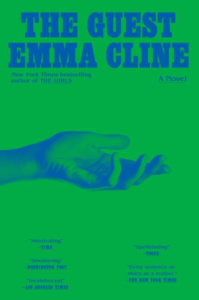
The Guest, Emma Cline
The Guest is the contemporary version, stripped to the bone. Alex—twenty-two, adrift, and semi-professionally attached to rich men—is thrown out by the older man she’s been staying with on the East End of Long Island. Rather than leave, she spends a week drifting between other people’s pools, houses, and parties on borrowed plausibility, convinced she’ll be forgiven if she can just survive until his Labor Day party. The whole book is a held breath, and you’ll keep reading to find out if you’re ever allowed to exhale.
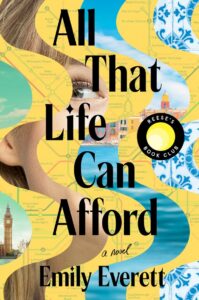
All That Life Can Afford, Emily Everett
The newest book on this list, and proof the guest plot is alive and thriving in Saint-Tropez. Anna grew up lower-middle-class and dreamed her way to London through Jane Austen novels; what she actually gets is a moldy flat and the paycheck-to-paycheck grind, until a wealthy family flies her south to tutor their teenage daughter. She’s absorbed into a world where confidence is a birthright and no one has ever had to ask what anything costs. Everett is exact about the specific vertigo of it: borrowed glamour, a sphinxlike older sister who sees straight through her, and two men—one who wants to fold her into a specific version of his world, one who clocks exactly where she came from. A Cinderella story that keeps its eyes open about the price of the slipper.
______________________________
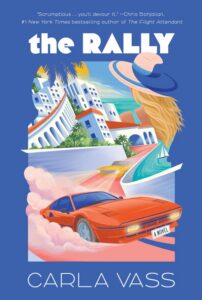
The Rally by Carla Vass is available from Union Square & Co., an imprint of Hachette Book Group.