By The Rio Times | Created at 2026-08-15 17:11:57 | Updated at 2026-08-15 17:25:28
28 minutes ago
By The Rio Times | Created at 2026-08-15 17:11:57 | Updated at 2026-08-15 17:25:28
28 minutes ago
Rio Times · Asia Intelligence Brief August 15
Key Facts
—Putin’s first visit there Vladimir Putin travelled to Iturup on Thursday, his first visit as president to the island chain Japan claims; a predecessor, Dmitry Medvedev, visited in 2010.
—Tokyo’s response Prime Minister Sanae Takaichi called the visit absolutely unacceptable, and Foreign Minister Toshimitsu Motegi summoned Russia’s ambassador.
—Moscow’s reply The Russian embassy called the protest unfounded and said the president’s travels are sovereign decisions not open to foreign discussion.
—Why analysts think he went One Washington think tank assesses the visit as part of the Kremlin’s response to Japan’s latest defence white paper.
—India’s target New Delhi is aiming for one trillion dollars in exports, with overseas shipments up 15% in the first four months.
—A new competitor in the air China’s domestically built C919 airliner has made its debut on an international commercial route.
One-stop reference
Company Intelligence
Every listed company in Latin America — financials, ownership and structure for 1,450+ companies across 26 exchanges, in one place.
Analysts read it as the third answer to a single Japanese defence document.
Russia and Japan – A Visit Eighty-One Years in the Making
A fish plant, a hospital, a school
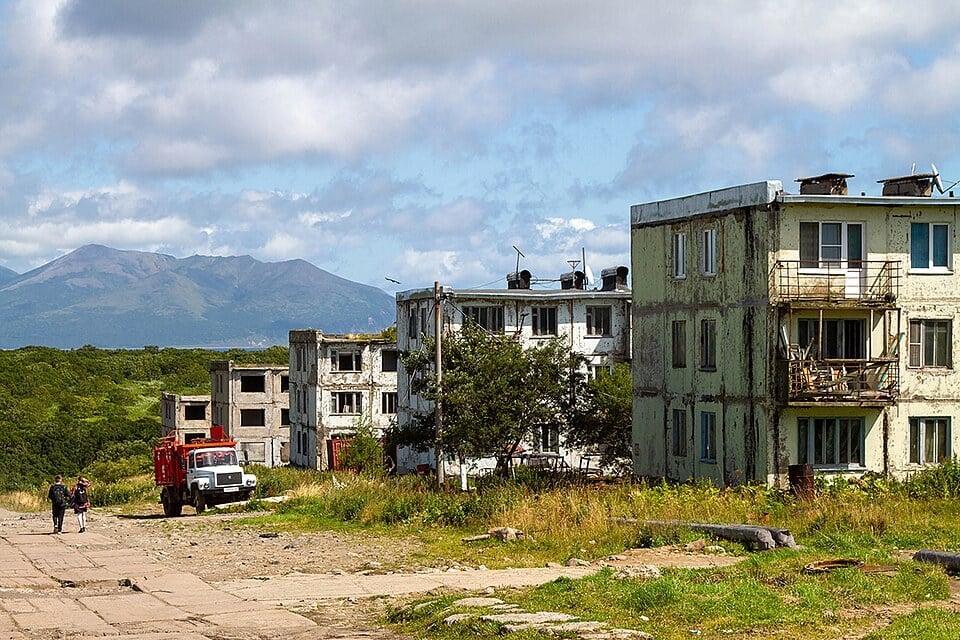
Vladimir Putin travelled on Thursday to Iturup, the largest of the four southern islands that Japan calls the Northern Territories, in his first visit there as president. He toured a fish-processing plant, a hospital and a school, met the governor of the Sakhalin region and spoke briefly with residents.
Russian state media showed him tasting caviar at the plant. The Soviet Union seized the islands in the final days of the Second World War, having declared war on Japan on 8 August 1945.
An ambassador summoned
Prime Minister Sanae Takaichi said the Northern Territories are an inherent part of Japan’s territory both historically and under international law, and that the visit offends the sentiments of the Japanese people and is absolutely unacceptable. She added that it had made restoring relations more difficult over the medium to long term.
Foreign Minister Toshimitsu Motegi summoned Russia’s ambassador to Tokyo and lodged a strong protest. Takaichi noted that Japan had repeatedly asked Moscow to ensure the president did not go.
Moscow calls the protest unfounded
The Russian embassy in Japan described Tokyo’s protest as unfounded, saying the southern Kuril Islands are an integral part of the Russian Federation and became so after the war on legitimate international grounds. It added that the president’s travels are sovereign decisions of the Russian leadership and cannot be subject to discussion with foreign states.
Putin had said the day before that Japan’s sanctions were unprovoked. Russia is not threatening Japan, he argued, but Japan has territorial claims against Russia.
A dispute with no treaty behind it
Japan renounced all right, title and claim to the Kuril Islands in the 1951 Treaty of San Francisco but never recognised Soviet sovereignty over them. A 1956 joint declaration ended the state of war, and no peace treaty has ever been signed.
Decades of negotiation have produced no visible result. Moscow has meanwhile strengthened its military presence on the islands.
One Document, Three Neighbours
A defence white paper answered three times
Analysts at a Washington research institute assess the visit as likely part of the Kremlin’s response to Japan’s latest defence white paper. That same document drew a formal protest from Seoul over a territorial claim and a statement of disapproval from Beijing’s foreign ministry.
One publication has now produced objections from all three of Japan’s largest neighbours. Tokyo has withdrawn nothing.
What that costs commercially
Beijing has maintained trade measures against Japan since November, covering seafood imports, rare earths and dual-use goods, none of which have been lifted. Japan has joined Group of Seven sanctions on Russia and provided funding and non-lethal defence aid to Ukraine.
That is a country simultaneously in dispute with the three states nearest to it. Supply chain fragmentation of this kind is precisely why boards look for production sites elsewhere.
A Russian president visited an island Japan claims, Seoul protested the same defence paper over a different island, and Beijing said it deplored it — one document, three neighbours, and a country that has withdrawn nothing.
India – A Trillion-Dollar Target
Fifteen percent in four months
India’s commerce minister said the country is targeting one trillion dollars in exports, with overseas shipments rising 15% in the first four months of the year. That is a substantial acceleration for an economy long characterised as domestically driven.
It arrives as Indian consumer inflation rose to 4.45% in July on accelerating food prices. Growth and price pressure are appearing together.
Another exporter entering the same markets
An Indian export drive of that scale competes for shelf space in exactly the European and North American markets Latin American manufacturers serve. Textiles, chemicals, pharmaceuticals and engineering goods overlap directly with Brazilian and Mexican output.
A stated target is not a delivered one, and India has missed such goals before. The 15% figure is the part worth taking seriously.
China – An Aircraft Crosses a Border
The C919 goes international
China’s domestically developed C919 narrow-body airliner has made its debut on an international commercial route. It is the first time the aircraft has carried paying passengers across a border.
The programme took well over a decade and depends heavily on Western engines and systems. Crossing into international service is nonetheless a threshold that most national aircraft programmes never reach.
Why Brazilian readers should note it
Brazil operates the only large commercial aircraft manufacturer outside North America and Europe, and has built decades of export revenue on regional jets. A Chinese narrow-body entering international service changes the medium-term competitive map above that segment.
The C919 competes with the largest Western programmes rather than with Brazilian regional aircraft directly. What it demonstrates is that the barrier to entry in commercial aviation is no longer absolute.
Southeast Asia – Thinner Savings, Heavier Rain
A monsoon met with less money
More Filipinos are facing the southwest monsoon and typhoon season with thinner savings, according to reporting this week, after storms left parts of Luzon under a state of calamity. Indonesian inequality is meanwhile widening, and Jakarta is weighing limits on subsidised fuel for luxury cars.
Heavy rain in Japan’s Chiba prefecture killed at least four people and left nearly 7,000 travellers stranded at Narita airport. India’s Himachal Pradesh has recorded 70 deaths and over 95 million dollars in damage.
The savings story, a third time
American retail sales fell 0.6% this week after the savings rate hit a four-year low, and European growth of 0.4% was attributed to households drawing down savings as real incomes fell. Filipino households are entering storm season with the same buffer thinner.
Three continents, one household balance sheet under pressure. It is the clearest cross-regional pattern of the month.
What This Means From Latin America
Fragmentation is the nearshoring case
Japan is now in open dispute with Russia, China and South Korea simultaneously, with Chinese trade restrictions still in force since November. That is the environment in which boards decide to place production outside North Asia altogether.
The competition for those factories is real, and this week’s evidence suggests much of it is landing inside ASEAN rather than the Americas. The fragmentation nonetheless remains the strongest structural argument Mexico and Brazil have.
And two new competitors named
India has set a one trillion dollar export target with shipments already up 15%, and China has put a domestically built airliner into international service. Both compete, in different segments, with Latin American manufactured exports.
Neither is an immediate threat and both are worth watching from now rather than later. Industrial capability of this kind compounds slowly and then arrives at once.
The Bigger Picture
Vladimir Putin made his first visit to Iturup, one of four islands Japan calls the Northern Territories and has claimed since the Soviet Union seized them in 1945. Prime Minister Sanae Takaichi called it absolutely unacceptable, Foreign Minister Toshimitsu Motegi summoned Russia’s ambassador, and Moscow dismissed the protest as unfounded.
Analysts assess the trip as part of the Kremlin’s response to Japan’s latest defence white paper, the same document that drew a formal protest from Seoul and a statement of disapproval from Beijing. One publication has now produced objections from all three of Japan’s largest neighbours.
For Latin American readers this fragmentation is the structural case for nearshoring, even as much of the relocation lands inside ASEAN. Two new competitors were also named this week, with India targeting one trillion dollars in exports on shipments already up 15%, and China putting its C919 airliner into international service.
Asia Intelligence Brief August 15: What We Are Watching
- Coming days – Whether Moscow escalates beyond the visit, or Tokyo beyond the summons.
- Ongoing – Whether China lifts any of the trade measures imposed on Japan since November.
- Coming months – Whether India’s export shipments hold the 15% pace behind its trillion-dollar target.
- Coming years – Whether the C919 secures orders outside China and its close partners.
- 17 and 18 September – The Bank of Japan meeting, with a move to 1.25% widely expected.
- September to December – The forecast El Niño peak, already driving storms across the region.
Go Deeper
The full Asia Intelligence Dossier — the interactive risk dashboard, the six people who matter and the downloadable PDF — is updated daily by the Rio Times Intelligence Desk.
More from the Rio Times Intelligence Desk on August 15: the Africa Intelligence Brief, the Europe Intelligence Brief and the USA & Canada Intelligence Brief. For how these stories developed, see the Asia Intelligence Brief for August 14 and the Asia Intelligence Brief for August 13.
The Asia Intelligence Brief August 15 returns tomorrow morning.
Frequently Asked Questions
What did Putin do in the Kuril Islands?
He travelled on Thursday 13 August to Iturup, the largest of the four southern islands Japan calls the Northern Territories, in his first visit there as president, touring a fish-processing plant, a hospital and a school, meeting the governor of Russia’s Sakhalin region and speaking briefly with residents. Russian state media showed him tasting caviar at the plant, on islands the Soviet Union seized in the final days of the Second World War after declaring war on Japan on 8 August 1945.
How did Japan respond?
Prime Minister Sanae Takaichi said the Northern Territories are an inherent part of Japan’s territory both historically and under international law, that the visit offends the sentiments of the Japanese people and is absolutely unacceptable, and that it has made restoring relations more difficult over the medium to long term. Foreign Minister Toshimitsu Motegi summoned Russia’s ambassador and lodged a strong protest, while Moscow’s embassy called the protest unfounded and said the president’s travels are sovereign decisions not open to discussion with foreign states.
Why do analysts think the visit happened now?
Analysts at a Washington research institute assess it as likely part of the Kremlin’s response to Japan’s latest defence white paper, the same document that drew a formal protest from South Korea over a territorial claim and a statement of disapproval from China’s foreign ministry. Relations have also worsened since 2022, with Japan joining Group of Seven sanctions on Russia and providing funding and non-lethal defence aid to Ukraine.
What is India’s export target?
India’s commerce minister said the country is targeting one trillion dollars in exports, with overseas shipments rising 15% in the first four months of the year. That comes as Indian consumer inflation rose to 4.45% in July on accelerating food prices, with the central bank holding its policy rate at 5.25% earlier in the month.
Sources: CNN, Associated Press via NPR, CNBC, Asia News Network
This article was produced by The Rio Times’ automated newsroom system. How we use AI · Report an error
LatAm Markets: Live Signals → — real-time movers, turnover leaders and FX across Latin America.