By The Rio Times | Created at 2026-08-15 17:11:58 | Updated at 2026-08-15 17:24:41
28 minutes ago
By The Rio Times | Created at 2026-08-15 17:11:58 | Updated at 2026-08-15 17:24:41
28 minutes ago
Rio Times · Europe Intelligence Brief August 15
Key Facts
—A hundred and eighty billion The Dutch bank Triodos estimates heat and drought could cut European Union output by about 1% this year, or roughly €180 billion.
—Almost the entire forecast The European Commission has been assuming growth of 1.1% for this year.
—Not fires, but productivity Lower labour productivity alone accounts for about 0.6 percentage points of the estimated loss.
—Harvests Agricultural production is expected to fall between 3 and 7%.
—Germany at the back German output grew just 0.2% in the second quarter, against 0.4% in the euro area and 0.5% across the Union.
—A model, not a bill The figure is a modelling exercise rather than a final damage assessment, and should be read as such.
One-stop reference
Company Intelligence
Every listed company in Latin America — financials, ownership and structure for 1,450+ companies across 26 exchanges, in one place.
Not through fires or flood damage, but because people work more slowly when it is too hot.
The Estimate – A Year’s Growth, Measured in Heat
One percent, or about €180 billion
The Dutch bank Triodos published a report estimating that heat-related disruption could reduce European Union output by about 1% in 2026, equivalent to roughly €180 billion. The European Commission has been assuming growth of 1.1% for the year.
Placed side by side, those two figures say the summer could consume almost the entire expected expansion. That is a modelling exercise rather than a settled bill, and we report it as one.
Where the loss actually comes from
The principal cause is not fire damage or flooding but reduced labour productivity, which the bank estimates could alone cut Union output by about 0.6 percentage points. Agricultural production is expected to fall between 3 and 7%.
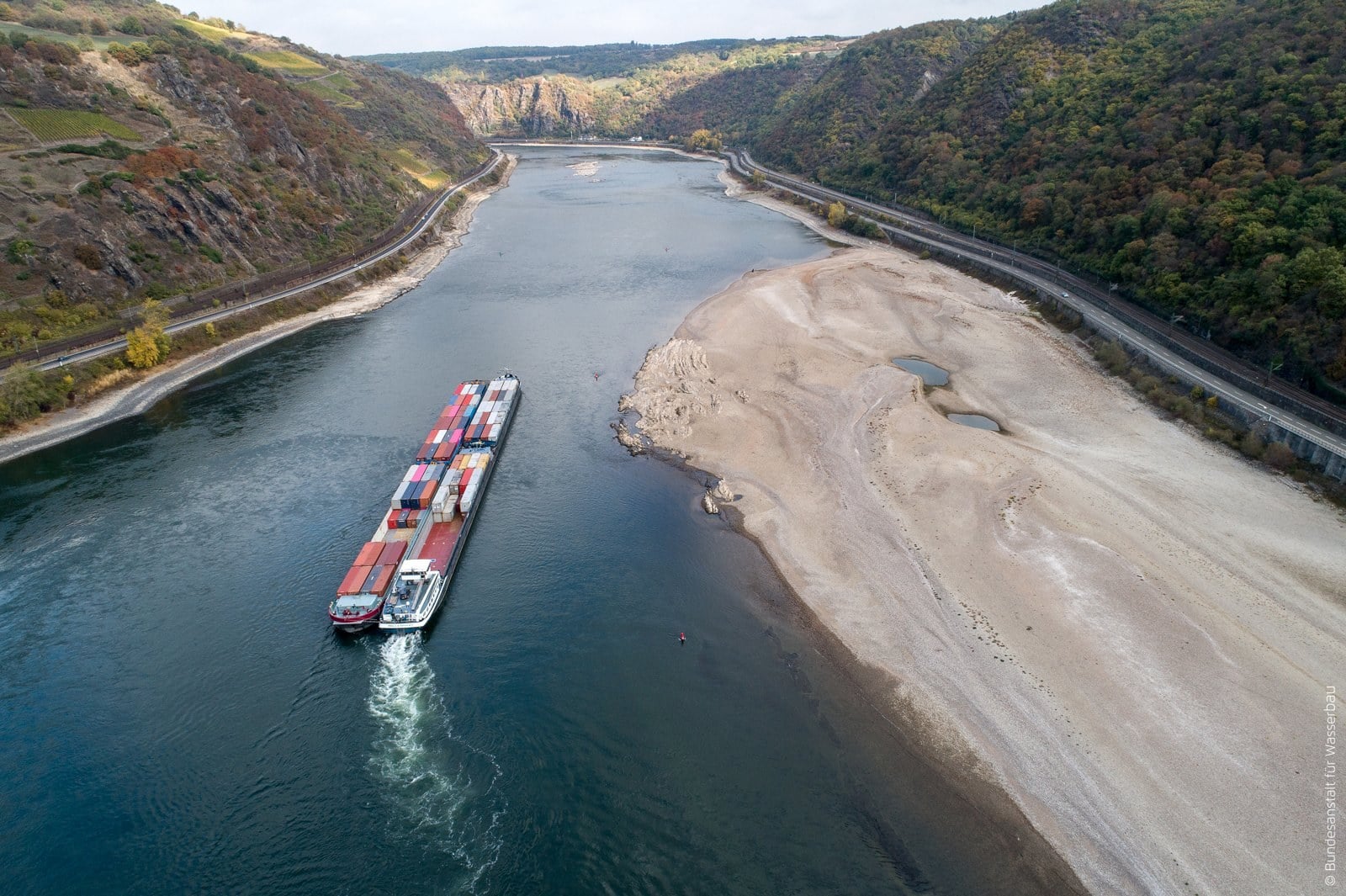
France is expected to carry a particularly heavy burden, with the Netherlands also facing significant losses. Low water on the Rhine, Danube and Elbe is raising transport costs for industries dependent on bulk freight.
Why the Composition Matters
A slower workforce is not a repairable asset
Damage from a fire or a flood is visible, insurable and eventually rebuilt. Output lost because a workforce cannot maintain its pace in extreme temperature is never recovered and never appears on a claim form.
That makes it the more expensive of the two kinds of loss over time. It is also the harder one to argue for spending money on.
From climate policy to industrial policy
One commentary on the report observed that when heatwaves regularly cost billions during a phase of weak growth, dealing with high temperatures stops being climate policy and becomes ordinary economic policy. The European Central Bank and the European Environment Agency have been tracking the same channels.
The continental temper here is late recognition rather than denial. Europe is discovering that adaptation is a competitiveness question.
Germany – Slowest of the Large Economies
Nought point two
German output grew just 0.2% in the second quarter against the previous three months, after a revised 0.4% in the first. The euro area managed 0.4% and the wider Union 0.5%.
Lithuania led at 1.7%, followed by Sweden at 1.4%, Portugal at 0.8% and Spain at 0.7%. France matched Germany at 0.2%, while Belgium and Austria recorded no growth at all.
A government that has already lowered its own bar
Berlin cut its 2026 growth expectation to 0.5% in its spring projection, down from the 1% it had assumed in January. That was before this summer’s heat estimate was published.
A continent whose largest economy grows at 0.2% has limited room to absorb a productivity shock. The two facts compound rather than offset.
The European Commission expects the Union to grow 1.1% this year, and one bank’s modelling puts the cost of heat and drought at about 1% — most of it not from fire or flood, but from people working more slowly.
Brussels – Two Questions of Sovereignty
Unwinding a software dependency
The Union and leading member states including France and Germany have begun examining how to phase out artificial-intelligence products supplied by an American technology company, according to reporting this week. Those products are deeply embedded in European security, health, industrial and financial systems.
The reporting frames the success or failure of that effort as decisive for European digital sovereignty. Removing embedded software from critical systems is considerably harder than deciding to.
A loan three countries need not join
Hungary, Slovakia and the Czech Republic are not required to participate in the financial obligations of the Union’s €90 billion loan to Ukraine, under the legal mechanism known as enhanced cooperation. The loan covers 2026 and 2027 and is financed through joint bonds issued on capital markets.
Of the total, €60 billion is earmarked for military support and €30 billion for the Ukrainian state budget. A mechanism that lets members opt out of joint borrowing is a precedent worth noting on its own terms.
The Prices Underneath
A spread that has not closed
Spanish harmonised inflation was revised up to 3.9% this week against 2.9% in Italy, where the core rate is just 1.6%, and 2.8% in Germany. Swiss producer and import prices fell 2.1% over the year.
The euro area as a whole came in at 2.9%, with energy inflation accelerating to 10.0% from 8.5%. One interest rate covers all of it.
And a decision with little margin
The European Central Bank’s Governing Council meets on 10 September, three days after the next estimate of second-quarter output. Norway held at 4.25% with a hawkish bias this week while Sweden decides on the twentieth at 1.75%.
A committee facing a heat-driven productivity shock, a 3.9% inflation print in one member and a 1.6% core rate in another has an unusually poor set of options. None of its instruments addresses temperature.
What This Means From Latin America
A harvest number worth watching
European agricultural production falling 3 to 7% is a direct signal for grain, oilseed and soft commodity prices, and therefore for Brazilian and Argentine export revenue. A shortfall in one large producing bloc is met by purchases from another.
That is the clearest commercial read in this brief and it points in the region’s favour. The caveat is that the same weather system has been tightening harvests across three continents at once.
And a customer growing more slowly than advertised
If the heat estimate is even approximately right, European growth this year will be close to zero rather than the 1.1% the Commission assumed. European import demand would be correspondingly weaker.
Latin American exporters of manufactured goods should plan for the lower figure. Exporters of food should plan for the opposite.
The Bigger Picture
The Dutch bank Triodos estimates that heat and drought could reduce European Union output by about 1% this year, or roughly €180 billion, against a European Commission growth assumption of 1.1%. The principal cause is not fire or flood but reduced labour productivity, which alone accounts for around 0.6 percentage points, with agricultural production expected to fall 3 to 7%.
That lands on an economy with little room. German output grew just 0.2% in the second quarter against 0.4% in the euro area, with France also at 0.2% and Belgium and Austria at zero, while Berlin has already cut its own 2026 forecast to 0.5% from 1%.
For Latin American readers the two reads point in opposite directions. A 3 to 7% European harvest shortfall supports Brazilian and Argentine food export revenue, while a growth figure closer to zero than to 1.1% means weaker European demand for manufactured goods.
Europe Intelligence Brief August 15: What We Are Watching
- Coming months – Whether official forecasters revise European growth toward the heat estimate.
- Coming months – European harvest data, against an expected 3 to 7% fall in agricultural production.
- 7 September – The next estimate of second-quarter output, three days before the rate decision.
- 10 September – The European Central Bank’s Governing Council meeting.
- 20 August – Sweden’s rate decision, at 1.75% against Norway’s 4.25%.
- Ongoing – Whether the effort to replace embedded American artificial-intelligence systems progresses.
Go Deeper
The full Europe Intelligence Dossier — the interactive risk dashboard, the six people who matter and the downloadable PDF — is updated daily by the Rio Times Intelligence Desk.
More from the Rio Times Intelligence Desk on August 15: the Africa Intelligence Brief, the Asia Intelligence Brief and the USA & Canada Intelligence Brief. For how these stories developed, see the Europe Intelligence Brief for August 14 and the Europe Intelligence Brief for August 13.
The Europe Intelligence Brief August 15 returns tomorrow morning.
Frequently Asked Questions
How much could heat cost the European economy this year?
The Dutch bank Triodos estimates that heat-related disruption could reduce European Union output by about 1% in 2026, equivalent to roughly €180 billion, against a European Commission growth assumption of 1.1% for the year. The figure is a modelling exercise rather than a final damage assessment, and the bank expects France to carry a particularly heavy burden with the Netherlands also facing significant losses.
What causes most of that loss?
The principal cause is reduced labour productivity rather than direct destruction from fires or drought damage, and that effect alone could cut European Union output by about 0.6 percentage points. Agricultural production is expected to fall between 3 and 7%, while low water levels on the Rhine, Danube and Elbe raise transport costs for industries dependent on bulk freight.
How is Germany performing against its neighbours?
German output grew just 0.2% in the second quarter against the previous three months, after a revised 0.4% in the first, while the euro area managed 0.4% and the wider Union 0.5%. Lithuania led at 1.7%, followed by Sweden at 1.4%, Portugal at 0.8% and Spain at 0.7%, with France also at 0.2% and Belgium and Austria recording no growth, and Berlin has cut its own 2026 forecast to 0.5% from 1%.
What is happening with the European loan to Ukraine?
Hungary, Slovakia and the Czech Republic are not required to participate in the financial obligations of the Union’s €90 billion loan, under the legal mechanism known as enhanced cooperation. The loan covers 2026 and 2027, is financed through joint bonds issued on capital markets, and allocates €60 billion to military support and €30 billion to the Ukrainian state budget.
Sources: Börsen-Zeitung, GrenzEcho, Eurostat, Apollo News
This article was produced by The Rio Times’ automated newsroom system. How we use AI · Report an error
LatAm Markets: Live Signals → — real-time movers, turnover leaders and FX across Latin America.