By The Rio Times | Created at 2026-10-05 18:56:42 | Updated at 2026-10-05 19:31:45
1 hour ago
By The Rio Times | Created at 2026-10-05 18:56:42 | Updated at 2026-10-05 19:31:45
1 hour ago
ENERGY · BOLIVIA
Key Facts
- —The country Bolivia, a landlocked Andean nation of about 12 million people, imports most of its diesel. Since 19 September diesel sells at a market price, while petrol stays subsidised.
- —Why it matters Fuel queues are the most visible test of market fuel pricing under President Rodrigo Paz, in office since November 2025, whose reforms an IMF programme now backs.
- —Why now On Sunday 4 October state oil firm YPFB said it had raised deliveries nationwide and would keep blocking plates of repeat buyers.
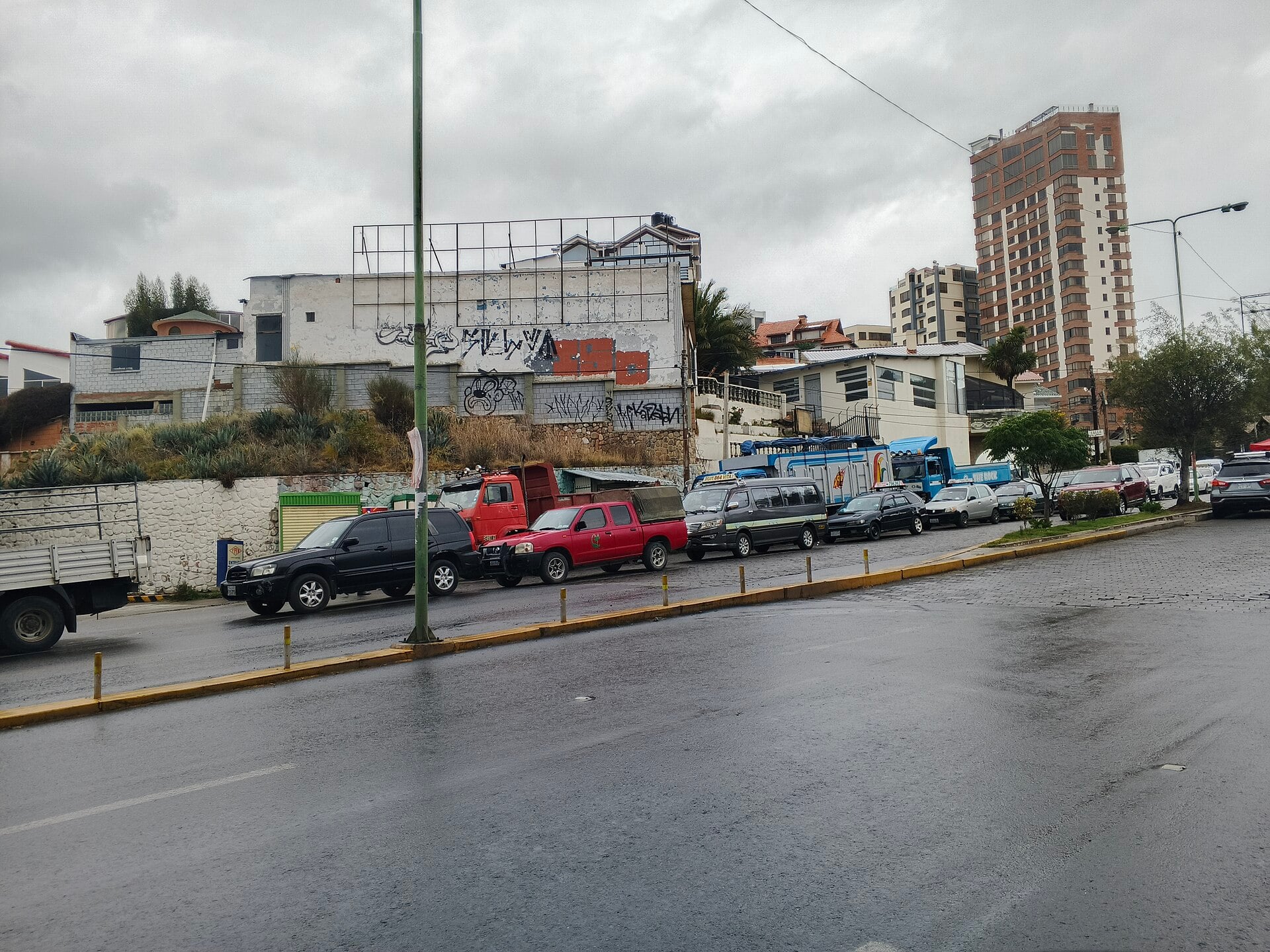
- —What happened Queues persisted on Monday 5 October in La Paz, Tarija and Santa Cruz (El Deber). A vice-minister said over 1,800 plates are blocked, a figure not independently confirmed.
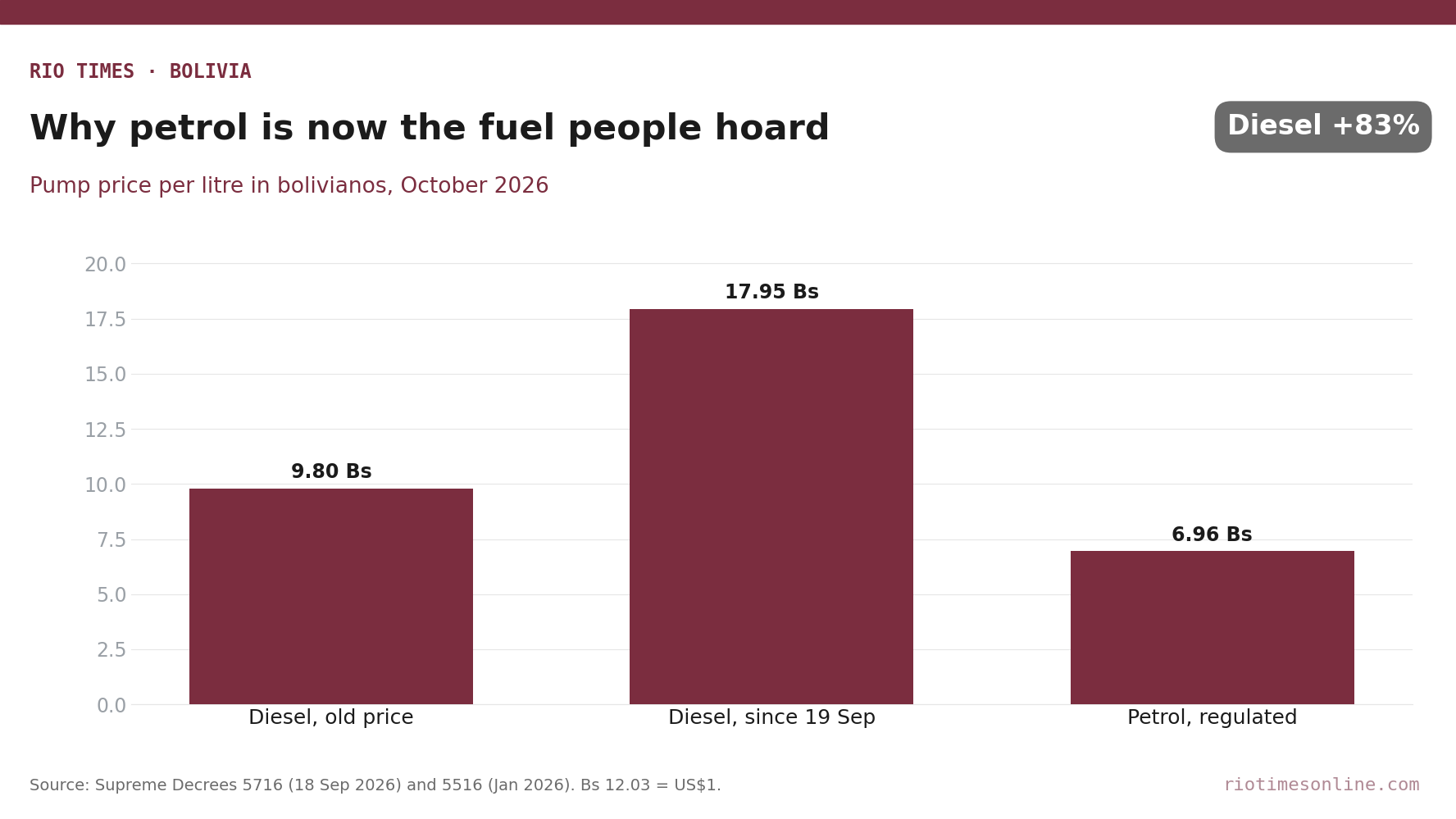
- —The numbers Diesel rose from Bs 9.80 to Bs 17.95 a litre (about US$0.81 to US$1.49) on 19 September. Petrol stays at Bs 6.96 (about US$0.58).
- —What it means for you Travellers in Bolivia should expect fuel waits, costlier buses and possible transport strikes. Business with Bolivia faces slower freight while tariffs are renegotiated.
- —Still open YPFB has published no figure for how much extra fuel it is sending. Santa Cruz drivers have given the government one week before considering an indefinite strike.
Petrol and diesel queues persisted across Bolivia on Monday 5 October, a day after state oil firm YPFB said it had raised deliveries. The Bolivia fuel shortage tests the shift to market diesel prices that an IMF programme now backs.
For travellers and firms, that means fuel waits, dearer transport and a risk of new strikes. The government’s answer is more supply and a crackdown on resale of cheap fuel.
What YPFB Announced
On Sunday 4 October, YPFB said it had sent more petrol and diesel to service stations in all nine departments. El Deber, Red Uno and El Día all carried the announcement, first covered in Bolivia Diesel Protests: Oruro Indigenous Nation Declares Emergency.
The company did not say how much extra fuel it was sending. It said the step was coordinated with the hydrocarbons regulator, the ANH, and with city governments.
The second half of the statement was about control. YPFB and the ANH are blocking plates of vehicles with repeated loads. Municipal transit offices and the national vehicle register help them.
YPFB said subsidised fuel is meant only for the domestic market. Anyone found hoarding or diverting it faces sanctions under current law, it added.
Follow this story
Get an email when there’s news on Bolivia markets
Free. One email a day at most, and only when there is news. This also signs you up to our weekday newsletter, The LatAm Brief. Nothing arrives until you click the confirmation link, and you can stop either with one click. Privacy policy.
Plate Blocks and Station Closures
Yamil García, vice-minister of transparency, gave new figures on Monday, Visión 360 reported. “More than 1,800 vehicle plates have been blocked. Twenty-four of them have been confiscated,” he said.
No second outlet, YPFB or the ANH had confirmed the 1,800 figure by Monday evening. The 24 matches the vehicles the government reported seized on 2 October.
Stations face sanctions too. A first offence brings a 10-day suspension and a second brings closure, García said.
He described one pattern the system now flags. A vehicle with a 90-litre tank was recorded loading 250 litres three times in a single day.
In Tarija, Ronaldo Roque, who runs YPFB’s service stations there, told El Deber that one cloned plate had filled up in Beni, Santa Cruz and Tarija. The system raised the alarm when a Santa Cruz load came two hours after one in Beni.
In Santa Cruz, the ANH temporarily sealed the Jaldín station in La Guardia after finding large petrol sales to gas-converted cars. These controls add to the earlier crackdown reported in Bolivia Fuel Crackdown Blocks 6,700 Vehicles in a Month.
Why the Queues Have Not Gone Away
Diesel has been sold at a market price since Supreme Decree 5716 took effect on 19 September. For most buyers it rose from Bs 9.80 to Bs 17.95 a litre (about US$0.81 to US$1.49).
Petrol is still regulated at Bs 6.96 a litre (about US$0.58), Bolivia Verifica confirmed on 4 October. That gap is why officials say smuggling networks have moved from diesel to petrol.
The Bolivia fuel shortage also reflects uneven supply. Roque linked the shortfall to a recent dispute with fuel-tanker operators, which cut dispatches from its refineries.
Rumours of a petrol price rise did the rest. One Tarija station that usually sells about 3,500 litres has seen demand above 10,000 litres in recent days, he said.
Tarija has temporarily stopped sales in jerrycans, including the 10-litre allowance for small farmers. Residents of the border town of Bermejo have crossed into Argentina to buy fuel, El Deber reported.
The queues are the same pattern described a weekend earlier in Santa Cruz Fuel Shortage Returns in Bolivia. YPFB expects supply to return to normal during this week.
Drivers Turn the Diesel Price Into a Fare Fight
The protest front has moved from the pumps to fares. Santa Cruz transport unions called off a 48-hour strike for Monday and Tuesday but remain on emergency footing, eju.tv reported.
Their leaders have given the government one week to send ministers to Santa Cruz. Ronald García, head of the Santa Cruz drivers’ federation Fedectrans, warned of an indefinite strike if that does not happen.
The Santa Cruz city council has approved a minibus fare of Bs 3.50 (about US$0.29). Heavy-goods hauliers were due to meet in Cochabamba on Monday to set new freight rates.
Public works minister Mauricio Zamora has said fares will rise and that the increase should be agreed. The transport regulator, the ATT, says it has not authorised a national rise. It puts fuel at 20 to 25 percent of operating costs.
The government’s stabiliser is money. The IMF approved Bolivia’s US$1.9 billion programme on 2 October, with US$214 million paid out at once.
What It Means for You
Travellers should expect long waits at pumps, dearer bus and minibus fares and possible transport strikes. Allow extra time for road trips, especially around Santa Cruz and near the Argentine border.
For investors and exporters, freight costs are rising as hauliers reprice diesel. Delays are likely while tariffs are renegotiated.
The stabiliser is the IMF programme, which gives the government dollars to import fuel. Whether queues ease this week will show if that money reaches the pumps.
What Is Not Known
YPFB has not said how many litres of petrol or diesel it is now delivering each day. Without that figure, its claim to be easing the Bolivia fuel shortage cannot be checked against demand.
The plate counts also differ. Hydrocarbons minister Marcelo Blanco cited 6,700 blocked plates on 2 October, and officials have not explained how that relates to Monday’s 1,800.
It is not known whether Santa Cruz transport unions will strike after their one-week deadline. A national bus fare band had not been published by Sunday afternoon.
Why is there a fuel shortage in Bolivia?
The Bolivia fuel shortage has several causes. Officials blame a recent tanker-operator dispute, panic buying on price rumours and resale of cheap fuel to smugglers.
How much does fuel cost in Bolivia now?
Diesel costs Bs 17.95 a litre (about US$1.49) since 19 September. Petrol remains regulated at Bs 6.96 a litre (about US$0.58).
Is it safe to travel in Bolivia during the fuel protests?
Travel is possible, but expect fuel queues, higher fares and possible road or transport strikes. Check local news before long road trips and allow extra time.
Sources: YPFB statement of 4 October 2026 as reported by El Deber and Red Uno; Visión 360, 5 October 2026; El Deber, 5 October 2026; eju.tv, 5 October 2026; eju.tv, 2 October 2026; Supreme Decree 5716; Bolpress, 19 September 2026; Bolivia Verifica via Prensa Mercosur, 4 October 2026.
Editorial responsibility: Matthias Camenzind, Editor-in-Chief · Editorial standards · Report an error
LatAm Markets: Live Signals → — real-time movers, turnover leaders and FX across Latin America.