By The Rio Times | Created at 2026-10-14 06:57:06 | Updated at 2026-10-16 09:53:48
2 days ago
By The Rio Times | Created at 2026-10-14 06:57:06 | Updated at 2026-10-16 09:53:48
2 days ago
BRAZIL · TRADE
Key Facts
- The country Brazil is Latin America’s largest economy and a top global supplier of soybeans, coffee, beef, crude oil and iron ore.
- What happened Brazil exports to the European Union rose 30.7% from May to September 2026, the first five months of the Mercosur trade deal.
- The numbers Sales to the 27 EU countries reached US$27.3 billion in those five months, against US$20.9 billion a year earlier.
- What led the rise Crude oil and copper ore made up about half of the US$6.4 billion gain, followed by soybeans, fuel oils and soymeal.
- The US angle Brazil’s exports to the United States grew only 1.6% over the same months, while EU and US companies compete for Brazilian buyers.
- Still open Officials have not said how much of the jump came from tariff cuts rather than prices, harvests or new oil output.
- Power Index Brazil ranks 1st of 14 in The Rio Times Latin America Power Index, with 75.0 points (October 2026 edition).
Prediction markets · who wins the runoff
Implied chance of winning Brazil’s presidency on 25 October, from traders’ prices.
Polymarket
Flávio Bolsonaro 86.1% · Lula 14.5% (US$181 million traded)
Kalshi (regulated in the US by the CFTC)
Flávio Bolsonaro 88% · Lula 15%
As of 14 October, 2:20 am ET (07:20 Lisbon), updated every 20 minutes. Prices are bets, not polls, and can move fast.
Why we show this: prediction markets turn real-money bets into a live probability that moves within minutes of the news, which is why investors, campaigns and newsrooms in the United States now follow them closely. We show them next to polls and official results, never instead of them.
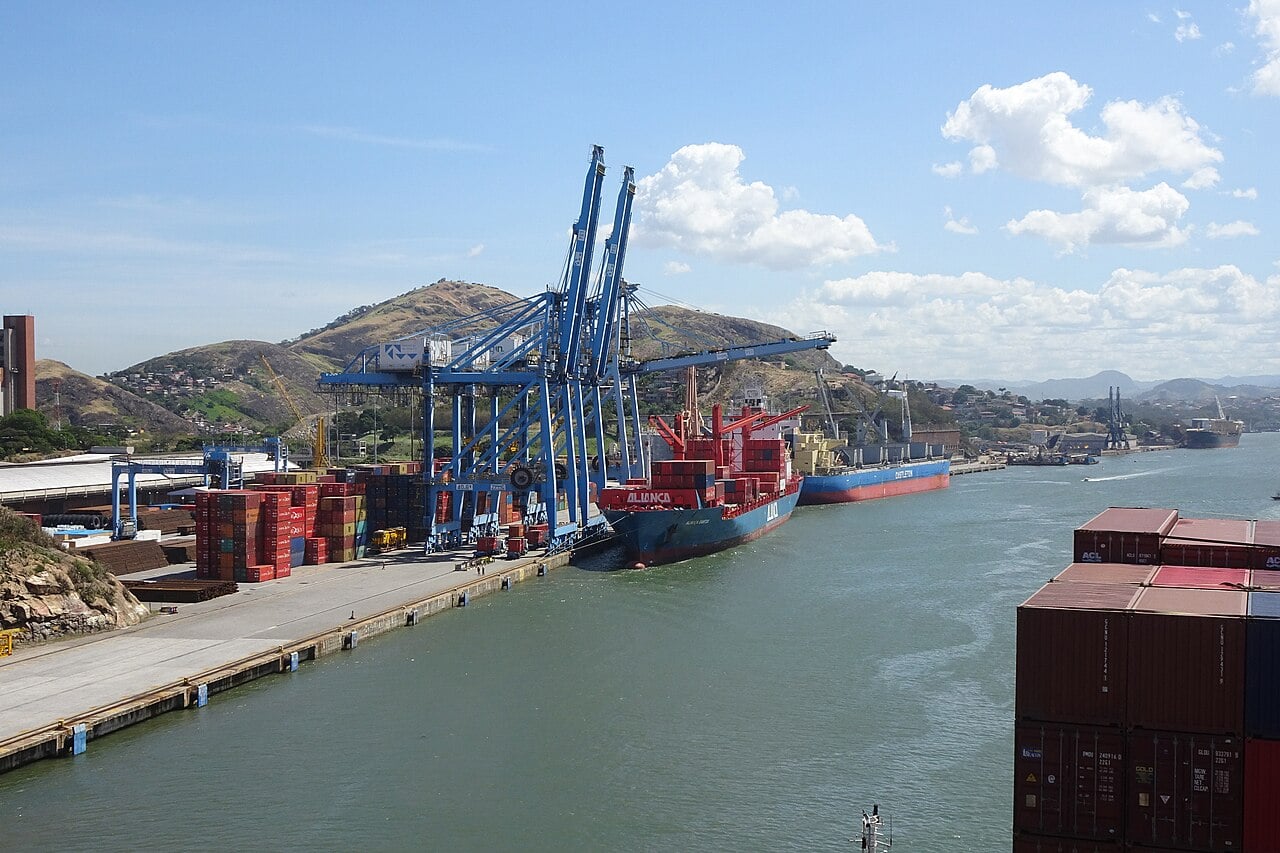
Brazil exports to the European Union jumped 30.7% in the first five months of the new Mercosur–EU trade deal, official trade data show. From May to September 2026, Brazil sold US$27.3 billion of goods to the 27-nation bloc, up from US$20.9 billion a year earlier.
For American companies, the deal means European rivals are gaining easier access to Brazil, Latin America’s largest economy. It also shows Brazil building new outlets for its oil, metals and farm goods while trade with Washington stays tense.
What the Trade Data Show
The figures come from Comex Stat, the public trade database of Brazil’s Ministry of Development, Industry, Trade and Services (MDIC). Its foreign trade secretariat, Secex, records every export by month, product and destination.
Sales to the EU climbed in every month from May to September compared with 2025. September alone brought US$6.95 billion, about 60% more than the US$4.34 billion of September 2025.
The contrast with the months before the deal is sharp, since exports to the EU rose just 6.2% from January to April. Over the first nine months, Brazil exports to the European Union reached US$44.17 billion, up 20%.
Foreign Minister Mauro Vieira credited the treaty at a ceremony in Brasília on Tuesday 13 October, the state news agency Agência Brasil reported. “The Mercosur–European Union agreement alone, from May until now, has meant a 30% expansion of our exports,” he said.
Follow this story
Get an email when there’s news on Brazil
Free. One email a day at most, and only when there is news. This also signs you up to our weekday newsletter, The LatAm Brief. Nothing arrives until you click the confirmation link, and you can stop either with one click. Privacy policy.
Oil, Copper and Soybeans Led the Rise
Crude oil remained Brazil’s biggest sale to the EU, worth US$6.21 billion from May to September against US$4.24 billion a year earlier. Copper ore and concentrates more than doubled, to US$2.38 billion from US$1.07 billion.
Those two raw materials alone account for about half of the US$6.4 billion increase. Soybeans rose 49% to US$2.05 billion, and soymeal, a protein feed for European livestock, rose 22.5% to US$2.14 billion.
Not every product gained, and some of Brazil’s best-known exports to the EU fell. Coffee sales slipped 8.4% to US$2.38 billion, and fruit juice sales dropped about 36%.
Smaller lines grew fast from a low base, including poultry, salted meat and frozen beef. Frozen beef sales to the EU rose 38.5% to about US$380 million in the five months.
Rio Times · Live Market Intelligence
Brazil — Live Market Board
B3 · São Paulo
Oct 14, 2026 · 03:38
Ibovespa · benchmark
206,887.52
-1.04%
L 167,142day rangeH 168,310
+21.85% over 12 months
Market breadth · 15 names
47% advancing
7 ▲ advancing8 declining ▼
Currencies, rates & key inputs
Sector heatmap · average move today
Mining
+1.16%
VALE3, CSNA3, GGBR4
Industrials
+0.20%
WEGE3, RENT3
Financials
-0.10%
ITUB4, BBDC4, BBAS3, B3SA3
Energy
-0.12%
PETR4, PRIO3
Consumer Staples
-0.80%
ABEV3
Consumer Disc.
-2.63%
AZZA3
Latin America scoreboard
IndexLastTodayStrength
IbovespaBrazil
206,887.52
-1.04%
S&P/BMV IPCMexico
66,965.15
+0.33%
S&P IPSAChile
11,020.01
-0.21%
S&P MERVALArgentina
2,869,151
+1.45%
MSCI COLCAPColombia
2,570.34
+1.55%
BVL S&P PerúPeru
60,645.95
-0.22%
Full instrument board
| IBOV | 206,887.52 | -1.04% | +21.85% | 209,066.90 | 168,310 | 167,142 | — |
| USD/BRL | 5.16 | +0.01% | -5.13% | 5.16 | 5.18 | 5.14 | — |
| SELIC | 14.00% | — | — | — | — | — | |
| PETR4 | 41.64 | -0.05% | +35.19% | 41.66 | 41.97 | 41.15 | 41,499,400 |
| VALE3 | 72.97 | +0.83% | +30.75% | 72.37 | 73.54 | 72.66 | 17,658,000 |
| ITUB4 | 38.60 | -1.03% | +4.57% | 39.00 | 39.34 | 38.39 | 29,487,800 |
| BBDC4 | 16.85 | +0.36% | +3.50% | 16.79 | 16.90 | 16.67 | 19,416,900 |
| BBAS3 | 19.37 | +0.47% | +0.73% | 19.28 | 19.44 | 19.16 | 11,069,200 |
| B3SA3 | 14.26 | -0.21% | +12.73% | 14.29 | 14.47 | 14.11 | 33,037,800 |
| ABEV3 | 14.89 | -0.80% | +21.91% | 15.01 | 15.07 | 14.81 | 16,453,100 |
| WEGE3 | 47.59 | +0.49% | +29.99% | 47.36 | 48.08 | 47.36 | 3,364,600 |
| PRIO3 | 59.14 | -0.19% | +50.67% | 59.25 | 59.81 | 58.74 | 3,325,600 |
| SUZB3 | 41.33 | +2.35% | -23.55% | 40.38 | 41.48 | 40.35 | 3,914,900 |
| RENT3 | 34.68 | -0.09% | +0.84% | 34.71 | 34.96 | 34.35 | 7,979,100 |
| AZZA3 | 15.89 | -2.63% | -53.76% | 16.32 | 16.42 | 15.82 | 1,330,300 |
| CSNA3 | 4.30 | +0.47% | -42.65% | 4.28 | 4.41 | 4.26 | 10,076,100 |
| GGBR4 | 24.69 | +2.19% | +51.38% | 24.16 | 24.85 | 24.18 | 7,047,600 |
| ENEV3 | 24.21 | -1.38% | +70.49% | 24.55 | 24.64 | 23.99 | 9,297,000 |
Largest moves today
AZZA3
15.89
-2.63%
SUZB3
41.33
+2.35%
GGBR4
24.69
+2.19%
ENEV3
24.21
-1.38%
IBOV
206,887.52
-1.04%
ITUB4
38.60
-1.03%
VALE3
72.97
+0.83%
ABEV3
14.89
-0.80%
The session read
The Ibovespa eased 1.04%, with breadth negative — 7 of 15 names higher. Materials led, while Consumer Disc. lagged.
From The Rio Times
Related coverage · 14 Oct 2026
São Paulo Daily Brief
Read →
How the Mercosur Deal Works
Mercosur is the South American trade bloc founded by Brazil, Argentina, Paraguay and Uruguay. Its deal with the EU came after almost 27 years of negotiations and took provisional effect on 1 May 2026.
The European Commission confirms that this interim trade agreement has applied provisionally since that date, when the first tariff cuts took effect. It will be replaced by a wider partnership agreement once that treaty is fully ratified.
Under the treaty, the EU will remove import duties on about 95% of goods, covering 92% of what it buys from Brazil. Some cuts apply at once, while others are phased in over 4 to 12 years.
Mercosur opens more slowly, cutting duties on about 91% of goods, or 85% of the value Brazil imports from the EU. Its schedules run up to 15 years, and longer for electric and hydrogen vehicles.
What It Means for You
For US exporters, Mercosur’s gradual tariff cuts for European goods mean tougher competition in Latin America’s largest economy over the coming years. Brazil’s imports from the EU rose 3.1% to US$22.5 billion from May to September.
Brazil exports to the United States grew far less, rising 1.6% to US$16.5 billion over the same five months. Development Minister Márcio Elias Rosa called the current moment in relations with Washington “delicate” but said Brazil would not walk away from negotiations.
Investors holding US-listed shares of Brazilian oil, mining and farm companies now have a fast-growing European market to watch. The EU took US$27.3 billion of Brazilian goods in those five months, far more than the US$16.5 billion sold to the United States.
What Is Not Known
Officials have not published an estimate of how much of the 30.7% rise came from lower tariffs. Higher prices, bigger harvests and new oil output can also lift sales, and the data do not separate these effects.
It is also unclear whether sales can keep this pace, since September alone supplied about 40% of the five-month gain. The European Commission gives no date for full ratification of the wider partnership agreement, which it lists as still being adopted or ratified.
More: Brazil news in English, every day from The Rio Times.
Frequently Asked Questions
How much did Brazil’s exports to the European Union grow?
Brazil exports to the European Union rose 30.7% from May to September 2026, to US$27.3 billion. In the same months of 2025, Brazil sold US$20.9 billion of goods to the bloc.
When did the Mercosur–EU trade deal take effect?
The trade part of the deal took provisional effect on 1 May 2026, after almost 27 years of talks. Tariff cuts are phased in, so many duties fall gradually over several years.
Which products drove the increase?
Crude oil and copper ore made up about half of the US$6.4 billion gain, with soybeans and soymeal also rising. Coffee and fruit juice sales to the EU fell over the same months.
Does the deal affect American companies?
Yes, because Mercosur is cutting duties on most European goods, which helps EU firms compete with US exporters in Brazil. Brazil exports to the United States rose only 1.6% from May to September.
Sources: Brazil Ministry of Development, Industry, Trade and Services (MDIC/Secex), Comex Stat, data to September 2026, accessed 14 October 2026; European Commission, Directorate-General for Trade: EU–Mercosur agreement, accessed 14 October 2026; Brazil Foreign Trade Portal (Siscomex), Mercosur–EU agreement factsheet, 2026; Agência Brasil, 13 October 2026; A Crítica (Agência Brasil), 13 October 2026.
Editorial responsibility: Matthias Camenzind, Editor-in-Chief · Editorial standards · Report an error
The Rio Times · Power Map
See who really holds power in Latin America
Click to open the Power Map →