By The Rio Times | Created at 2026-10-10 14:01:54 | Updated at 2026-10-10 14:43:04
1 hour ago
By The Rio Times | Created at 2026-10-10 14:01:54 | Updated at 2026-10-10 14:43:04
1 hour ago
BRAZIL · RESOURCES
Key Facts
- —The country Brazil holds about 12% of the planet’s fresh water, mines most of the world’s niobium and is the second-largest iron ore producer after Australia.
- —Oil and gas Brazil pumped 4.6 million barrels of oil a day in August 2026; with gas, output reached 6.0 million barrels of oil equivalent a day.
- —Farmland Conab, the federal crop agency, put the 2025/26 grain harvest at 361.7 million tonnes, including a record 180.4 million tonnes of soybeans (September 2026).
- —Who profits Oil royalties and special levies paid R$100.4 billion (about US$20 billion) in 2025; Rio de Janeiro state and its towns took about 45%.
- —Environmental cost Amazon clearing fell to 5,731 sq km in the year to July 2025, but mining-dam collapses in 2015 and 2019 killed 291 people.
- —For US readers Brazil supplied 58% of US iron ore imports and 67% of US niobium imports in 2021-24; since July 2026 new US tariffs hit many Brazilian goods.
- —Prediction markets Polymarket gives Flávio Bolsonaro an 89% chance of winning the 25 October runoff (10 October, 9:25 a.m. ET). Polymarket puts Flávio Bolsonaro’s chance of winning at 89% and Kalshi at 87% (Lula: 12% and 13%), as of 10 October, 10:00 am ET; prices are bets, not polls.
Brazil’s natural resources reach American factories and portfolios: the country supplied 58% of US iron ore imports in 2021-24.
This guide explains what Brazil pumps, mines and grows, who earns the money and the environmental cost, as of October 2026. The 25 October runoff decides who sets resource policy from 2027.
Oil and Gas, the Pre-Salt Boom
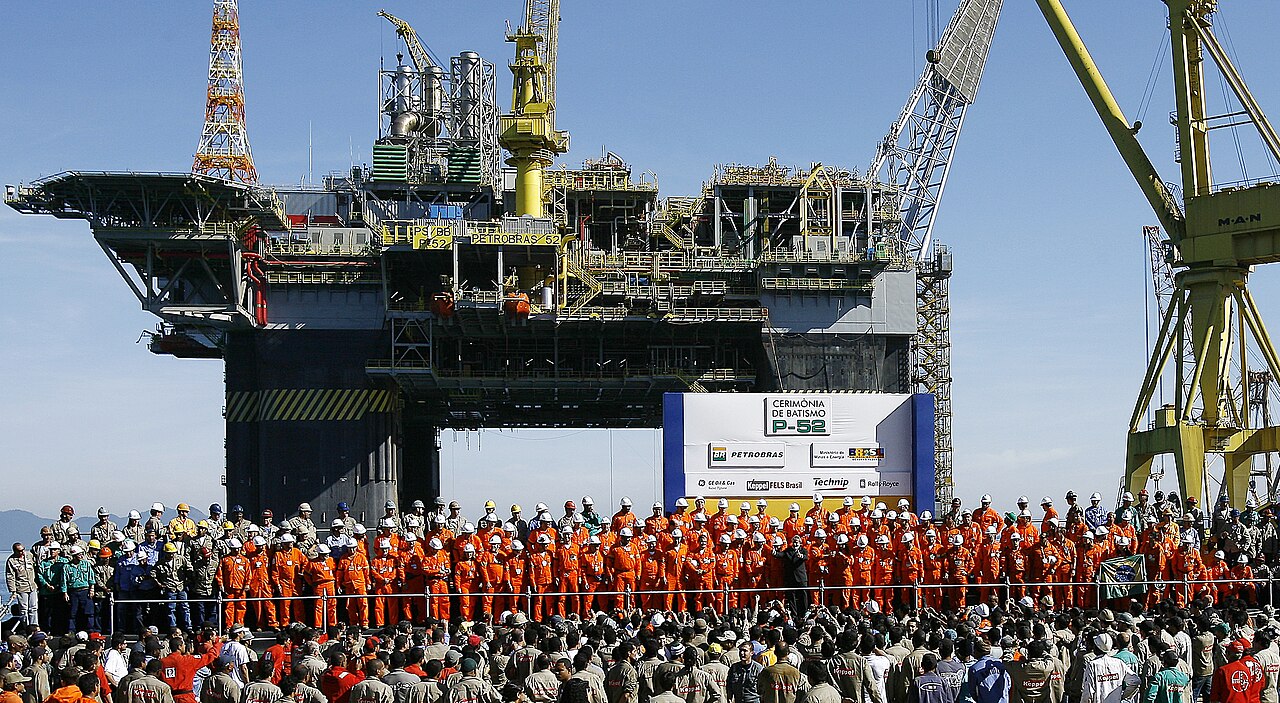
Brazil pumped 4.6 million barrels of oil a day in August 2026, according to the ANP, the national petroleum regulator. Counting natural gas, total output reached 6.002 million barrels of oil equivalent a day.
Most of it comes from the pre-salt, oil trapped beneath a thick layer of salt deep under the Atlantic seabed. Pre-salt fields supplied 82.6% of national output in August 2026.
Offshore fields produced 98.1% of the oil that month, so Brazil’s oil output comes almost entirely from the sea. The largest field, Búzios in the Santos Basin, produced 1.17 million barrels a day.
Fields operated by Petrobras, the state-controlled oil company, alone or with partners, delivered 87.55% of national output. Fields run by other operators supplied the remaining 12.45%.
The ANP keeps selling new acreage, and on 7 October 2026 it sold seven pre-salt blocks at auction. A separate concession round that afternoon raised R$3 billion (about US$600 million) in signing bonuses, the most since the model began.
The New Frontier at the Mouth of the Amazon
In October 2025 Ibama, the federal environmental agency, licensed Petrobras to drill block FZA-M-59, 175 kilometres (109 miles) off Amapá state.
Petrobras announced a first oil find there in August 2026 and a second on 2 October 2026. Material from the second find was due for laboratory analysis, and environmental groups worry about drilling near the Amazon’s mouth.
Iron Ore, Niobium and Critical Minerals
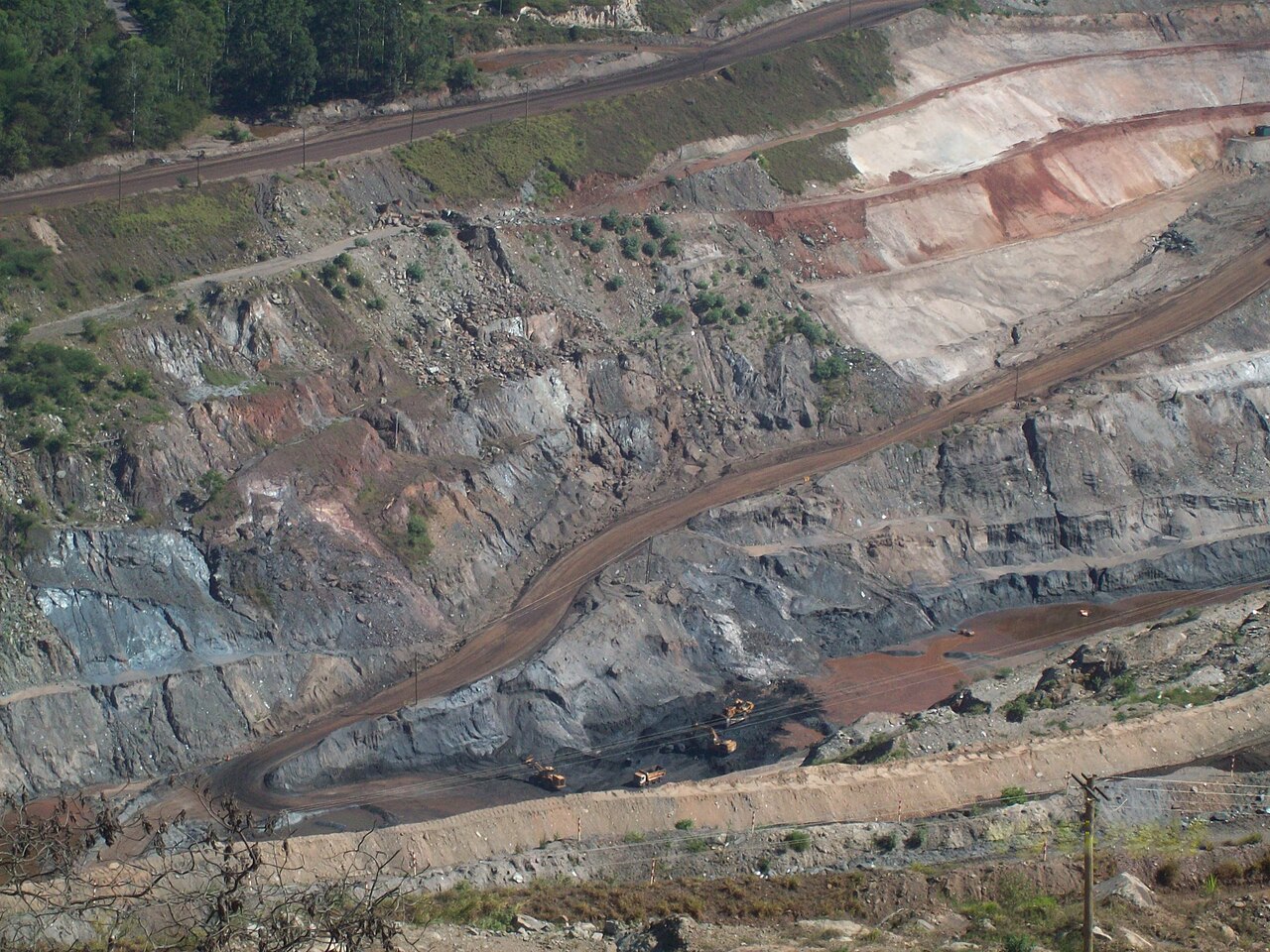
Brazil is the world’s second-largest iron ore producer after Australia. The US Geological Survey (USGS), the US government’s earth-science agency, estimates Brazilian output at 420 million tonnes in 2025.
The same 2026 survey puts Brazil’s crude iron ore reserves at 34 billion tonnes. The leading miner, Vale, produced 336.1 million tonnes of iron ore in 2025, according to the company’s own production data.
Niobium is a metal added to steel and to superalloys for the aerospace industry. Brazil produced about 93% of the world’s niobium in 2025, according to the USGS.
Brazil also holds at least 14 million of the more than 21 million tonnes of niobium reserves known worldwide. China took 49% of Brazil’s ferroniobium exports and the United States 8%, according to the USGS 2026 summary.
Rare earths, metals used mainly in magnets, are the newest prize among Brazil’s mineral resources. Brazil holds 11 million tonnes of rare-earth reserves, second only to China’s 44 million.
Yet Brazil mined only about 2,000 tonnes of rare earths in 2025, against China’s 270,000 tonnes. It also produced about 12,000 tonnes of lithium, the battery metal, from reserves of 540,000 tonnes.
Where new mining money is heading is covered in Brazil’s mining investment plans to 2030.
Rio Times · Live Market Intelligence
Brazil — Live Market Board
B3 · São Paulo
Oct 10, 2026 · 11:01
Ibovespa · benchmark
209,066.90
+1.38%
L 167,142day rangeH 168,310
+21.85% over 12 months
Market breadth · 15 names
47% advancing
7 ▲ advancing8 declining ▼
Currencies, rates & key inputs
Sector heatmap · average move today
Mining
+1.16%
VALE3, CSNA3, GGBR4
Industrials
+0.20%
WEGE3, RENT3
Financials
-0.10%
ITUB4, BBDC4, BBAS3, B3SA3
Energy
-0.12%
PETR4, PRIO3
Consumer Staples
-0.80%
ABEV3
Consumer Disc.
-2.63%
AZZA3
Latin America scoreboard
IndexLastTodayStrength
IbovespaBrazil
209,066.90
+1.38%
S&P/BMV IPCMexico
66,048.57
+1.63%
S&P IPSAChile
11,044.42
+0.18%
S&P MERVALArgentina
2,828,027
-0.16%
MSCI COLCAPColombia
2,531.15
+0.21%
BVL S&P PerúPeru
59,610.00
+2.26%
Full instrument board
| IBOV | 209,066.90 | +1.38% | +21.85% | 206,220.24 | 168,310 | 167,142 | — |
| USD/BRL | 5.16 | +0.01% | -5.13% | 5.16 | 5.18 | 5.14 | — |
| SELIC | 14.00% | — | — | — | — | — | |
| PETR4 | 41.64 | -0.05% | +35.19% | 41.66 | 41.97 | 41.15 | 41,499,400 |
| VALE3 | 72.97 | +0.83% | +30.75% | 72.37 | 73.54 | 72.66 | 17,658,000 |
| ITUB4 | 38.60 | -1.03% | +4.57% | 39.00 | 39.34 | 38.39 | 29,487,800 |
| BBDC4 | 16.85 | +0.36% | +3.50% | 16.79 | 16.90 | 16.67 | 19,416,900 |
| BBAS3 | 19.37 | +0.47% | +0.73% | 19.28 | 19.44 | 19.16 | 11,069,200 |
| B3SA3 | 14.26 | -0.21% | +12.73% | 14.29 | 14.47 | 14.11 | 33,037,800 |
| ABEV3 | 14.89 | -0.80% | +21.91% | 15.01 | 15.07 | 14.81 | 16,453,100 |
| WEGE3 | 47.59 | +0.49% | +29.99% | 47.36 | 48.08 | 47.36 | 3,364,600 |
| PRIO3 | 59.14 | -0.19% | +50.67% | 59.25 | 59.81 | 58.74 | 3,325,600 |
| SUZB3 | 41.33 | +2.35% | -23.55% | 40.38 | 41.48 | 40.35 | 3,914,900 |
| RENT3 | 34.68 | -0.09% | +0.84% | 34.71 | 34.96 | 34.35 | 7,979,100 |
| AZZA3 | 15.89 | -2.63% | -53.76% | 16.32 | 16.42 | 15.82 | 1,330,300 |
| CSNA3 | 4.30 | +0.47% | -42.65% | 4.28 | 4.41 | 4.26 | 10,076,100 |
| GGBR4 | 24.69 | +2.19% | +51.38% | 24.16 | 24.85 | 24.18 | 7,047,600 |
| ENEV3 | 24.21 | -1.38% | +70.49% | 24.55 | 24.64 | 23.99 | 9,297,000 |
Largest moves today
AZZA3
15.89
-2.63%
SUZB3
41.33
+2.35%
GGBR4
24.69
+2.19%
IBOV
209,066.90
+1.38%
ENEV3
24.21
-1.38%
ITUB4
38.60
-1.03%
VALE3
72.97
+0.83%
ABEV3
14.89
-0.80%
The session read
The Ibovespa rose 1.38%, with breadth negative — 7 of 15 names higher. Materials led, while Consumer Disc. lagged.
From The Rio Times
Related coverage · 10 Oct 2026
Brazil Poll Gives Flávio Bolsonaro 52.8%, Lula 47.2%
Read →
Farmland, Soybeans and Cattle
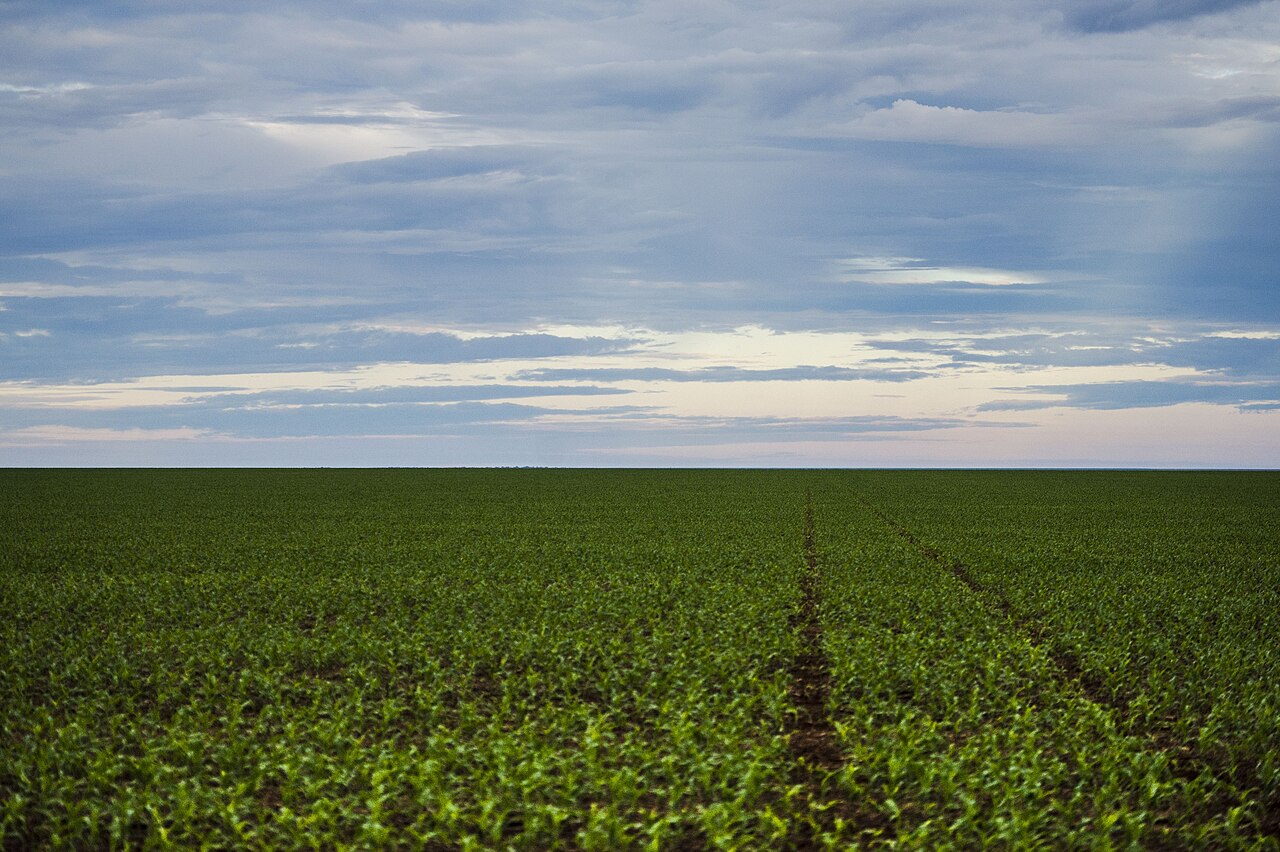
Conab, the federal crop-supply agency, estimates Brazil’s 2025/26 grain harvest at 361.7 million tonnes (September 2026). That is 2.6% more than a year earlier.
Soybeans led with a record 180.4 million tonnes, followed by 144 million tonnes of corn. Grain crops covered 83.5 million hectares, about 206 million acres.
Brazil’s cattle herd stood at 234.3 million head in 2025, the lowest in three years, according to IBGE, the national statistics institute.
Coffee is another major crop. With almost all of it picked, Conab put the 2026 coffee crop at 67.6 million bags of 60 kilograms each (September 2026).
Water and Hydropower
Brazil holds about 12% of the planet’s fresh water reserves, according to ANA, the national water and sanitation agency (June 2026). Among Brazil’s resources, water is the one that keeps the lights on.
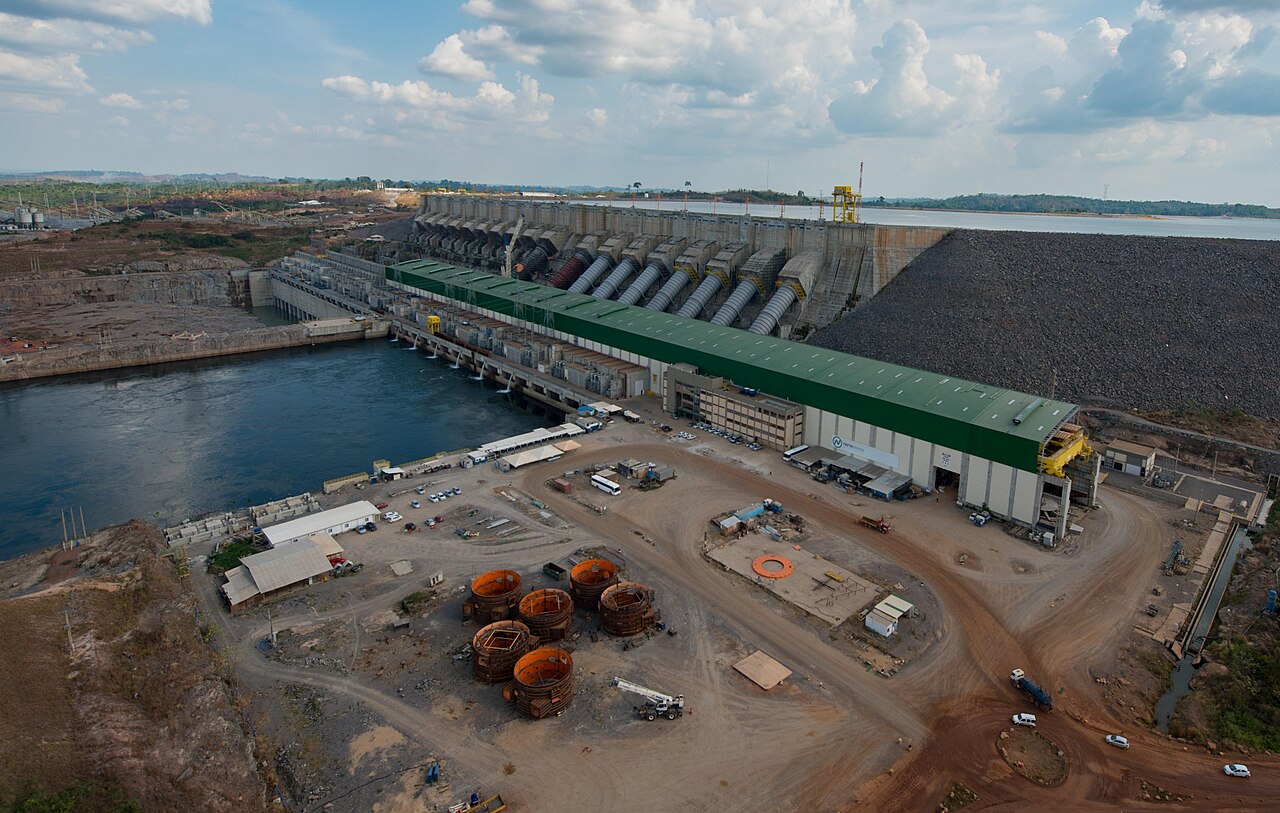
Hydropower generated 401,415 gigawatt-hours in 2025, just over half of Brazil’s electricity. Renewable sources supplied 86.8% of the power, according to the 2026 National Energy Balance from EPE, the energy ministry’s planning company.
Dry years expose the risk. Hydro output fell 4.8% in 2025, while gas-fired generation rose 22.7%.
Wind and solar together produced 26.4% of Brazil’s electricity in 2025. Dams also carry safety risks, a subject of Brazil’s latest dam safety report.
Forests and Fisheries
INPE, the national space research institute, measures forest loss by satellite. Its PRODES system counted 5,731 square kilometres (2,213 square miles) of Amazon clearing between August 2024 and July 2025.
That was 12.07% less than a year earlier. Mato Grosso was the only Amazon state where clearing rose, by 26.73%.
INPE’s faster DETER alert system flagged 2,874 square kilometres (1,110 square miles) from August 2025 to July 2026. That was the lowest in its series and 36% less than a year earlier.
DETER alerts in the Cerrado, the tropical savanna south of the Amazon, fell 7.8% to 5,119 square kilometres over the same period.
Fish and Shrimp Farming
Brazil’s fish farms produced 783,000 tonnes in 2025, and tilapia made up 68.2% of it, according to IBGE’s livestock survey. Paraná state grew 39.2% of the tilapia.
Shrimp farms produced a record 172,400 tonnes. All aquaculture output together was worth R$13.2 billion (about US$2.6 billion) in 2025.
Who Extracts and Who Profits
The federal government controls Petrobras through 50.26% of its voting shares, yet owns only 29.02% of total capital. Those figures come from the company’s September 2026 shareholder data.
Foreign investors hold 48.73% of Petrobras capital. American Depositary Receipts, the certificates that trade on the New York Stock Exchange, represent 21.59%.
Oil money also flows to governments through royalties and a special levy on the most productive fields. In 2025 these payments totalled R$100.4 billion (about US$20 billion), according to ANP accounts.
Rio de Janeiro state and its towns received R$45.1 billion (about US$9 billion), close to half of the total.
The federal government kept R$35.8 billion (about US$7.2 billion), part of it earmarked for education, health and a social fund.
The families and groups behind these industries appear in who dominates Brazil, and wider coverage sits on the Brazil news page.
The Environmental Cost
Two mining-dam collapses in Minas Gerais state show the human cost. In 2015 the Fundão tailings dam in Mariana gave way and killed 19 people.
The dam belonged to Samarco, controlled by Vale and Australian miner BHP. Mud degraded the Doce River basin, reached the Atlantic and affected more than 40 municipalities.
The Supreme Federal Court (STF), Brazil’s highest court, calls it the country’s largest environmental disaster. In November 2024 it endorsed a R$170 billion (about US$34 billion) repair deal.
On 25 January 2019 Vale dams at the Córrego do Feijão mine in Brumadinho collapsed and killed 272 people. A February 2021 settlement with the Minas Gerais government, prosecutors and public defenders set reparations at R$37.68 billion (about US$7.5 billion).
What Prediction Markets Say
The runoff on Sunday 25 October pits President Luiz Inácio Lula da Silva, of the left-wing Workers’ Party (PT), against Flávio Bolsonaro. Flávio Bolsonaro is a senator for Rio de Janeiro from the conservative Liberal Party (PL).
Polymarket is a platform where people bet real money on events. It gave Flávio Bolsonaro an 88.6% chance of winning (10 October, 9:25 a.m. ET).
Bets on that market totalled about US$179.7 million. A separate Polymarket margin bet priced a Bolsonaro win by 4 to 8 points at 48.5%.
In the 4 October first round, Flávio took about 47% of valid votes and Lula about 45%, the Senate’s news agency reported.
The winner matters for Brazil’s resources because the government steers Petrobras as its controlling shareholder. Federal agencies also license drilling, mines and forest clearance.
Prediction markets · who wins the runoff
Implied chance of winning Brazil’s presidency on 25 October, from traders’ prices.
Polymarket
Flávio Bolsonaro 88.5% · Lula 11.5% (US$180 million traded)
Kalshi (regulated in the US by the CFTC)
Flávio Bolsonaro 87% · Lula 13%
As of 10 October, 10:00 am ET (15:00 Lisbon), updated every 20 minutes. Prices are bets, not polls, and can move fast.
Why we show this: prediction markets turn real-money bets into a live probability that moves within minutes of the news, which is why investors, campaigns and newsrooms in the United States now follow them closely. We show them next to polls and official results, never instead of them.
What It Means for US Readers
The United States sold US$54.3 billion of goods to Brazil in 2025 and bought US$39.9 billion, Census Bureau data show. That left a US surplus of US$14.4 billion.
Brazil supplied 58% of US iron ore imports and 67% of US niobium imports in 2021-24, the USGS reports. That makes Brazil’s resources part of American steel and aerospace supply chains.
Since 22 July 2026 Washington has charged a 25% tariff on Brazilian goods, with exemptions, under Section 301, a US unfair-trade law. A second 12.5% Section 301 tariff, from a forced-labour probe of 60 economies, began on 24 July.
Coffee, beef, aircraft and orange juice escaped the new duties, and oil and its derivatives are exempt from the 12.5% charge. Brazil’s trade ministry said in July 2026 that 52.7% of its exports to the US faced no new surcharge.
The two governments opened consultations at the World Trade Organization in Geneva on 25 September 2026. On 30 September, Brazilian ministers met US Trade Representative Jamieson Greer in Milwaukee and agreed to form a working group.
Critical minerals featured in an earlier US offer. A first US proposal in October 2025 made 21 demands, including advantages on critical-mineral sales.
The Lula government rejected that proposal, the São Paulo newspaper O Estado de S. Paulo reported.
US investors who hold Petrobras shares through New York receipts carry the policy risk of the runoff. Brazil’s 180.4-million-tonne soybean crop also matters to US farmers, who sell to the same world buyers.
What Is Not Known
Whether the oil found off Amapá is commercial, and how much there is, remains open. Petrobras said on 2 October 2026 that drilling continued to evaluate the rock layers it had found.
The runoff winner’s plans for Petrobras, mining licences and Amazon enforcement become policy only once the new government takes office in 2027.
If the consultations at the World Trade Organization fail, Brazil can ask for a dispute panel after 60 days. Whether the tariffs change is open.
INPE’s official PRODES rate for August 2025 to July 2026 will show whether the drop in DETER alerts holds.
Brazil’s rare-earth reserves are large, but how fast mines and processing plants can turn them into supply for US buyers remains open. IBGE’s survey covers farmed fish only, so the size of the wild catch is less clear.
Frequently Asked Questions
What are Brazil’s main natural resources?
Brazil’s main resources are pre-salt oil and gas, iron ore, niobium and rare earths, farmland for soybeans, corn, cattle and coffee, about 12% of the world’s fresh water, the Amazon forest and farmed fish.
How much oil does Brazil produce?
Brazil produced 4.6 million barrels of oil a day in August 2026, according to the ANP regulator. Including natural gas, output reached 6.0 million barrels of oil equivalent a day, 82.6% of it from the pre-salt.
Who owns Petrobras?
The Brazilian federal government controls Petrobras with 50.26% of voting shares but owns 29.02% of total capital. Foreign investors hold 48.73%, and New York-traded receipts represent 21.59% (September 2026).
Why does Brazilian niobium matter to the United States?
Brazil produced about 93% of the world’s niobium in 2025 and supplied 67% of US niobium imports in 2021-24, according to the USGS. Niobium strengthens steel and goes into aerospace superalloys.
Is deforestation in the Brazilian Amazon falling?
Yes. INPE’s PRODES system measured 5,731 square kilometres of clearing in the year to July 2025, down 12.07%. DETER alerts for August 2025 to July 2026 fell 36% to the lowest level in the series.
Do US tariffs affect Brazil’s resources?
Partly. Since July 2026 the US has charged 25% and 12.5% Section 301 tariffs on many Brazilian goods. Coffee, beef and orange juice are exempt, and oil is exempt from the 12.5% charge.
Sources: ANP, oil and gas production August 2026, 2026-10-01; ANP, 4th production-sharing permanent offer cycle, 2026-10-07; ANP, 6th concession permanent offer cycle, 2026-10-07; ANP, consolidated government take 2025, 2026-05-25; USGS Mineral Commodity Summaries 2026, iron ore, 2026-02; USGS Mineral Commodity Summaries 2026, niobium, 2026-02; USGS Mineral Commodity Summaries 2026, rare earths, 2026-02; USGS Mineral Commodity Summaries 2026, lithium, 2026-02; Vale, quarterly reports and 2Q26 performance data (2025 iron ore production), 2026-07; Conab, 2025/26 grain harvest estimate, 2026-09-15; Conab, 2026 coffee estimate, 2026-09-24; IBGE, Municipal Livestock Survey 2025, 2026-09-30; ANA, World Basin Summit, 2026-06-17; EPE, National Energy Balance 2026 summary, 2026; INPE, PRODES Amazon 2025, 2026-08-18; INPE, DETER 2025-2026, 2026-08-07; Petrobras, shareholder structure, 2026-09; STF, Mariana settlement, 2024-11-06; MPMG, Brumadinho reparation agreement, four years, 2025-02; US Census Bureau, trade in goods with Brazil, 2026; Agência Brasil, Margem Equatorial discovery, 2026-10-02; Agência Brasil, US 12.5% tariff exemptions, 2026-07-23; Agência Brasil, 37.5% tariff and MDIC data, 2026-07-24; Poder360, Brazil-US WTO consultations, 2026-09-25; Agência Senado, first-round result, 2026-10-04; Terra (O Estado de S. Paulo), Brazil-US tariff talks in Milwaukee, 2026-09-30; USTR notice, Section 301 action on Brazil (Federal Register 2026-14542), 2026-07-20; USTR notice, Section 301 forced-labour actions (Federal Register 2026-15181), 2026-07-28.
This article was produced by The Rio Times’ automated newsroom system. How we use AI · Report an error · Editorial responsibility: Matthias Camenzind, Editor-in-Chief
The Rio Times · Power Map
See who really holds power in Latin America
Click to open the Power Map →