By The Rio Times | Created at 2026-06-23 17:36:34 | Updated at 2026-06-23 18:55:17
1 hour ago
By The Rio Times | Created at 2026-06-23 17:36:34 | Updated at 2026-06-23 18:55:17
1 hour ago
Mining
Key Facts
—The green light. Brazil’s environment agency, Ibama, has granted an installation licence for Mineração Rio do Norte’s New Mines Project in western Pará.
—The money. The plan carries about 9 billion reais ($1.75bn) of investment from 2027 to 2041, with a further 1.9 billion reais ($370m) earmarked for 2026.
—The output. The company aims to keep mining about 12.5 million tonnes of bauxite a year, the raw material for aluminium, out to 2041.
—Why now. The mine’s current pits are running low, so the new areas are needed simply to hold production steady, not to grow it.
—The wait. The approval ends a licensing process that began in 2018 and required studies of nearby Amazon river and quilombola communities.
—The footprint. The project supports more than 7,500 jobs, most held by people from Pará, and adds about 2,300 more during construction.
A single Brazil bauxite mine in the Amazon has just won the approval it needs to keep feeding the world’s aluminium supply for another fifteen years.
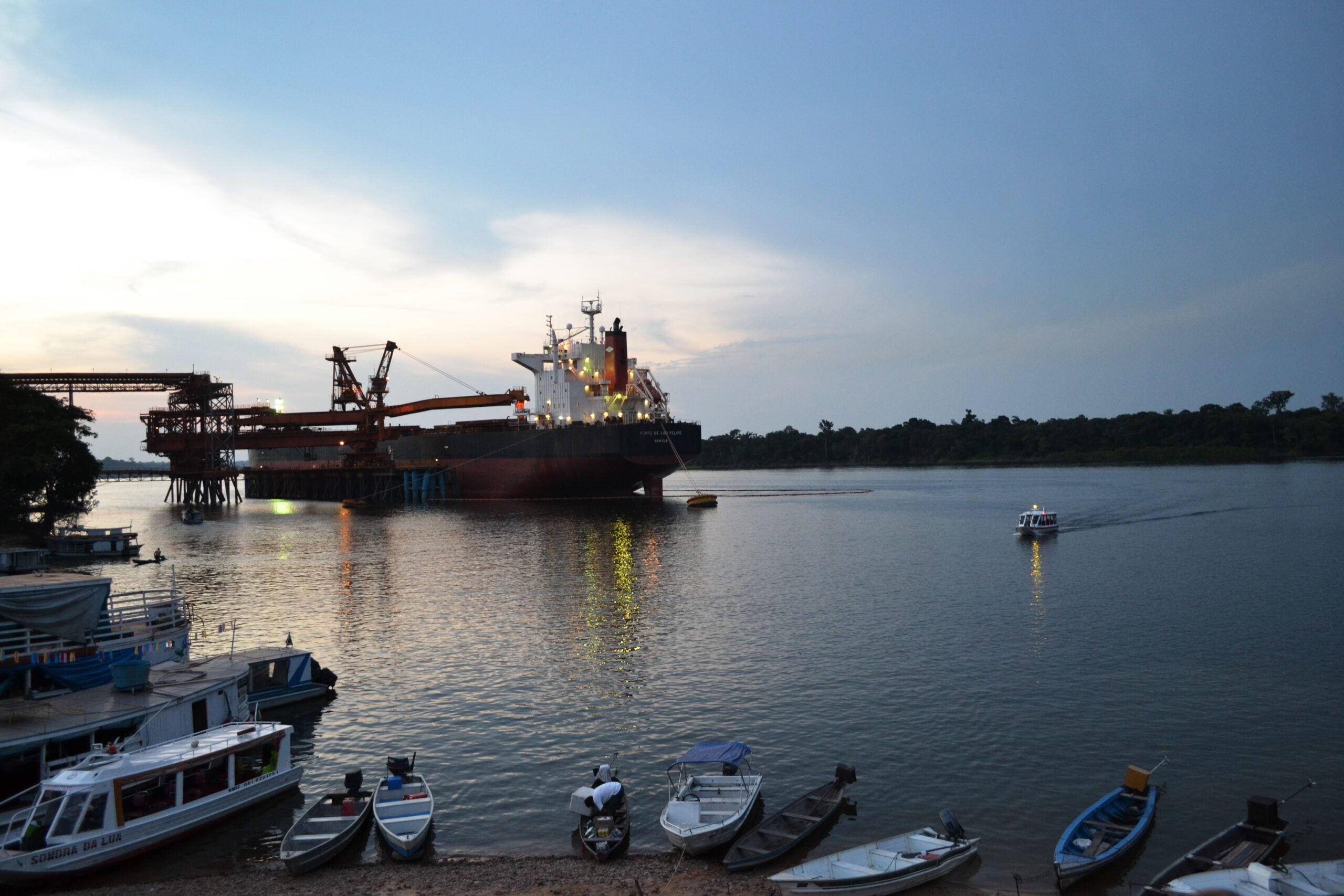 Bauxite being loaded at Porto Trombetas in Pará, the hub of Brazil’s largest bauxite operation. (Photo: Wikimedia Commons)
Aluminium starts as a reddish rock called bauxite, and Brazil digs most of its share from one place in the Amazon. That mine has just been told it can keep going.
Mineração Rio do Norte, the country’s largest bauxite producer, won an installation licence from Brazil’s federal environment agency for a project that extends its life to 2041.
Why this Brazil bauxite mine matters
The licence, granted in late April, lets the company start building five new mining areas in western Pará, a state in Brazil’s northern Amazon region.
The new pits sit across three small river towns, Oriximiná, Terra Santa and Faro, deep in the rainforest. The company has mined this corner of the Amazon for more than four decades.
The reason is simple. The pits the company has worked for decades are gradually running out, so without new ground its output would start to fall.
The new areas are meant to hold production steady at about 12.5 million tonnes of bauxite a year. That keeps a long industrial chain, from refineries to smelters, supplied with raw material.
For a sense of scale, the company has tagged the plan with about 9 billion reais, or roughly 1.75 billion dollars, of spending spread across the years to 2041.
A long wait in a sensitive place
Getting here took eight years. The approval process began in 2018 and ran through environmental studies, public hearings and a separate review of nearby communities.
Some of those are quilombola communities, the descendants of people who escaped slavery and settled the land generations ago. Their consent was sought under an international labour convention before the licence could proceed.
That consultation is not a formality. It reflects a wider shift in Brazil, where big projects increasingly have to show they have squared local communities and regulators before breaking ground.
For the towns involved, the stakes are jobs. The mine is the economic anchor of a remote stretch of the Amazon, and a halt in production would hit the local workforce hard.
The setting matters because this is the Amazon, and large new mining works there draw close scrutiny. Brazil is hosting the COP30 climate summit later this year, which sharpens that attention.
It points to a tension the country keeps facing. Pará is both a mining heartland and the showcase for Brazil’s greener ambitions, and the two pull in different directions.
The company says it will store mining waste using a dry method rather than a wet dam. That choice is meant to lower the risk that has haunted Brazilian mining since two deadly dam collapses.
Those disasters, at Mariana in 2015 and Brumadinho in 2019, killed hundreds and reshaped how Brazil regulates tailings. A dry-stacked design avoids the kind of structure that failed in both.
What it means for investors
The headline read is supply security. A steady source of bauxite underpins Brazil’s position in the global aluminium trade, a metal prized as economies push toward lighter, more recyclable materials.
The owners are a who’s who of the metal. The mine is shared among large aluminium and mining groups, so its raw material feeds plants well beyond Brazil’s borders.
There is a regional angle too. The company puts the local payoff at about 380 million reais ($74m) a year in taxes and some 727 million reais ($141m) in local purchases.
The caution is that this is a hold-the-line project, not a growth story. It defends existing output rather than adding new tonnes to a tight global market.
Frequently Asked Questions
What is the New Mines Project at this Brazil bauxite mine?
It is a plan by Mineração Rio do Norte to open five new mining areas in western Pará, replacing pits that are running low. The goal is to keep output near 12.5 million tonnes of bauxite a year through 2041.
Why did the licence take so long?
The process started in 2018 and required environmental studies, public hearings and a review of impacts on nearby river and quilombola communities. Their consent was sought under an international labour convention before approval.
Why does bauxite matter globally?
Bauxite is the rock from which aluminium is made, so a steady supply feeds refineries and smelters worldwide. Brazil is a major producer, and this mine is the country’s largest single source.
The Rio Times · Power Map
See who really holds power in Latin America
Click to open the Power Map →