By The Rio Times | Created at 2026-10-02 07:51:50 | Updated at 2026-10-02 09:56:43
2 hours ago
By The Rio Times | Created at 2026-10-02 07:51:50 | Updated at 2026-10-02 09:56:43
2 hours ago
CHILE · EDUCATION
Key Facts
- —The country Chile, a nation of about 20 million people and the world’s largest copper producer, has a long history of student protest. Marches in 2006 and 2011 reshaped its education policy.
- —The background President José Antonio Kast sent his 2027 budget to Congress on 30 September. Students and teachers fear cuts to public education.
- —Why now On 1 October the Confech student confederation, teachers and unions marched in Santiago and other cities under the slogan “Not one peso less for education”.
- —What happened Teachers’ union president Mario Aguilar called the police response “very brutal and unjustified”. The Catholic University’s rector condemned an attack on students who staged a counter-protest.
- —The numbers Police counted about 6,000 marchers in Santiago; organisers claimed more than 20,000. Police reported 31 arrests in Santiago and at least six in Concepción.
- —What it means for you Expect further marches in central Santiago, including on the Alameda, the main avenue. The teachers’ union says it will march again “as many times as necessary”.
- —Still open Whether Congress changes the education lines of the budget, and whether any arrests lead to charges.
Chile’s main teachers’ union has called the police response to a student march in Santiago “very brutal and unjustified”. The march on 1 October protested against possible education cuts in the 2027 budget.
Free daily brief — no card needed
Get every Chile story in one morning email
We build you a personalized brief around the topics you follow — free for 7 days. Love it? Your first month after that is US$1.
Yes, email me my free daily brief — I can unsubscribe any time.
The same day, the rector of the Pontifical Catholic University condemned an attack on his students by a hooded group during the march. In Concepción, police arrested at least six people after a separate march ended in barricades.
One-stop reference
Company Intelligence
Every listed company in Latin America — financials, ownership and structure for 1,450+ companies across 26 exchanges, in one place.
What the teachers say
Mario Aguilar leads the Colegio de Profesores, Chile’s national teachers’ union. He said the march was orderly until it reached the Santa Lucía hill, where the Carabineros, Chile’s national police, moved in.
“The repression was very brutal and unjustified,” Aguilar said, according to BioBioChile.
“Later they will show incidents of that kind, but they provoked them,” he added. “We were marching peacefully and, out of the blue, they repressed us.”
He also disputed the government’s figures. President Kast said education spending would rise, but Aguilar called that “misleading” and said it had fallen below the 2026 level.
The march had been authorised by the regional government delegation. Police used water cannon and tear gas near the GAM cultural centre and Santa Lucía, BioBioChile reported.
The attack outside the Catholic University
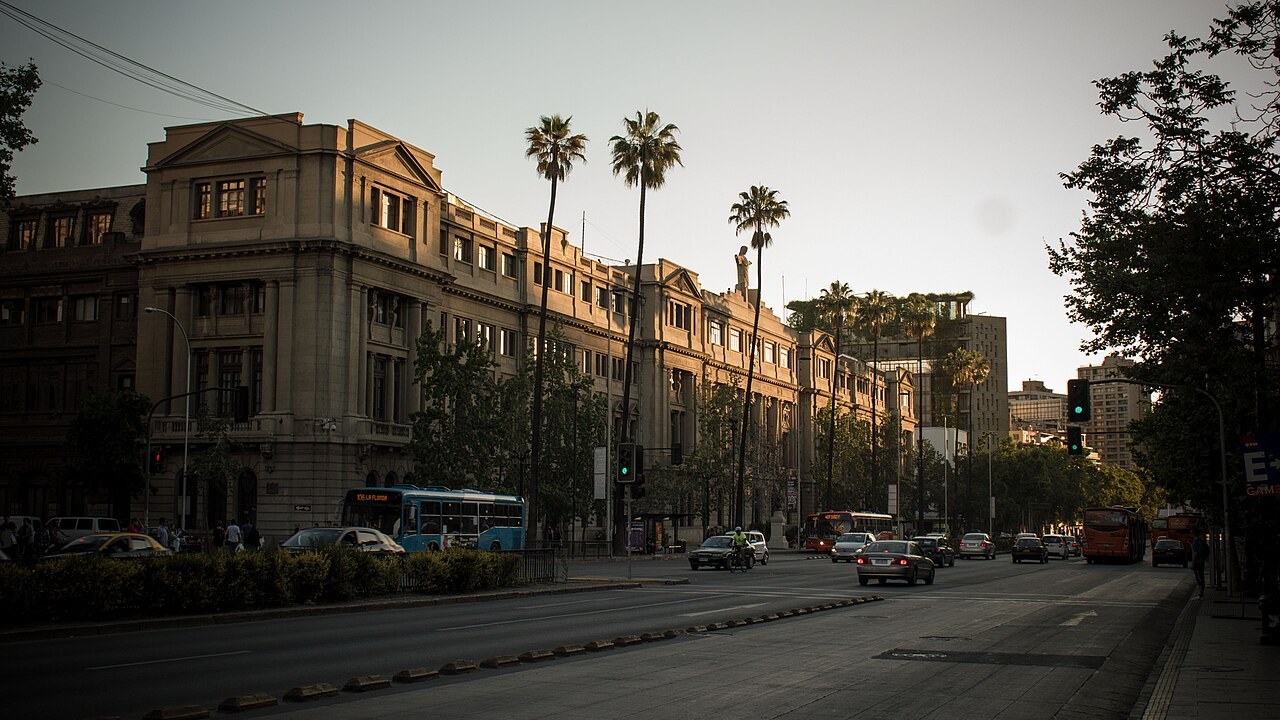
As the march passed the university’s Casa Central on the Alameda, two right-wing student groups staged a counter-protest. A hooded group attacked members of the Movimiento Gremial and Solidaridad UC.
Rector Juan Carlos de la Llera wrote to the university community that ten students were treated by campus emergency staff. Four were sent to the university’s hospital, and staff who stepped in were also attacked.
“Hitting and intimidating those who think differently is an inhuman act,” he wrote, according to The Clinic. It is “an expression of intolerance that no cause can justify”.
Those responsible will face disciplinary charges under university rules.
President Kast, speaking in Antofagasta, condemned the attack. “When you demonstrate, you also have to respect those who think differently,” he said, the news site Pauta reported.
The march organisers distanced themselves from the attack.
Laura Mlynarz, a Confech spokeswoman, said the confederation condemns “all the situations of violence” that day. She called clashes between students “unacceptable”.
Arrests in Santiago and Concepción
In a preliminary count, Interior Undersecretary Máximo Pavez put the number of arrests in Santiago at 17. By the afternoon, police had reported 31, according to BioBioChile.
In Concepción, the main city of the Biobío region, a march began at about 5:30 p.m. local time and passed peacefully. Around 7:30 p.m., some marchers set up barricades near Plaza Tribunales.
Colonel Marco Jiménez of the Concepción police said officers used chemical deterrents and water. Four people were arrested for public disorder, one under the anti-barricade law and one for assaulting an officer.
He said police had received no reports of injured people. No officers were hurt.
What comes next
The budget now goes through Congress, where education spending will be debated line by line. The Rio Times reported on the march and the earlier health strike on 1 October.
Thursday’s events do not signal a return to the mass unrest of 2019. The march was authorised, most of it passed peacefully, and both the government and the organisers condemned the violence.
What they do show is a hardening tone on both sides. Teachers accuse the police of brutality, while the government and the university accuse marchers of attacking those who disagree.
Frequently Asked Questions
Why are Chilean students protesting?
They fear cuts to public education in the 2027 budget that President José Antonio Kast sent to Congress on 30 September. Their slogan is “Not one peso less for education”.
What is the Colegio de Profesores?
It is Chile’s national teachers’ union. Its president, Mario Aguilar, marched with students on 1 October and called the police response “very brutal and unjustified”.
What happened at the Catholic University?
A hooded group attacked members of two right-wing student groups who staged a counter-protest outside the university’s Casa Central. The rector said ten students were treated and four were sent to hospital.
Is it safe to visit Santiago during protests?
Most marches are authorised and pass peacefully, but clashes can break out near the Alameda and the presidential palace. Visitors can avoid the march route on announced protest days.
Sources: BioBioChile, Colegio de Profesores, 1 October 2026, BioBioChile, Concepción arrests, 1 October 2026, BioBioChile, Confech spokeswoman, 1 October 2026, The Clinic, UC rector’s letter, 2 October 2026, Pauta, Kast condemns attack, 1 October 2026, El Periódico, 1 October 2026, El Argentino Diario, Undersecretary Pavez’s count, 1 October 2026. All retrieved 2 October 2026.
The Rio Times · Power Map
See who really holds power in Latin America
Click to open the Power Map →