By The Rio Times | Created at 2026-10-02 07:51:48 | Updated at 2026-10-02 08:49:46
1 hour ago
By The Rio Times | Created at 2026-10-02 07:51:48 | Updated at 2026-10-02 08:49:46
1 hour ago
DOMINICAN REPUBLIC · SECURITY
Key Facts
- —The country The Dominican Republic is a Caribbean country of about 10.8 million people that shares the island of Hispaniola with Haiti. Its constitution bans the death penalty.
- —The background Police describe many deaths as “exchanges of gunfire” with suspects. Rights groups have long said many are executions, and the count rose sharply in September under a new police chief.
- —Why now On 30 September Diario Libre found that only three of at least 182 people killed by police this year appeared on the force’s public list of fugitives.
- —What happened On 1 October two legal organisations, Finjus and the Dominican Institute of Criminal Law, demanded limits on lethal force and independent investigations of the deaths.
- —The numbers Of 99 homicides recorded from 1 to 25 September, 45 were deaths in police operations, according to the government’s official count reported by Diario Libre.
- —What it means for you Overall murder is still falling: the homicide rate stood at 7.36 per 100,000 people by 25 September, against 8.16 a year earlier.
- —Still open Whether any death will be independently investigated. President Luis Abinader has told fugitives to surrender; his vice-president has defended the police.
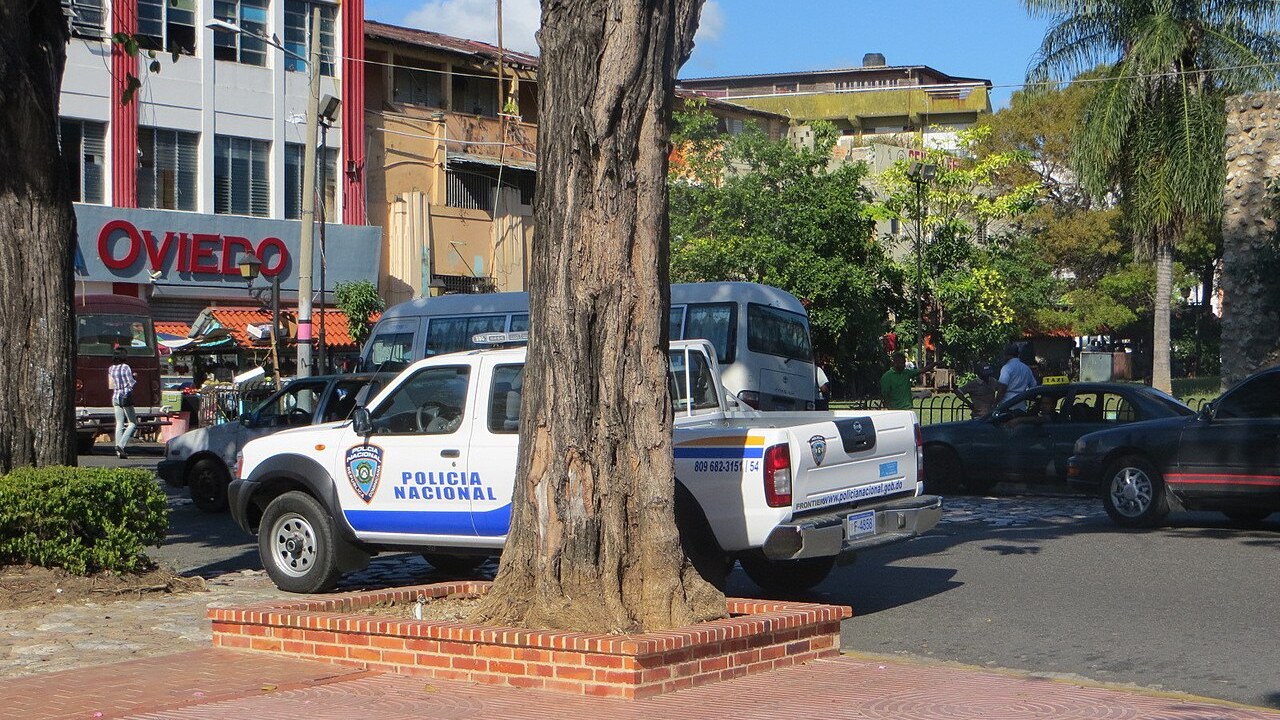
Dominican Republic police killings have passed 180 this year, and two of the country’s leading legal organisations now want them independently investigated. Both spoke out on 1 October.
Free daily brief — no card needed
Get every Dominican Republic story in one morning email
We build you a personalized brief around the topics you follow — free for 7 days. Love it? Your first month after that is US$1.
Yes, email me my free daily brief — I can unsubscribe any time.
Their statements followed a Diario Libre investigation published on 30 September. It found that only three of at least 182 people killed by police in 2026 were on the force’s public fugitive list.
One-stop reference
Company Intelligence
Every listed company in Latin America — financials, ownership and structure for 1,450+ companies across 26 exchanges, in one place.
What the legal groups say
Finjus, a foundation that works on justice and the rule of law, said fighting crime does not justify extrajudicial executions. Its executive vice-president, Servio Tulio Castaños Guzmán, cited Article 37 of the constitution, which protects the right to life.
Officers must tell “a real and imminent threat” from cases where it “has ceased or does not justify lethal force”, he said.
“Proportionality is not an abstract formula,” Castaños Guzmán added. He said police need legal backing, but with controls and accountability.
The Dominican Institute of Criminal Law (IDDP), a body of criminal-law specialists, asked President Abinader for a “ceasefire”. Its representative Cándido Simón said the police may identify and detain suspects but not kill them.
The IDDP wants every such death examined by independent investigators, using the United Nations’ Minnesota Protocol where it applies. No arrest warrant or criminal record turns a person into a convicted criminal, it said, according to the newspaper Hoy.
The fugitive list
Officials often justify the deaths by saying the dead were fugitives who fired on officers.
Diario Libre compared 354 entries on the police’s public fugitive list, from 2022 to 2026, with its own database. That database, Patrulla Letal, tracks deaths at the hands of security forces.
Only three of the 182 people killed this year appeared in both. On 28 September police chief Ernesto Rodríguez García said all those recently killed had “a criminal record of more than two entries”.
A criminal record does not put someone on the fugitive list, the newspaper noted. The police say only about 1% of wanted people reach the public platform, as “most wanted” cases.
The government’s position
On Thursday 1 October the police published a database of 53,877 pending arrest warrants against 50,865 people. The force has 43,464 officers, so there are more wanted people than police.
The police also singled out 73 people with multiple warrants, some with dozens, and 485 others with more than five each. Abinader repeated his call to fugitives the same day.
“What we repeat to them is that they should surrender, because there are teams searching,” he said. He spoke at a school opening in Santo Domingo Este.
Vice-President Raquel Peña said those who set out to commit crimes “have to face the consequences”. Abinader promised more officers, technology and patrols by city quadrant.
The numbers in context
September was the deadliest month of the year for police operations. Of the 99 homicides recorded from 1 to 25 September, 45 happened in police actions, ahead of 35 from personal disputes.
Yet the overall murder rate keeps falling.
It stood at 7.36 per 100,000 people by 25 September, down from 8.16 a year earlier. Violent deaths fell 6.1% in nine months, to about 931.
Interior Minister Faride Raful has acknowledged that a lower homicide rate does not necessarily make people feel safer. The Rio Times reported the September toll on 28 September.
What comes next
The legal groups have no power to open investigations; that rests with the Public Prosecutor’s Office. The reports published so far mention no independent review.
The criticism does not mean every death was unlawful, and police say those killed were dangerous offenders. It does mean the police account, that those killed were wanted offenders, is being tested against public records.
Frequently Asked Questions
How many people have Dominican police killed in 2026?
At least 182 by the end of September, according to Diario Libre’s database of deaths at the hands of security forces. Police typically describe such deaths as exchanges of gunfire.
What are Finjus and the IDDP?
Finjus is a Dominican foundation that works on justice and the rule of law. The IDDP, the Dominican Institute of Criminal Law, is a body of criminal-law specialists.
Does the Dominican Republic have the death penalty?
No. The constitution bans it and protects the right to life. That is why legal groups say police may detain suspects but not execute them.
Is the Dominican Republic becoming more dangerous?
Not by the main measure. The homicide rate fell to 7.36 per 100,000 people by 25 September, from 8.16 a year earlier. Deaths in police operations, however, rose.
Sources: Diario Libre, police deaths draw civil-society criticism, 2 October 2026, Diario Libre, Finjus statement, 1 October 2026, Diario Libre, police killings and the fugitive list, 30 September 2026, Diario Libre, September homicide figures, 30 September 2026, Diario Libre, Abinader to fugitives, 1 October 2026, Hoy, IDDP calls for a ceasefire, 1 October 2026. All retrieved 2 October 2026.
The Rio Times · Power Map
See who really holds power in Latin America
Click to open the Power Map →