 By GB News (World News) | Created at 2026-10-15 19:30:36 | Updated at 2026-10-15 20:45:42
1 hour ago
By GB News (World News) | Created at 2026-10-15 19:30:36 | Updated at 2026-10-15 20:45:42
1 hour ago
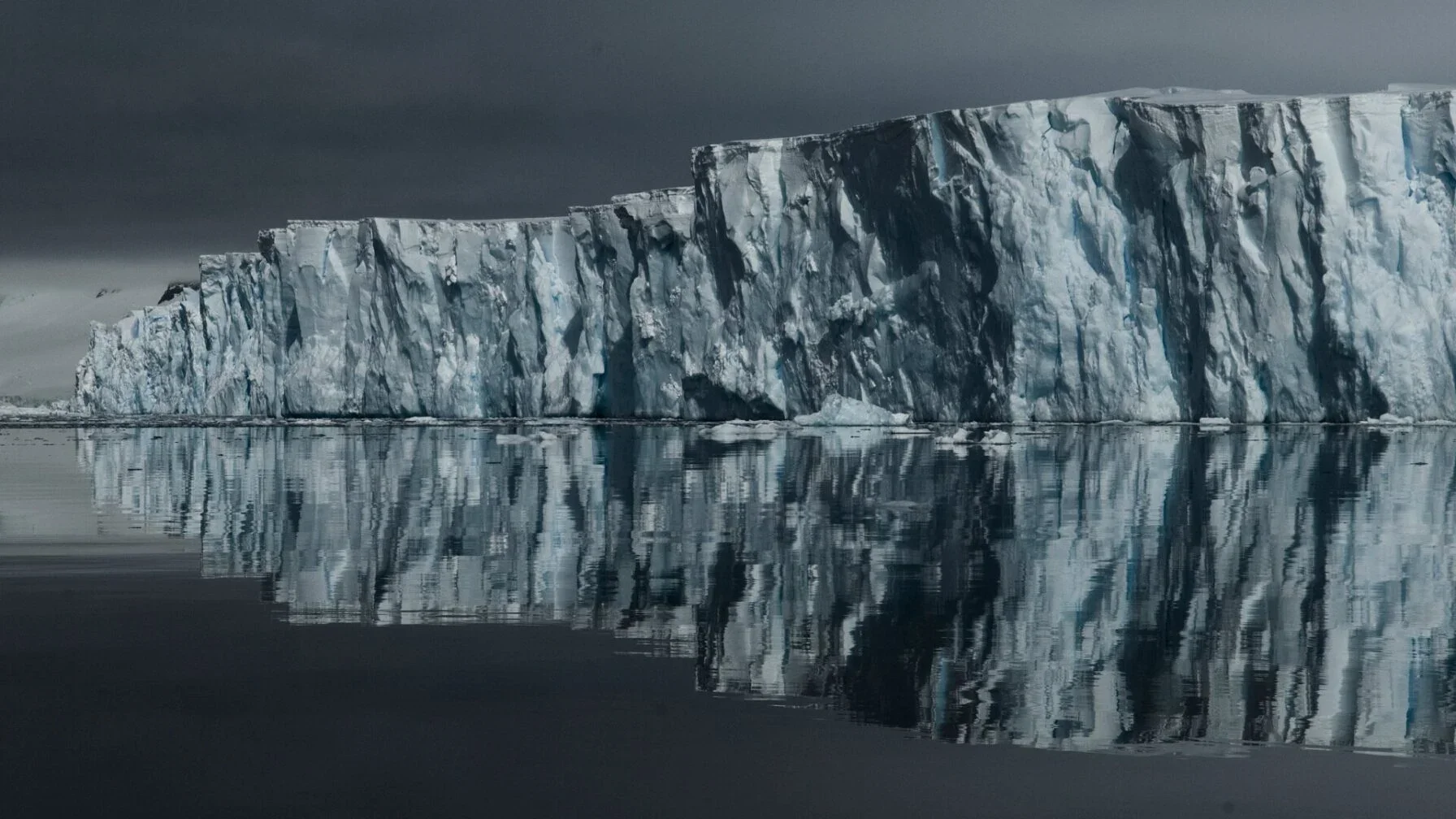
Researchers warned that the glacier will 'continually retreat across a predominantly retrograde seafloor toward its next topographic high'|
BRITISH ANTARCTIC SURVEY
Antarctica's Thwaites Glacier, widely known as the "Doomsday Glacier", is deteriorating far more rapidly than scientists had previously calculated, according to new research.
A team of glaciologists from the University of California, Irvine and Nasa's Jet Propulsion Laboratory constructed a new ice sheet model that projects the vast West Antarctic glacier could add up to 1.2 inches (30mm) to global sea levels by the end of the century, effectively doubling earlier forecasts.
Crucially, this accelerated ice loss could occur even without any additional global warming.
The glacier, roughly the size of Great Britain, currently accounts for approximately four per cent of worldwide sea level rise.
A complete collapse would push oceans more than two feet higher, but because Thwaites effectively acts as a plug restraining the broader Antarctic ice sheet, the ultimate consequence could be around 10 feet of rise, threatening coastal populations globally.
The breakthrough behind these revised projections lies in how scientists model the boundary where ice meets ocean.
For decades, glaciologists treated the "grounding line", where ice lifts off the seabed and begins floating, as a narrow, largely static feature.
However, satellite observations revealed that what was assumed to be a thin line is, in fact, a broad "grounding zone" that stretches several miles wide.
"We have come to acknowledge a different arrangement beneath Earth's major ocean-terminating glaciers," said lead author Mattia Poinelli, a project scientist at UCLA who conducted the research while at UC Irvine.
Within this zone, tidal cycles drive pressurised seawater deep beneath the grounded ice in a process called "tidal pumping," repeatedly lifting and lowering the thick ice mass.
This mechanism channels relatively warm ocean water far inland, triggering intense melting at the glacier's base that older models entirely failed to capture.
The study identified a particularly alarming risk involving the Mouginot Ridge, one of two critical underwater formations that anchor Thwaites and slow its march towards the sea.
Melting processes within the grounding zone are hastening the glacier's separation from this stabilising ridge, with the model placing the probability of full detachment at 60 per cent before 2100. Should that disconnection occur, the consequences would be severe.
"Once that ridge is unpinned, the glacier will continually retreat across a predominantly retrograde seafloor toward its next topographic high, the South Ridge," Mr Poinelli explained.
The underlying terrain compounds the danger considerably. The bedrock beneath Thwaites slopes downward as it extends inland, meaning that each phase of retreat exposes ever greater volumes of ice to erosive warm water, a self-reinforcing cycle that could dramatically accelerate the glacier's disintegration once the ridge connection is lost.
Eric Rignot, professor of Earth system science at UC Irvine and co-author of the paper, said the revised model represents a step change in accuracy.
"Most projections to date have struggled to match the rapidity of the mass loss because of missing physics; our new model with more complete physics can match the record and then produces projections that are twice as large as before," he said.
Mr Rignot added that the findings "predict greater risk of and exposure to coastal flooding than anticipated in the coming decades".
He and his colleagues plan to travel to Thwaites in 2028 to install instruments that can directly monitor seawater movement beneath the ice.
Even with immediate emissions reductions, Mr Rignot warned: "We can expect higher sea levels in the future resulting from the damage that has already been done."
You are about to be charged £0.00