 By GB News (World News) | Created at 2026-10-01 09:41:10 | Updated at 2026-10-01 10:44:11
1 hour ago
By GB News (World News) | Created at 2026-10-01 09:41:10 | Updated at 2026-10-01 10:44:11
1 hour ago
New driving licence rules are being introduced today that will place restrictions on younger motorists to emphasise the importance of road safety.
Northern Ireland will roll out the Graduated Driving Licence scheme today (October 1, 2026) in a bid to reduce the involvement of new, primarily young, drivers in road traffic accidents.
The GDL will require learner motorists to complete various tasks before being able to get their driving licence under the new Road Safety Strategy Action Plan.
Data from Northern Ireland's Department for Infrastructure shows that 164 people were killed or seriously injured in collisions in 2024 in which a driver aged between 17 and 23 was responsible.
Drivers between 17 and 23 years of age account for 24 per cent of fatal or serious collisions, despite making up just eight per cent of licence holders.
The new Graduated Driving Licence will require drivers to have a Mandatory Minimum Learning Period (MMLP) of six months before taking a practical test.
They will also be required to complete a Programme of Training that details the learning required to become a safe driver, which must be recorded in a logbook and signed by an approved instructor.
The 45mph speed restriction on learner and newly qualified drivers will be removed, alongside a longer post-test protection period, which will be increased to 24 months.
New Graduated Driving Licence rules have been launched in Northern Ireland today

Night time restrictions will also be introduced, with the GDL banning passengers for new drivers under 24 years old for the first six months after passing their test.
There can also be no more than one passenger aged between 14 and 20 years between 11pm and 6am, although restrictions do not apply to immediate family members.
The GDL will apply to all learners, regardless of age, whose provisional licence entitlement to drive a category B car starts on or after October 1, 2026.
Anyone learning how to drive will have until March 31, 2027, to complete their learning and pass the practical driving test.
Minister Liz Kimmins is pictured with St Colman’s College Principal Cormac McKinney and pupils during her visit to the school on Wednesday to discuss the introduction of Graduated Driver Licensing

DEPARTMENT FOR INFRASTRUCTURE
Infrastructure Minister Liz Kimmins confirmed that all learners will be subject to the Graduated Driving Licence and its post-test requirements from April 1, 2027.
M Kimmins visited St Colman's College earlier this week to discuss the GDL and raise awareness of the changes being introduced today.
The Sinn Féin MLA for Newry and Armagh said: "It was valuable to hear their thoughts and questions about the scheme and its impact on learner and newly qualified drivers.
"GDL aims to ensure drivers are not just technically competent but also safe, through structured learning, including completion of a Driver's Programme of Training and Logbook.
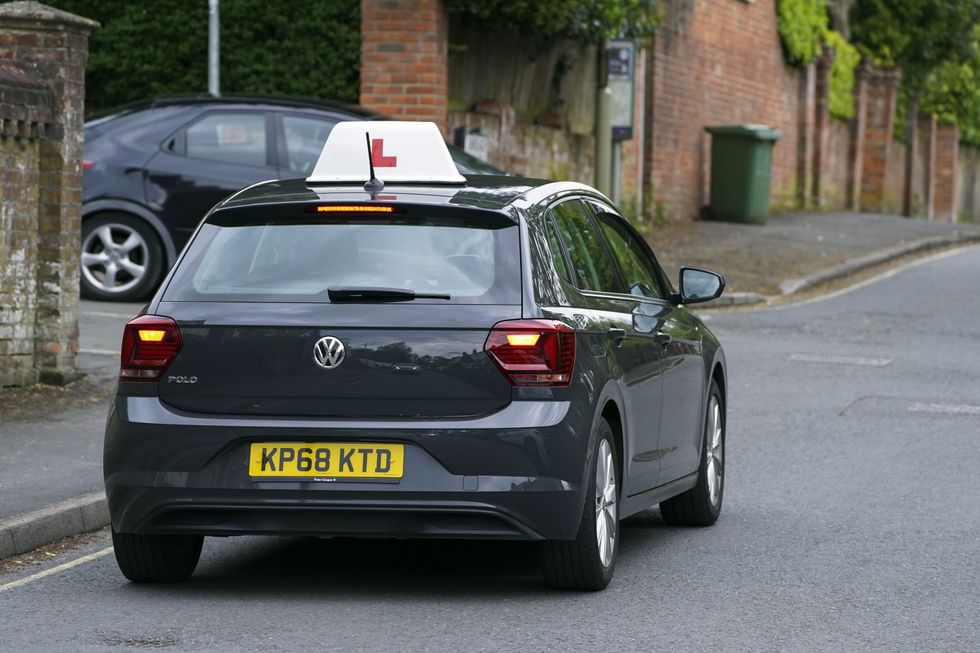
The driving licence rules will have a massive impact on younger motorists going forward
"This will better prepare drivers for both the driving test and post-test driving period by helping learners understand how their attitude, personality, behaviour and emotions can affect their driving style."
Ms Kimmins described the introduction of the GDL as "one of the most significant reforms to driver licensing and testing in almost 70 years".
The Department for Infrastructure launched a public information campaign about the GDL earlier this year after the measures were confirmed.
Officials from the DfI will continue to liaise with approved instructors, the PSNI and a range of other stakeholders.