By The Rio Times | Created at 2026-09-07 11:26:26 | Updated at 2026-10-02 11:07:48
3 weeks ago
By The Rio Times | Created at 2026-09-07 11:26:26 | Updated at 2026-10-02 11:07:48
3 weeks ago
GABON · ENERGY
Key Facts
—What moved: Five gas turbines with a combined announced capacity of 100 MW began leaving Owendo commercial port on 6 September, according to SEEG.
—How long it takes: The convoy runs over three days, from 6 to 8 September, moving daily from about 4 am to 6:30 pm under police escort.
—Where they are going: The Akournam thermal plant, which supplies Greater Libreville and has been the weak point in the capital’s power supply.
—The stated purpose: SEEG describes the delivery as a renewal of the Owendo gas plant’s production equipment, to make operation more reliable and improve service quality.
—The caveat: Announced capacity is not delivered capacity. Installation, commissioning and grid connection all sit between the convoy and the network.
—Why it matters now: Greater Libreville has been running with recurrent outages, and the capital concentrates most of Gabon’s formal economic activity.
—Fiscal context: Gabon cut its revenue forecast by a fifth this year while holding spending, which leaves little room for slippage on capital projects.
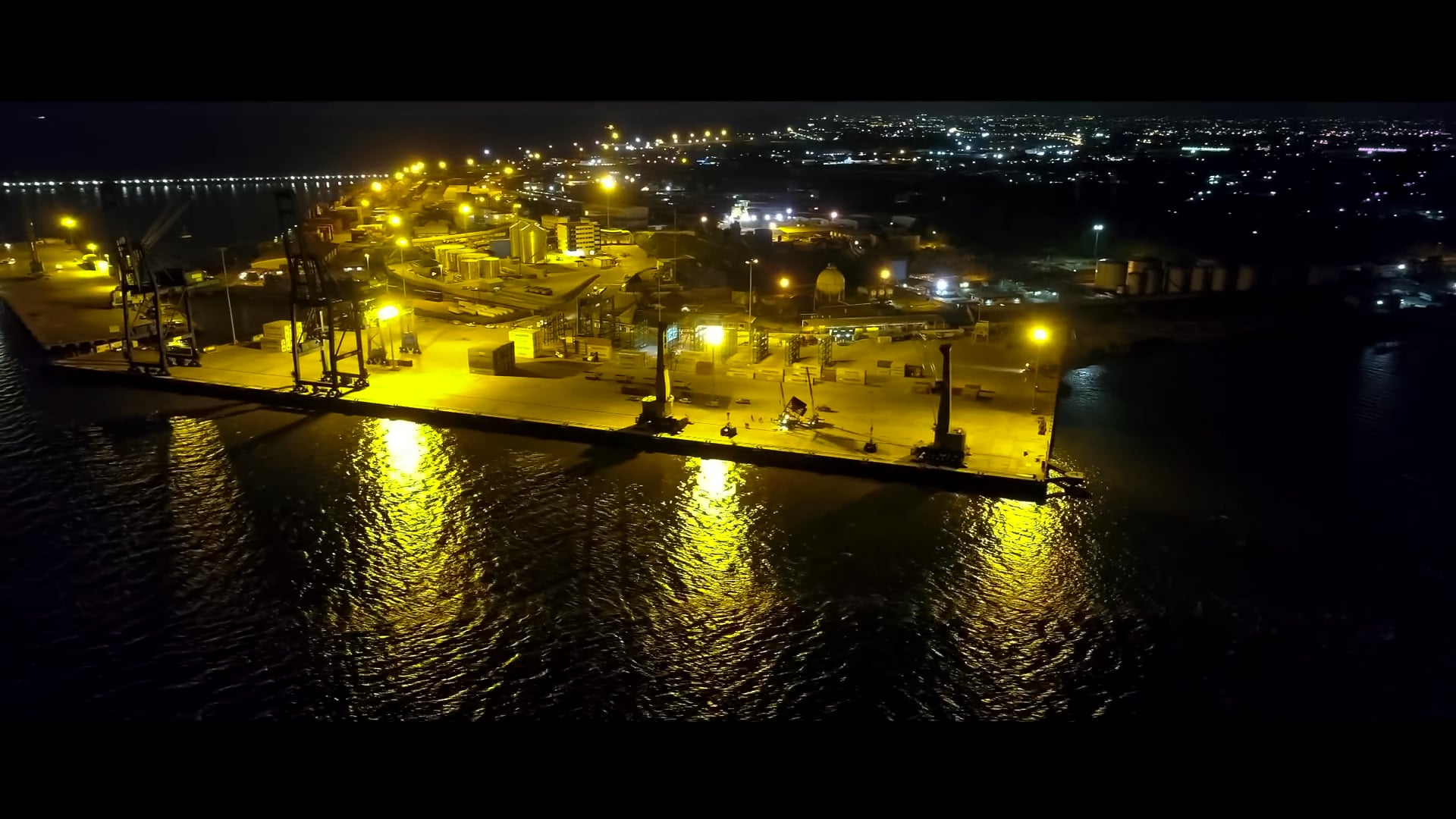
Five Gabon power turbines with a combined announced capacity of 100 MW began moving out of Owendo port this weekend, bound for the Akournam thermal plant that supplies Greater Libreville. On paper it is the largest single addition to the capital’s generation in years.
What the Gabon power turbines are meant to fix
The Akournam site is the backbone of supply to Greater Libreville, and its equipment has been the constraint. SEEG, the national water and power utility, calls the delivery a renewal of the plant’s production facilities.
The utility’s stated aims are reliability and quality of service rather than expansion for its own sake. That is the language of an operator managing outages, not one chasing growth.
Greater Libreville holds the great majority of Gabon’s formal employment, public administration and services. Power failures there are national economic events.
A convoy that shuts a city’s roads
Moving five turbines from the quay to the plant takes three days, from 6 to 8 September, with transport each day from about 4 am until 6:30 pm under police escort.
Direct Infos Gabon warned drivers that the route would be disrupted throughout. Loads of this size travel slowly and cannot share a carriageway.
The logistics are a reminder of how physical energy policy remains. A hundred megawatts arrives on a low-loader, not in a press release.
Owendo is Gabon’s main commercial port and the entry point for almost everything the capital consumes. Its handling capacity is itself a constraint on national investment.
That the operation was announced in advance, with hours and routes published, is a small sign of a utility communicating better than it used to.
Live Company IntelligenceSociedad Comercial del Plata S.A. — the full investor dossierInside: live share price, market cap, three-year financials, valuation, ESG and peer benchmarks — plus the latest Rio Times coverage.S
◆ Live Company Intelligence
Sociedad Comercial del Plata
BA: COMECOMEIndustrialsConglomerates
Valuation & profitability
Market capAR$288.12B
Revenue (TTM)AR$668.36B
Profit margin-0.8%
Return on equity-0.9%
Price & risk
52-wk low
$29.1052-wk high
$85.00
Beta (volatility)-0.18
200-day average$49.09
Revenue trend · 6y
20202025
Latest AR$655.95B
Ownership
Institutions2.3%
Shares outstanding7.00B
Dividend
No regular dividend — earnings reinvested for growth.
What Sociedad Comercial del Plata does. Sociedad Comercial del Plata S.A. operates in the agribusiness, construction, energy, transportation, infrastructure, and real estate sectors in Argentina. It operates through Construction; Oil and By-Products; and Agribusiness segments. The company offers construction materials, such as hollow ceramic bricks, floor and wall coverings, ceramic and porcelain tiles, and processed glasses under the…
Why the announced number should be read carefully
One hundred megawatts is the nameplate figure. What reaches customers depends on installation, testing, fuel supply and the state of the transmission network.
Gabon Review made the point plainly: after transport comes the decisive challenge of turning announced capacity into electricity actually available on the grid.
Thermal plants in the region routinely run below rating because of gas supply interruptions or deferred maintenance. The turbines are necessary and not sufficient.
Gabon also draws on hydropower, which varies with rainfall and has left the system exposed in dry spells. Thermal capacity is the buffer that covers those gaps.
The right question for households is not how many megawatts arrived but how many hours of supply they get in December. Those are different measurements.
The fiscal frame around it
Gabon cut its revenue forecast by roughly a fifth this year while keeping spending largely intact, a combination that has drawn attention from the Fund and from bondholders.
The country nonetheless raised US$920 million in a Eurobond that outperformed much of the emerging-market field. Investors have been more relaxed than the fundamentals alone would suggest.
Capital equipment for the capital’s grid is one of the more defensible uses of that money. Deferred power investment tends to be repaid with interest in lost output.
Gabon’s authorities have been keen to show delivery on visible infrastructure since the political changes of recent years. A convoy through Libreville is, among other things, a photograph.
That is not a criticism. Governments everywhere sequence their spending for visibility, and electricity is one of the few areas where the public verdict is immediate and honest.
Gas, and what Gabon does with it
The plant is gas-fired, which ties the capital’s electricity to domestic hydrocarbon production at a moment when Gabon’s mature oil fields are in decline.
Central African producers are all facing versions of the same question. The regional central bank has warned that oil dependence has thinned reserves across the monetary union.
Using gas domestically rather than exporting it is at least a decision about value retention. Whether the supply holds for the life of the turbines is a separate matter.
What to watch next
The first marker is a commissioning date. Equipment that sits on site through the rainy season is a familiar outcome in the region.
The second is outage statistics for Greater Libreville over the next two quarters, which are the only honest measure of whether this worked.
The third is tariffs. New capacity has to be paid for, and SEEG’s balance sheet is not separate from the state’s.
Frequently Asked Questions
What are the Gabon power turbines being delivered?
Five gas turbines with a combined announced capacity of 100 MW, landed at Owendo port and moved to the Akournam thermal plant.
When is the convoy running?
From 6 to 8 September 2026, moving each day from about 4 am to 6:30 pm under police escort.
Who is behind the project?
SEEG, Gabon’s national water and electricity utility, which describes the delivery as a renewal of the Owendo gas plant’s production equipment.
Will Libreville immediately get 100 MW?
No. The 100 MW is announced capacity, and installation, commissioning and grid connection all have to follow before power reaches customers.
Why does this matter for the economy?
Greater Libreville concentrates most of Gabon’s formal economic activity, so recurrent outages there translate directly into lost national output.
This article was produced by The Rio Times’ automated newsroom system. How we use AI · Report an error
The Rio Times · Power Map
See who really holds power in Latin America
Click to open the Power Map →