By The Rio Times | Created at 2026-09-22 10:36:52 | Updated at 2026-09-22 13:56:46
4 hours ago
By The Rio Times | Created at 2026-09-22 10:36:52 | Updated at 2026-09-22 13:56:46
4 hours ago
Guatemala · Defense
Key Facts
- —What happened About 2,000 Colt M4A1 rifles bought from the United States landed in Guatemala City on Monday 21 September 2026.
- —What was bought 2,699 rifles, 59 machine guns, 57 grenade launchers and 11,220 magazines, about US$5.03 million in total, according to state news agency AGN.
- —How it was paid A sale through the US Foreign Military Sales programme, funded by Guatemala’s own budget, not an American grant.
- —Where they go A new jungle operations brigade in Petén, the northern region bordering Mexico, to fight drug trafficking.
- —Why it matters Washington restricted arms for Guatemala’s army from 1977 over civil-war abuses; Guatemala announced the restriction lifted in March 2026.
- —The catch The headline figure of 14,000 is mostly magazines; the rifles number 2,699, arriving in lots.
About 2,000 American carbines landed in Guatemala City on Monday. The army paid for them itself, after Washington lifted a restriction that dates back to the civil war.
One-stop reference
Company Intelligence
Every listed company in Latin America — financials, ownership and structure for 1,450+ companies across 26 exchanges, in one place.
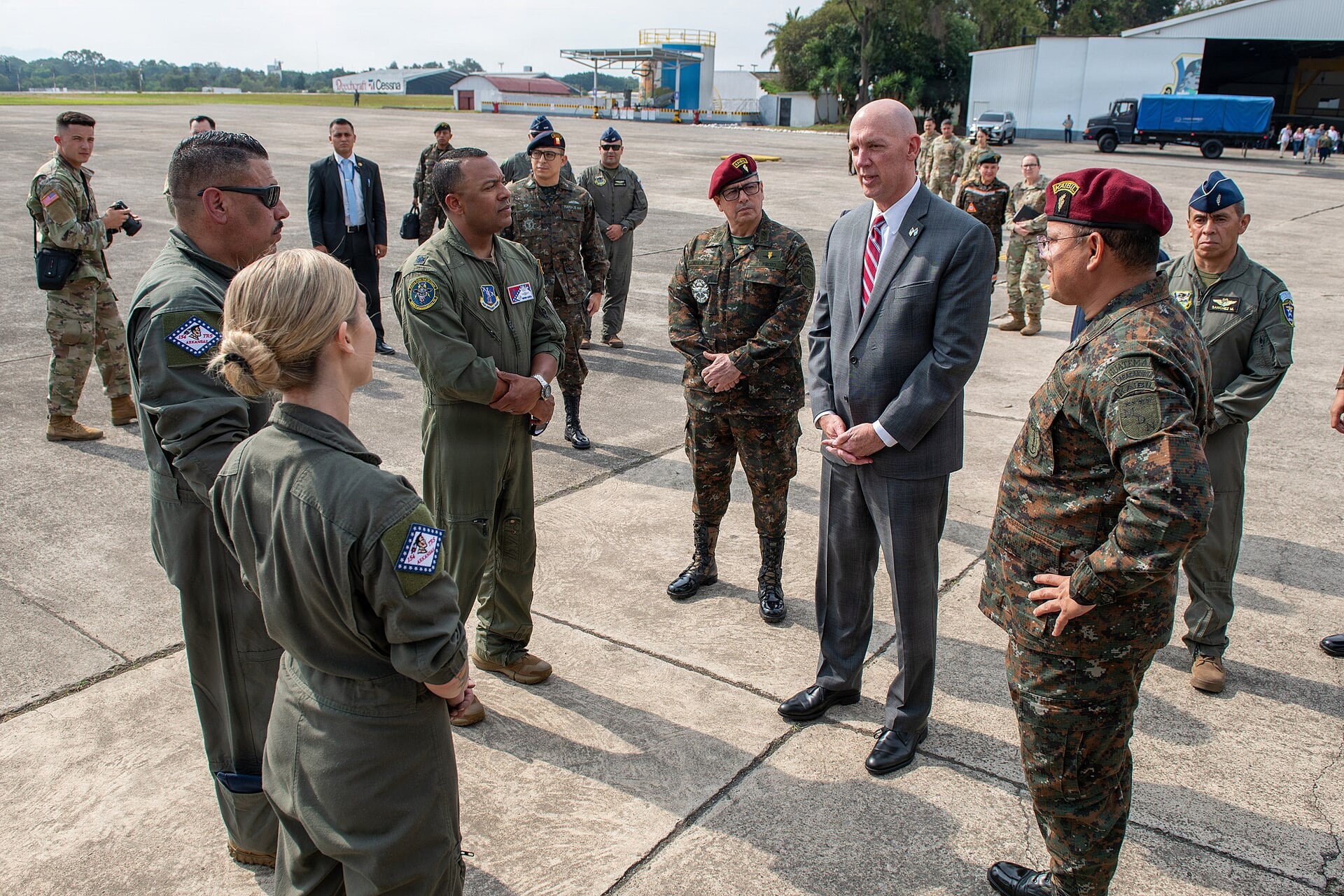
A batch of Guatemala M4 rifles bought from the United States landed in Guatemala City on Monday 21 September 2026. About 2,000 Colt M4A1 carbines arrived on an American military aircraft.
The US embassy’s top diplomat called it the first purchase of its kind in about five decades. Washington had restricted arms for Guatemala’s army since 1977 over civil-war atrocities.
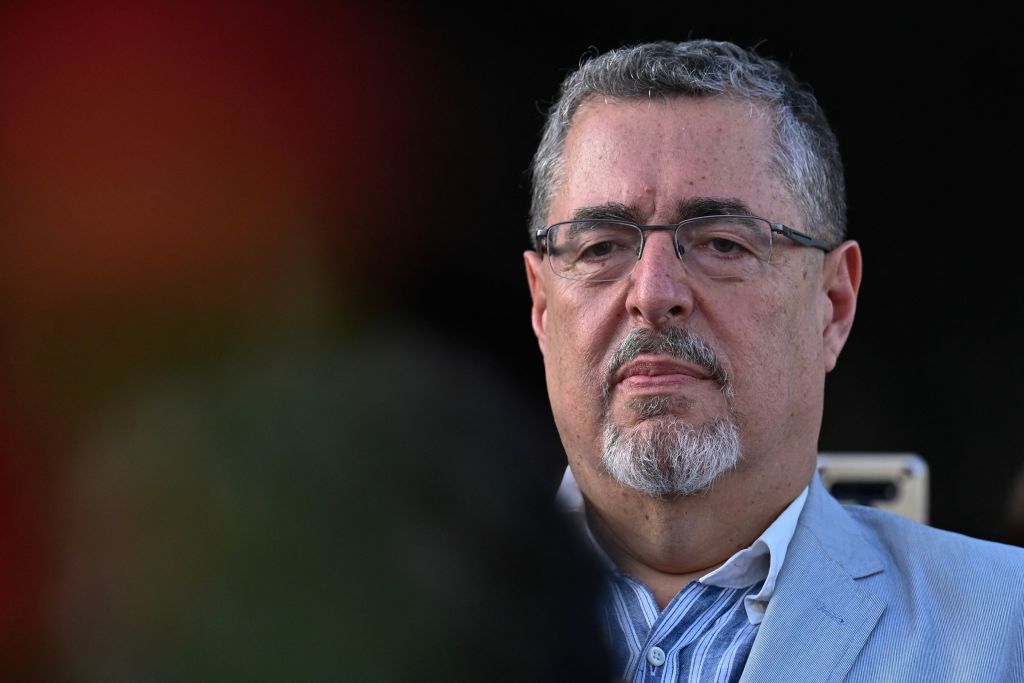
The plane landed on the military ramp of the Guatemalan Air Force at La Aurora International Airport. President Bernardo Arévalo and Defence Minister Henry Sáenz, a major general, received the shipment.
What Guatemala actually bought
The purchase was made through Foreign Military Sales, the US government programme that sells American weapons to foreign governments. Guatemala paid with its own money; it is not a grant.
The total is US$5,033,645, according to the state news agency AGN. Its itemised breakdown lists 2,699 M4A1 rifles, 59 M240 machine guns and 57 grenade launchers.
It also lists 11,220 magazines holding 30 cartridges each. The four items add up to 14,035 pieces, which explains the figure of more than 14,000 cited by officials.
Most of those pieces are therefore magazines, not guns. Arévalo himself described the order as more than 14,000 “units” of modern armament.
Monday’s aircraft carried about 2,000 rifles, according to Jorgan Andrews, the chargé d’affaires who runs the US embassy. Sáenz said the grenade launchers had arrived in an earlier lot, and the machine guns come next.
Nor was Monday the first delivery: the defence ministry told Prensa Libre that a first lot had arrived on 30 June.
Arévalo said deliveries would continue over the coming months. Prensa Libre, citing the sales documentation, reported that the rifle order is scheduled for full delivery by the third quarter of 2027.
Where the Guatemala M4 rifles will go
The weapons are destined for a new Special Jungle Operations Brigade in Petén, Sáenz said. Petén is the vast northern lowland region bordering Mexico, used by drug traffickers.
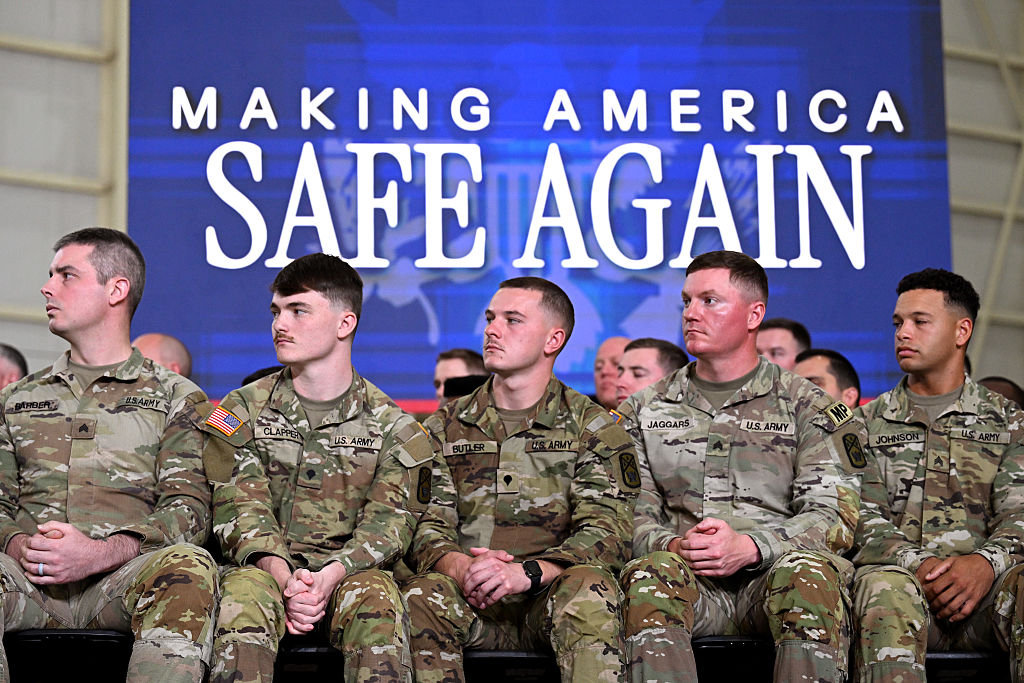
The brigade’s base is in the final stage of construction, according to La Hora. Its tasks include fighting drug trafficking, guarding the Mexican border and protecting natural resources.
Asked how the army would stop the rifles reaching criminals, Sáenz said control protocols had been reviewed. He cited an earlier incident that exposed failures in supervision, which led to criminal complaints.
A restriction older than most soldiers
Guatemalan officials describe the ban as a 47-year embargo. The real history is messier, and it began with Guatemala walking away.
In March 1977 the new Carter administration sent Guatemala a State Department report on its human rights record. On 11 March 1977, Guatemala’s foreign ministry replied in a diplomatic note.
It declined “in advance any aid or sale of military equipment” conditioned on foreign judgments of its internal affairs. That is recorded in a US embassy telegram published by the State Department’s Office of the Historian.
Congress then acted. The foreign aid appropriations law President Jimmy Carter signed on 31 October 1977 prohibited military credit sales to Guatemala.
The measure targeted the army rather than the country. The UN-backed truth commission later attributed 93% of documented violations in the 1960 to 1996 conflict to state forces.
The ban was never airtight. DW reported that Washington kept donating equipment to Guatemala’s armed forces for counter-narcotics work.
Cut off from American sales, the army turned elsewhere. Israel supplied Galil assault rifles, La Hora recalled, and DW reports that Israel and Colombia remain its main suppliers.
How the door reopened
Sáenz announced on Monday 9 March 2026 that the United States had lifted the restriction. He said no document formalised the change, which followed Guatemala meeting a series of conditions.
Those included keeping the army under a democratic president and focused on borders, drug trafficking and transnational threats. Sáenz said at the time that the army had about US$50 million to spend on arms in 2026.
On Monday, Arévalo argued the conditions behind the ban were gone. “The army of today is fundamentally different from the army of 1978,” he told reporters, as quoted by AP.
Why Washington wants this sale
Andrews called the purchase “historic”. He said Guatemala was investing its own resources and taking on more responsibility.
He linked the rifles to a wider effort to equip 16 Guatemalan battalions with nearly 8,000 additional rifles. He also promoted the Coalition of the Americas against cartels, a US-led regional security initiative.
Critics see a cost. The Mutual Support Group (GAM) represents relatives of people who disappeared during the war.
In a column for Agencia Ocote, GAM argued that lifting the ban removes pressure over wartime archives.
That issue is live. In August, a United Nations working group on enforced disappearances urged the army to open those archives, AP reported.
For now, the Guatemala M4 rifles deal is small in money but large in symbolism. It turns decades of arm’s-length military ties into an ordinary customer relationship.
More: Guatemala coverage, every day from The Rio Times.
Frequently Asked Questions
Did Guatemala receive 14,000 rifles from the United States?
No. The order covers 2,699 Colt M4A1 rifles, 59 M240 machine guns, 57 grenade launchers and 11,220 magazines. Together those make 14,035 items, which is where the 14,000 figure comes from. About 2,000 of the rifles arrived on 21 September 2026, and the rest are being delivered in lots.
Was this American military aid?
No. Guatemala bought the equipment through the US Foreign Military Sales programme and paid about US$5.03 million from its own budget. The American chargé d’affaires, Jorgan Andrews, stressed that Guatemala was investing its own resources.
Was there really a 47-year US arms embargo on Guatemala?
Not in a single clean form. In March 1977 Guatemala rejected US military aid tied to human rights reports, and in October 1977 Congress barred military credit sales to it. Washington still donated some counter-narcotics equipment in later years. Guatemala announced on 9 March 2026 that the restriction had been lifted.
What will the rifles be used for?
Defence Minister Henry Sáenz said they will equip a new Special Jungle Operations Brigade in Petén, the northern region bordering Mexico. Its missions include fighting drug trafficking, guarding the border and protecting natural resources.
Sources: AGN on the itemised US$5.03 million purchase, Prensa Libre on the US chargé d’affaires’ remarks, Soy502 on the arrival at La Aurora, La Hora on the Petén jungle brigade, AP on the purchase and the civil-war background, US State Department historical documents on the 1977 break, DW on the March 2026 announcement, Prensa Libre on the contract and delivery schedule