By The Rio Times | Created at 2026-09-22 10:36:51 | Updated at 2026-09-22 13:26:23
3 hours ago
By The Rio Times | Created at 2026-09-22 10:36:51 | Updated at 2026-09-22 13:26:23
3 hours ago
Uruguay · Politics
Key Facts
- —What happened Pablo Leiva, adviser to a National Party councillor in Montevideo, was sentenced on 18 September 2026 to 30 months for money laundering.
- —The drug case Police seized about 265 kilograms of cocaine and cocaine paste in Operation Trazador, valued at almost US$2 million.
- —The political response The governing Frente Amplio warned on 21 September 2026 of a “permanent risk” of organised-crime money entering politics.
- —What the opposition says National Party chairman Álvaro Delgado said the party’s leadership knew nothing of the adviser’s activities.
- —The catch Only three people have been convicted. No charge against any politician, or against the adviser’s son, has been reported.
- —What comes next Frente Amplio lawmakers and councillors will meet so the party leadership can decide its next political steps.
A paid aide to an opposition councillor in Montevideo is going to prison after a big drug seizure. Uruguay’s governing left now says organised-crime money is a standing threat to its politics.
One-stop reference
Company Intelligence
Every listed company in Latin America — financials, ownership and structure for 1,450+ companies across 26 exchanges, in one place.
A National Party adviser in Montevideo is going to prison for laundering drug money. The case has handed Uruguay’s governing left a fresh argument about organised crime and political funding.
Pablo Leiva, 48, was a paid aide to Gonzalo Gómez, a National Party member of Montevideo’s departmental council, the city’s local legislature. He was sentenced on Friday 18 September 2026.
On Monday 21 September 2026, the governing Frente Amplio warned of a “permanent risk” of criminal money penetrating politics. It said it would weigh further action.
The seizure behind the case
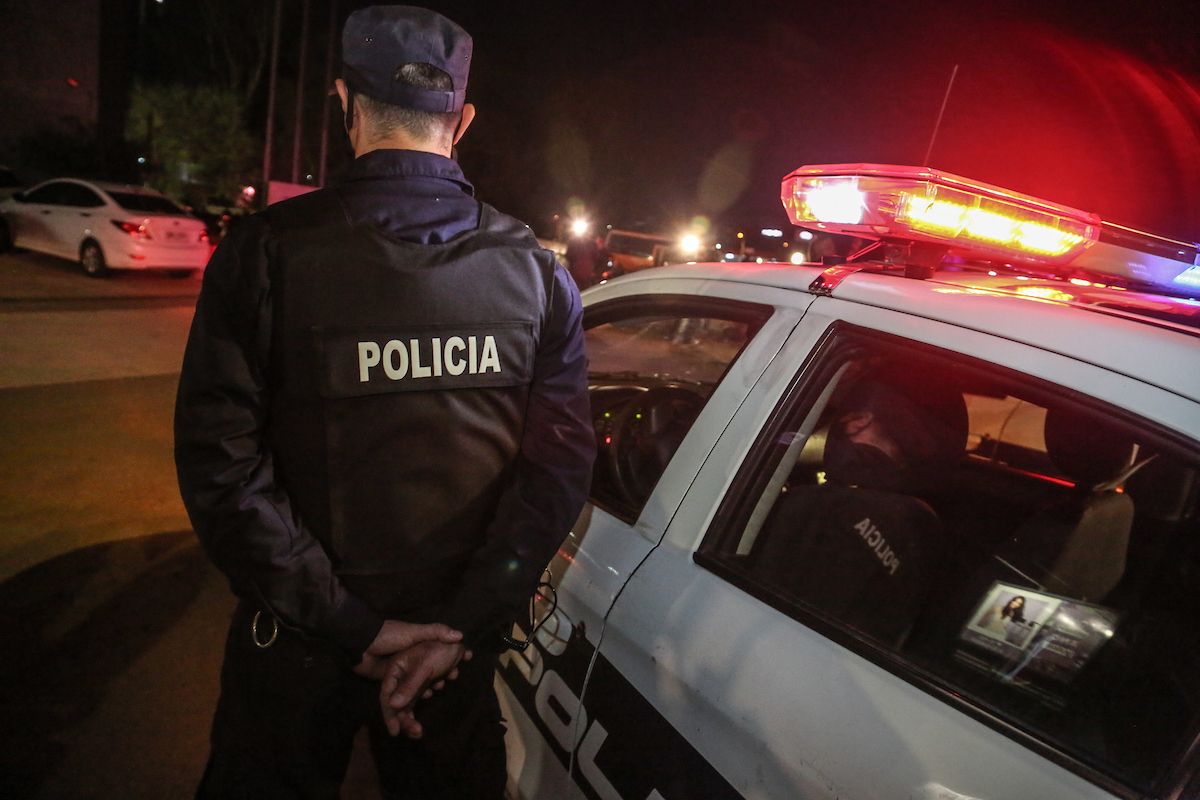
The case began with Operation Trazador, a police investigation into a drug gang in Montevideo. Officers raided three properties in the Brazo Oriental and Pérez Castellanos districts.
The Interior Ministry said police seized 141.6 kilograms of cocaine paste and 124.2 kilograms of cocaine. The ministry valued the haul at almost US$2 million.
Cocaine paste, known locally as pasta base, is a cheap smokable form of the drug. Interior Minister Carlos Negro said the load was probably meant for Uruguay’s own streets.
Police also seized more than 3 million pesos (about US$74,600 at 40.20 pesos per dollar) and US$42,564 in cash. Five vehicles and two pistols were taken, and three men and a woman were detained.
Three convictions under plea deals
The Fiscalía General de la Nación, Uruguay’s national prosecution service, announced three convictions on 18 September 2026. All came through abbreviated plea agreements with its specialist narcotics prosecutor in Montevideo.
The gang’s leader received six years and six months for drug trafficking, arms trafficking, handling stolen goods and money laundering. His partner received three years for assisting drug trafficking.
The third defendant, whom the prosecutors did not name, received two years and six months. The charges were money laundering by possession and internal trafficking of ammunition.
The newspapers la diaria and Caras y Caretas identified that defendant as Pablo Leiva. Caras y Caretas reported that council records put his salary at 52,000 pesos (about US$1,290).
A councillor’s aide and his son
Gómez sits on the National Party’s governing board as a youth representative. He belongs to List 250, a faction led by Jorge Gandini.
Gandini is a former senator. He now holds the opposition’s seat on the board of the National Ports Administration (ANP), the state port authority.
Leiva’s son, Lucio, also worked for Gómez and heads the party’s Montevideo youth wing. He was detained in the raids, then released without charge.
Gómez, who was in China for a seminar, dismissed the father on social media on 18 September 2026. “Esta situación me tomó completamente por sorpresa,” he wrote, meaning the situation took him completely by surprise.
He said he accepted responsibility for not being careful enough when he hired Leiva. He apologised to the party and kept the son, whom he called a trusted friend.
Gómez said Leiva had joined his team “recently”. La diaria, citing a public records request, reported that Leiva started in December 2025.
What the Frente Amplio said
The Frente Amplio is the centre-left coalition of President Yamandú Orsi. Its executive secretariat adopted a written resolution on 21 September 2026, which El Observador obtained.
The resolution spoke of alarms over party funding and a “permanent risk” from organised-crime money. It said the party would take steps to learn the full scope of the facts.
It also cited party-financing regulation as the kind of initiative it wants. The coalition will convene its Montevideo councillors and national legislators, and its political leadership will then decide on action.
The resolution also referred to the business used for the laundering transactions. It said the business “could” reportedly be among the declared assets of an unnamed senior figure from the same party.
Fernando Pereira, the Frente Amplio’s president, told El Observador that such cases “no longer seem isolated”. He said the party should study how to shield parties from organised-crime financing.
Gandini and the payment agency
On Monday 21 September 2026, Gandini gave a television interview about a dispute at the port of Montevideo. At the end, he was asked about the adviser’s case.
He said he could not talk about politics. “Que no tengo nada que ver, además,” he added, meaning he had nothing to do with it anyway.
Late that night, la diaria reported that police are examining a payment and exchange agency in Villa Española, a Montevideo district. Gandini’s wife, Laura Scalabrino, reportedly bought the exchange business about a year ago.
According to la diaria, Leiva lived nearby and often used the agency. He went there to pay a construction company’s contributions to the BPS, Uruguay’s state social-security agency.
Neither Gandini nor Scalabrino has been charged, and no court or prosecutor has found any wrongdoing by either. Caras y Caretas reported that their defence scheduled a press conference for Tuesday 22 September 2026.
How the National Party responded
Álvaro Delgado, chairman of the National Party’s board and its 2024 presidential candidate, told Telenoche the party was following the case closely. He said the case causes concern.
Delgado said the board had known nothing of the aide’s activities. He urged care in hiring political advisers.
Senator Sebastián Da Silva of the National Party called it “a serious case” in an interview. He said traffickers “slip in” to parties now and then, and that Gómez’s trust had been abused.
Why the left is pressing the point
The National Party, also called the Blancos, is Uruguay’s largest opposition party. Frente Amplio senators have seized on the case.
Senator Sebastián Sabini asked Blanco leaders for a “mea culpa”. He recalled that National Party senator Sergio Botana had called the Frente Amplio a “narco party”.
Senator Eduardo Brenta urged the Jutep, Uruguay’s public ethics and transparency board, to open its own inquiry. No review by the board has been reported.
For now, the only people found guilty are the three defendants in the drug case. What the National Party adviser’s conviction means for party funding rules is a question for Parliament.
More: Uruguay coverage, every day from The Rio Times.
Frequently Asked Questions
Who is the National Party adviser convicted in Uruguay?
Local newspapers identified him as Pablo Leiva, 48, a paid aide to Montevideo councillor Gonzalo Gómez of the National Party. Prosecutors announced on 18 September 2026 that he had been sentenced to two years and six months for money laundering and ammunition trafficking. Gómez dismissed him the same day.
What is Operation Trazador?
It is a police and prosecution investigation into a drug gang in Montevideo. Police seized about 265 kilograms of cocaine and cocaine paste, cash, vehicles and weapons. Three people, including the gang’s leader, were convicted under plea agreements.
What did the Frente Amplio decide?
Its executive secretariat warned on 21 September 2026 of a “permanent risk” of organised-crime money entering politics. It will meet its councillors and legislators, and its leadership will then decide what political action to take. It has cited party-financing rules as one area for initiatives.
Has any politician been charged?
No charge against any politician has been reported. The councillor’s other aide, the convicted man’s son, was released without charge. National Party chairman Álvaro Delgado said the party’s leadership had known nothing of the aide’s activities.
Sources: Fiscalía General de la Nación on the three convictions, Interior Ministry on the Operation Trazador seizure, la diaria on the adviser and his son, Caras y Caretas on the sentence, El Observador on the Frente Amplio resolution, la diaria on the Frente Amplio’s next steps, la diaria on the payment agency, Caras y Caretas on the planned defence press conference, Telenoche on Álvaro Delgado and Eduardo Brenta, Telenoche on Sebastián Sabini, Montevideo Portal on Sebastián Da Silva, Subrayado on Gonzalo Gómez’s statement