By The Straits Times | Created at 2026-06-22 12:06:36 | Updated at 2026-06-24 08:04:59
1 day ago
By The Straits Times | Created at 2026-06-22 12:06:36 | Updated at 2026-06-24 08:04:59
1 day ago
KULAI, Johor – When Johor caretaker Menteri Besar Onn Hafiz Ghazi stepped out of a black saloon car on June 16 for the launch of the state’s first commuter shuttle train service, Malaysian Transport Minister Anthony Loke was there to shake his hand. Then Loke guided him through the media scrum at a packed train station in Kulai, Johor.
Once seated, Loke poured him a glass of water. The assembled press chuckled at the affable gesture, as it appeared to signal a cooling of tensions after weeks of public sparring between the Johor Barisan Nasional (BN) chief and the Pakatan Harapan (PH) leader.
The cordiality lasted 12 minutes.
On stage later, Onn Hafiz pressed Loke over delays to Johor Bahru’s proposed elevated autonomous rapid transit (ART) system – a tram system that runs on rubber tyres on the road, a cheaper alternative to the light rail transit (LRT).
“If this project can be expedited, the federal government will deserve huge credit,” he told Loke, who is also secretary-general of the Democratic Action Party (DAP).
“But I worry should there be any hiccups; I hope you would also claim the discredit.”
With Johor’s July 11 state election looming, the Kulai event offered a preview of the fault lines that will define the campaign: a federal government led by PH and a state machinery under BN, both claiming ownership of the same infrastructure promises.
It was also a glimpse into a federal-state relationship fraying, with real consequences for the tens of thousands of commuters counting on the state to be ready when the Johor Bahru–Singapore Rapid Transit System (RTS) Link opens in 2027.
The cost should Johor fail to beef up its public transport is stark – for residents and, by extension, any visitors from across the Causeway.
The proposed RM10 billion (S$3.1 billion) ART system is expected to form a key part of Johor Bahru’s public transport network to help disperse passengers arriving from Singapore via the RTS Link, which can carry up to 10,000 passengers an hour.
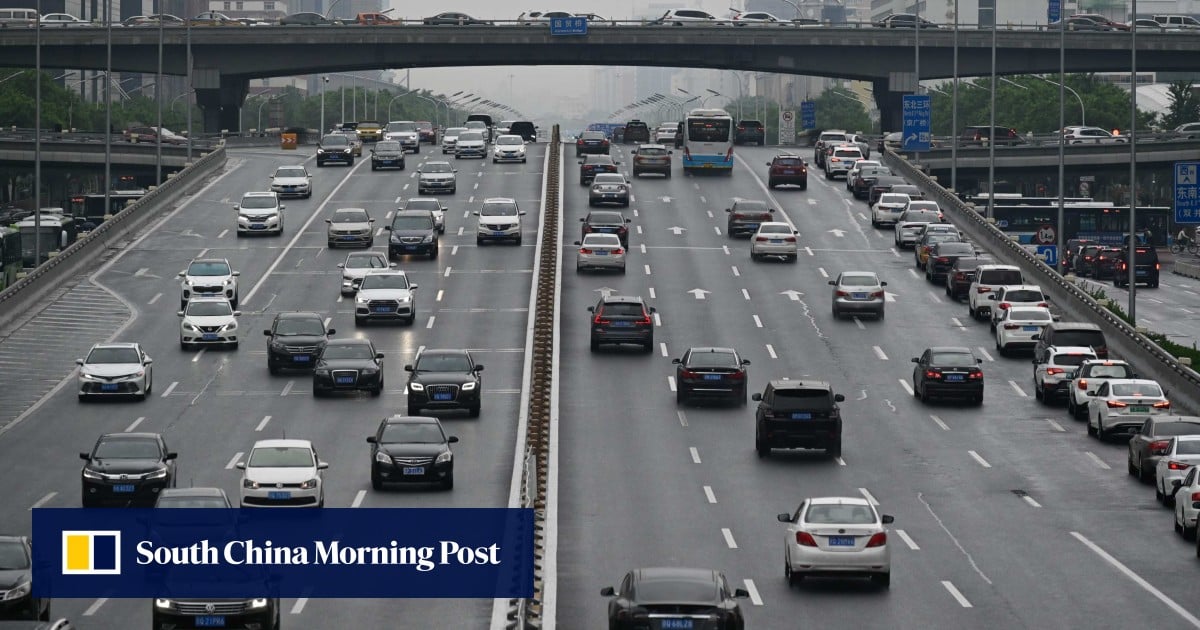
State officials have warned that congestion in JB will worsen if the RTS Link opens before a supporting dispersal system is implemented.
Although Loke announced federal approval for the ART project on May 17, Onn Hafiz questioned its lack of progress, noting that it was tabled to the Cabinet in 2024.
“Is it true that the letter of award has yet to be issued? Because I worry that when the RTS is ready, the main mode of public transport to disperse passengers will be ready only by 2030 or 2031,” he said on stage at Kulai, pressing Loke directly.
That potential three- to four-year gap – between the RTS Link opening in 2027 and an ART system that may not be ready until 2030 or 2031 – is the crux of the dispute.
He also compared the project with Penang’s Mutiara Line LRT, arguing that JB, with a similar population of about 1.8 million, deserved equal federal attention.
Loke responded that transport projects in Johor would continue regardless of political differences between the federal and state governments.
He explained that the ART project is being evaluated by the Public Private Partnership Unit under the Prime Minister’s Office and will be implemented through a public-private partnership (PPP) model, meaning it falls outside his ministry’s direct tender process.
“On politics, we talk about politics at the political stage... I’m here as transport minister, and you are here as caretaker menteri besar,” he said.
“This is a government project, not a question of credit or discredit.”
That explanation drew immediate pushback. BN lawmaker and former transport minister Wee Ka Siong argued that the ministry “cannot simply wash its hands of the matter and pass responsibility to another agency”.
He pointed to a structural vulnerability that predates the state election: When accountability is spread across multiple agencies and two levels of government, delays have nowhere obvious to land.
The charged exchanges between Loke and Onn Hafiz mask a deeper dispute between the federal and state governments, one that has since been exacerbated by partisan politics ahead of the state elections.
For voters in JB, the question is no longer simply whether the ART will be built – but whether the coalition they vote for on July 11 will have the federal leverage to build it on time.
Onn Hafiz declared that BN would contest all 56 state seats and later said he would not work with DAP if he forms the next Johor government, despite being federal partners.
BN won 40 seats at the last state polls in 2022, while DAP won 10 out of 12 seats under the Pakatan Harapan (PH) banner.
PH leaders, including Loke and Prime Minister Anwar Ibrahim, pushed back, but Onn Hafiz maintained that Johor had never adopted the unity government model practised in Putrajaya.
Observers warned that the political climate is adding a layer of risk the project cannot afford.
“Once a complex PPP project becomes a political football, every issue – from cost and fares to construction timelines – can be weaponised by either side,” said KRA Group strategic director Amir Fareed Rahim.
He also warned that federal-state coordination could deteriorate over land, alignment, approvals, public messaging and responsibility for delays.
However, Singapore Institute of International Affairs senior fellow Oh Ei Sun downplayed the dispute as election-season “politicking”, with both sides seeking to claim credit and shift blame.
“Neither side could afford to see the project fail like in Melaka, but as in many other projects, delays and obstacles will also be abundant,” he said, referring to the Melaka Monorail project that was plagued by technical issues since it was launched in 2010 and eventually abandoned.
Observers also expressed confidence that political differences will not ultimately derail Johor’s transit ambitions – but noted that the window to act is narrowing.
National University of Singapore lecturer Serina Rahman said Johor is likely to continue receiving support for the project, particularly with the state’s sultan serving as Malaysia’s king until January 2029.
“But if parties are not supportive at the federal level, it’s going to be difficult, especially if the Yang di-Pertuan Agong’s (king’s) term ends,” she said.
For now, Loke is hoping both sides can at least agree to keep the campaign trail out of the construction site. He proposed a “gentleman’s agreement” that no federal project events be held in Johor from nomination day on June 27 until polling day – a small truce in a dispute with massive stakes.
Sign up for our weekly Asian Insider Malaysia Edition newsletter to make sense of the big stories in Malaysia.