By The Straits Times | Created at 2026-09-05 21:03:03 | Updated at 2026-10-02 06:39:02
3 weeks ago
By The Straits Times | Created at 2026-09-05 21:03:03 | Updated at 2026-10-02 06:39:02
3 weeks ago
KUCHING – At 126 Laksa, a bustling breakfast spot in Kuching, patience is part of the morning ritual. The place can be packed, with Malays and Chinese sharing tables over steaming bowls and conversation.
There is something else that might catch a visitor’s eye: the absence of a halal logo. Yet Muslim diners are perfectly at ease eating here.
In Sarawak, a Muslim looking for a meal does not always begin by searching for the familiar halal logo. Halal still matters, but for some Muslim diners here, trust and familiarity can carry almost as much weight as formal certification.
That is a small but revealing difference from the way halal certification is often perceived in Peninsular Malaysia, where the logo has become an important shorthand for Muslim consumers deciding where to eat.
Malaysia has a formal halal certification system overseen by the federal Islamic authority JAKIM and state Islamic authorities, but certification is voluntary.
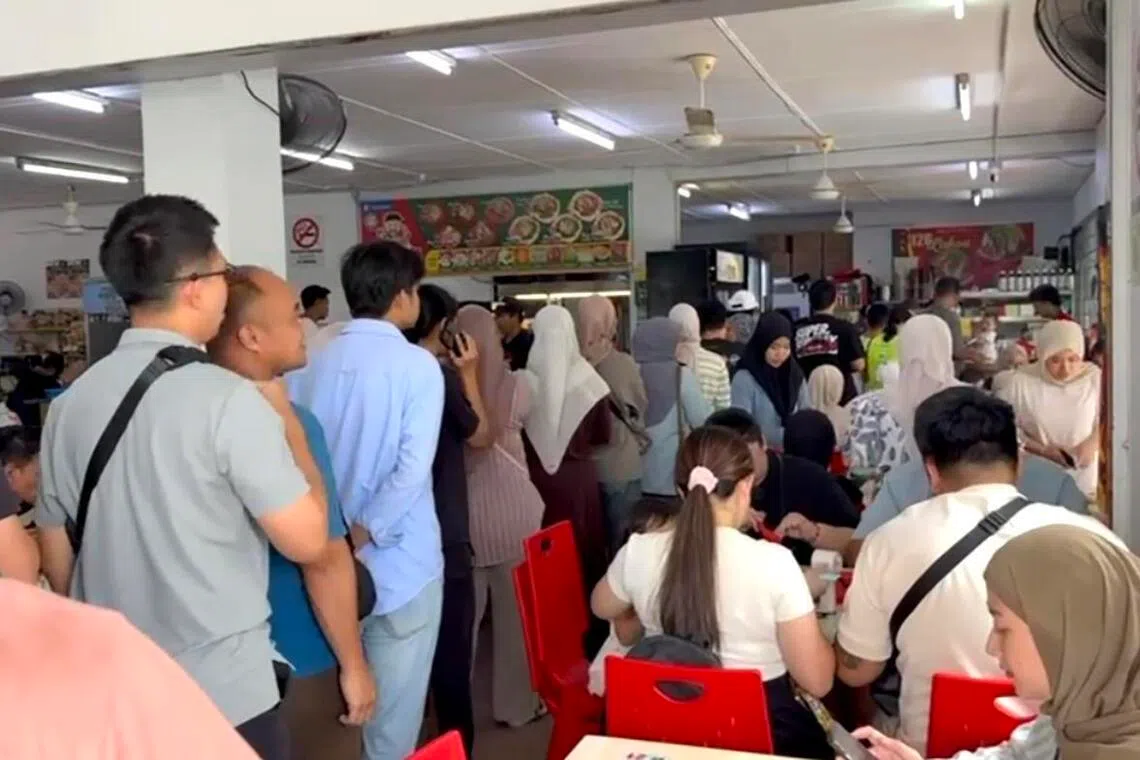
Locals queueing at 126 Laksa, a popular eatery in Kuching, Sarawak on Aug 16.
ST PHOTO: HADI AZMI
The difference in this East Malaysian state is less about a different halal standard than the social setting in which food choices are made. Sarawak, like neighbouring Sabah, is markedly more religiously and ethnically diverse than much of Peninsular Malaysia. That diversity is reflected in how people navigate everyday life – including what goes on the dinner table.
That can be seen in the way people eat. At food courts in shopping malls, for instance, pork is often not served, making it easier for Muslim diners to choose their meals. Other eateries are considered Muslim-friendly despite not carrying official halal certification.
One such place is Kantin at the Granary, a popular Kuching spot where the absence of a halal logo does not appear to deter Muslim diners.
But perhaps the best place to see how Sarawakians navigate food and faith is at 126 Laksa, a popular eatery in the state capital.
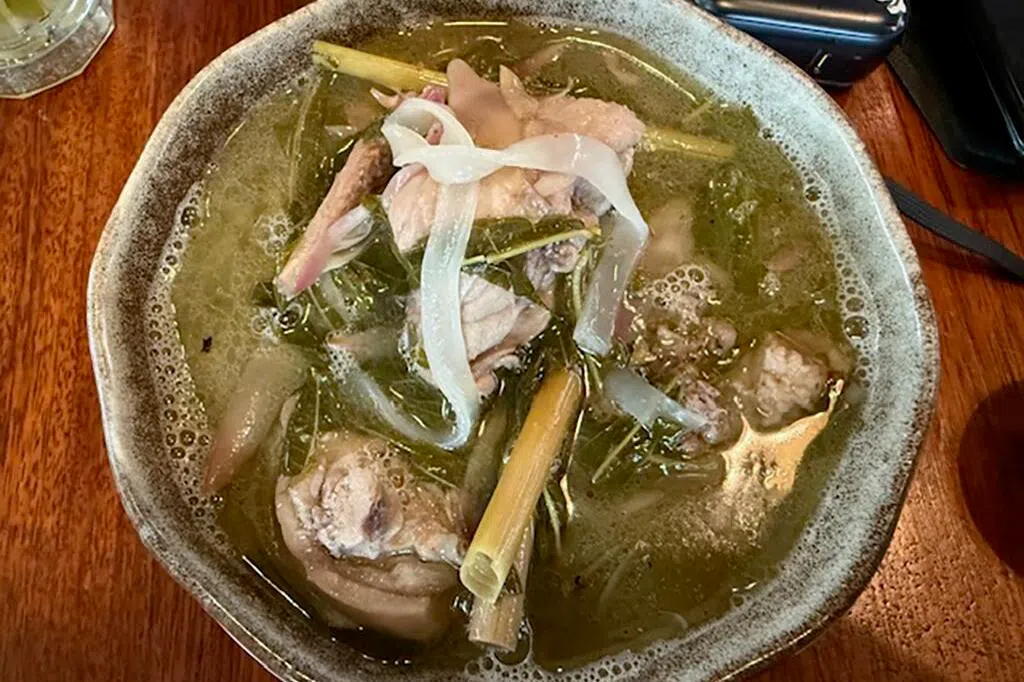
Ayam Pansoh, a Sarawak traditional dish made by cooking marinated chicken inside a bamboo stalk served at Kantin at the Granary, a bustling eatery in Kuching, Sarawak on Aug 14.
ST PHOTO: MUZLIZA MUSTAFA
Menus above the stalls feature Chinese characters. Bowls of Sarawak laksa, a rich, spiced broth topped with shredded chicken, prawns and strips of omelette, pass out of the kitchen alongside plates of mee kolok, or springy egg noodles tossed in savoury seasoned oil. There is also familiar fare such as banana fritters.
The mee kolok is prepared in the classic Chinese style. The eatery does not display a halal certificate at the cashier counter.
The setting is revealing nonetheless – Malays and Chinese sit together, enjoying dishes from different culinary traditions.
When asked how she knew the food was halal, diner Masrina Abdullah, 46, had a simple answer.
“We were told it’s halal by the seller. Why would someone lie about that? Furthermore, as a Sarawakian, I know which places serve halal food and which do not,” said Masrina, who is Malay and Muslim.
A bowl of mee kolok on her table offers another glimpse of how food crosses cultural lines here. The noodles are tossed in a savoury red oil, a preparation style associated with Chinese hawkers.
“This is the difference,” Masrina said. “The red oil means it’s Chinese style. If it were tossed in soy sauce, it would be the Malay version.”
Local Desmond Davidson, 60, said the halal logo is simply not a usual sight in Sarawak.
The state is home to dozens of ethnic groups and faiths, with intermarriage common. A Melanau may marry an Iban, while within the same extended family there can be Muslims and Christians.
That familiarity, Davidson said, has made people more tolerant and aware of one another’s practices.
“My plate is my plate, and your plate is your plate,” he said.
“We can share the same table. I eat my pork, and you eat your chicken.”
The arrangement is understood. Sellers know which plates and utensils are used for different dishes and keep them separate.
That same consideration extends beyond the cities and into Sarawak’s longhouses.
At an Iban longhouse in Lubok Antu, more than 200km from Kuching, a host had organised an event attended mostly by non-Muslims. Yet Muslim guests were catered for, with a separate set of halal dishes prepared for them.
As the gathering grew livelier, a guest nudged the writer towards the food.
“Have a bit,” she said.
She explained that it would be disrespectful not to, because the host had taken the trouble to prepare halal food specifically for the Muslim guests.
It was a small gesture that captured the spirit of the gathering. People followed different religious practices, yet none of that stopped them from enjoying the occasion together.
Sarawak is the only state in Malaysia where Christians form the largest religious group. Muslims make up a significant part of the population, but are not the majority.
At
the longhouse, nobody made much of the different meals. The halal food was prepared separately, the rest of the dishes went on the table, and the gathering carried on.
Perhaps that is the difference. For some Muslims in Sarawak, knowing what is halal does not always begin with looking for a logo. Sometimes, it begins with knowing the people.
Sign up for our weekly Asian Insider Malaysia Edition newsletter to make sense of the big stories in Malaysia