By The Straits Times | Created at 2026-10-16 21:01:21 | Updated at 2026-10-16 21:58:29
58 minutes ago
By The Straits Times | Created at 2026-10-16 21:01:21 | Updated at 2026-10-16 21:58:29
58 minutes ago
PALEMBANG – For months, firefighters in South Sumatra have battled peatland fires that refuse to die. They pump water into the smouldering ground and beat back the flames with basic tools, only to watch the fires flare up again.
The acrid smell of smoke greets you the moment you step off the plane at Sultan Mahmud Badaruddin II International Airport in Palembang, the provincial capital. The thick haze that has blanketed the city for weeks belies the firefighters’ painstaking efforts.
Now, an unlikely weapon has arrived from the other side of the world: a powder called Realiza Antichamas (Portuguese for “fire-retardant solution”) which forms a fire-suppressing gel when mixed with water.
Its maker, Brazilian firm Grupo Realiza, claims the product makes water up to 10 times more effective at fighting fires. Firefighting crews in Sumatra and Kalimantan have been testing it since early October.
With conventional firefighting efforts struggling to contain Indonesia’s stubborn peat fires, the authorities are turning to alternative measures.
But whether the gel can tackle the fires that matter most remains an open question: Peat fires can smoulder metres underground, beyond the reach of water sprayed from above, and it is not yet clear how deeply the mixture can penetrate. The trials come as a severe fire season sends choking haze across the region.
Palembang-based firefighter Sulaiman noticed the difference the first time he used it. "It hardens the soil and helps stop the fire from reigniting," he told The Straits Times on Oct 14.
A severe fire season
The gel trials are among several alternative measures being tested as Indonesia endures an unusually severe fire season, exacerbated by a very strong El Nino.
Fires burned 202,004ha nationwide from January to July, up 69% from a year earlier, according to the Forestry Ministry’s SiPongi monitoring system. Forest fires have affected several of the country’s major islands, with Sumatra and Kalimantan among the hardest-hit areas.
The fires are difficult to extinguish because many burn in dry peat – thick layers of partly decayed vegetation that can smoulder for weeks below the surface, beyond the reach of water sprayed from above.
The resulting smoke also reduces visibility, hampering water-bombing operations by helicopter.
Efforts to contain the fires have intensified in recent weeks, even as smoke has spread to Singapore, Malaysia, the Philippines and Timor-Leste.
In Palembang, PM2.5 concentrations reached 816 micrograms per cubic metre at 5am on Oct 15, according to air-quality platform IQAir, nearly three times the 300-microgram threshold it classifies as “hazardous”.
The haze has fuelled respiratory problems, forced school closures and disrupted flights in Indonesia and neighbouring countries, increasing pressure on Jakarta to contain the fires.
High hopes, measured claims
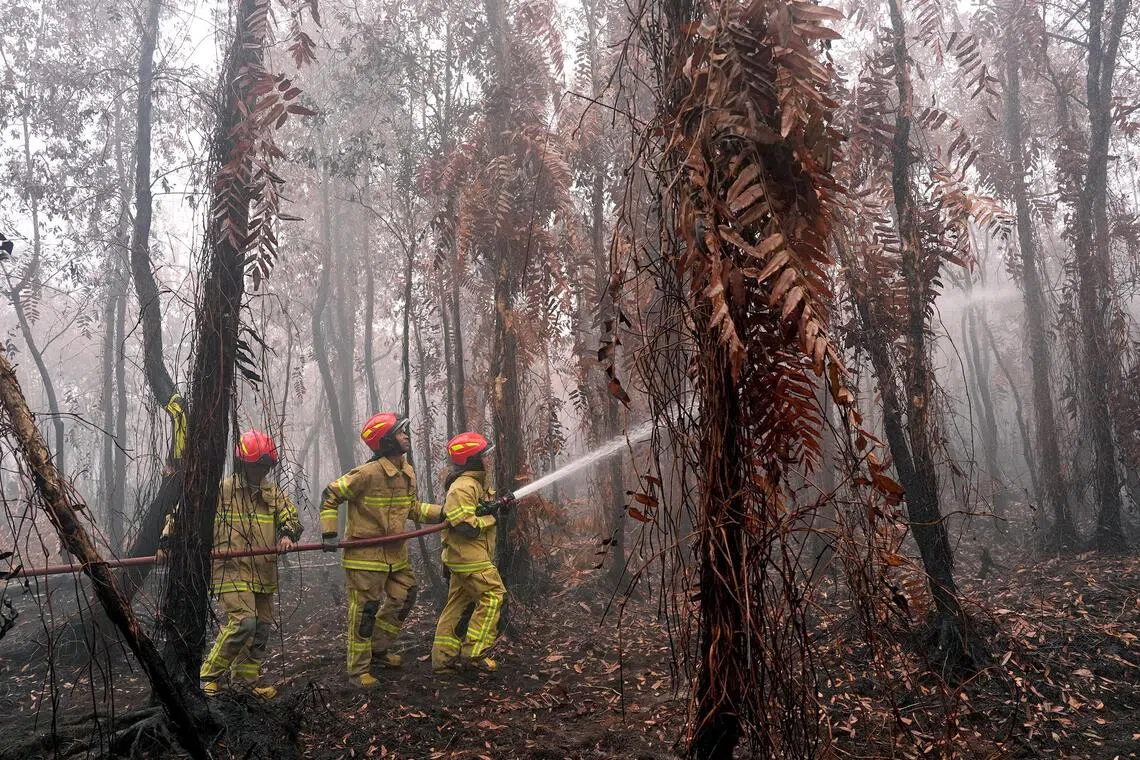
The fires are difficult to extinguish because many burn in dry peat – thick layers of partly decayed vegetation that can smoulder for weeks below the surface, beyond the reach of water sprayed from above.
ST PHOTO: DIMAS ARDIAN
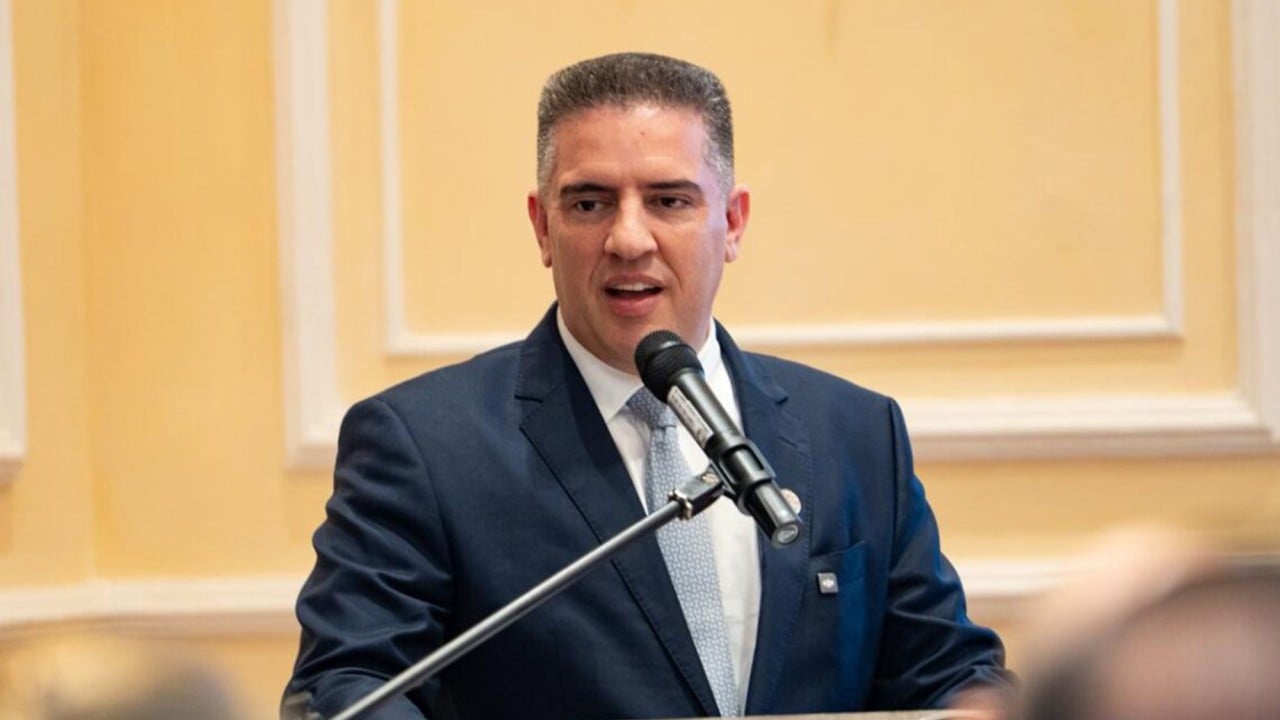
Coordinating Minister for Political and Security Affairs Dudung Abdurachman, whose ministry is coordinating the government’s response, hopes Realiza Antichamas will help contain the fires.
Dudung, who was appointed minister on Oct 1, visited Sematang Borang, on Palembang’s outskirts, on Oct 15 to watch a demonstration of the gel.
ST also watched as a strip of ground treated with the gel did not burn when flames reached it. But the demonstration did not establish whether the gel could extinguish fires already smouldering deep underground, where peat fires are notoriously difficult to reach.
“It is still limited, only a trial. But we will develop it,” Dudung told ST. “Earlier, the results were optimal.”
He said the gel did not harm wildlife nor kill plants. He added that it had also been tested in Kalimantan and would be deployed by helicopter as well as by ground crews.
Grupo Realiza chief executive Valdiney Koch went further. “This product gave 100% efficacy in Indonesia,” he told the gathering in Portuguese in Sematang Borang on Oct 15.
Paolo Barroso, the company’s technical director, was more measured.
“To be honest, so far, we have done some tests and they have shown good, positive results,” he said, adding that the powder, which he described as a mixture of sucrose and cellulose, keeps soil moist and prevents fires from reigniting for up to 72 hours.
But the team was still testing how deeply the gel could penetrate, he said. Its deepest test so far involved a fire 2m underground, which the team treated by injecting the gel through a perforated pipe about 1.5m long.
Clogged hoses, stubborn fires
The team planned to remain in Indonesia for another week of tests and was seeking research partnerships with universities in Jakarta and Brazil’s Mato Grosso state.
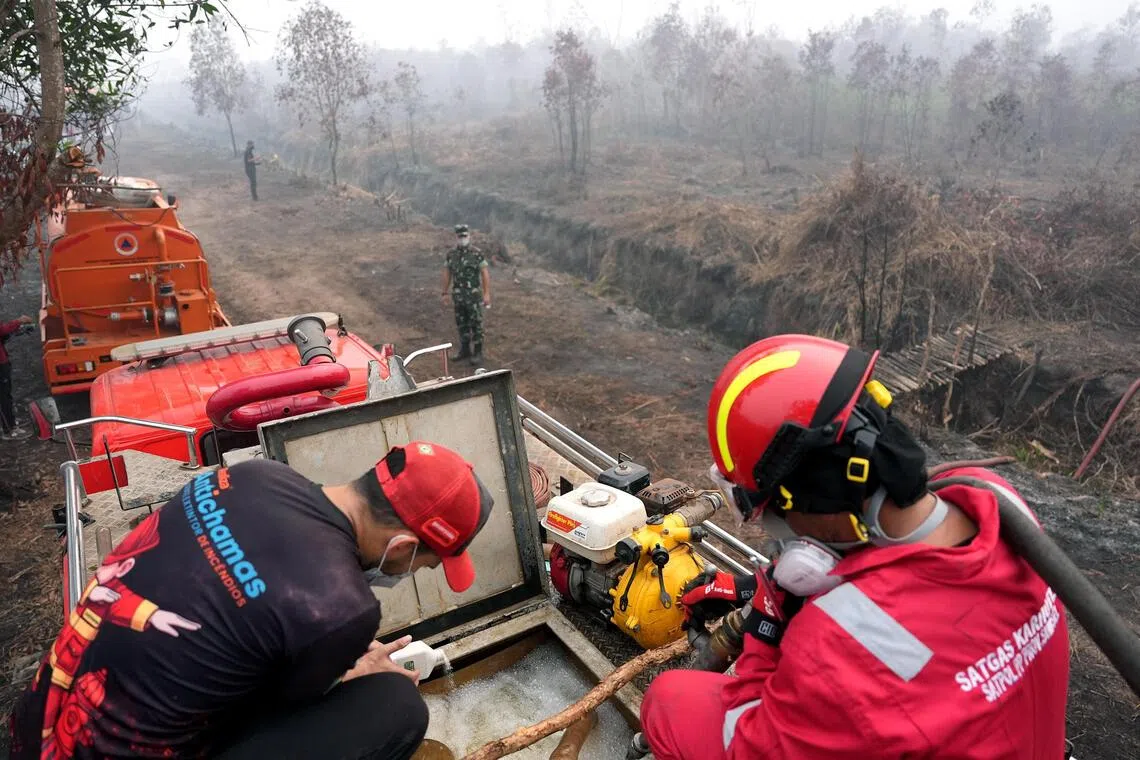
Efforts to contain the fires have intensified in recent weeks, even as smoke has spread to Singapore, Malaysia, the Philippines and Timor-Leste.
ST PHOTO: DIMAS ARDIAN
But some firefighters on the ground have raised questions about the gel’s effectiveness.
A senior firefighter at the South Sumatra office, who spoke on condition of anonymity as he was not cleared to speak to the media, said he had asked the crews involved in the initial trials about the gel’s weaknesses.
Without a specialised peat nozzle driven into the ground, he said, the gel covers only the top layer. “If oxygen is still trapped underneath, the fire naturally stays alive. It only contains it.”
Crews have also encountered a more mundane problem: the mixture thickens, so tanks, hoses and nozzles must be flushed with clean water after every operation to prevent clogging.
The suppliers told crews that the mixture would remain usable for 48 hours, the senior firefighter said, “but it turned out that after 24 hours, it had already gone bad”. One vehicle used in an earlier trial in Banyuasin regency in South Sumatra was not cleaned in time – the mixture hardened, making it unusable, he added.
The senior firefighter said the true test would be whether the gel could extinguish large blazes.
“For small fires like these, even water alone would put them out.”
Grupo Realiza has bigger ambitions. Its representative in Indonesia, James Jerry Huang, said the 500kg of donated powder could produce one million litres of solution, and that about a fifth had been used so far, for demonstrations and out in the field.
He expects the remaining supply to run out in October. Indonesia would need an estimated 10,000kg to 20,000kg of powder to get through the current fire season, he said – up to 40 times the amount donated.
Cassava, dry ice and other experiments
The gel is one of several experimental approaches Indonesia has explored this fire season.
At a meeting on the fires chaired by President Prabowo Subianto in Palembang on Aug 24, then national police chief Listyo Sigit Prabowo proposed a suppressant made from cassava flour.
Prabowo ordered mass-production trials, but Arif Satria, head of Indonesia’s National Research and Innovation Agency, said the material had so far worked only on a small scale.
Another experiment involves dispersing 1.5 tonnes of dry ice, or solid carbon dioxide, from an aircraft over Palembang.
The aim is to reduce the haze and improve visibility, not to extinguish the fires smouldering underground, the Coordinating Ministry for Political and Security Affairs said on Oct 14.
Dudung told ST that the aerial operation was intended to thin the haze near the ground.
For the longer term, he said regional police and military commanders had proposed building retention ponds, canal blocks and bore wells at thousands of sites prone to recurring fires. He was confident the President would back the plan.
For the senior firefighter, the challenge comes down to the basic conditions needed for combustion. Peat is a loose mass of decayed leaves, twigs and roots that is difficult to seal completely, allowing oxygen to continue feeding a fire below the surface.
“Either we remove the fuel, seal off the oxygen or cool the heat – only then will it go out,” he noted.