By The Rio Times | Created at 2026-09-25 13:16:50 | Updated at 2026-09-25 13:52:00
1 hour ago
By The Rio Times | Created at 2026-09-25 13:16:50 | Updated at 2026-09-25 13:52:00
1 hour ago
GUIDES · GUYANA
Key Facts
- —What it is A plain-English safety guide for foreigners living in or moving to Guyana, with a focus on Georgetown.
- —Who it’s for Oil-sector staff, contractors, remote workers, retirees and returning diaspora weighing a move.
- —The rules The US rates Guyana Level 3, “reconsider travel”, for crime; Canada says “exercise a high degree of caution”.
- —Why it matters Police recorded 130 murders in 2025, about 15.6 per 100,000 people, and 137 road deaths.
- —The catch Serious crime is falling on official figures, but robberies cluster at night and around cash.
- —What is still open The World Court has not set a date for its ruling on Venezuela’s claim to two-thirds of Guyana.
Is Guyana safe for expats in 2026? For foreigners who follow local advice, the risks are manageable. Violent crime, fast roads and a border dispute still shape daily life.
Guyana’s oil boom has drawn a growing community of foreign workers to Georgetown, a low-lying Atlantic capital of wooden colonial buildings. Whether Guyana is safe has a two-part answer. Serious crime is falling on official figures, but violent crime remains high by North American and European standards.
What the crime numbers show
The Guyana Police Force (GPF), the national police, recorded 130 murders in 2025. That was up from 117 in 2024, an increase of 11.1 per cent, in figures released on 9 January 2026.
Guyana had about 836,000 people in 2025, according to the World Bank, fewer than the US state of Delaware. That puts the 2025 murder rate near 15.6 per 100,000 residents.
For scale, World Bank data put the US homicide rate at 5.8 per 100,000 in 2023. Guyana’s rate is about 2.7 times that most recent American figure.
The longer trend is down, but uneven. Guyana’s Bureau of Statistics records 154 murders in 2020, 131 in both 2021 and 2022, and 158 in 2023.
Other serious crime fell faster. Police counted 920 serious crimes in 2025, down 25.5 per cent from 1,235 in 2024. Armed robberies with a firearm dropped from 289 to 204.
Police said “disorderly” killings from fights, parties or drinking sessions have been the most common murders for five years. Domestic murders doubled, from 13 in 2024 to 26 in 2025.
This suggests many killings stem from personal disputes rather than attacks on strangers. For foreigners, the more relevant crime is robbery. Police said most armed robberies in 2025 happened between 6 p.m. and midnight.
Regional Division 4 ‘A’, which includes central Georgetown, had the largest share of crime in 2025. It accounted for 24 per cent of serious crimes and 21 per cent of murders. Police link this to dense population and commercial activity.
For 2026, the government’s Mid-Year Report says serious crime fell 16.9 per cent in the first half of the year. In June, Police Commissioner Clifton Hicken had cited a 33.5 per cent fall. The official 2026 target is no more than 117 murders.
What the US, UK and Canada advisories say
As of 25 September 2026, the US State Department rates Guyana at Level 3 of 4, “reconsider travel”, because of crime. Its advisory, last reissued on 12 May 2025, says violent crime is common, especially at night.
One-stop reference
Company Intelligence
Every listed company in Latin America — financials, ownership and structure for 1,450+ companies across 26 exchanges, in one place.
The US worry is police capacity. The advisory says local police often lack the resources to respond to serious crimes. The State Department’s security reporting says Stabroek Market is off-limits to US government staff at all times, and Bourda Market in the evening.
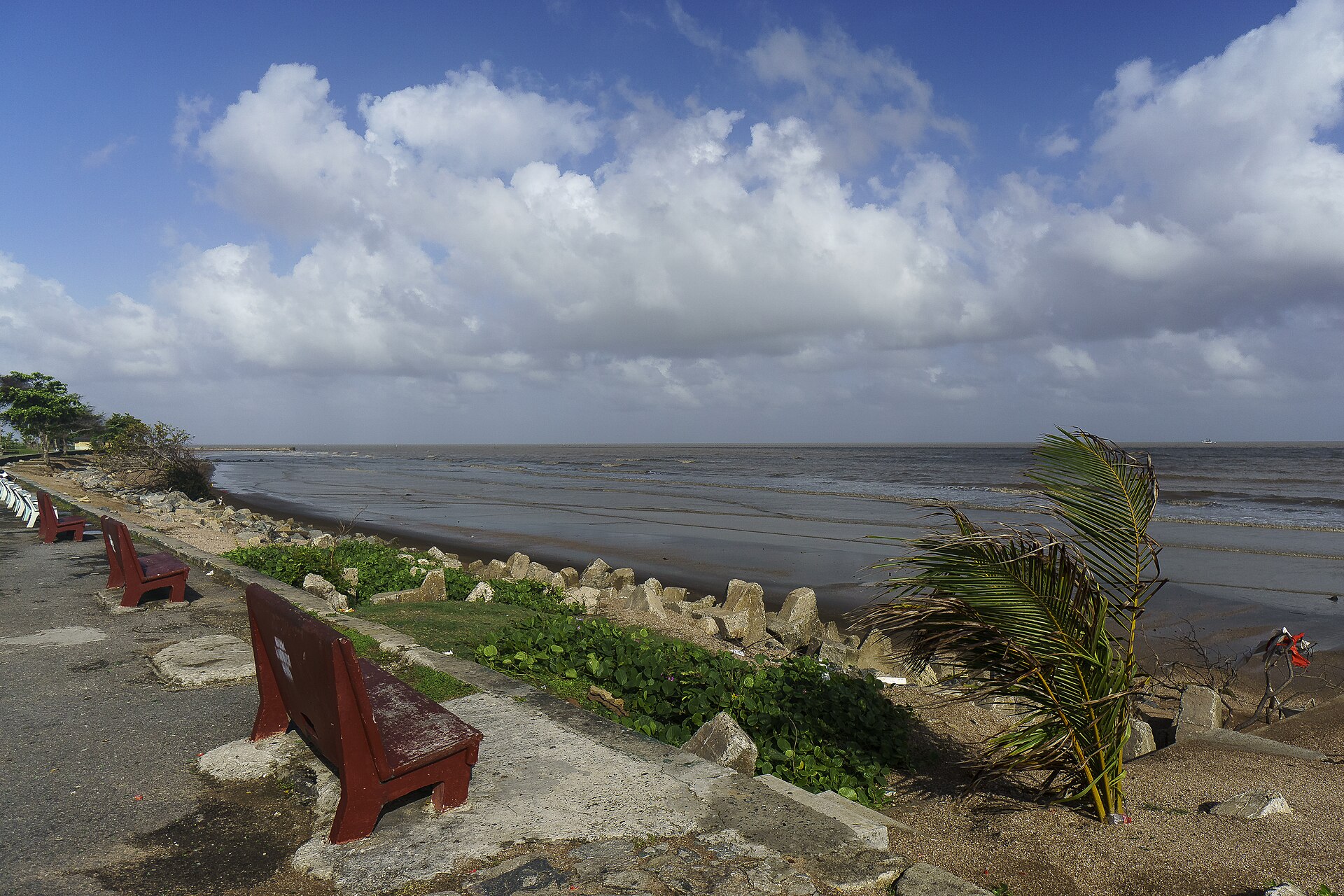
The department’s Guyana country page tells visitors to avoid the National Park and the Seawall east of Vlissengen Road at night. It says Agricola, Albouystown and Tiger Bay should be avoided altogether. Stabroek and Bourda are Georgetown’s two big central markets.
The State Department also rates Georgetown a “critical” threat location for crime, according to its Overseas Security Advisory Council (OSAC). OSAC’s country report says criminals see foreigners as targets of opportunity, but do not single out Americans.
Canada’s advice, updated on 24 September 2026, says “exercise a high degree of caution”, the second of four levels. It warns that foreigners have been robbed at gunpoint after withdrawing money at banks, in shopping districts and in hotels.
The UK Foreign, Commonwealth & Development Office (FCDO) uses no numbered levels. It does not advise against travel to any part of Guyana. It says crime levels are significant and police capacity is low.
The FCDO also reports gangs following cars from Cheddi Jagan International Airport, the main airport, and attacking passengers at their destination. None of the three governments lists kidnapping as a specific threat. Police recorded no kidnapping cases in 2025.
Georgetown neighbourhoods: where foreigners live and what they avoid
Property guides place most diplomatic and executive housing in Bel Air, Prashad Nagar, Queenstown and Kingston. These districts hold diplomatic residences and senior corporate homes, close to embassies and government offices.
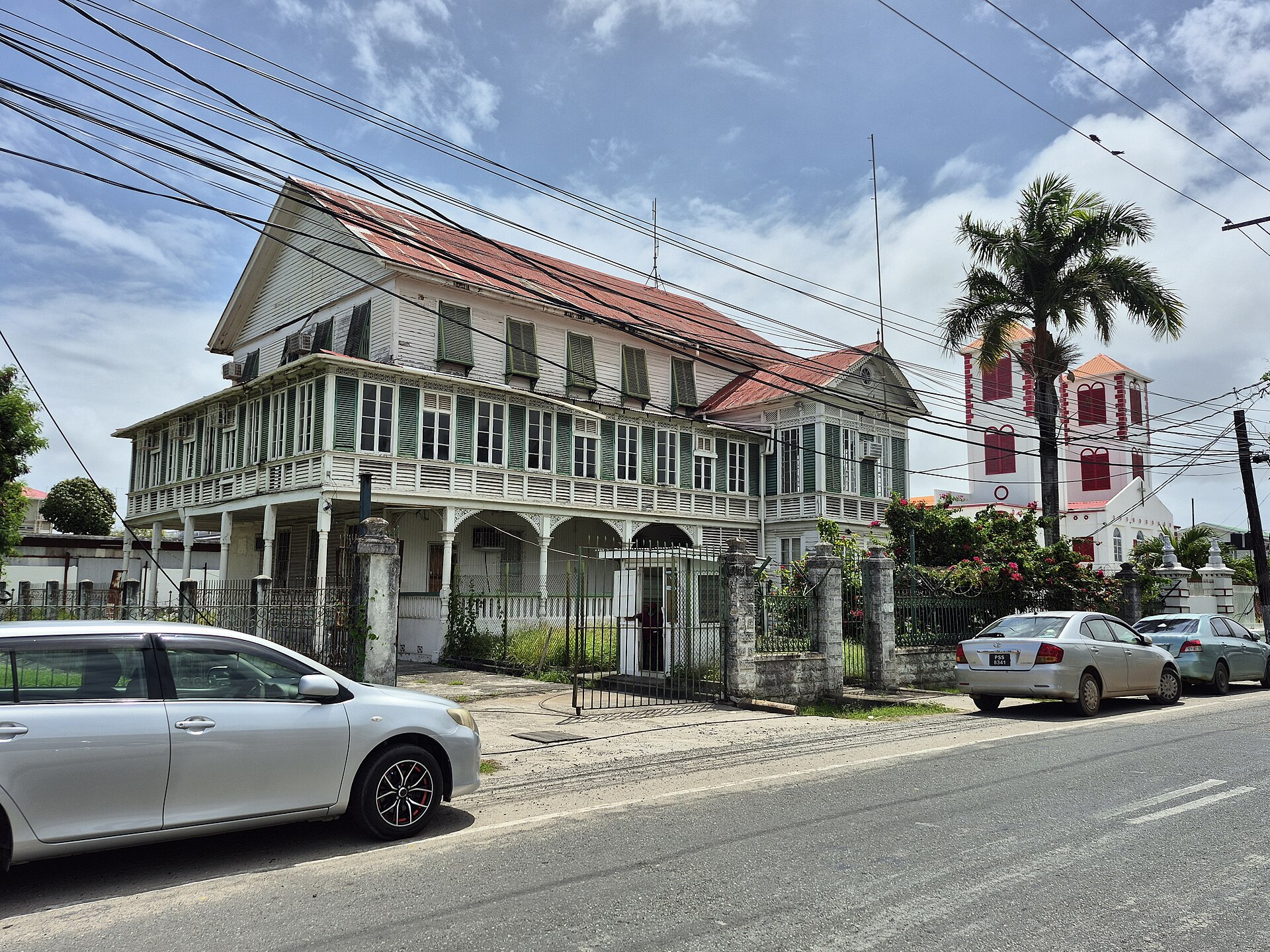
Some look further out. Newer estates on the East Bank of Demerara, such as Providence and Eccles, offer more space. Campbellville is an established central option.
These areas are quieter and better guarded, not crime-free. In August 2026, Kaieteur News reported a Cuban worker stabbed near his Queenstown home around midnight. Six men took his electric bike.
In April 2026, the same paper reported a man shot and robbed in his Campbellville yard just after midnight. Both cases fit the police pattern of late-night robbery.
The zones to avoid are named consistently. The US, UK and Canada all list Tiger Bay, Albouystown and Agricola. The UK and Canada also name Sophia and the East Coast village of Buxton.
Canada’s list is the longest. It also names Albertown, Bourda, East and West Ruimveldt, Stabroek, and the area two kilometres south of Brickdam Street.
Police publish crime figures by division rather than by neighbourhood, so these lists rest on the judgement of foreign governments. OSAC notes that burglaries are less common where homes have guards. Many expat leases include a gated compound or a guard.
How the oil boom changes daily security
Guyana pumped about 902,000 barrels of oil a day in the first half of 2026, the government says. That compares with about 639,000 a year earlier. A fifth production ship arrived offshore in August, with first oil targeted for the last quarter of 2026.
New money brings new targets. Canada warns that criminals often work in groups of two or more and watch their targets for days before striking.
OSAC says foreigners are often assumed to carry more cash than locals. Cash is also the common thread in local robbery reports.
In January 2026, police said a restaurant manager was robbed at gunpoint outside a Georgetown restaurant just before 10 p.m. The robber took 642,000 Guyana dollars (about US$3,070) in daily sales.
All dollar conversions in this guide use about 209 Guyana dollars to the US dollar, the open.er-api.com rate on 25 September 2026. The Bank of Guyana quoted a buying and selling range of 207.98 to 210.45 on 24 September.
Private security has grown with the boom. In December 2024, National Security Adviser Gerry Gouveia said the sector employs roughly 20,000 to 30,000 people. That is more than the police and army combined.
That scale worries some observers. The Guyana Human Rights Association said in May 2025 that some private firms were acting beyond their legal remit.
The boom is also visible in traffic. The Bureau of Statistics counted 43,511 newly registered vehicles in 2024, against 5,336 in 2000. In 2025, Vice President Bharrat Jagdeo said every citizen experiences “the ordeal of traffic”.
Road safety is the risk most expats underestimate
Police recorded 137 road deaths from 124 fatal crashes in 2025, slightly more than the 130 murders. For a foreigner who does not walk the streets at night, the road may be the bigger daily danger.
Deaths peaked at 175 in 2023, according to Andre Ally, the permanent secretary of the Home Affairs Ministry. In the first 170 days of 2026, deaths rose to 62, from 58 a year earlier.
By around 1 September 2026, police counted 74 road deaths from 68 fatal crashes. Speeding was a factor in 75 per cent of fatal crashes in the first half of the year, Ally said.
New speed cameras logged 30,266 speeding violations in the first six months of 2026, according to the government’s Mid-Year Report. Traffic Chief Mahendra Singh has said current penalties are not deterring dangerous driving.
The UK advises keeping a safe distance from minibuses, whose drivers cause many crashes. It also advises avoiding airport trips late at night and before dawn. Canada adds poorly lit roads, common drink-driving and roaming livestock.
The Venezuela dispute and the western border
Venezuela claims the Essequibo region, all Guyanese land west of the Essequibo River. That is about two-thirds of the country, nearly 62,000 square miles, roughly the size of the US state of Georgia.
In 2018, Guyana asked the International Court of Justice (ICJ), the UN’s highest court, to confirm the 1899 border award. The court held hearings on the merits from 4 to 11 May 2026.
Venezuela’s team was led by acting President Delcy Rodríguez, who took power after US forces seized Nicolás Maduro in January 2026. As of 25 September 2026, the court was deliberating and had not announced a date for its judgment. Guyana’s government has said it expects one between November 2026 and January 2027.
In orders of December 2023 and May 2025, the court told Venezuela not to change the situation on the ground. The second order also barred it from holding elections in the territory. Venezuela argues that a 1966 agreement signed in Geneva requires a negotiated settlement instead.
At the UN General Assembly in September 2026, Rodríguez urged Guyana to return to negotiations. On 24 September, President Irfaan Ali urged Venezuela to respect the coming ruling.
The physical risk sits on the remote western frontier. Guyana Defence Force patrols on the Cuyuni River have repeatedly come under fire from the Venezuelan bank. Two soldiers were shot in May 2026, and six were wounded in an ambush in February 2025.
Canada notes there are no official border crossings with Venezuela and advises a high degree of caution near that border. The UK says organised crime in the border areas is common and increasing. It also notes a separate dispute with Suriname over the New River Triangle.
None of the three governments restricts travel to Georgetown because of the dispute. For residents of the capital, it is mainly a political and legal risk rather than a street-level one.
Health risks, flooding and the interior
The US Centers for Disease Control and Prevention (CDC) recommends malaria tablets for all of Guyana except two cities. Cases are rare in Georgetown and New Amsterdam. Anyone heading into the rainforest or savannah should plan for them.
The health minister reported more than 20,000 malaria cases in 2024, mostly in Regions One, Seven, Eight and Nine. These are hinterland regions in the north-west, west and south, where much of the country’s gold mining takes place.
Dengue is the coastal risk. The minister said about 10,000 cases were diagnosed in 2024, with no deaths. The UK also lists Zika, Oropouche and yellow fever.
The FCDO says medical facilities are very limited, even in Georgetown, and advises evacuation for serious treatment. Insurance with medical evacuation is therefore a core safety tool, not an extra.
Canada calls travel to the interior unsafe because of the low police presence and advises travelling in convoys. For treks, it advises hiring an experienced guide from a reputable company.
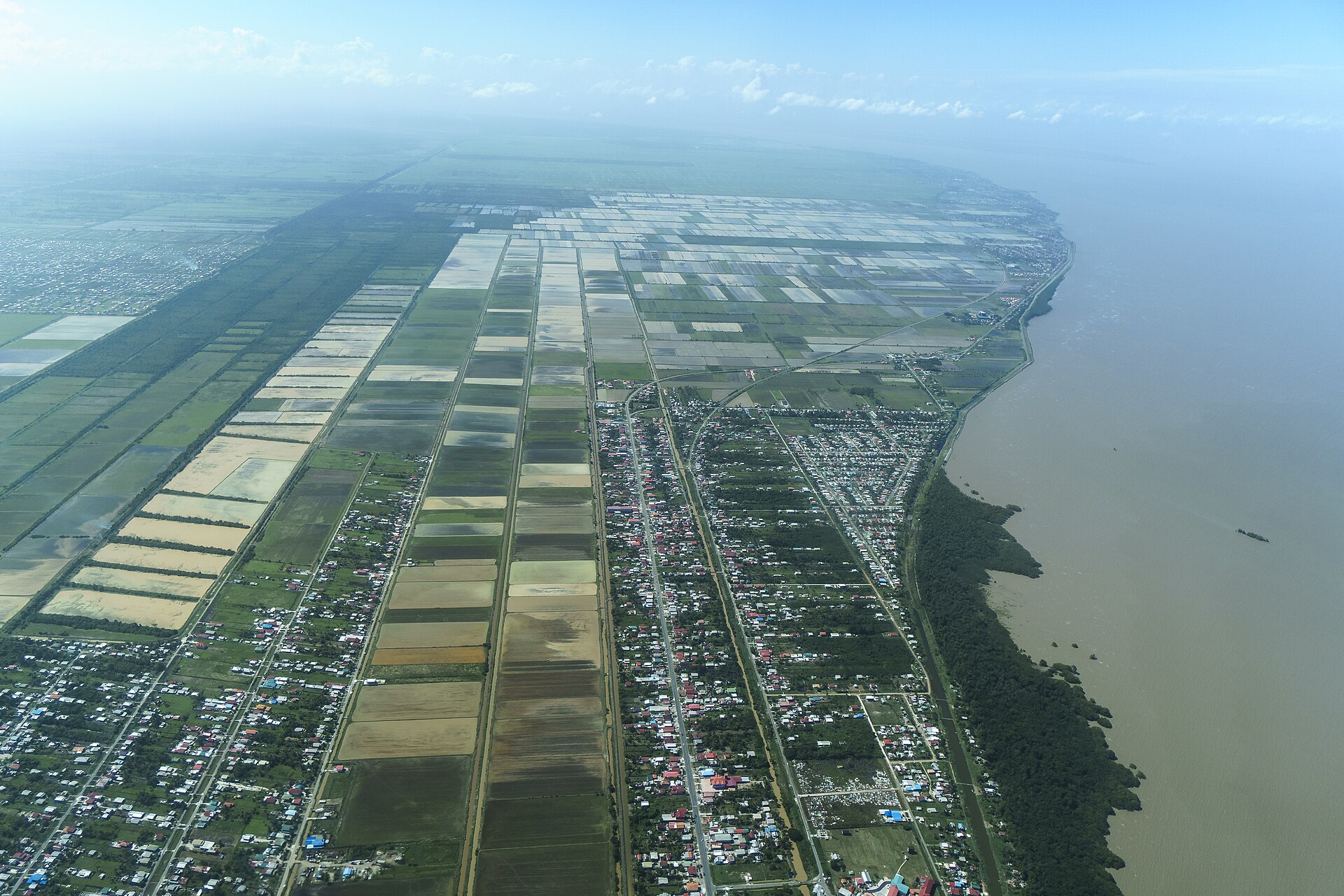
Flooding is the other everyday hazard. Canada says the coast lies below sea level behind sea defences and dams. Its rainy seasons run from May to July and from November to January.
Canada adds that flooding can happen year-round and that drainage is poorly maintained. Before signing a lease, ask neighbours whether the street floods in heavy rain.
Practical rules for living safely in Guyana
Travel by car after dark rather than on foot. Canada and the UK both call taxis the safest option. Book one through a hotel or a reputable company rather than hailing one in the street.
Use ATMs inside banks or shopping centres, and never change money with street changers. Keep car doors locked and windows closed, and watch for vehicles following you from the airport or a bank.
If you are robbed, do not resist, as the State Department’s OSAC report stresses. Keep jewellery and watches out of sight, and vary routes if you move cash for a business.
Emergency numbers are 911 for police, 912 for fire and 913 for an ambulance, according to Canada. Response times may be slow. Register with your embassy’s alert service, such as the US Smart Traveler Enrollment Program (STEP).
Know the local laws. Same-sex sexual activity is illegal, though the UK says this is rarely enforced. Drug offences carry a minimum sentence of three years.
So is Guyana safe for a careful foreigner? The honest answer is that the risk is real but predictable. Most of it can be managed by where you live, how you move and when you carry cash.
Sources: Crime, road and border facts come from the Guyana Police Force, Bureau of Statistics, Department of Public Information and ICJ. Advisory and health details come from the State Department, OSAC, Global Affairs Canada, the FCDO, the CDC and the World Bank. All accessed 25 September 2026.
- travel.state.gov
- osac.gov
- travel.gc.ca
- gov.uk
- gov.uk
- statisticsguyana.gov.gy
- statisticsguyana.gov.gy
- dpi.gov.gy
- dpi.gov.gy
- dpi.gov.gy
- dpi.gov.gy
- dpi.gov.gy
- guyanastandard.com
- stabroeknews.com
- data.worldbank.org
- data.worldbank.org
- icj-cij.org
- icj-web.leman.un-icc.cloud
- apnews.com
- france24.com
- kaieteurnewsonline.com
- wwwnc.cdc.gov
- newsroom.gy
- guyanatimesgy.com
- hgptv.com
- hgptv.com
- newsroom.gy
- guyanastandard.com
- newssourcegy.com
- demerarawaves.com
- kaieteurnewsonline.com
- kaieteurnewsonline.com
- internationalpropertydirectory.com
- bankofguyana.org.gy
- open.er-api.com
- apnews.com
- dpi.gov.gy
What Is Not Known
The date of the World Court’s judgment on Essequibo is not known. Venezuela has never accepted the court’s jurisdiction, and how its government would respond to a ruling in Guyana’s favour cannot be predicted.
The true size of the 2026 fall in crime is unclear. The Mid-Year Report cites 16.9 per cent, while the police commissioner cited 33.5 per cent. Neither figure came with published baseline counts.
Official statistics count only crimes reported to the police. How much robbery and assault goes unreported, in Georgetown or in mining areas, is not measured in public data.
No public data show crime rates by Georgetown neighbourhood. The safer and riskier areas named here come from foreign-government advisories and property guides, not from local police statistics.
Who is firing on soldiers along the Cuyuni River has not been established. Guyana blames Venezuelan gangs known as sindicatos, but the attackers have not been publicly identified.
Frequently Asked Questions
Is Guyana safe for expats in 2026?
For most foreigners who follow local advice, the risks are manageable, but crime is high by North American and European standards. Police recorded 130 murders in 2025, about 15.6 per 100,000 people, while serious crime fell 25.5 per cent. Robberies cluster at night and around cash, and road crashes killed 137 people in 2025.
What travel advisory level do the US, UK and Canada give Guyana?
The US State Department rates Guyana Level 3 of 4, reconsider travel, because of crime. Canada tells travellers to exercise a high degree of caution, the second of its four levels. The UK does not use levels and does not advise against travel to any part of Guyana. It says crime is significant and police capacity is low.
Which Georgetown neighbourhoods do foreigners live in, and which do they avoid?
Property guides place most diplomatic and executive housing in Bel Air, Prashad Nagar, Queenstown and Kingston. Newer estates lie on the East Bank of Demerara. The US, UK and Canada all name Tiger Bay, Albouystown and Agricola as areas of concern. The US bars its staff from Stabroek Market at all times.
Is the Venezuela border dispute a danger to people living in Georgetown?
None of the US, UK or Canadian advisories restricts travel to Georgetown because of the dispute. The physical risk sits on the remote western border, where soldiers on the Cuyuni River have come under fire. The World Court heard the case in May 2026. As of 25 September 2026, it had not set a date for its ruling.
Do I need malaria tablets for Guyana?
The CDC recommends malaria prevention medicine for all of Guyana except Georgetown and New Amsterdam, where cases are rare. More than 20,000 malaria cases were reported in 2024, mostly in the hinterland mining Regions One, Seven, Eight and Nine. Dengue is the main mosquito risk on the coast.
How dangerous are the roads in Guyana?
Police recorded 137 road deaths from 124 fatal crashes in 2025, slightly more than the number of murders. By around 1 September 2026, 74 people had died on the roads. Speeding was a factor in 75 per cent of fatal crashes in the first half of 2026. The UK advises keeping clear of minibuses and avoiding airport trips late at night.