By The Diplomat | Created at 2026-10-01 08:42:05 | Updated at 2026-10-01 12:01:32
10 hours ago
By The Diplomat | Created at 2026-10-01 08:42:05 | Updated at 2026-10-01 12:01:32
10 hours ago
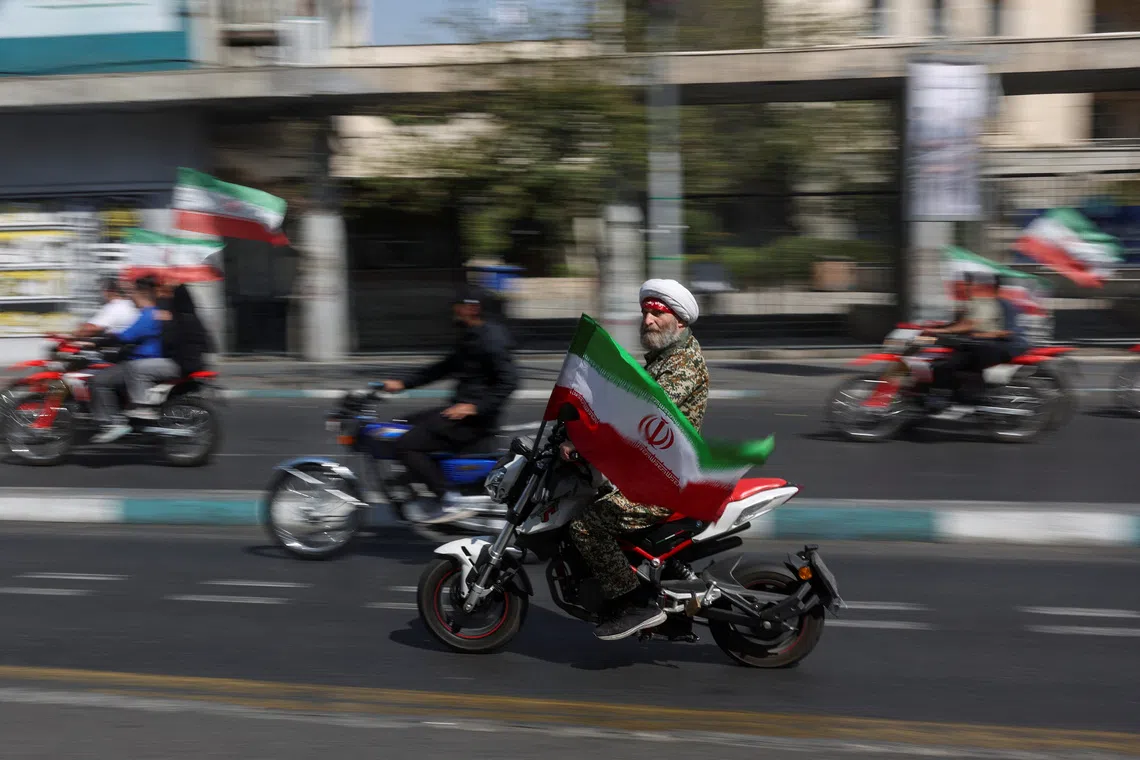
The Strait of Hormuz was effectively closed following the U.S. and Israeli attacks on Iran in February, leaving oil tankers unable to transit the strait, which is both the entrance to the Persian Gulf and one of the world’s most critical trade arteries. Japan imports more than 90 percent of its crude oil from the Middle East. Gasoline prices have surged, and the effects on daily life have been wide-ranging. The current crisis has a precedent. During the Iran-Iraq War of the 1980s, the Japanese government actively debated whether to send Maritime Self-Defense Force (MSDF) minesweepers and Japan Coast Guard (JCG) patrol vessels to the Persian Gulf — and ultimately chose not to.
Iraq invaded Iran in September 1980, beginning the Iran–Iraq War. Around 1984 the conflict spread to the sea, and passage through the Persian Gulf became hazardous for tankers as missile attacks and mines proliferated. In July 1987, at Kuwait’s request, the U.S. government dispatched warships and began escorting tankers, but a tanker still struck a mine. Washington then asked Western countries, including Japan, to send minesweepers. The U.K., France, Italy, the Netherlands, and Belgium all subsequently contributed to the minesweeping effort.
The Japanese government began exploring how it could contribute to navigational safety in the Gulf. Prime Minister Nakasone Yasuhiro was personally in favor of deploying personnel via MSDF minesweepers. On August 27, 1987, speaking before a Lower House committee, he argued that while he did not intend to order the dispatch, the act of removing mines would not, in his view, constitute the use of force, and that sending vessels to the Persian Gulf would not constitute the overseas dispatch of troops.
Naval mines constitute weapons of naval warfare, and laying them is an established means of naval combat. Under international law, minesweeping operations conducted during an armed conflict are themselves considered a use of force. This posed a legal challenge to Nakasone’s position: his argument applied only to the removal of abandoned mines in peacetime, after a ceasefire had been reached — not to active operations in an ongoing conflict.
Within the Japanese government, the Ministry of Foreign Affairs led efforts to identify feasible forms of contribution. It became clear that any MSDF minesweeper dispatch would require a destroyer escort, and amid strong public opposition the government decided against sending minesweepers. Instead, it developed alternative proposals: providing economic cooperation in the Gulf region, sharing the costs of ensuring safe passage, increasing Japan’s host-nation support for U.S. forces, and dispatching JCG patrol vessels as a means of contributing personnel.
A senior Foreign Ministry official argued that dispatching JCG patrol vessels would circumvent constitutional constraints while signaling Japan’s proactive stance to the world. Under then Transport Minister Hashimoto Ryutaro, the Ministry of Transport and the JCG continued to explore this option. The JCG faced no statutory geographic limits on its activities, and operations in the Persian Gulf would have been legally permissible. The problem was operational: the Gulf was a war zone, and the safety of any JCG vessels deployed there could not be guaranteed.
Chief Cabinet Secretary Gotoda Masaharu would later describe Nakasone as one of the most outstanding postwar Japanese leaders, noting that they rarely differed in their political judgments — with one exception. That exception was the proposed dispatch of JCG patrol vessels to the Persian Gulf. Gotoda risked his position to oppose it, telling Nakasone that while the Cabinet would make the final decision, he personally would not sign off on it regardless.
Gotoda’s stand proved decisive. At U.S. urging, Japan instead agreed to fund the installation of high-precision radio navigation aids known as Decca chains. The resulting Decca Navigator stations allowed vessels to chart safe routes through the Gulf while avoiding the war zone, a practical and politically viable contribution that did not require deploying personnel into a combat area.
The 1987 episode established a precedent: Japan would not send vessels into an active conflict zone. That caution carried forward. Those 1987 deliberations directly shaped Japan’s approach to the subsequent Gulf War, and continue to shape its response to the current Strait of Hormuz crisis. During the Gulf War, Japan dispatched MSDF minesweepers to the Persian Gulf only after the ceasefire agreement took effect.
When Iraq invaded Kuwait in August 1990, the U.S. again asked Japan to dispatch minesweepers and supply vessels. Senior Foreign Ministry officials resisted, citing the 1987 precedent against sending vessels into areas of armed conflict. Japan instead provided $13 billion in financial support, a contribution that drew a cold response from the international community, as it was widely viewed as checkbook diplomacy without strategic commitment. After the Gulf War ceasefire took effect in April 1991, with the Persian Gulf no longer a combat zone, Japan dispatched MSDF minesweeper units that same month. The pattern established in 1987 held: deployment was permissible, but only once hostilities had ceased. As Japan weighs its options in the current Strait of Hormuz crisis, that calculus — and the political constraints behind it — remain fundamentally unchanged.