By The Rio Times | Created at 2026-08-15 16:41:51 | Updated at 2026-08-15 17:19:12
50 minutes ago
By The Rio Times | Created at 2026-08-15 16:41:51 | Updated at 2026-08-15 17:19:12
50 minutes ago
Côte d’Ivoire · POLITICS
Key Facts
—Party re-election: Laurent Gbagbo was re-elected president of the African People’s Party – Côte d’Ivoire (PPA-CI) by acclamation at its first ordinary congress in Abidjan on 14–15 May 2026.
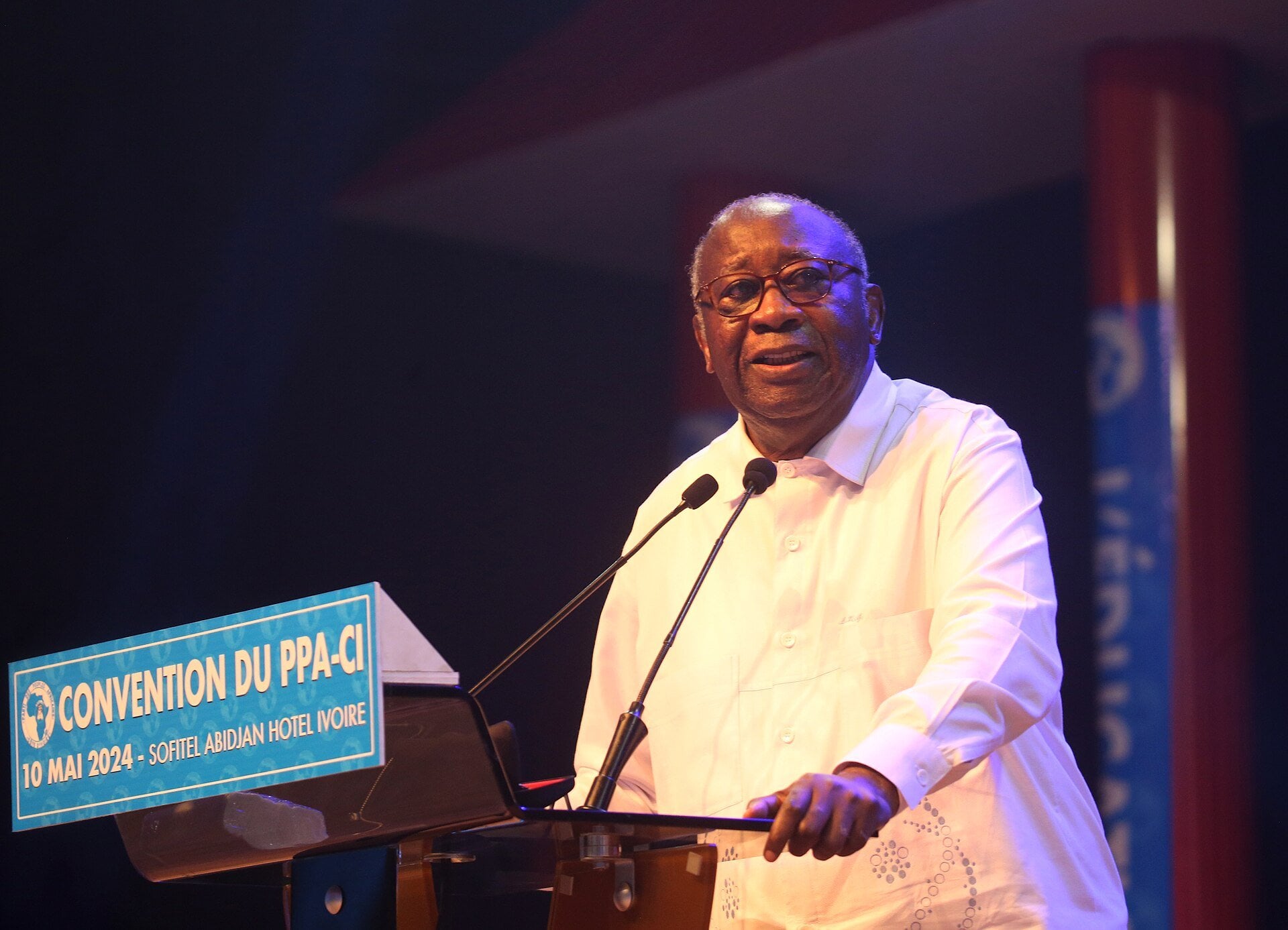
—Delegation announced: Days later at the 4th Renaissance Festival in Songon, Gbagbo said he would delegate powers within the party while rejecting any immediate succession or definitive withdrawal.
—Five lieutenants named: A party communiqué reported by Abidjan.net named Assoa Adou, Hubert Oulaye, Ackah Emmanuel, Justin Koné Katinan and Dano Djédjé Sébastien as recipients of delegated prerogatives.
—Collegial model: The stated purpose was to create a more “collégiale” leadership structure based on division of labour and unity, not a handover of ultimate authority.
—Electoral context: Reuters reported in March 2024 that Gbagbo agreed to be the PPA-CI’s standard-bearer for the then-expected 2025 presidential election, though his name was later removed from the voter roll.
—Founder’s grip: Gbagbo founded the PPA-CI in October 2021 after returning from International Criminal Court acquittal, building a party still anchored to his personal authority.
Laurent Gbagbo delegates presidential powers within the African People’s Party – Côte d’Ivoire (PPA-CI) to five senior lieutenants while explicitly rejecting any immediate succession, reshaping the opposition’s internal architecture ahead of Côte d’Ivoire’s next electoral cycle.
One-stop reference
Company Intelligence
Every listed company in Latin America — financials, ownership and structure for 1,450+ companies across 26 exchanges, in one place.
What Laurent Gbagbo delegates to his PPA-CI lieutenants
What Laurent Gbagbo delegates is best read as an internal power rebalancing, not a handover of authority. Gbagbo told supporters at the 4th Renaissance Festival in Songon, west of Abidjan, that he would delegate powers but stressed this was not a definitive withdrawal.
A subsequent party communiqué, reported by Abidjan.net, detailed the division of labour. First vice-president Assoa Adou took responsibility for the party line and compliance with statutes, while second vice-president Hubert Oulaye assumed control of party life and Central Committee meetings.
Third vice-president Ackah Emmanuel was handed relations with national institutions, and fourth vice-president Justin Koné Katinan received the government programme portfolio. Dano Djédjé Sébastien, as president of the Strategic and Political Council, was given general direction and supervision of the party.
The stated goal was a more “collégiale” leadership model. In practice, the 81-year-old founder kept the identity of any future operational leader deliberately vague, preserving his control while easing internal pressure for renewal.
The succession question that will not go away
Gbagbo’s announcement came days after he was re-elected party president by acclamation at the PPA-CI’s first ordinary congress in Abidjan on 14–15 May 2026. The choreography reinforced his dominance even as the delegation narrative signalled change.
The party faces a classic succession-management problem. It remains built around a dominant founder whose street-level mobilisation capacity, especially in Abidjan’s working-class districts, few other opposition figures can match.
Delegating direction and supervision to trusted lieutenants reduces the risk of single-point failure if Gbagbo cannot or chooses not to manage daily operations. It also helps contain rivalry among cadres positioning for eventual succession, a theme long highlighted by analysts covering the “impossible succession” question inside Ivorian opposition politics.
Why party structures still matter in Côte d’Ivoire
Ivorian politics remains dominated by a small circle of historic leaders, notably Gbagbo, President Alassane Ouattara, and, until his death in 2023, Henri Konan Bédié. The state is highly central to access to public contracts, jobs, ports, land and patronage networks.
Control of party structures therefore carries strategic weight even outside government. The PPA-CI’s internal reorganisation can be read as an attempt to build a durable political machine rather than a loose protest movement.
The delegation also addresses practical questions of who controls nominations, message discipline, fundraising and local machines. These are the levers that determine whether a party can sustain itself between elections and convert street support into electoral results.
Gbagbo’s long road back to political relevance
Gbagbo returned to Côte d’Ivoire in 2021 after his acquittal by the International Criminal Court, where he had faced charges stemming from the post-2010 electoral crisis. He founded the PPA-CI in October 2021 as a vehicle for renewed political influence.
Reuters reported in March 2024 that he agreed to be the party’s standard-bearer for the then-expected 2025 presidential election. The PPA-CI also signalled it would seek restoration of his electoral rights after his name was removed from the voter roll.
Those legal-political constraints continue to shadow his career. The delegation move allows the party to project institutional maturity while keeping its founder at the symbolic centre, a balance that may prove useful if eligibility questions persist.
The regional read-through for investors and partners
Côte d’Ivoire is one of West Africa’s most important economies and a regional commercial hub. Its political stability matters to external partners and investors, especially as neighbouring Sahel states grapple with coups and anti-Western sentiment.
Gbagbo’s political messaging has long resonated with sovereignty, anti-elite and anti-neoliberal themes. That matters in a region where popular frustration with incumbency and foreign influence has intensified, even if his party currently operates from the opposition benches.
External actors care less about the internal nameplate of the opposition than about whether Côte d’Ivoire remains governable, bankable and insulated from spillover from the Sahel’s security crises. The PPA-CI’s evolution is one variable in that larger calculation, as explored in our pillar series Africa: The New Scramble.
What to watch next
The delegation is an internal party matter, but its real test will come during the next electoral cycle. Whether the five lieutenants can operate the collegial model without fragmenting will determine if the PPA-CI matures beyond its founder.
Watch for any move by the party to resolve Gbagbo’s voter-roll status, and for signals from the five named figures about their own ambitions. The opposition space in Côte d’Ivoire remains fragmented, and the PPA-CI’s ability to professionalise while retaining its mobilisation capacity will shape the pre-election landscape.
For now, Gbagbo has done what seasoned political operators do: he has institutionalised personal control by delegating tasks without surrendering power. The question of who eventually leads the party into an election remains unanswered by design.
Frequently Asked Questions
Did Laurent Gbagbo step down as PPA-CI president?
No. He was re-elected by acclamation in May 2026 and explicitly said the delegation of powers was not a definitive withdrawal or automatic succession.
Who received the delegated powers in the PPA-CI?
Five figures: Assoa Adou, Hubert Oulaye, Ackah Emmanuel, Justin Koné Katinan and Dano Djédjé Sébastien, each with specific portfolios ranging from party statutes to government programme.
Why does the PPA-CI reorganisation matter for Côte d’Ivoire?
It shows how the opposition is trying to professionalise while remaining anchored to a dominant patriarch, in a political economy where party control shapes access to patronage and electoral influence.
Connected Coverage
For deeper context on how domestic power struggles in anchor states like Côte d’Ivoire intersect with great-power competition and investor calculations across the continent, read our pillar series Africa: The New Scramble.
Sources
This article was produced by The Rio Times’ automated newsroom system. How we use AI · Report an error
LatAm Markets: Live Signals → — real-time movers, turnover leaders and FX across Latin America.
The Rio Times · Power Map
See who really holds power in Latin America
Click to open the Power Map →