By The Rio Times | Created at 2026-06-18 11:26:54 | Updated at 2026-06-18 13:47:12
2 hours ago
By The Rio Times | Created at 2026-06-18 11:26:54 | Updated at 2026-06-18 13:47:12
2 hours ago
Metropole · Sport
—The milestone. Within a single day, Messi and Ronaldo each became the first players ever to appear at six different World Cups.
—One night. Messi scored all three goals against Algeria, drawing level with the all-time record of sixteen World Cup goals and earning a standing ovation.
—The other. A day later, Ronaldo was a peripheral figure and missed two clear chances as Portugal were held to a draw.
—The record. Messi also moved past Pelé for the most goal contributions in World Cup history, with twenty-four against the Brazilian’s twenty-one.
—The ages. Messi is thirty-eight and Ronaldo forty-one, and both have signalled this is almost certainly their last World Cup.
—The frame. It is South America’s greatest player and his European rival, finally separated on the same stage.
For two decades Messi and Ronaldo have shared the same conversation, and within a single day they reached the same unprecedented milestone, a sixth World Cup, on two nights that could hardly have been more different.
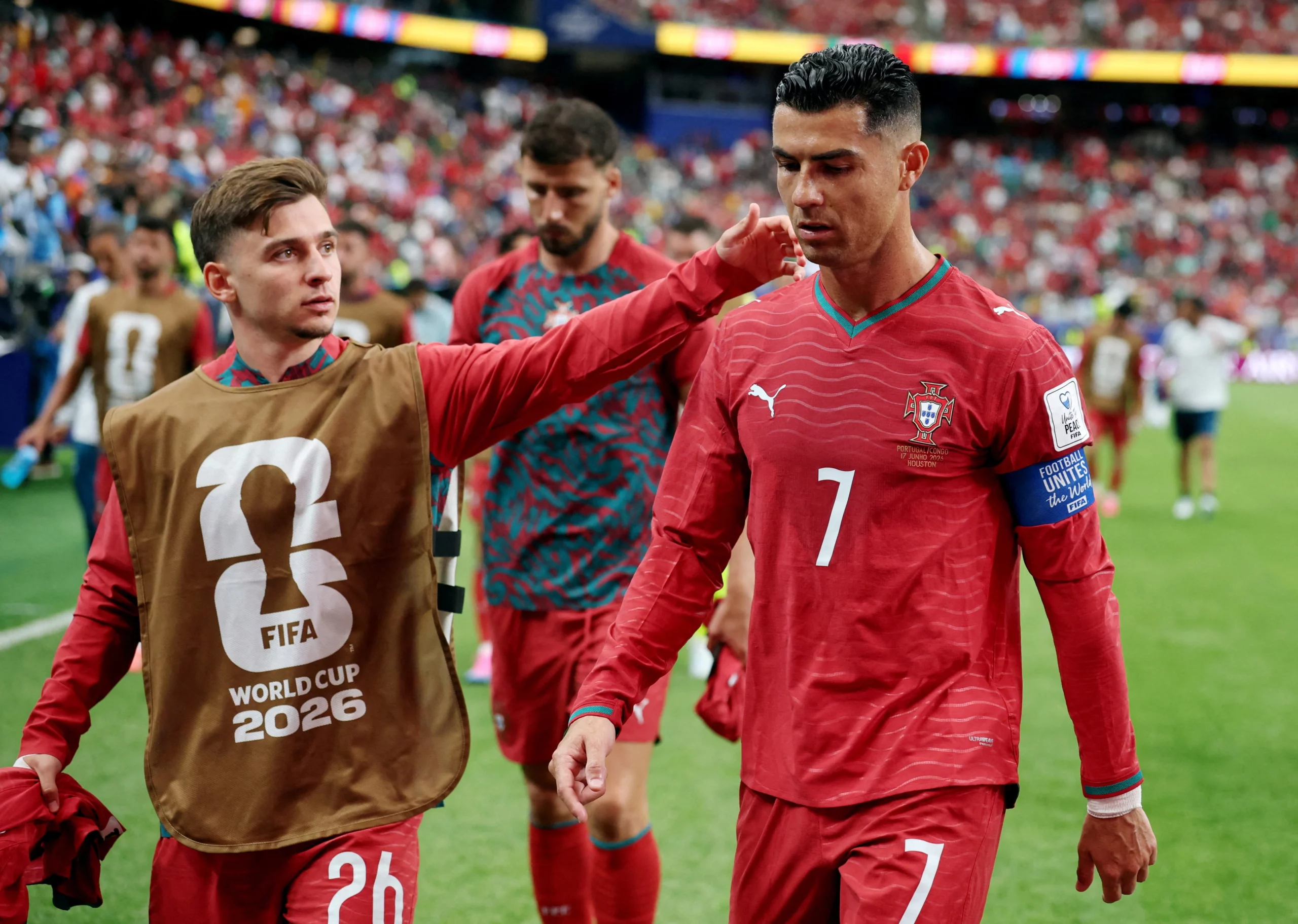
Messi and Ronaldo hit the same milestone, one day apart
No footballer had ever played at six World Cups. This week two did, within twenty-four hours of each other, and they happen to be the two men who have defined the sport for a generation.
Lionel Messi got there first, on the Tuesday in Kansas City. Cristiano Ronaldo followed the next day in Houston.
The shared achievement is historic, but the manner of it pulled them sharply apart.
This is not the old argument about who is better. That debate is decades old and goes nowhere.
The interest now is simpler and sadder, namely where each man actually stands, in what both have said is almost certainly their final tournament.
One man rewrote the record books
Messi’s night was close to perfect. He scored all three goals in a three-nil win over Algeria, his first hat-trick at a World Cup, and at thirty-eight became the oldest player ever to score three in a single match at the tournament.
The treble carried him level with Germany’s Miroslav Klose at the very top of the all-time scoring list, on sixteen World Cup goals. One more would leave him alone at the summit.
He also moved past a South American giant. Counting goals and assists together, Messi now has twenty-four World Cup contributions, overtaking Pelé’s twenty-one for the most in the competition’s history.
The timing added to the romance. It came on his two hundredth appearance for Argentina, exactly twenty years to the day after his World Cup debut as a teenager.
He left the field in tears, to a standing ovation.
The other walked off with nothing
Ronaldo’s evening was the mirror image. At forty-one he led Portugal out against the Democratic Republic of the Congo, a side playing at its first World Cup since 1974, when the country was still called Zaire.
Portugal took an early lead through a João Neves header, but were pegged back and held to a one-all draw. It was a result widely read as a shock, and not the script their captain wanted.
Ronaldo himself was peripheral for long stretches. He missed two clear chances, sending both wide, and extended a goalless run in major tournaments that now stretches across his last ten such games.
The contrast with the night before was impossible to miss. One legend bent the record books to his will; the other chased the game and could not bend it at all.
Why the South American angle matters
For the region, this is more than two scorelines. Messi is South America’s defining modern player, the man who finally won the trophy in 2022, set against the European rival who has always lived in the same sentence as him.
For most of their careers the comparison stayed maddeningly even, trophy for trophy, goal for goal. This week, on the biggest stage of all, the gap between them opened wider than it ever has.
None of this settles the lifelong debate, nor should it. A single round of opening fixtures cannot define two twenty-year careers, and Ronaldo has answered doubters many times before.
Why it matters beyond the pitch
For the tournament’s hosts and sponsors, the two names remain a commercial engine. A Messi in record-breaking form keeps Latin American audiences locked in and lifts the value of every match Argentina play.
There is a farewell in the air as well. Both men have framed this as a last act, which gives every appearance the weight of an ending and a reason for neutrals to tune in while they still can.
For now, the story of the week is the divergence. The same milestone, reached a day apart, told two very different tales about where these careers have arrived.
Frequently Asked Questions
What did Messi and Ronaldo achieve this week?
Within a single day, each became the first footballer to appear at six different World Cups. Messi reached the mark on the Tuesday against Algeria, and Ronaldo matched it the next day with Portugal, an unprecedented milestone for both.
What records did Messi break against Algeria?
His hat-trick drew him level with Miroslav Klose on sixteen World Cup goals, the all-time record, and made him the oldest player to score three in a match. He also passed Pelé for the most career goal contributions, with twenty-four.
How did Ronaldo’s opening match go?
Portugal were held to a one-all draw by the Democratic Republic of the Congo, who were playing at their first World Cup since 1974. Ronaldo, now forty-one, was a peripheral figure and missed two clear chances.
The Rio Times · Power Map
See who really holds power in Latin America
Click to open the Power Map →