By The Rio Times | Created at 2026-10-05 12:46:56 | Updated at 2026-10-05 14:55:06
2 hours ago
By The Rio Times | Created at 2026-10-05 12:46:56 | Updated at 2026-10-05 14:55:06
2 hours ago
MOROCCO · GEOPOLITICS
Key Facts
- —The country Morocco is a North African kingdom of 36.8 million people (2024 census), facing Spain across the Strait of Gibraltar.
- —Who decides King Mohammed VI, on the throne since 1999, steers foreign policy and commands the army. Fatima Ezzahra El Mansouri became head of government on 29 September 2026.
- —The core issue Western Sahara, a former Spanish colony claimed by Morocco and by the Algeria-backed Polisario Front, which seeks independence. Rabat judges every partner by its stance on it.
- —The US link Free trade since 2006, Major Non-NATO Ally status since 2004 and US recognition of Moroccan sovereignty over Western Sahara since 2020.
- —The numbers US goods exports to Morocco reached US$5.5 billion in 2025, against imports of US$1.9 billion, Census Bureau data show.
- —What it means for you A Western-aligned gateway to Africa and Europe, though most Moroccan goods have paid an extra 12.5% US tariff since 24 July 2026.
- —Still open The mandate of MINURSO, the UN mission in Western Sahara, runs out on 31 October 2026 unless the Security Council renews it.
Morocco geopolitics turns on one question, the fate of Western Sahara, and Washington has backed Rabat’s answer since December 2020. For Americans, that makes the kingdom a security partner, a free-trade partner and a test of US diplomacy at the UN.
This guide explains who Rabat courts, what each power wants and where the risks lie, as of October 2026.
Who Runs Morocco’s Foreign Policy
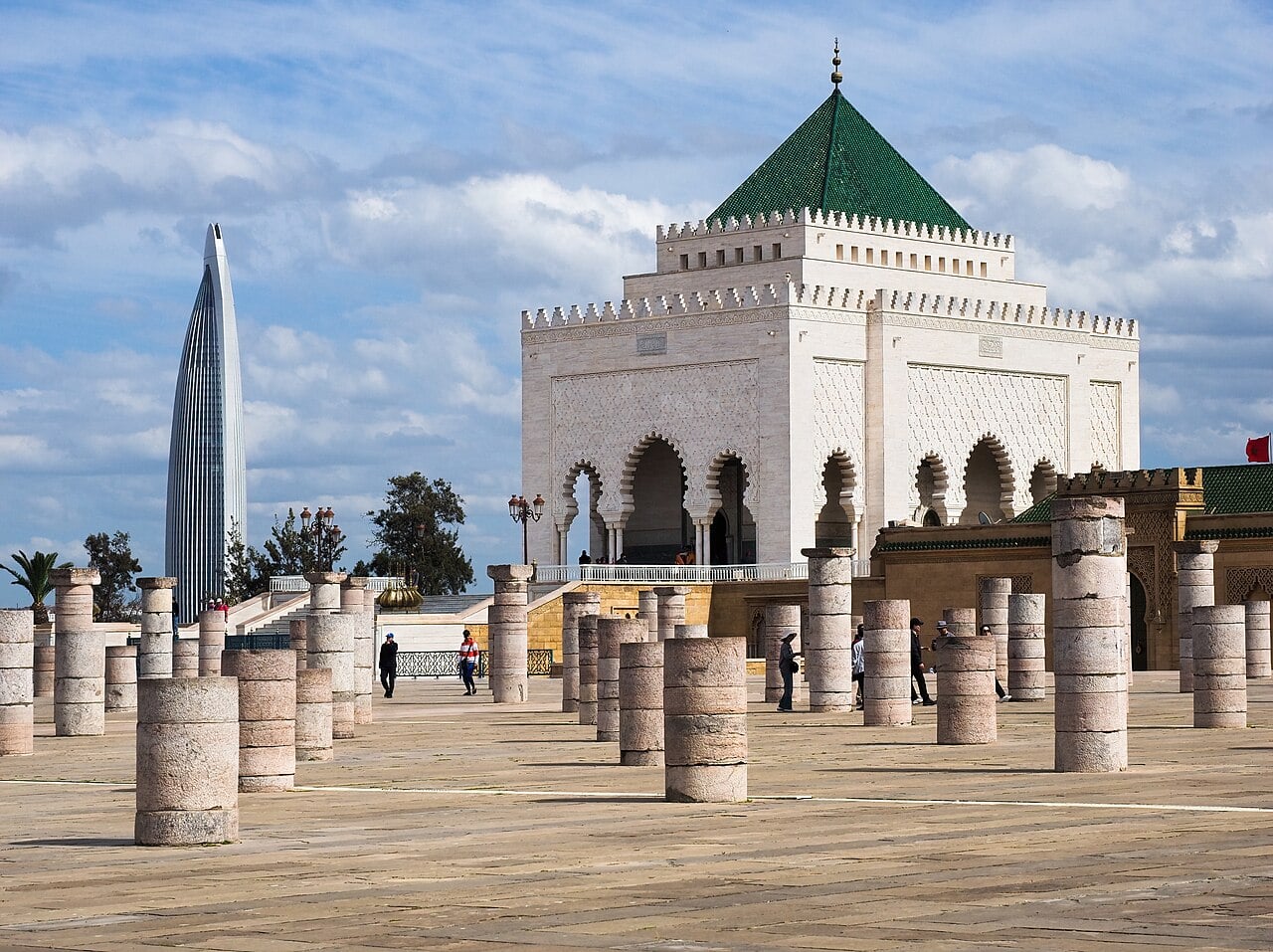
Morocco is a constitutional monarchy, and foreign policy belongs to the palace. The 2011 constitution makes King Mohammed VI head of state and supreme head of the Royal Armed Forces.
Under Article 55, the king accredits ambassadors and signs and ratifies treaties. He has reigned since 1999.
Elected governments run the economy and day-to-day administration. On 29 September 2026, the king appointed Fatima Ezzahra El Mansouri head of government, the first woman in the post.
Article 47 of the constitution requires the king to choose the head of government from the party that wins most seats. Her Authenticity and Modernity Party (PAM) won 97 of 395 seats on 23 September, according to provisional Interior Ministry results.
As of 5 October 2026, she was still negotiating a coalition, and no new cabinet had been named. Nasser Bourita, foreign minister in the outgoing cabinet, represented Morocco at the UN General Assembly in September.
One issue frames everything. In a speech on 20 August 2022, the king called the Sahara file “the prism” through which Morocco views its international environment.
He added that it is the yardstick for the sincerity of friendships and the efficiency of partnerships. That is the key to reading Morocco geopolitics.
For a general introduction, see Morocco explained, and follow the latest on the Rio Times Morocco page.
The United States Comes First
In Morocco geopolitics, the United States comes first, and the ties are old. Morocco formally recognised the United States by signing a treaty of peace and friendship in 1786.
The first US consul arrived in Tangier in 1797, the State Department’s Office of the Historian notes. Permanent diplomatic relations followed in 1905.
Trade runs under a free trade agreement in force since 1 January 2006, says the US Trade Representative (USTR). In 2025, US goods exports to Morocco reached US$5.5 billion and imports US$1.9 billion.
That left the United States with a goods surplus of about US$3.7 billion, Census Bureau figures show. Even so, Washington added a 12.5% tariff on most Moroccan goods from 24 July 2026.
The USTR applied it under Section 301 of US trade law, citing Morocco’s lack of an enforced ban on forced-labour imports. The same measure covers 60 economies and was first proposed in June 2026.
The political anchor is Western Sahara. In Proclamation 10126, signed in December 2020, President Donald Trump recognised Moroccan sovereignty over the entire territory.
The proclamation calls Morocco’s autonomy plan “the only basis” for a just and lasting solution. After talks with Bourita on 25 September 2026, Deputy Secretary of State Christopher Landau said “this status quo cannot be maintained”.
Morocco World News, a Moroccan news site, reported the remark and noted that the dispute has run for more than 50 years.
Military Ties and the African Lion Exercise
Morocco has been a Major Non-NATO Ally of the United States since June 2004, under a presidential determination. Security cooperation has deepened since.
In April 2026, the two sides signed a 2026-2036 defence roadmap at the Pentagon, the news site The North Africa Post reported. Under Secretary of War Elbridge Colby signed for Washington, and Abdellatif Loudiyi, Morocco’s minister for defence administration, for Rabat.
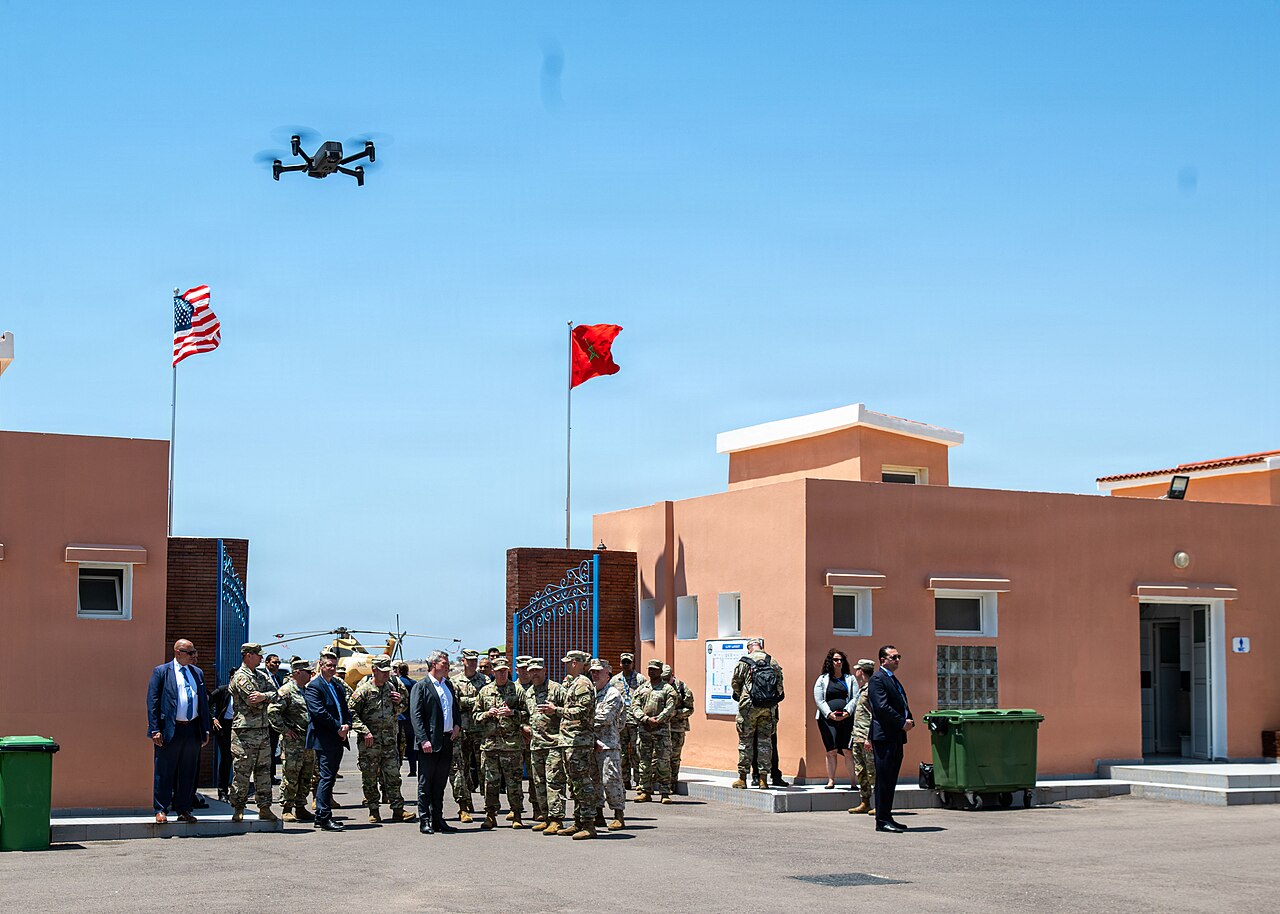
On 13 July 2026, Morocco’s armed forces and US Africa Command (AFRICOM) signed a memorandum on a training centre at Tan-Tan. AFRICOM says the aim is to set it up by 2030.
The centre will combine a training range, a drone academy and an innovation and testing centre. The drone academy will train operators from Morocco and other African countries against threats in West Africa.
Morocco also hosts African Lion, AFRICOM’s annual exercise. AFRICOM says the 2027 edition will serve as a proof of concept for the Tan-Tan centre.
Rabat is also helping train other African armies, as described in Morocco’s growing role with NATO and AFRICOM.
Western Sahara at the UN Security Council
Western Sahara, on Africa’s Atlantic coast, was a Spanish colony until 1976. A sand wall, the berm, separates Moroccan forces from those of the Polisario Front, an Algeria-backed independence movement.
The Security Council created MINURSO in April 1991 to organise a referendum on the territory’s future, which has never taken place. The Polisario’s self-declared Sahrawi Republic has belonged to the African Union and its predecessor since 1982.
On 31 October 2025, the Council adopted Resolution 2797 by 11 votes to none, with China, Russia and Pakistan abstaining. Algeria, then a Council member, did not take part in the vote.
The resolution backs talks “taking as basis Morocco’s Autonomy Proposal”. It says “genuine autonomy could represent a most feasible outcome”, while still referring to the self-determination of the people of Western Sahara.
It extended MINURSO’s mandate to 31 October 2026, so the Council must act again before that date. That vote is the next big test for Morocco geopolitics.
Washington has pushed for a deal. On 8 February 2026, US officials hosted Morocco, Algeria, Mauritania and the Polisario at the US Embassy in Madrid.
Massad Boulos, President Trump’s senior adviser for Africa, and Mike Waltz, the US ambassador to the UN, led the US side. Staffan de Mistura, the UN envoy for Western Sahara, also attended, Yabiladi, a Moroccan news site, reported.
On 1 October 2026, the Moroccan daily L’Opinion reported that Waltz had urged a Polisario delegation to accept the autonomy plan. That meeting is covered in the US envoy’s talks with the Polisario.
France, Spain and the European Union
Europe is the other pillar of Morocco geopolitics, and the EU is the kingdom’s largest trade partner. EU-Morocco goods trade reached €62.2 billion (US$70.0 billion) in 2025, the European Commission says, more than nine times US-Moroccan goods trade.
Euro amounts here are converted at 0.889 euros to the US dollar, the rate on 4 October 2026.
France moved closer to Rabat in 2024. Addressing Morocco’s parliament on 29 October 2024, President Emmanuel Macron said the territory’s present and future fall within Moroccan sovereignty.
He had first set out that position in a letter to the king on 30 July 2024. In late September 2026, Bladi.net, a Moroccan news site, reported that a friendship treaty between the two was nearly finalised.
Spain shifted in 2022. Prime Minister Pedro Sánchez’s government called the autonomy plan “the most serious, realistic and credible basis” for a settlement.
A joint declaration after a Madrid summit on 4 December 2025 repeated that line and cited Resolution 2797. Público, a Spanish daily, reported the text.
Spain also borders Morocco directly through Ceuta and Melilla, two Spanish cities on the North African coast. See Morocco and its neighbours for the land borders.
The EU’s own court complicates trade. On 4 October 2024, the Court of Justice of the EU ruled on two 2019 deals covering fisheries and farm goods.
It found they had been concluded without the consent of the people of Western Sahara, in breach of self-determination. Politically, Brussels has since edged closer to Rabat.
At an EU-Morocco Association Council on 29 January 2026, the EU welcomed Resolution 2797. It also welcomed Morocco’s offer to explain what autonomy “under Moroccan sovereignty” would look like.
The Gulf Monarchies, Israel and Turkey
The Gulf monarchies back Morocco firmly on the Sahara. On 2 October 2026, Bahrain spoke for the six-member Gulf Cooperation Council (GCC) at the UN’s Fourth Committee, which deals with decolonisation.
It welcomed Resolution 2797 and renewed GCC support for Morocco’s sovereignty and autonomy plan, the state news agency MAP reported.
The United Arab Emirates opened a consulate general in Laayoune, in Western Sahara, on 4 November 2020, its foreign ministry says.
In May 2025, a Moroccan-Emirati consortium including TAQA Morocco signed deals for desalination plants and a 1,400-kilometre power line. Le Matin, a Moroccan daily, tied the programme to a 2023 declaration by the king and the UAE president.
Israel is a newer partner. On 22 December 2020, Morocco, Israel and the United States signed a joint declaration in Rabat.
It committed Morocco and Israel to resume official contacts and reopen liaison offices. That step brought Morocco into the Abraham Accords, the US-brokered normalisation deals between Israel and Arab states.
In July 2023, Israel’s government recognised Moroccan sovereignty over Western Sahara in a letter to the king, Morocco’s Royal Cabinet said.
On 16 September 2026, Bourita, Israeli Foreign Minister Gideon Sa’ar and US ambassador to the UN Mike Waltz met in New York. In a joint statement, they confirmed that Morocco and Israel will upgrade their missions to full embassies and exchange ambassadors.
With Turkey, the main framework is a free trade agreement signed in Ankara in April 2004. It took effect on 1 January 2006, and an amendment entered into force in April 2022, Turkey’s trade ministry says.
China, Russia, India and the BRICS Question
China’s footprint is mainly industrial. Chinese battery maker Gotion High-Tech is building a lithium iron phosphate battery gigafactory in the Rabat-Salé-Kenitra free trade zone.
In July 2026, the African Development Bank approved a €100 million (US$112.5 million) loan for the plant. Its first phase is planned at 10 gigawatt-hours of battery cells and packs.
On 28 September 2026, Gotion and PowerCo, Volkswagen’s battery arm, announced a cathode venture at Kenitra worth about €480 million (US$540 million). Le360, a Moroccan news site, said it will supply the two groups’ battery projects in Spain and Slovakia.
Diplomatically, Beijing keeps a lower profile. President Xi Jinping met Crown Prince Moulay El Hassan during a stopover in Casablanca on 21 November 2024, China’s foreign ministry said.
China abstained on Resolution 2797, saying it failed to take on board all Council members’ concerns. Russia also abstained, calling the text unbalanced, but did not block the mandate extension.
Rabat keeps the Moscow channel open. Bourita met Russian Foreign Minister Sergei Lavrov in New York on 25 September 2026, Hespress, a Moroccan news site, reported.
They discussed ties under a 2016 declaration on deepening their strategic partnership, as well as the Sahara dispute.
The two countries signed a sea-fishing cooperation agreement in Moscow on 17 October 2025. Morocco’s government approved it in May 2026.
India is a growing defence partner. On 23 September 2025, India’s defence minister opened a Tata Advanced Systems plant in Berrechid that builds 8×8 wheeled armoured vehicles.
India’s government calls it the first such plant by an Indian private company in Africa. Morocco geopolitics, in other words, leaves room for many partners.
Morocco has stayed out of BRICS, the emerging-economies bloc that includes Brazil, Russia, India, China and South Africa. In August 2023, a Moroccan foreign ministry source denied that Rabat had applied to join, the magazine Le Courrier de l’Atlas reported.
The source cited strained relations with South Africa over Western Sahara.
Africa, the African Union and the Algeria Rivalry
Africa is the third arena of Morocco geopolitics. Morocco rejoined the African Union (AU) on 31 January 2017, after decades outside the pan-African body.
The Sahrawi Republic is also a member, so both now sit in the same organisation.
How Rabat builds influence south of the Sahara is covered in Morocco’s role in Africa.
Algeria, its eastern neighbour, is the main rival. Algeria broke off diplomatic relations on 24 August 2021, in an announcement by its foreign minister at the time, Ramtane Lamamra.
The land border between the two countries has been closed since 1994, the Moroccan news site Bladi.net notes. At the UN, Algeria argued that Resolution 2797 neglected Sahrawi aspirations and did not faithfully reflect UN doctrine on decolonisation.
Yet Algerian envoys sat at the US-hosted Madrid table in February 2026, alongside Morocco, Mauritania and the Polisario. That suggests the rivalry is managed through Washington and the UN rather than settled.
What It Means for US Readers
Morocco geopolitics matters to Americans because Rabat has tied its biggest national cause to US recognition. Washington, in turn, gains a stable Atlantic and Mediterranean partner with ports, factories and training grounds.
For exporters, the 2006 free trade agreement remains the legal frame. For importers, the 12.5% Section 301 tariff since 24 July 2026 raises the cost of most Moroccan goods.
For defence watchers, Morocco is becoming a hub for US training in Africa, from African Lion to the planned Tan-Tan centre. For investors, Chinese battery plants show Rabat courting several powers at once.
The October 2026 MINURSO vote is a test of how far Washington can turn its 2020 recognition into an international settlement.
What Is Not Known
It is not known whether the Security Council will renew MINURSO unchanged, reshape it or let it lapse on 31 October 2026. Council members were due to discuss it in closed meetings on 7 and 8 October 2026, Hespress reported.
The Polisario had not publicly accepted the autonomy plan by early October 2026.
The make-up of El Mansouri’s cabinet, including who will run foreign affairs, was still open on 5 October 2026. The palace’s control of Morocco geopolitics makes a sharp change of direction unlikely, but the line-up matters for trade and investment.
The USTR applies a lower 10% rate to economies that have adopted or committed to forced-labour import bans. Whether Morocco will seek that lower rate is not yet clear.
Frequently Asked Questions
What is the main issue in Morocco geopolitics?
Western Sahara. In a 2022 speech, King Mohammed VI called it the prism through which Morocco views its international environment. He also called it the yardstick for judging partnerships.
Does the United States recognise Western Sahara as part of Morocco?
Yes. Proclamation 10126 of December 2020 recognised Moroccan sovereignty over the entire territory, and US officials reaffirmed support in September 2026.
Does Morocco have a free trade agreement with the United States?
Yes, since 1 January 2006. Since 24 July 2026, however, most Moroccan goods entering the US have paid an extra 12.5% tariff under Section 301.
Who leads Morocco in 2026?
King Mohammed VI is head of state and controls foreign and defence policy. Fatima Ezzahra El Mansouri of the Authenticity and Modernity Party became head of government on 29 September 2026.
Is Morocco joining BRICS?
Not as of October 2026. In August 2023, a Moroccan foreign ministry source denied that Rabat had applied to join. The source cited tensions with South Africa over Western Sahara.
Why are Morocco and Algeria rivals?
Their rivalry is the main fault line in Morocco geopolitics. Algeria backs the Polisario Front and cut diplomatic ties with Morocco in August 2021. Their land border has been closed since 1994.
What happens to the UN mission in Western Sahara in 2026?
MINURSO’s mandate expires on 31 October 2026. The Security Council must decide before then whether to renew, reshape or end it.
Sources: Office of the US Trade Representative, Morocco FTA, accessed October 2026; US Census Bureau, trade in goods with Morocco, accessed October 2026; Federal Register, Section 301 forced-labour tariff notice (91 FR 47318), 28 July 2026; Federal Register, Proclamation 10126, 15 December 2020; US Africa Command, AMTEC memorandum, 13 July 2026; MAP, Royal appointment of the head of government, 29 September 2026; African Union, member states, accessed October 2026; European Commission, EU trade relations with Morocco, accessed October 2026; Elysée, state visit to Morocco, day two, 29 October 2024; UN Security Council, Resolution 2797 (2025), 31 October 2025; MINURSO, background, accessed October 2026; Maroc.ma, royal speech on the 69th anniversary of the Revolution of the King and the People, 20 August 2022; Maroc.ma, provisional 2026 legislative election results, 24 September 2026; US Embassy and Consulate in Morocco, US-Morocco-Israel joint statement, 16 September 2026; US State Department, Office of the Historian, Morocco, accessed October 2026; Court of Justice of the EU, press release 170/24, 4 October 2024; Press Information Bureau of India, TASL plant in Berrechid, 23 September 2025.
This article was produced by The Rio Times’ automated newsroom system. How we use AI · Report an error · Editorial responsibility: Matthias Camenzind, Editor-in-Chief