By The Rio Times | Created at 2026-06-23 11:55:41 | Updated at 2026-06-23 15:18:23
3 hours ago
By The Rio Times | Created at 2026-06-23 11:55:41 | Updated at 2026-06-23 15:18:23
3 hours ago
Economy · Peru · Analysis
— Key Facts
—The ruling. A Peruvian court upheld the state’s right to police pricing at the China-run Chancay port.
—The plaintiff. Cosco Shipping had sued to block a consumer-watchdog review of its tariffs.
—The scope. The win is narrow, covering pricing oversight rather than the wider supervision fight still on appeal.
—The port. Chancay is a 1.3-billion-dollar deep-water hub north of Lima, majority-owned by China’s state shipping giant.
—Washington’s role. The United States has warned that Peru risks ceding control of strategic infrastructure to China.
—Why it matters. The case is a test of who sets the rules when private foreign money builds public infrastructure.
A Chancay port ruling has handed the state a partial win in its tug-of-war with the Chinese operator of South America’s most closely watched piece of infrastructure.
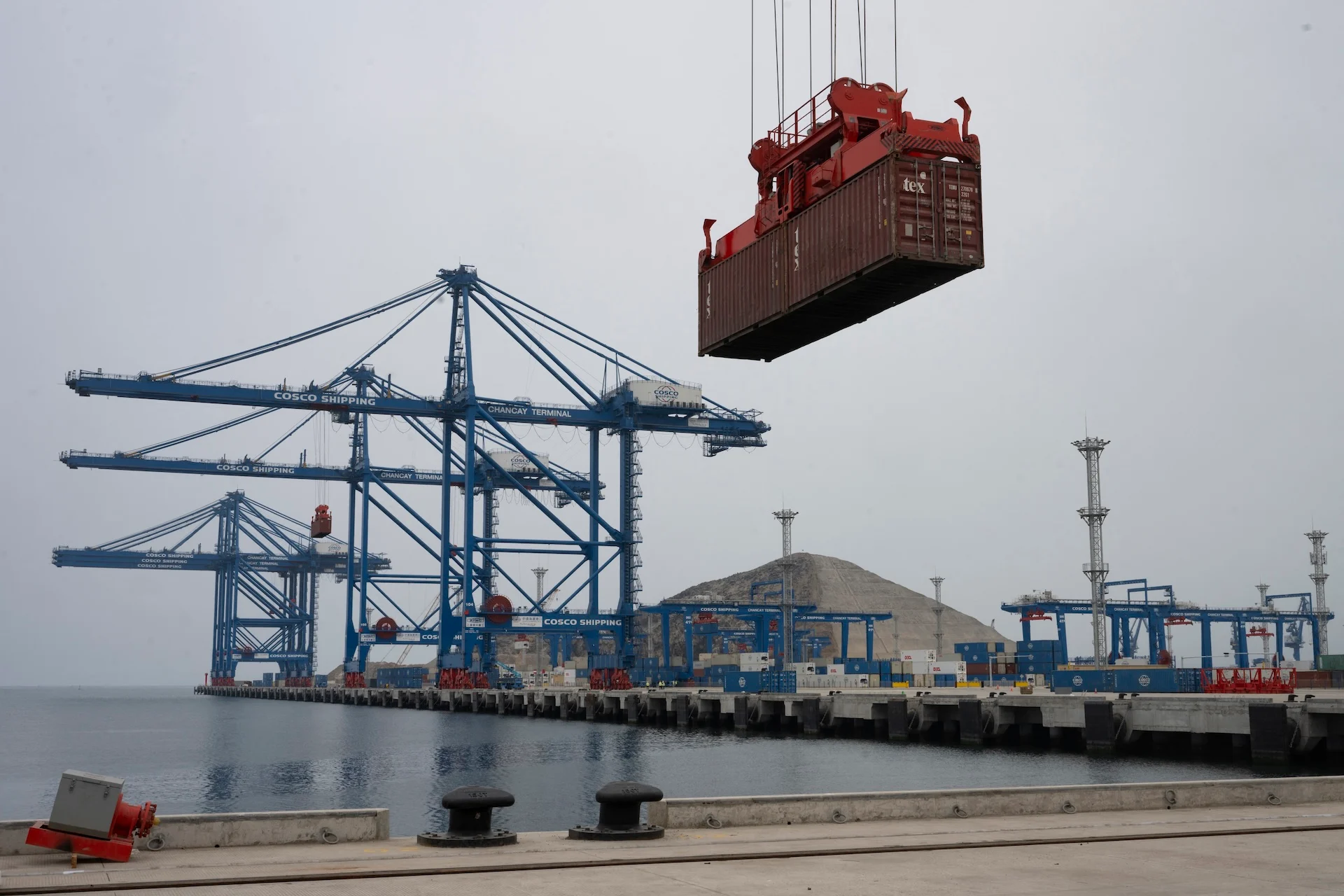
Peru’s judiciary has sided with the state in one strand of a long legal fight over Chancay, the giant Chinese-built port north of Lima. It is a modest but pointed win for regulators.
The court upheld the right of a state body to oversee pricing competition at the terminal, the regulator said on Monday. The port is run by China’s state shipping group, Cosco Shipping.
What the Chancay port ruling actually decided
The detail matters here, because the headline is easy to over-read. Cosco had gone to court earlier this year to block Peru’s consumer-protection agency, Indecopi, from reviewing the port’s tariffs.
The company argued that such intervention undermined the legal certainty of a private investment. The court disagreed, finding that the agency’s action did not violate Cosco‘s contractual rights.
So this is a win on pricing, not a sweeping reassertion of state control. A separate and bigger battle, over the transport regulator’s general powers at the port, is still working its way through appeal.
In that other case, a lower court ruled in February that the regulator, known as Ositrán, must refrain from supervising the terminal. The agency appealed, and the higher court has yet to settle it.
Why a single port draws so much attention
Chancay is no ordinary terminal. The deep-water facility cost about 1.3 billion dollars, opened in late 2024, and can take some of the largest cargo ships afloat.
It has cut shipping times between South America and Asia to roughly 23 days and is starting to act as a regional trade hub. For Peru’s exporters, that is a genuine prize.
The reach extends beyond Peru. Brazil, Chile and Ecuador all eye Chancay as a faster Pacific gateway to Asia, which is part of why the rules governing it carry weight across the region.
The timing adds to the stakes. Peru is in the middle of its own contested election cycle, and whoever forms the next government will inherit the unresolved supervision fight.
It is also majority-owned by a Chinese state company, which is why Washington is watching. The United States has warned, in unusually blunt terms, that cheap Chinese money can cost a country its sovereignty.
Beijing rejects that framing and says the port stays fully under Peruvian jurisdiction. The dispute has become a small but vivid front in the wider contest between the two powers in Latin America.
The deeper question for investors
Underneath the geopolitics sits a dry but important legal puzzle. Who regulates infrastructure that is privately built and owned, but serves the public?
Cosco’s case is that Chancay was financed entirely with private capital and granted no state concession, so it should not face the full regime that governs public ports. Regulators counter that public use, not ownership, is what triggers oversight.
For foreign investors, the worry is fragmentation, where similar assets end up under different rules. Monday’s decision tilts one piece toward the state, but the central question is still open.
What did the Chancay port ruling decide?
A Peruvian court upheld the state’s power to oversee pricing competition at the terminal, rejecting a challenge by operator Cosco Shipping and finding that the consumer agency’s tariff review did not breach the company’s contractual rights. The decision is narrow and does not resolve a separate, broader supervision case still on appeal.
Who owns and runs the Chancay port?
Chancay is majority-owned and operated by Cosco Shipping, the Chinese state shipping group, in partnership with a Peruvian mining firm. The roughly 1.3-billion-dollar deep-water port sits about 80 kilometres north of Lima and opened in late 2024.
Why is the United States concerned about Chancay?
Washington has warned that Chinese control of a strategic Pacific port could erode Peru’s sovereignty over critical infrastructure, and some US lawmakers have raised the possibility of dual military use. Beijing and Cosco reject those claims, saying the port remains under Peruvian jurisdiction and operates on purely commercial terms.
The Rio Times · Power Map
See who really holds power in Latin America
Click to open the Power Map →