By The Rio Times | Created at 2026-10-16 15:11:15 | Updated at 2026-10-16 16:05:39
1 hour ago
By The Rio Times | Created at 2026-10-16 15:11:15 | Updated at 2026-10-16 16:05:39
1 hour ago
NIGERIA · RELIGION
Key Facts
- —The basics As of October 2026, Nigeria has no census count of religion, and survey estimates put Muslims at about 56% and Christians at about 43%, with traditional faiths and other groups under 1%.
- —Why it matters Faith and region overlap in Africa’s most populous country, so religion shapes party tickets, security debates and US policy, including a Country of Particular Concern designation by President Donald Trump on 31 October 2025.
- —The numbers The 2023-24 national health survey found 57.6% of women and 58.2% of men aged 15 to 49 were Muslim, and 41.9% of women and 40.8% of men were Christian. Twelve northern states run sharia penal codes.
- —Who is who The Nigerian Supreme Council for Islamic Affairs, led by the Sultan of Sokoto, and the Christian Association of Nigeria, led by Archbishop Daniel Okoh, are the two main bodies speaking for Muslims and Christians.
- —What to watch Watch the presidential election on Saturday, 16 January 2027, where the faith of tickets, campaign language and insecurity in the north and Middle Belt will test the country’s religious balance.
- —Prediction markets Polymarket gives Bola Tinubu a 73.5% chance of winning the Nigerian presidential election and Peter Obi 20% (16 October, 10:50 a.m. ET).
- —What it means for you Visitors and investors should expect public holidays for Eid, Easter and Christmas, sharia penal rules for Muslims in 12 northern states, and security conditions that differ sharply from region to region.
This guide to Nigeria religion explains the main groups, their political weight, the festivals and the tensions, using dated surveys. Nigeria is split almost evenly between Muslims and Christians, with traditional beliefs woven into both faiths.
Nigeria religion is split almost evenly between Islam and Christianity, with Muslims holding a narrow majority in recent survey estimates. No census has published a religion count since 1963, so every figure below is an estimate from dated surveys.
That matters in the United States because Nigeria is Africa’s most populous country, and religion now features in US policy toward it. On 31 October 2025 President Donald Trump named Nigeria a Country of Particular Concern, citing claims the Nigerian government disputes.
Nigeria Religion by the Numbers
Nigeria’s 2006 census did not ask about religion, and the last published count dates from 1963. On Wednesday, 29 March 2023, the National Population Commission said its planned census would also leave out religion and ethnicity.
The commission called both topics sensitive within Nigerian politics. Researchers therefore rely on household surveys, above all the Demographic and Health Survey (DHS).
Fieldwork for the 2023-24 DHS ran from 1 December 2023 to 7 May 2024. It asked women and men aged 15 to 49 about their religion.
It found 57.6% of women and 58.2% of men were Muslim, against 41.9% of women and 40.8% of men who were Christian. Catholics made up 8.2% of women and 7.6% of men, and traditionalists 0.4% and 0.9%.
Pew Research Center, using DHS data, estimated that Muslims were 56.1% of all Nigerians in 2020 and Christians 43.4%. It put all other groups at 0.6%.
Pew estimated that Muslims grew 32% to about 120 million between 2010 and 2020, and Christians 25% to about 93 million. Because half of Nigerians are under 18, Pew noted in 2025, studies of adults alone can show a different balance.
Earlier surveys differ because of method, timing and who is counted. A 2009 Pew survey found 52% Muslim and 46% Christian, and the 2018 DHS found 53.5% of women Muslim.
Religion follows geography and ethnicity to a large degree. The Middle Belt separates a largely Muslim north from a heavily Christian south, Pew says.
In Pew’s 2009 survey, 96% of Igbo respondents were Christian and 96% of Hausa respondents were Muslim. The Yoruba of the south-west were split, with 54% Muslim and 45% Christian.
The Rio Times guides to Nigeria history and Nigeria population give the longer background to these regional and religious divides. One runs from the Nok culture to the 2027 election, and the other covers ethnic groups and languages.
Islam in Nigeria, Sunni, Sufi and Shia
In Pew’s 2009 survey of Nigerian Muslims, 38% called themselves Sunni and 42% said they were just Muslim. The US State Department says most Sunnis follow the Maliki school of law.
Sufi brotherhoods are a major strand, with 19% of Muslims in the Tijaniyya and 9% in the Qadiriyya in Pew’s 2009 survey. Salafi groups known as Izala form another current, the State Department says.
Pew’s 2009 survey found 12% of Muslims described themselves as Shia, a figure that no census can confirm. The government has proscribed the Islamic Movement in Nigeria, whose members hold Ashura processions.
The Nigerian Supreme Council for Islamic Affairs (NSCIA) is the apex Islamic body, set up in 1973 at a conference in Kaduna. It announces the start and end of Ramadan after moon sighting.
As of October 2026 its president-general is the Sultan of Sokoto, Muhammad Sa’ad Abubakar, and its secretary-general is Prof. Is-haq Oloyede. The Sultan of Sokoto traditionally leads the council.
The council scheduled a national prayer for Wednesday, 30 September 2026, and a general assembly in Abuja on Thursday, 1 October. Blueprint, a Nigerian daily, carried the announcement on 23 September 2026.
Nigeria’s National Hajj Commission (NAHCON) confirmed a final 2026 quota of 50,000 pilgrims, down from an initial 95,000. By 21 May 2026 it had flown 38,888 pilgrims to Saudi Arabia on 98 flights.
Christianity in Nigeria, Catholic, Anglican and Pentecostal
Christians are about 43% of Nigerians in Pew’s 2020 estimate. In the 2023-24 DHS, Catholics were 8.2% of women and other Christians 33.7%.
The Christian Association of Nigeria (CAN), the umbrella body of churches, puts mainline Protestants, including Anglicans, at 25% to 30% of Christians. It puts Pentecostals at about 30%, evangelicals at 10% and African-instituted churches at 5% to 10%, the State Department says.
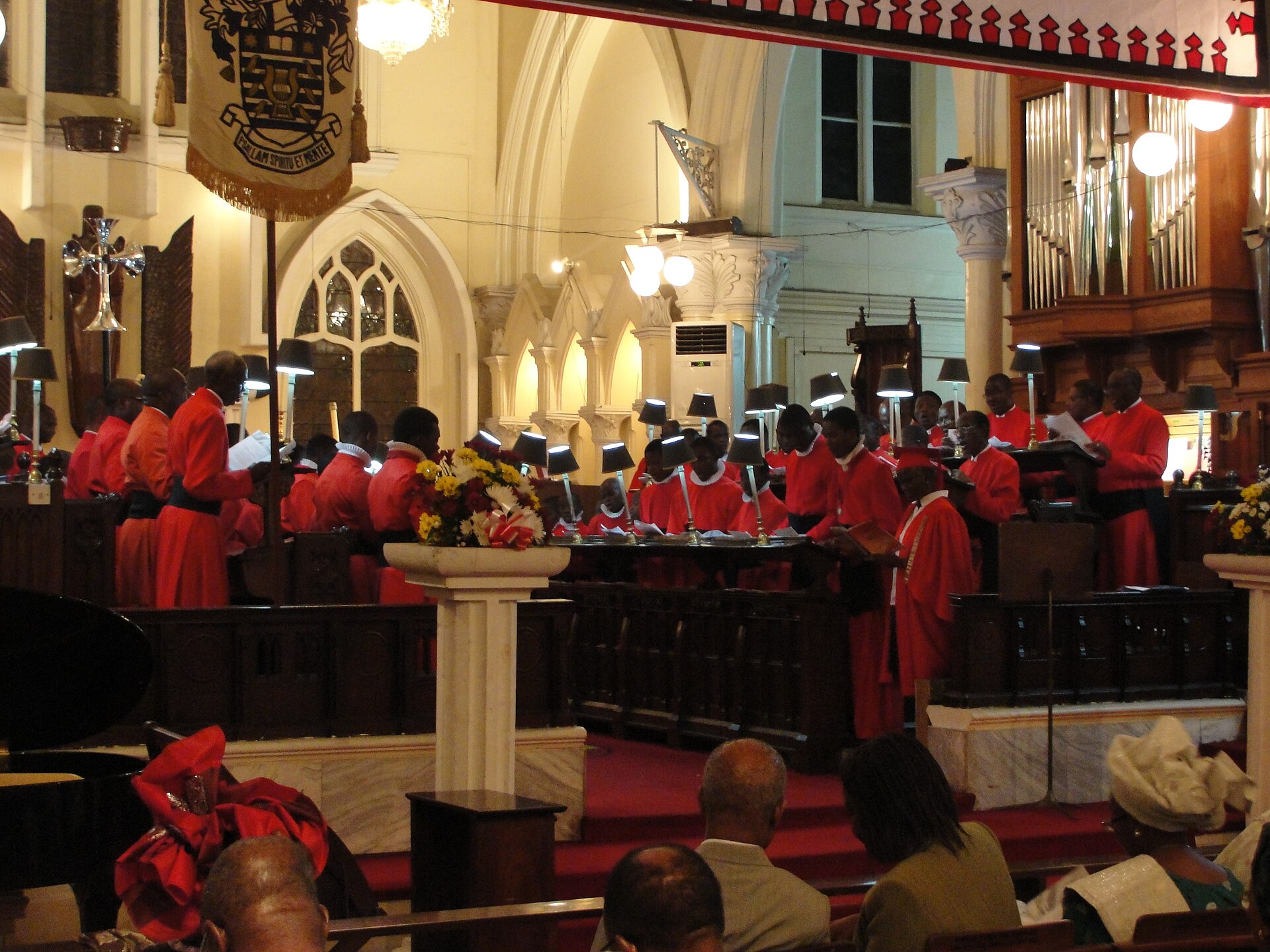
Catholics, about a quarter of Christians in a 2011 Pew figure, speak through the Catholic Bishops Conference of Nigeria. As of July 2026 the Church of Nigeria (Anglican) is led by Archbishop Henry Ndukuba, enthroned as Primate on 25 March 2020.
Pentecostal churches give Nigerian Christianity its most visible megachurches, and two networks stand out. As of March 2026, Pastor Enoch Adeboye is the worldwide general overseer of the Redeemed Christian Church of God (RCCG).
As of October 2026, Living Faith Church Worldwide, or Winners’ Chapel, says its founder, Bishop David Oyedepo, oversees over 21,000 Nigerian churches. Its Canaanland headquarters in Ota houses Faith Tabernacle, which the church says is reputedly the world’s largest single congregation.
In Pew’s 2009 survey, 26% of Nigerian Christians belonged to Pentecostal denominations, the largest Protestant family. Anglicans were 9%, African-initiated churches 8% and Baptists 8%.
Traditional Religion and Mixed Beliefs
Traditional religions are a small share of declared affiliation, at 0.4% of women and 0.9% of men in the 2023-24 DHS. Many Nigerians still blend Indigenous practices with Islam or Christianity, the US State Department says.
Beliefs outside the two big faiths remain common. Pew said in November 2025 that about seven in ten Nigerian adults believe spells, curses or magic can influence lives.
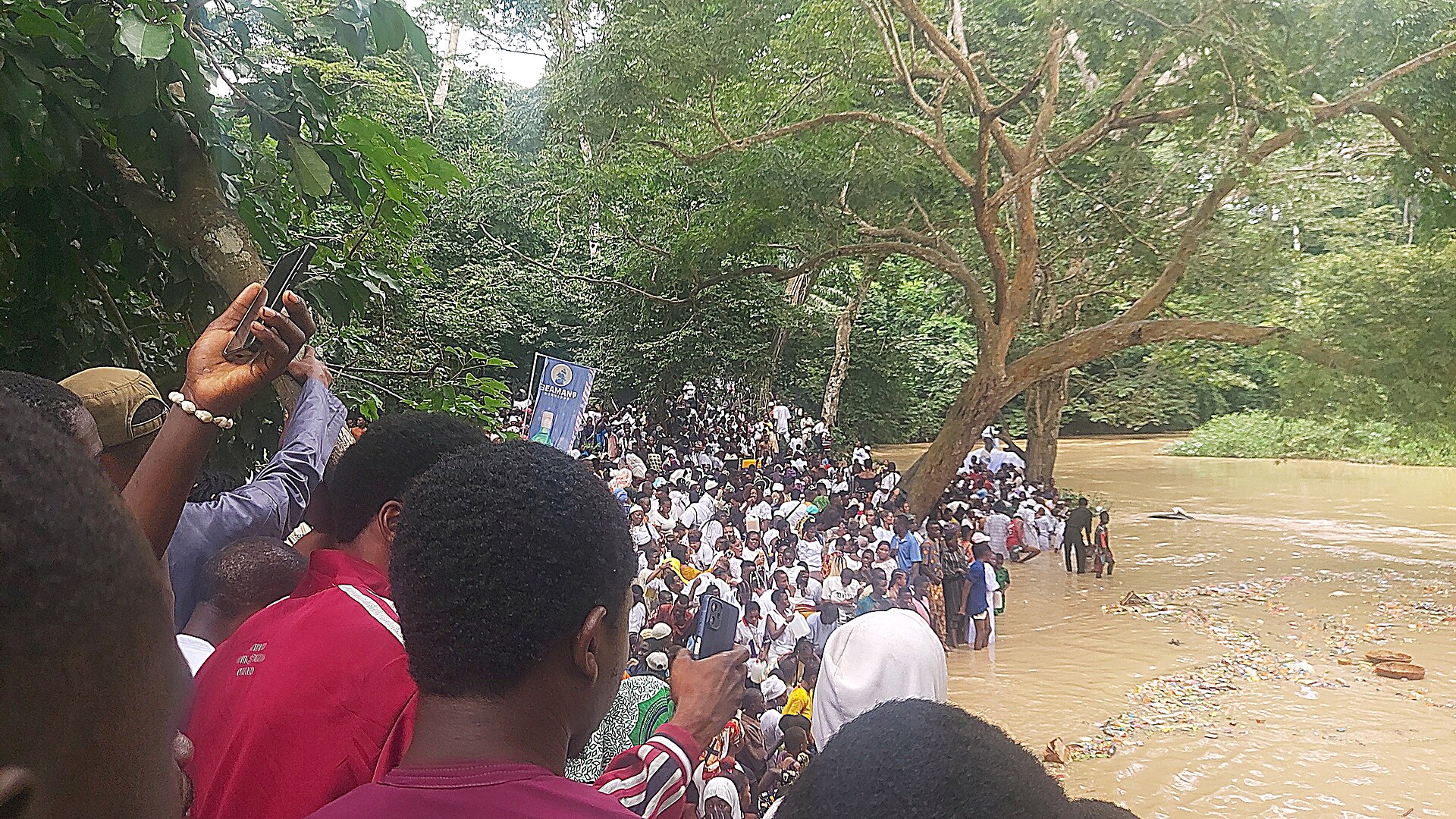
Yoruba traditional religion, known as Isese, honours deities including Osun, the goddess of fertility. UNESCO inscribed the Osun-Osogbo Sacred Grove, 75 hectares of forest on the edge of Osogbo, as a World Heritage site in 2005.
Followers of traditional religion can face legal risk where insult laws apply. In August 2023 authorities detained an Isese priest and activist for insulting an emir and other Muslim leaders, the State Department says.
Religion and Political Power
The 1999 constitution bars the federal and state governments from adopting a state religion. It also guarantees freedom of thought, conscience and religion, including the freedom to change one’s faith.
The constitution prohibits parties that limit membership by religion or carry religious names, the State Department says. Civil courts rank above sharia and customary courts, so clerics do not hold final legal authority.
Party tickets are often judged by their balance between Christians and Muslims and between north and south. Section 14 of the constitution adds a formal federal character rule for government appointments.
In July 2022 Bola Tinubu named Kashim Shettima, a fellow Muslim, as his running mate. The Peoples Gazette, a Nigerian news site, called it the first major-party ticket with two Muslims since 1993.
CAN had warned against it, arguing that Nigeria’s roughly equal Christian and Muslim populations should be reflected on a ticket. Tinubu, profiled in Who Is Bola Tinubu, won the 2023 election and took office on Monday, 29 May 2023.
The Independent National Electoral Commission (INEC) has set the presidential vote for Saturday, 16 January 2027. INEC’s final candidate list of 12 September 2026 names Tinubu and Shettima again as the ruling-party ticket, ThisDay and Sahara Reporters said.
Two councils speak for the faiths in national affairs, the NSCIA for Muslims and CAN for Christians. The Nigeria Inter-Religious Council (NIREC) also brings Muslim and Christian leaders together, the State Department says.
At a press conference for CAN’s 50th anniversary on Friday, 2 October 2026, Archbishop Okoh urged parties not to weaponise religion. Blueprint, a Nigerian daily, quoted him saying Nigerians had seen enough bloodshed and division in election periods.
Complaints about balance come from both sides. In September 2023 the Muslim advocacy group Muslim Rights Concern said appointments under Tinubu favoured Christians, the State Department records.
Sharia in the Northern States
Sharia, or Islamic law, operates beside the common law in 12 northern states and the Federal Capital Territory. Section 275 of the constitution lets any state that wants one set up a sharia court of appeal.
The 12 states with sharia penal codes generally apply them only to Muslims, and the codes were first approved in 1999. Civil courts rank above sharia courts, and sentences can be appealed to them.
Kano, Zamfara, Sokoto and Yobe have Hisbah boards that help enforce sharia rules among Muslims. Citizens of any faith can choose sharia courts for civil cases, and Zamfara makes sharia courts mandatory for Muslims in criminal cases.
Blasphemy is an offence in both the secular and sharia legal systems. In the 12 sharia states, insulting the Quran or a recognised prophet carries the death penalty.
The State Department says no such sentence has been carried out since 1999, though some people have been sentenced. Pew says sharia codes have been used against Muslims accused of same-sex activity, and blasphemy laws against Muslims, Christians and humanists.
Violence and Religious Tensions
Nigeria faces several overlapping kinds of violence, and its causes are contested. The US State Department’s 2023 report says religion, ethnicity, land and crime are closely linked, making many incidents hard to classify.
In the North East, militant groups Boko Haram and the Islamic State West Africa Province have attacked churches and mosques, Pew says. Pew adds that Muslims and Christians alike have been attacked, kidnapped and killed by armed gangs.
In the Middle Belt, Pew says, tension between mostly Christian farmers and Muslim herders has caused violent conflict over land. The State Department says multiple sources see banditry, not religion, as the main driver of violence in the North West.
The US Commission on International Religious Freedom (USCIRF) says non-state actors regularly kill, kidnap and attack Christians, Muslims and traditionalists. It also says the government tolerates, inadequately responds to or fails to hold violators accountable.
President Donald Trump designated Nigeria a Country of Particular Concern on 31 October 2025, a US label for severe religious-freedom violations. On 3 December 2025 the State Department announced a visa policy that applies to violators of religious freedom, including in Nigeria.
The Nigerian government has disputed claims that Christians are being persecuted for their faith, Pew noted in November 2025. In May 2023 the Sultan of Sokoto said recent killings were not related to religion, the State Department records.
For regional detail on crime and security, see the Rio Times guide to Nigeria security and crime. Visitors should check current US travel advice before planning trips to the north and the Middle Belt.
Festivals and Daily Life
Federal public holidays follow both major faiths. The government declared Thursday, 19 March and Friday, 20 March 2026 for Eid-ul-Fitr, which ends Ramadan.
It declared Friday, 3 April and Monday, 6 April 2026 for Easter. In December 2024 it declared Wednesday, 25 December 2024 and Thursday, 26 December 2024 for Christmas and Boxing Day.
Eid al-Adha follows the Hajj, whose climax fell on Tuesday, 26 May 2026. Nigerian pilgrims formed one of the largest national contingents outside the Arab world, the state broadcaster Voice of Nigeria said.
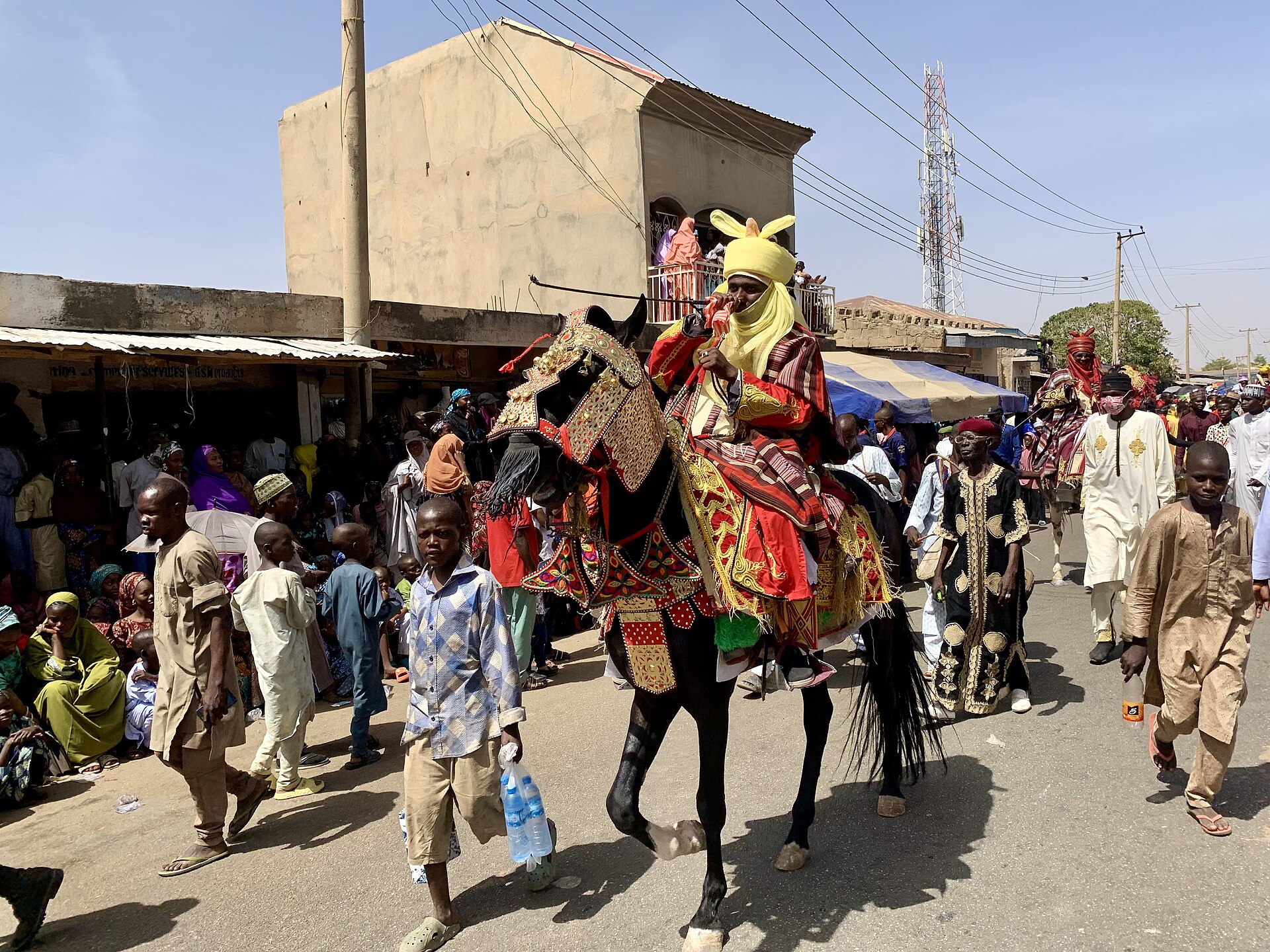
In Kano, the Eid durbar, called Hawan Idi, is a procession from the Eid praying ground to the Emir’s Palace. In March 2026 the Kano government changed or suspended several durbar events for security reasons, the Voice of Nigeria said.
The Osun-Osogbo festival is an annual procession lasting twelve days in July and August. UNESCO says it renews the mystic bonds between the goddess Osun and the people of the town.
Lagos stages the Eyo festival, or Adamu Orisa Play, a masquerade procession that honours notable people who have died. Voice of Nigeria said the 2025 edition was set for Saturday, 27 December 2025 at Tafawa Balewa Square after an eight-year gap.
Faith runs through daily routines. Pew’s 2009 survey found over nine in ten Muslims fasting in Ramadan and over eight in ten Christians fasting in Lent.
In the same survey 67% of Nigerians welcomed religious leaders speaking on political questions, in roughly equal shares of Christians and Muslims. Some 58% called religious conflict a very big problem, behind unemployment at 89% and corrupt leaders at 81%.
The constitution says no pupil may be forced to take part in religious instruction or ceremonies of another faith. Faith groups also run universities, such as Covenant University in Ota, which the Living Faith website credits to Bishop Oyedepo.
The constitution also tells the state to encourage interfaith marriages and associations that cut across religious lines. NIREC met Muslim and Christian leaders in Abuja in December 2023 to discuss peaceful coexistence, the State Department says.
The Rio Times guide to Nigeria culture profiles key figures behind the country’s festivals and arts. Its media coverage is in the Nigeria media landscape guide.
What It Means for US Readers
US visitors and business travellers should plan around public holidays for Eid, Easter and Christmas. In the 12 sharia states, penal codes generally apply only to Muslims, but local religious customs deserve respect.
Policy readers should note that religion now features in US-Nigeria relations through the Country of Particular Concern designation and the visa policy. The State Department’s 2023 report and USCIRF’s Nigeria page are the main US government sources to follow.
Investors in Nigerian assets should watch the 16 January 2027 election, where faith, region and security shape voting and turnout. Church and mosque networks also run schools and universities, which gives faith leaders influence beyond worship.
In Abuja, the National Mosque and the National Christian Centre stand near each other, as Pew’s photo caption notes. Practical advice is in the Rio Times Abuja and Lagos city guides and the Nigeria news hub.
What Prediction Markets Say
On Polymarket, bets give Bola Tinubu a 73.5% chance of winning the Nigerian presidential election and Peter Obi 20%. The prices stood at 10:50 a.m. ET on 16 October 2026, with about US$131,000 traded on the market.
The market asks who will win, not which faith the winner follows, and it does not measure religious voting. These are bets on an outcome, not opinion polls.
Why we show this: prediction markets turn real-money bets into a live probability that moves within minutes of the news, which is why investors, campaigns and newsrooms in the United States now follow them closely. We show them next to polls and official results, never instead of them.
What Is Not Known
No census count of religion has been published since 1963, so the true Muslim-Christian balance is not known. Estimates range from a near-even split to a Muslim majority of about 56%, depending on method and year.
Reliable numbers for Shia Muslims, Sufi orders and traditional believers are scarce, and the 12% Shia figure is a self-description from 2009. The 2023-24 DHS also skipped 20 of 1,400 clusters where security made fieldwork impossible, including 10 in Zamfara.
How many attacks are driven by religion, rather than land, crime or politics, is disputed and cannot be settled from public data. The Nigerian government disputes claims of persecution, while USCIRF calls religious freedom conditions particularly severe.
The faith balance of tickets other than the ruling party’s was not confirmed in the sources reviewed. How often NIREC has met since December 2023 was also not confirmed.
Frequently Asked Questions
What is the main religion in Nigeria?
Islam holds a narrow majority in recent estimates, at 56.1% in Pew’s 2020 estimate and 57.6% of women in the 2023-24 DHS. Christians are the second large group, at about 41% to 43%.
Does Nigeria have an official religion?
No, the constitution bars federal and state governments from adopting a state religion. Twelve northern states nonetheless apply sharia penal codes, generally only to Muslims.
Why is there no census figure for religion in Nigeria?
The 2006 census did not ask about religion. In March 2023 the National Population Commission said its planned census would also leave out religion and ethnicity because both are sensitive.
Which Nigerian states use sharia law?
Twelve northern states have sharia penal codes, and sharia courts also operate in the Federal Capital Territory. The codes generally apply only to Muslims, and sentences can be appealed to civil courts.
Which are the biggest churches in Nigeria?
Large churches include the Catholic Church, the Church of Nigeria (Anglican), the Redeemed Christian Church of God and Winners’ Chapel. The Christian Association of Nigeria is the umbrella body for churches.
What are the main religious festivals in Nigeria?
Eid-ul-Fitr, Easter and Christmas are federal public holidays, and Eid al-Adha follows the Hajj. Local festivals include Osun-Osogbo in Osogbo and the Eyo festival in Lagos.
Is religious violence a risk for visitors to Nigeria?
Violence varies by region, and the US State Department says religion, ethnicity, land and crime are closely linked. Visitors should check current US travel advice, especially for the north and the Middle Belt.
Sources: Pew Research Center, 5 facts about religion in Nigeria (11 November 2025); Pew Research Center, Tolerance and Tension (2010, Nigeria survey 2009); Nigeria Demographic and Health Survey 2023-24, final report; Nigeria Demographic and Health Survey 2018, final report; Voice of Nigeria, National Population Commission on the census (29 March 2023); Constitution of Nigeria 1999 (revised 2011), text; US State Department, 2023 Report on International Religious Freedom: Nigeria; US State Department, Countries of Particular Concern list; US State Department, press statement (3 December 2025); US Commission on International Religious Freedom, Nigeria; Nigerian Supreme Council for Islamic Affairs, history; NSCIA, national executive council; Blueprint, NSCIA special prayer and general assembly (23 September 2026); Blueprint, CAN at 50 press conference (2 October 2026); Peoples Gazette, Tinubu picks Shettima (10 July 2022); ThisDay, INEC final list of presidential candidates (12 September 2026); Sahara Reporters, INEC final list (12 September 2026); Independent National Electoral Commission, election calendar; Church of Nigeria (Anglican Communion), the Primate; Church of Nigeria, Primate Ndukuba anniversary (27 March 2026); News Agency of Nigeria, Primate Ndukuba at 65 (18 July 2026); Redeemed Christian Church of God; Peoples Gazette, Adeboye birthday tribute (1 March 2026); Living Faith Church Worldwide, about Bishop David Oyedepo; UNESCO World Heritage Centre, Osun-Osogbo Sacred Grove; Federal Ministry of Information and National Orientation, Eid-ul-Fitr holidays (17 March 2026); Voice of Nigeria, Easter holidays (2 April 2026); Federal Ministry of Information and National Orientation, Christmas holidays (23 December 2024); Voice of Nigeria, 2026 Hajj (23 May 2026); Voice of Nigeria, Kano Eid durbar (18 March 2026); Voice of Nigeria, Eyo festival (22 December 2025); Polymarket market data (all accessed 16 October 2026).