By The Rio Times | Created at 2026-09-04 07:36:35 | Updated at 2026-10-01 10:41:25
3 weeks ago
By The Rio Times | Created at 2026-09-04 07:36:35 | Updated at 2026-10-01 10:41:25
3 weeks ago
SOUTH AFRICA · MINING
Key Facts
—The scale: South Africa loses roughly 10% of its chrome production each year to illegal mining, amounting to about 600,000 tonnes of stolen material.
—Why it matters globally: South Africa mines roughly half of the world’s chrome ore and holds about 70% of known reserves. It also produces around 70% of the world’s platinum. A loss on this scale is not a local problem.
—Where it disappears: According to the Global Initiative Against Transnational Organised Crime, the illegal chrome has vanished into the legal supply chain by the time it reaches port.
—The ports named: Durban, Richards Bay and Maputo are the exit points where the distinction between legal and illegal ore stops being visible.
—The destination: Most of it goes to China, the world’s largest stainless steel producer, where it ends up in everything from cookware to building facades.
—The product: Chrome ore is smelted into ferrochrome, the alloying element that makes steel stainless. There is no substitute at industrial scale.
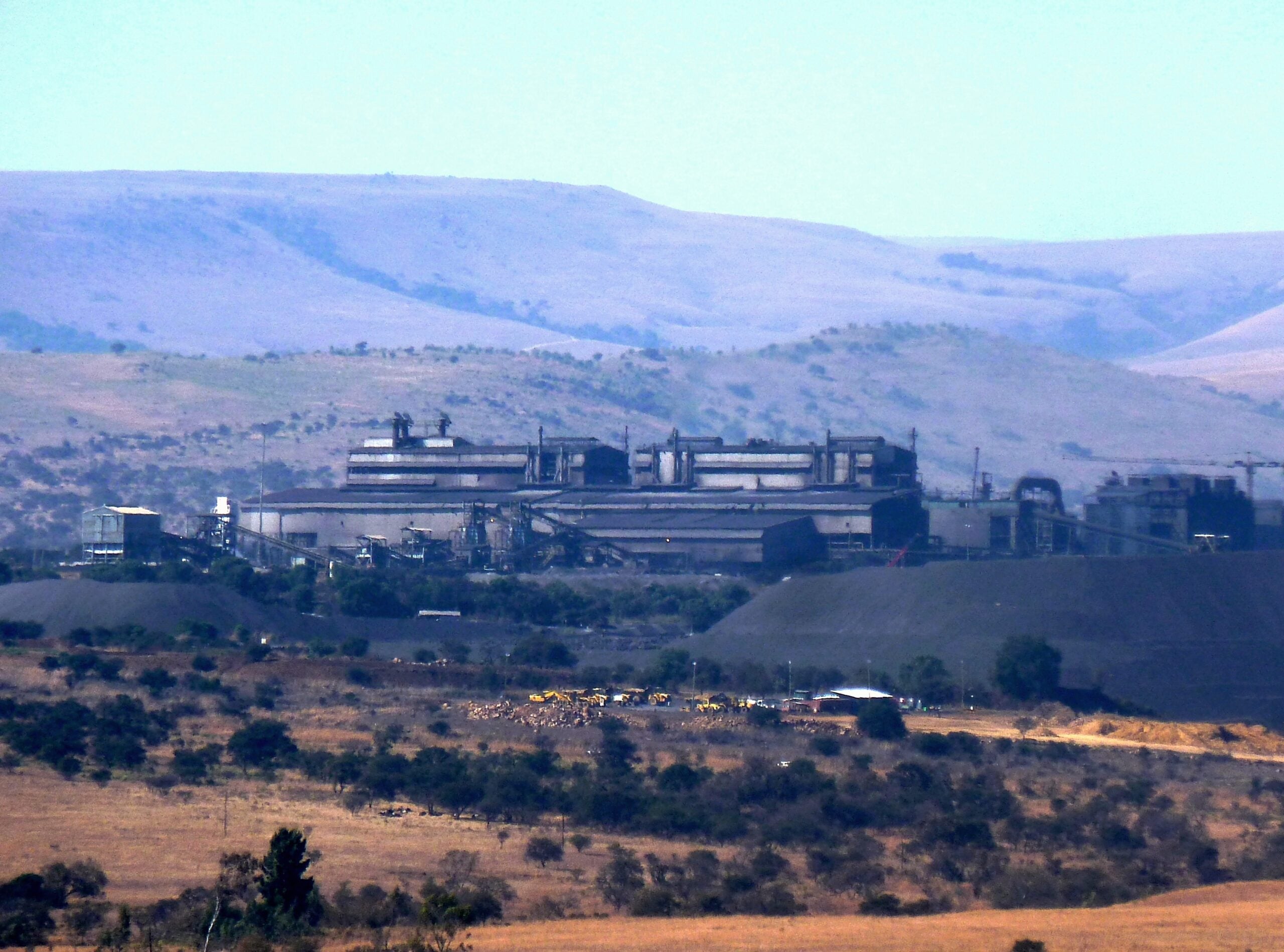
South Africa loses about 600,000 tonnes of chrome a year to illegal mining, roughly a tenth of national production, and by the time that ore reaches Durban, Richards Bay or Maputo it is indistinguishable from the legal material beside it. Most of it sails to China and returns to the world as stainless steel.
One-stop reference
Company Intelligence
Every listed company in Latin America — financials, ownership and structure for 1,450+ companies across 26 exchanges, in one place.
How much illegal chrome mining South Africa is losing
The estimate is about 10% of annual production, or roughly 600,000 tonnes. For a country that mines around half the world’s chrome ore, that is a globally material volume.
The research comes from the Global Initiative Against Transnational Organised Crime, which has tracked the sector for several years. Bloomberg Businessweek’s reporting from Witrandjie, a North West province village ringed by illegal pits, reached compatible conclusions.
What makes chrome unusual among stolen commodities is its bulk. This is not gold in a pocket; it is ore moved by truck in quantities that should be impossible to hide.
The laundering happens before the port, not at it
Illegally mined ore is washed and blended at unregulated plants, then trucked to the coast. By the time it is loaded, its paperwork looks like everyone else’s.
Durban, Richards Bay and Maputo are where the trail ends rather than where the crime happens. That is why port-side enforcement has achieved so little.
The Maputo route also means the problem is regional. Mozambique’s ports serve as an exit for material that never appears in South African export statistics.
Why the buyer end almost never asks
Chrome ore is a bulk commodity bought on specification, not provenance. A cargo is assessed on chrome content and impurities, not on which pit it came from.
China is the destination for most of it, as the largest stainless producer. Ferrochrome from that ore goes into consumer goods and construction worldwide.
So the material ends up in supply chains belonging to companies that would fail an audit if anyone ran one. Nobody currently runs one.
What this costs South Africa
The direct loss is royalties and tax on 600,000 tonnes a year. The indirect loss is larger and harder to price.
Illegal operations do not rehabilitate land, do not pay for water treatment and do not run safety systems. The environmental bill is deferred onto the state and the communities living beside the workings.
Legal producers also carry the cost of competing against operations with none of those obligations.
The policy question nobody has answered
Export controls have been discussed as a lever, on the reasoning that a licensing chokepoint at the border is easier to police than thousands of pits.
The objection is that controls raise costs for legal exporters while criminal networks adapt fastest to new paperwork. Neither argument has been tested at scale.
What is not in dispute is the enforcement gap inland, which is where the material actually enters the chain.
There is also a demand-side lever nobody has pulled. Stainless steel buyers routinely audit their chains for other risks, and chrome provenance is simply not among the things they check.
That is a choice rather than a technical impossibility. Bulk commodities have been traced before when a market decided the reputational cost of not doing so was high enough.
Until either the inland enforcement or the buyer-side scrutiny changes, the arithmetic favours the thieves. Six hundred thousand tonnes a year is a business, not a leakage.
Who is actually doing the mining
The workforce is largely made up of people with no other income, working without equipment, ventilation or any legal protection. Injuries and deaths go unrecorded because the sites do not officially exist.
The danger is not abstract. In August, fourteen illegal chrome miners died in a cave-in near Marikana in North West province, in a single collapse at one site.
Above them sit organised networks that provide transport, washing plants and the paperwork. That layer is where the money concentrates and where enforcement almost never reaches.
Treating the diggers as the problem has been tried and has failed. Arrests at pit level remove labour that is immediately replaced.
Communities living beside the workings are left with contaminated water, collapsed land and roads destroyed by overloaded trucks. They rarely see any of the revenue.
This is the same structure that shapes illegal gold mining in South Africa, and the policy debate has run into the same wall. Enforcement aimed at the bottom of a supply chain does not disturb the top of it.
The scale also distorts the legal market’s own numbers. Production and export statistics that omit 600,000 tonnes describe a smaller industry than the one that exists.
Frequently asked questions
How much chrome does South Africa lose to illegal mining?
Roughly 10% of annual production, amounting to about 600,000 tonnes a year. South Africa mines around half the world’s chrome ore and holds about 70% of known reserves.
Where does the illegally mined chrome go?
It launders into the legal supply chain before reaching Durban, Richards Bay or Maputo, and most is exported to China, the largest stainless steel producer.
What is chrome ore used for?
It is smelted into ferrochrome, the alloying element that makes steel stainless. There is no substitute at industrial scale.
Who documented the scale of the problem?
The Global Initiative Against Transnational Organised Crime, whose research has been supported by independent investigative reporting.
Why is enforcement at ports ineffective?
Because the ore is washed, blended and given legitimate paperwork inland, long before it reaches the coast. By the port the material is indistinguishable.
Sources: Global Initiative Against Transnational Organized Crime; Bloomberg Businessweek; Mining Weekly; MINING.COM.
This article was produced by The Rio Times’ automated newsroom system. How we use AI · Report an error
The Rio Times · Power Map
See who really holds power in Latin America
Click to open the Power Map →