By The Rio Times | Created at 2026-06-22 09:06:53 | Updated at 2026-06-22 13:43:36
4 hours ago
By The Rio Times | Created at 2026-06-22 09:06:53 | Updated at 2026-06-22 13:43:36
4 hours ago
Energy · Suriname
Key Facts
—The event. Suriname’s energy summit, SEOGS, runs June 23 to 26 in Paramaribo and adds a first dedicated local-content forum.
—The gap. Unlike neighbouring Guyana, Suriname still has no local-content law; participation is set only by clauses inside oil contracts.
—The prize. The IMF estimates the GranMorgu project alone could direct about $1.2bn of spending to local firms, with TotalEnergies citing up to $1.5bn.
—The jobs. The construction phase is expected to create several thousand jobs, with the wider project cited at more than 6,000 direct and indirect roles.
—The clock. First oil from GranMorgu, led by TotalEnergies, is due in 2028, leaving a short window to build local capacity.
—The stake. For a small economy of about 600,000 people, how much of the oil money stays at home is the defining question.
The Suriname local content question moves to centre stage this week, as the country opens its biggest energy summit with a brand-new forum on the subject, even though it has chosen a very different path from the booming neighbour next door.
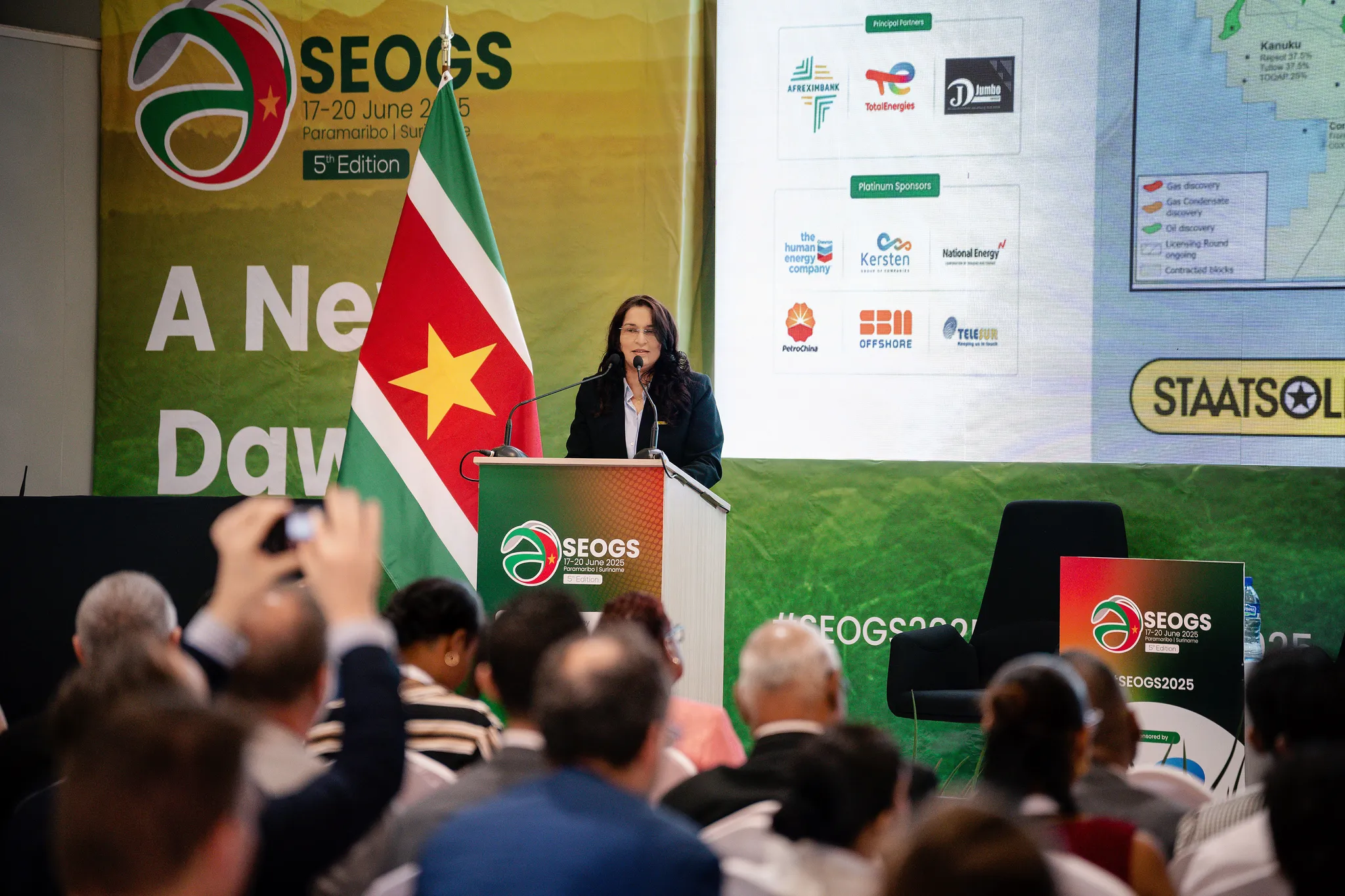
Suriname is about to get its first real taste of the oil-money question that has reshaped its neighbour. This week the small South American country opens its yearly energy summit, and for the first time the programme carries a dedicated forum on local content.
Local content is the simple-sounding idea that a host country should capture as much of an oil project as it can. That means jobs for its workers and contracts for its companies, rather than seeing the money flow straight back out to foreign firms.
What is happening this week
The Suriname Energy, Oil and Gas Summit, known as SEOGS, runs across four days this week in the capital, Paramaribo. It is hosted by the state oil company, Staatsolie, under the theme “Unlocking Energy, Empowering Nations”.
The new local-content forum runs across the middle two days and is free to attend. It is meant to bring together officials, the international oil companies, local businesses and educators to thrash out how ordinary Surinamese can share in the boom.
The timing is deliberate. Suriname is moving from discovery toward its first offshore production, so the question of who benefits is shifting from theory to hard contracts.
The gap with Guyana
Here is the part that should catch an investor’s eye. Guyana, just to the west and a few years ahead, passed a Local Content Act that legally requires oil firms to use named Guyanese services and hire Guyanese workers.
Suriname has no such law. According to the petroleum regulator, an arm of Staatsolie, local participation is instead governed by clauses written into each oil contract, backed by a supplier-development push rather than a statute.
That is a choice, not an oversight. Staatsolie’s chief executive has argued that a flexible policy may serve the country better than a rigid legal framework like Guyana’s.
The Rio Times reads this as the central tension of the week. A law gives local firms certainty and leverage, while a policy gives the government and the oil companies room to adapt, and the forum is where those two visions meet in public.
Why Suriname local content matters now
The sums at stake are large for a country this size. The International Monetary Fund estimates that the flagship GranMorgu project alone could channel around one-and-a-quarter billion dollars of spending to local firms.
TotalEnergies, the French major leading the project, has put the local figure at up to one-and-a-half billion dollars over the three-year construction phase. The wider project is expected to create more than six thousand direct and indirect jobs.
GranMorgu sits about 150 kilometres offshore and is due to deliver its first oil in 2028. That deadline is also the catch.
The IMF has warned of a short window to build the skills, suppliers and rules needed to capture that money before the spending peaks. Build the capacity too late, and the contracts simply go to foreign firms instead.
The government has framed 2026 as the start of a national local-content programme, aiming for Surinamese workers and companies to take on bigger roles by 2029. The president has stressed that foreign expertise is still welcome, but the goal is to build skills at home.
The honest risk is the one every oil newcomer faces. A small workforce and a thin supplier base can leave a country collecting royalties while the high-value work, and the wages that come with it, are done by outsiders.
The forward signal is what to watch from this week’s talks. Any move toward firmer rules, clear hiring targets or a supplier registry would tell investors that Suriname intends to hold the oil companies to their local promises.
Frequently Asked Questions
What is the SEOGS summit?
SEOGS is Suriname’s annual energy, oil and gas summit, held in Paramaribo from June 23 to 26 and hosted by the state oil company Staatsolie. The 2026 edition adds a dedicated local-content forum for the first time.
How does Suriname local content differ from Guyana’s?
Guyana has a Local Content Act that legally requires oil firms to use local services and hire local workers. Suriname has no such law and relies instead on clauses inside each oil contract, a softer approach its state oil company defends as more flexible.
How much money is at stake for local firms?
The International Monetary Fund estimates the GranMorgu project could direct around one-and-a-quarter billion dollars to local firms, while TotalEnergies cites up to one-and-a-half billion over the construction phase. First oil is due in 2028, leaving a short window to build local capacity.
The Rio Times · Power Map
See who really holds power in Latin America
Click to open the Power Map →