 By The Washington Times (World News) | Created at 2026-08-13 19:00:38 | Updated at 2026-08-13 21:06:48
4 hours ago
By The Washington Times (World News) | Created at 2026-08-13 19:00:38 | Updated at 2026-08-13 21:06:48
4 hours ago
SEOUL, South Korea — A brouhaha over the role of the U.S.-led United Nations Command erupted Thursday, just hours after the unit’s Australian deputy commander briefed foreign reporters.
According to reports, Seoul is upset that changes were made without its input to the makeup of the UNC, the American-led international force that controls access to the DMZ, the buffer between South Korea and North Korea.
With the 10-day Ulchi Freedom Shield 2026, a major annual exercise, set to kick off on Monday, the development is the latest security controversy testing relations between the South Korean and U.S. militaries on the flashpoint peninsula.
South Korea’s leading progressive newspaper, The Hankyoreh, reported exclusively Thursday that the UNC is establishing a new brigade-sized force without consulting Seoul.
“The Ministry of National Defense expressed regret that South Korea was excluded from the consultation process while the UNC discussed the details of the new organization with 18 member states,” the paper reported.
The Hankyoreh’s sources guessed that the move is designed to future-proof the UNC.
“Sources within and outside the [South Korean] military view this as the UNC seeking to strengthen its armistice enforcement functions in anticipation of potential changes to the South Korean-U.S. command structure.”
Those changes relate to South Korean President Lee Jae-myung’s intention to claim wartime operational control (“OPCON Transfer”) of the South Korean military by 2029. Under the current status, Seoul’s troops would fight under U.S. command.
The timing of the report was ironic, given that the UNC’s deputy commander, Australian Lt. Gen. Scott Winter, speaking to foreign reporters earlier in Seoul, had diplomatically stated that the UNC enjoyed “really positive, constructive working relations and, dare I say, friendships with our Korean colleagues.”
Some of his comments unintentionally foreshadowed the controversy that would break hours later.
“The intent of the armistice and the communications mechanisms to de-escalate all remain in place,” he said. “Our devotion to ensure that continues to be in place remains absolutely integral to our actions today.”
After the local news broke, the UNC issued a late statement.
It denied establishing a new brigade — a unit roughly three times larger than the current UNC Security Battalion, which oversees the iconic truce village of Panmunjom in the DMZ.
“Current planning reflects an internal reorganization of existing resources only, with zero growth in personnel, infrastructure, or capabilities on the Korean peninsula,” the statement read.
Seoul “has been informed of these planning efforts throughout the consideration process,” the UNC insisted.
The brigade designation is essentially a “rebrand” of existing assets, a UNC staffer explained.
Simmering tensions
The UNC was originally established to absorb troops from “sending states” which deployed under the U.N. flag, but under U.S. command, to join South Korea’s fight against the North Korean invasion in 1950.
Prominent sending states included Australia, Canada, Colombia, France, the Netherlands, New Zealand, the Philippines, Thailand, Turkey and the United Kingdom.
Today the UNC comprises 18 nations and is headquartered at the sprawling U.S. Camp Humphreys, south of Seoul. It is just one of an alphabet soup of U.S.-led commands in South Korea.
The UNC’s commander is U.S. Gen. Xavier Brunson, who is “triple-hatted”: He also commands all U.S. Forces Korea, or USFK, and the Combined Forces Command, or CFC.
The latter is the South Korea-U.S. joint war-fighting command on the peninsula.
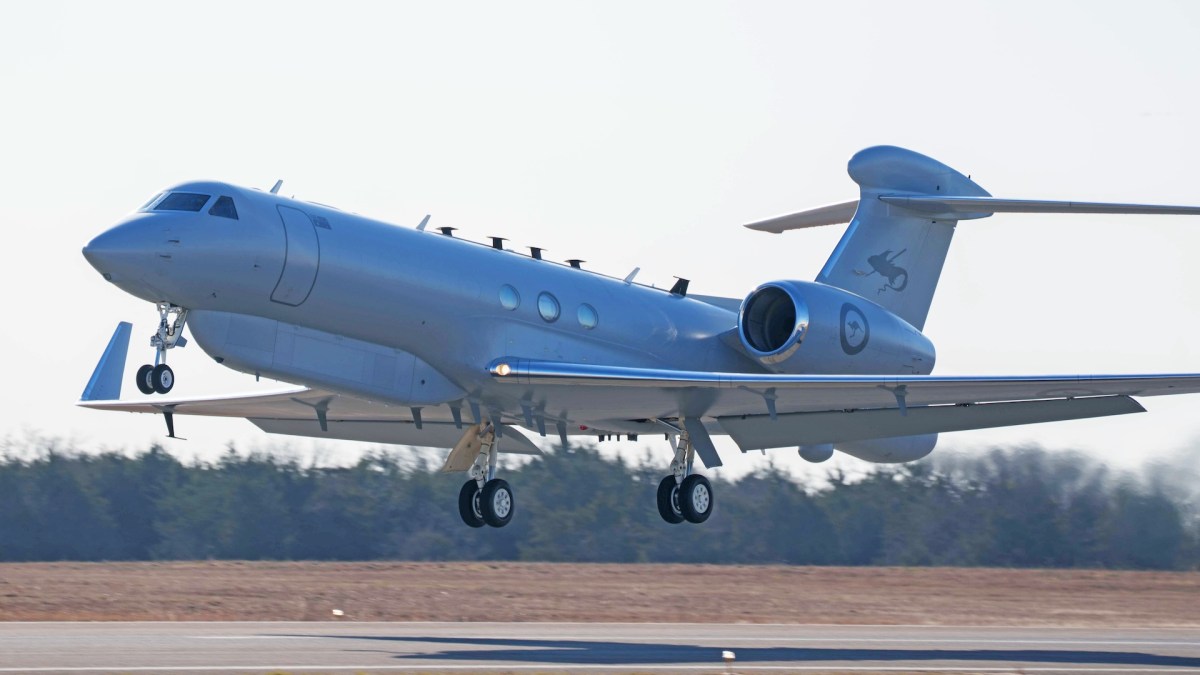
Given the heavy burdens on the resident U.S. four-star, considerable authority has been handed down to UNC deputy commanders. Since 2018, these deputies have been senior Australian, British and Canadian officers.
Gen. Winter is the second Australian in the role.
The UNC is facing local political challenges. The ruling Democratic Party of Korea has proposed “The DMZ Act,” which would allow Seoul to grant civilians access to South Korea’s side of the 2.5-mile-wide, 160-mile-long buffer zone that bisects the Korean Peninsula. As things stand, permission to enter the DMZ, a high-risk, frontline flashpoint, must be sought from the UNC.
The UNC has pushed back, citing clauses of the 1953 Armistice Agreement. Gen. Brunson also responded in a podcast.
“What we want to try to make sure … is, number one, we don’t allow that area to become politicized,” he said in December. “What governs our behavior is the armistice … what we can’t do is seek to change the way we do business in abrogation of a legal document, which is the armistice.”
Seoul did not sign the 1953 armistice. Then-President Rhee Syngman’s position was that fighting should continue until reunification.
The armistice was signed by China, North Korea and — as signatory for the UNC — the United States.
Tensions over the UNC are not new. During the last progressive administration under President Moon Jae-in, who engaged closely with North Korean leader Kim Jong Un, similar disagreements came up.
Seoul was irked when the UNC inspected a South Korean train, set to cross the border into North Korea, to ensure sanctioned products were not aboard.
The Washington Times was informally told at the time — and cannot confirm — that a brigadier had been assigned within South Korea’s Ministry of National Defense to investigate what leverage Seoul held over the UNC.
Subsequently, UNC officers said they had Status of Forces Agreement privileges withdrawn.
SOFA grants overseas troops certain legal protections in South Korea. The officers said that when driving, they were told to ensure they were not involved in any kind of accident.
The situation was subsequently resolved.
The bigger picture
Thursday’s developments are not happening in a vacuum. Relations between the U.S. and South Korean militaries on the peninsula are sensitive for two reasons.
Firstly, the progressive Mr. Lee, who took power in 2025, and his government are working to maintain strong relations with Washington amid the policy uncertainties of the second Trump presidency.
It is also pursuing improved ties with Beijing and wants to resume dialogue with Pyongyang, stalled since 2019.
As such, Seoul is wary about U.S. forces in Korea engaging in off-peninsula operations — so-called “strategic flexibility.”
Secondly, Mr. Lee has made clear his intention to retake wartime OPCON from the U.S. by 2030. That process is underway, but conditions for its execution remain classified.
Equally unclear is the future status of the CFC and the troop strength of USFK, post-OPCON Transfer. Some fret that USFK could be downsized, and questions also hang over the UNC’s future.
Tensions have gone public in several cases.
Gen. Brunson has noted, in multiple fora, how strategically well-sited South Korea is, geographically, to deter not just North Korea, but also China and Russia. These comments have raised eyebrows in Seoul.
Over the Chinese New Year holiday in February, U.S. fighter jets based at Osan Air Base in South Korea sortied to the median line in the Yellow Sea. That compelled Chinese jets to scramble and surprised Seoul, which said it had not been informed of the flights beforehand.
In July, South Korean prosecutors probing officials of the disgraced ex-President Yoon Suk Yeol — Mr. Yoon was impeached and imprisoned after his short-lived martial law declaration in 2024 — entered Osan searching for evidence.
USFK lodged a formal complaint, questioning the prosecutors’ jurisdiction.