By The Rio Times | Created at 2026-10-04 21:41:41 | Updated at 2026-10-06 01:21:38
1 day ago
By The Rio Times | Created at 2026-10-04 21:41:41 | Updated at 2026-10-06 01:21:38
1 day ago
SECURITY · TRINIDAD AND TOBAGO
Key Facts
- —The country Trinidad and Tobago, a twin-island Caribbean state off Venezuela’s coast, where firearms were used in 82.5% of murders from 2018 to 2024 (Global Crime study, TTPS data).
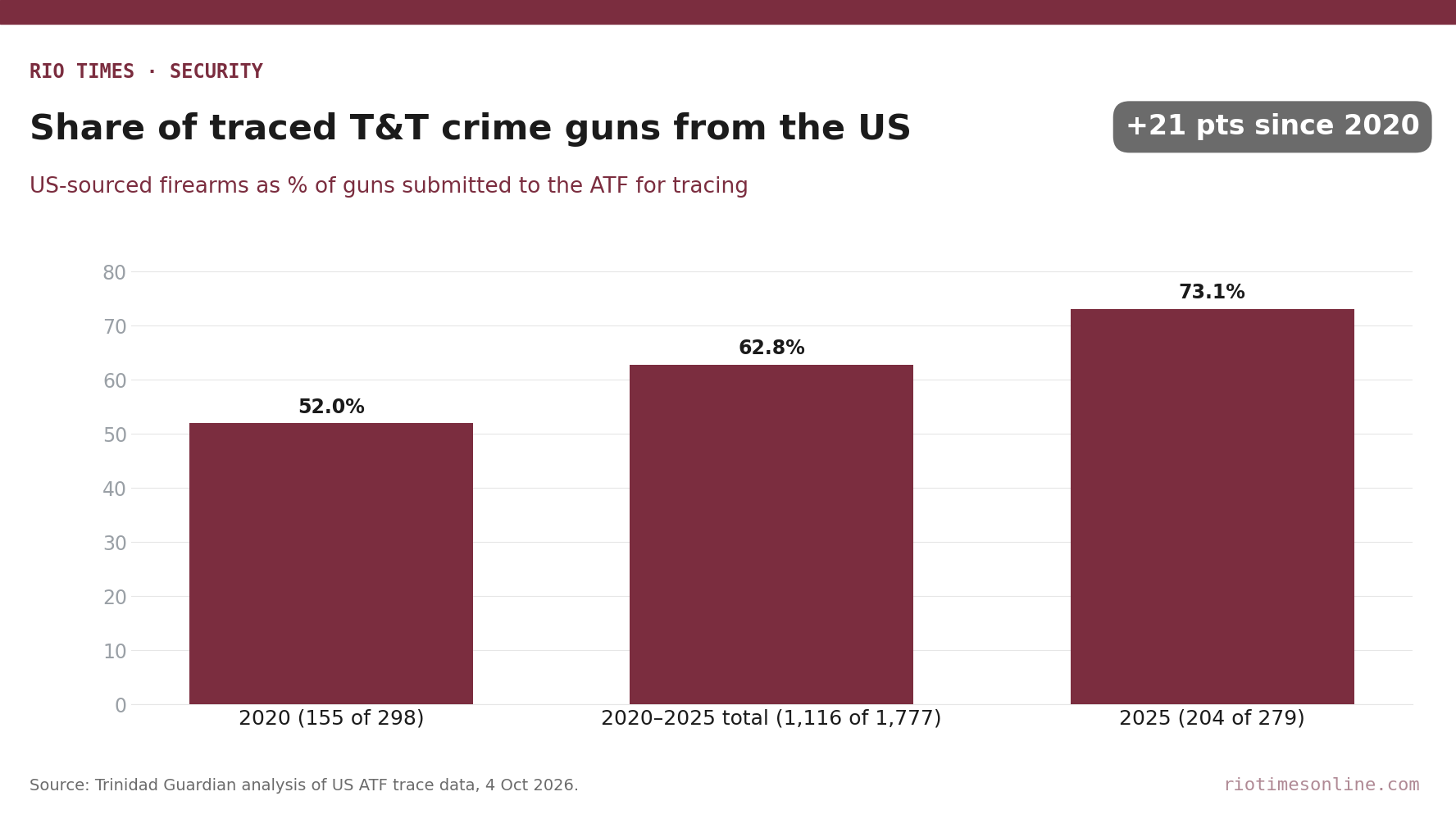
- —What happened Of 279 guns recovered in 2025 and traced by the US firearms agency, 204 (73.1%) were US-sourced, up from 52% in 2020 (Trinidad Guardian, 4 October 2026).
- —The numbers From 2020 to 2025, 1,116 of 1,777 traced guns (62.8%) were US-sourced. Handguns made up 246 of the 279 traces in 2025 (Trinidad Guardian, 4 October).
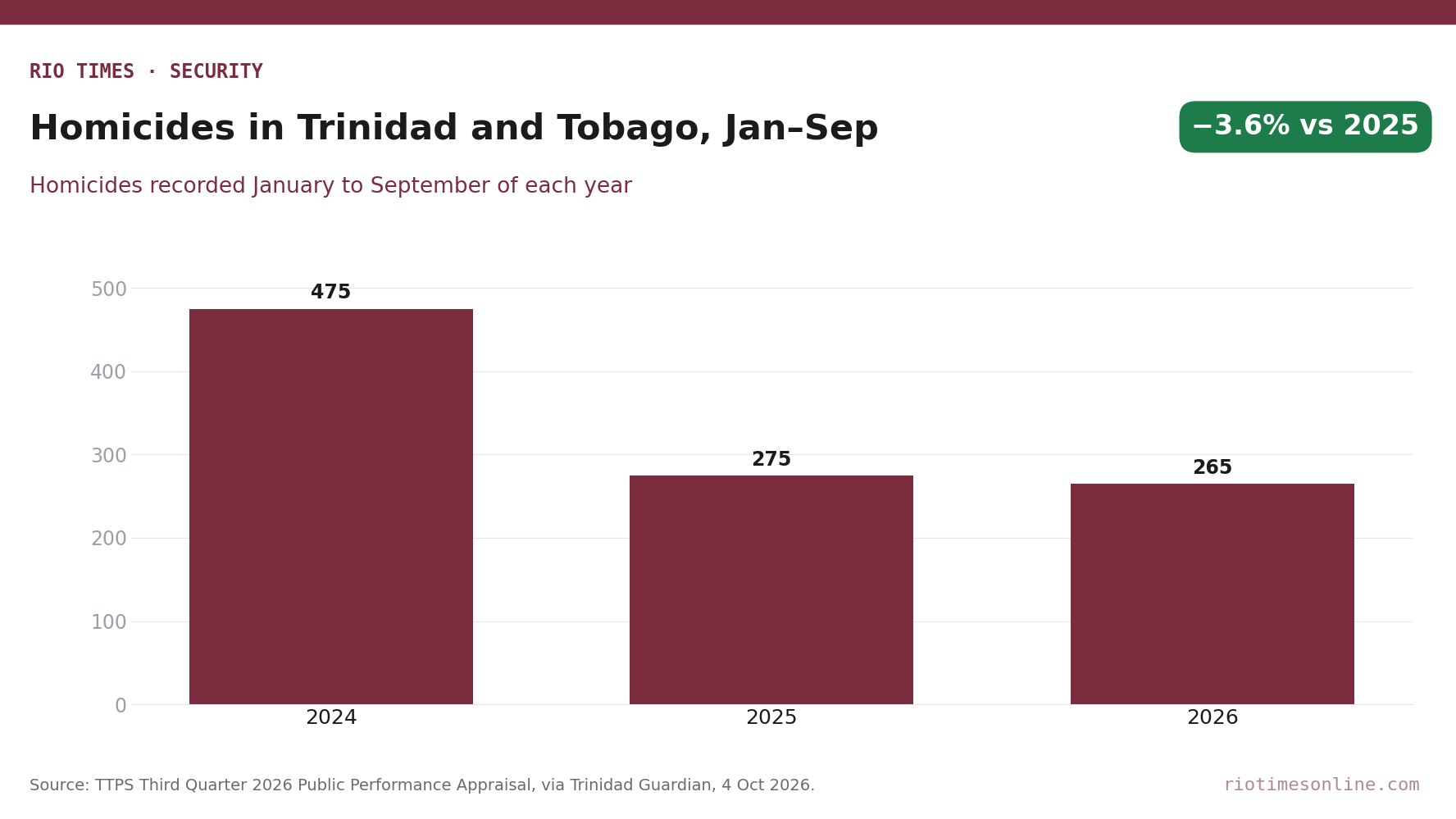
- —What it means for you Homicides fell to 265 in January to September 2026, from 275 a year earlier (TTPS, 2 October). Tracing aids police, but nearly half of US trails went cold.
- —Still open The data do not show who smuggled the guns or by which route. For 100 of the 204 US-sourced guns, the first buyer was never identified.
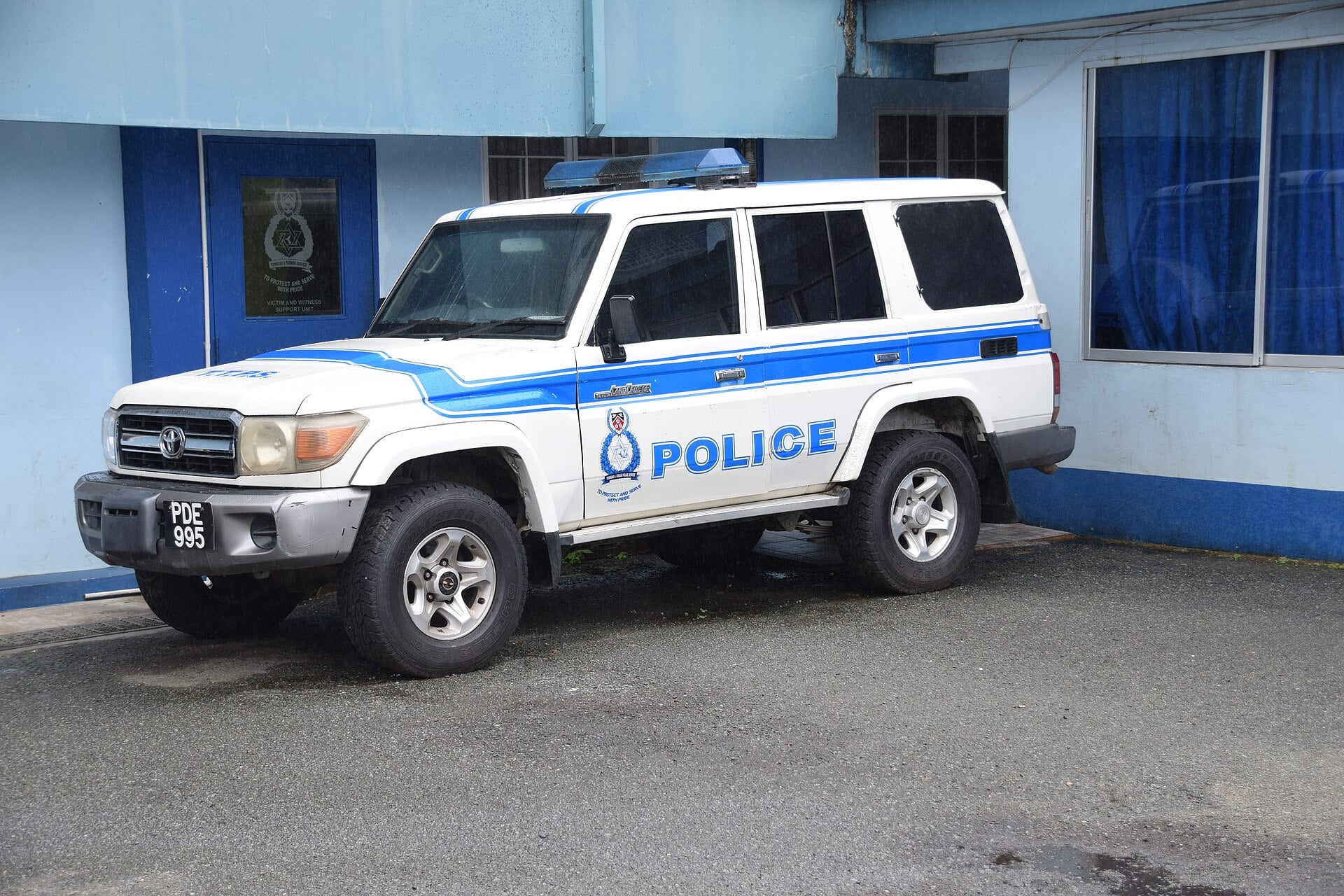
Nearly three in four traced crime guns from Trinidad and Tobago in 2025 were US guns, the Trinidad Guardian reported on Sunday. The figure comes from a Guardian Media review of six years of US trace data.
Police submitted 279 recovered firearms to the US Bureau of Alcohol, Tobacco, Firearms and Explosives (ATF) for tracing last year. The agency classed 204 of them, or 73.1%, as US-sourced.
A Six-Year Rise in US Guns
The share has climbed steadily. In 2020, 155 of 298 traced firearms were US-sourced, or 52%, according to the Guardian review.
Across 2020 to 2025, 1,116 of 1,777 traced guns came through the US market. That is 62.8% over the six years.
“US-sourced” covers guns made in the United States and foreign-made guns legally imported into the US market. In 2025 the split was 104 US-made and 100 imported.
The classification does not show who smuggled a gun into the country or which route it took. It only shows the weapon passed through the US commercial system.
Follow this story
Get an email when there’s news on Trinidad and Tobago
Free. One email a day at most, and only when there is news. This also signs you up to our weekday newsletter, The LatAm Brief. Nothing arrives until you click the confirmation link, and you can stop either with one click. Privacy policy.
Mostly Handguns, and Many Trails Go Cold
Pistols (183) and revolvers (63) made up 246 of the 279 traces in 2025, or 88.2%. The rest were 17 rifles, eight shotguns and eight other firearms.
The ATF identified the first US retail buyer for 72 of the 204 US-sourced guns. Another 32 were traced to a foreign government, dealer or other entity.
For the remaining 100, the first purchaser could not be found. The ATF cites incomplete records, missing details, filed-off serial numbers and guns too old to trace.
The agency also warns that traced guns are not a random sample. Not every crime gun in Trinidad and Tobago is sent for tracing.
Guns Behind Most Murders
A 2026 study in the journal Global Crime, using police data, found firearms in 3,072 of 3,723 murders from 2018 to 2024. That is 82.5%, the Guardian reported.
Police seized 1,064 firearms in 2017 but 656 in 2024, the same study showed. The researchers cautioned that fewer seizures do not necessarily mean fewer illegal guns.
A 2024 report by Parliament’s Joint Select Committee on National Security put the average black-market gun price at TT$17,429. That is about US$2,586 at 6.74 Trinidad and Tobago dollars per US dollar (2 October close).
Killings Fall as Police Lean on Tracing
The Trinidad and Tobago Police Service (TTPS) recorded 265 homicides from January to September 2026, its third-quarter appraisal shows. That compares with 275 a year earlier and 475 in 2024.
The appraisal, released on Friday 2 October, also showed serious reported crime down 13.3% on 2025. Kidnappings for ransom rose from six to seven, the Guardian reported.
Deputy Commissioner of Police Junior Benjamin said tracing helps police see how guns enter the country. “It helps us in a lot of ways,” he told Guardian Media.
Prime Minister Kamla Persad-Bissessar raised illegal gun flows at the UN General Assembly days earlier. She said the country would use its coming UN Security Council term to push for stronger tracing.
The fall in killings comes after months of emergency rule. In September the government revived its zones of special operations bill. Police also burned seized drugs worth US$249 million in late September.
What Is Not Yet Known
The ATF data cover only guns police chose to submit, so the US share of all crime guns is unknown. The routes and smuggling networks behind the US guns traced in 2025 have not been published.
It is also unclear how many of the 265 homicides in 2026 involved firearms. The TTPS appraisal, as reported, did not break down killings by weapon.
Sources: Trinidad Guardian, “US gun trail grows in T&T: Nearly three-quarters of traces now linked to America” (4 October 2026), Guardian Media analysis of US ATF trace data; Trinidad Guardian, “TTPS appraisal: Homicides, serious crime down” (4 October 2026), citing the TTPS Third Quarter 2026 Public Performance Appraisal.
This article was drafted with automated assistance and reviewed before publication. How we use AI · Report an error · Editorial responsibility: Matthias Camenzind, Editor-in-Chief
The Rio Times · Power Map
See who really holds power in Latin America
Click to open the Power Map →