By The Diplomat | Created at 2026-10-01 16:36:52 | Updated at 2026-10-01 18:03:12
2 hours ago
By The Diplomat | Created at 2026-10-01 16:36:52 | Updated at 2026-10-01 18:03:12
2 hours ago
“You must have heard of Dharmendra Pradhan,” student leader Neha Bora said in a video message on September 30, two days before a series of agitations is scheduled to start in major Indian cities like Delhi, Mumbai, and Kolkata, demanding Chief Election Commissioner Gyanesh Kumar’s resignation.
“Gyanesh Kumar, it’s your turn now. We are coming,” Bora said with a cheeky smile. A leftist student leader, Bora was part of the youth agitation in July that forced the Narendra Modi government’s education minister, Dharmendra Pradhan, out of office.
Now, students and youth are rallying around the Cockroach Janta Party (CJP) and opposition parties against a new target: Gyanesh Kumar, who has been at the center of political controversies since his appointment as chief election commissioner about a year and a half ago.
Kumar has been accused of speaking political language and giving undue advantage to India’s ruling Bharatiya Janata Party (BJP). He is being compared with Adolf Eichmann, the central operational manager of the Holocaust.
The latest trigger for the nationwide protests that will begin on October 2 was an investigation by The Indian Express, which reported that two members of the Election Commission, Sukhbir Singh Sandhu and Vivek Joshi, had raised concerns with Kumar at least 14 times in 10 months, only to be overlooked. Some decisions were reportedly taken without their knowledge. The objections concerned electoral roll decisions and orders.
Notably, Kumar is the first chief election commissioner appointed under a new law that the Modi government brought, overturning a mechanism recommended by India’s Supreme Court. This new law gives the government the authority to pick election commissioners of its choice. The law also gives immunity to the election commissioner for any action they take with regard to conducting elections.
The opposition’s challenge to the law has not made much progress in the Supreme Court yet, with a five-judge constitutional bench expected to start hearing it.
The Indian Express report dropped like a political bombshell. Opposition parties jumped in to claim that the report vindicates what they have been alleging for a long time: that the BJP government is using Chief Election Commissioner Kumar to manipulate elections in favor of the BJP, starting with the voter roll.
Trying to downplay the internal rift, the commission’s reply was measured: differences are normal in any institution. Despite the concerns raised at different stages, the final decisions were unanimous, the commission said.
Its defense has not calmed the room. The Indian Express disclosures landed amid the highly contested overhaul of the voter roll, the Special Intensive Revision, which has removed millions of names from the electoral rolls. Several opposition leaders and civil society personalities, including Rahul Gandhi of the Congress, India’s main opposition party, have alleged that the electoral roll revision process is being used to steal votes.
A dispute inside a constitutional body has thus become evidence, for opponents, not only of a wider institutional failure, but also of “sabotage” of an institution that is most critical for the smooth functioning of an electoral democracy.
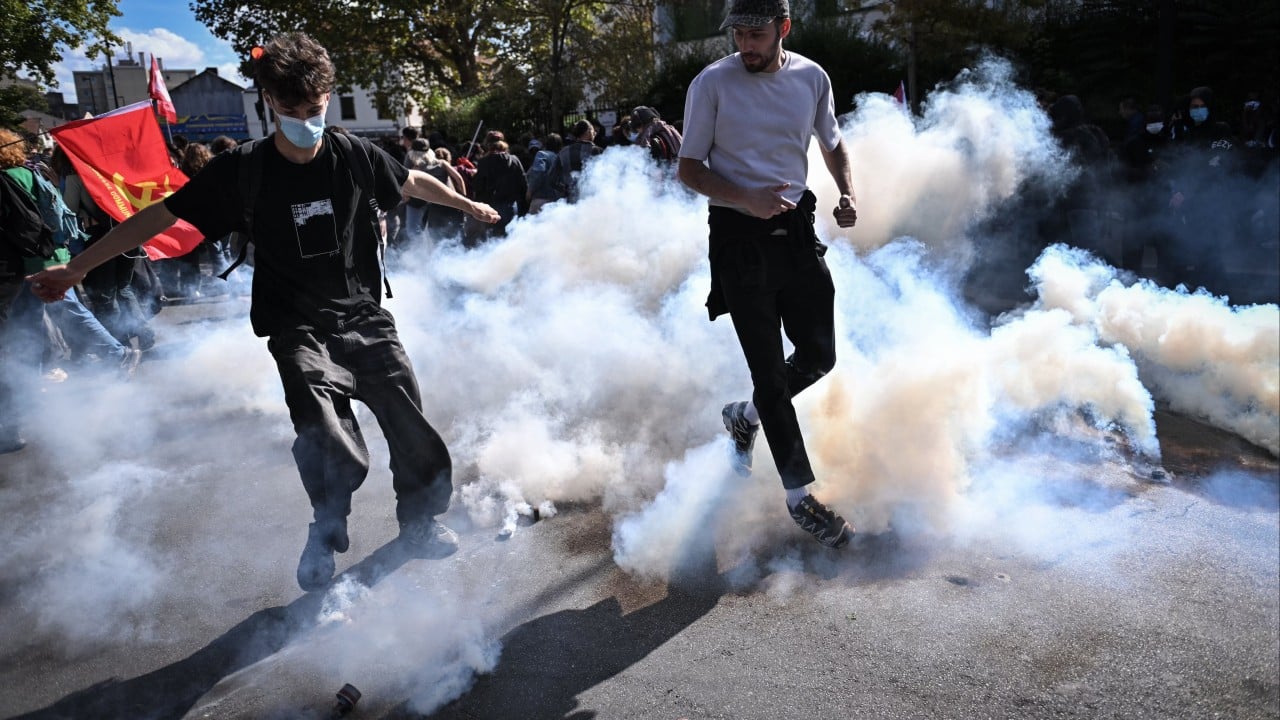
The CJP, a youth movement that spearheaded the July agitation, moved quickly. “Gyanesh, it’s done bro,” CJP leader Abhijit Dipke wrote on social media the day the Indian Express report was published. The CJP gave Kumar 48 hours to quit. In the national capital of New Delhi, the Jantar Mantar premises, the site of the June-July protests, were heavily barricaded on September 25 as organizations and activists, mostly leftists, marched. Several protesters were detained.
Opposition parties echoed the demand for Kumar’s resignation, accusing him of sidelining his fellow commissioners. Kumar, as expected, did not oblige.
Therefore, protests are expected in different parts of the country over the coming days, some led by the CJP, some by opposition parties. Over the past few days, Congress workers demonstrated in different states, with a rally outside the Election Commission’s office in the national capital.
The tension can perhaps be sensed from the fact that after some Congress workers defaced the gates and walls of Kumar’s residence in the BJP-ruled north Indian state of Uttar Pradesh, police booked them under charges of attempt to murder.
While Kumar is the visible immediate target, the movement’s demands go further than one man’s exit. The CJP and opposition parties also want the entire SIR exercise to be scrapped. Gandhi asked people not to forget that it was Modi who appointed Kumar, which means the prime minister cannot escape responsibility for Kumar’s deeds and misdeeds.
BJP supporters argue that cleaning the rolls is a legitimate duty of the government. Some BJP leaders have even demanded that Kumar be awarded some of India’s highest civilian awards for his service in electoral reforms.
As a target, Kumar is much tougher to unseat than Pradhan. A minister serves at the government’s pleasure, and a prime minister can sacrifice one minister to defuse a larger crisis. A chief election commissioner’s position is designed to be harder to dislodge, because the office’s independence depends on that insulation. Article 324(5) gives the CEC the same removal protection as a Supreme Court judge.
That means a parliamentary motion on the grounds of proven misbehavior or incapacity must be passed by special majorities in both houses of parliament. No such move has ever succeeded. Earlier this year, the chairpersons of both the upper and lower houses of Parliament rejected the opposition’s notice for Kumar’s removal.
Understandably, the Modi government would likely wait for the proceedings at the apex court, even as the ruling party is expected to garner public sympathy for Kumar and his “bold actions.”
The CJP and different student organizations and youth forces, on the other hand, seem to believe in the power of the street protests. To what extent the CJP, the student organizations, and opposition political parties manage to build sustained pressure through street protests remains to be seen. October being a month when festivals will be celebrated in most parts of the country, it would not be easy for them to maintain the momentum.