By The Rio Times | Created at 2026-06-18 08:23:27 | Updated at 2026-06-18 12:38:02
4 hours ago
By The Rio Times | Created at 2026-06-18 08:23:27 | Updated at 2026-06-18 12:38:02
4 hours ago
Metropole · Arts
—The show. “Damián Ortega: Matter and Energy” is the Mexican artist’s first major survey in South America, at São Paulo’s MASP.
—The dates. It runs from May 15 to September 13, then travels to the Centro Cultural La Moneda in Santiago, Chile.
—The scale. The survey gathers 35 works across three decades, spanning sculpture, installation, photography and video.
—The setting. MASP is dedicating its entire 2026 calendar to the art of Latin America, and this is one of its anchor exhibitions.
—The artist. Ortega, born in Mexico City in 1967, is best known for “Cosmic Thing,” a Volkswagen Beetle suspended in mid-air as exploded parts.
—The museum. MASP drew more than one million visitors last year and ranks among the world’s hundred most-visited museums.
The Damián Ortega MASP survey is the headline act of a year in which São Paulo’s most famous museum has turned its whole programme over to the art of Latin America.
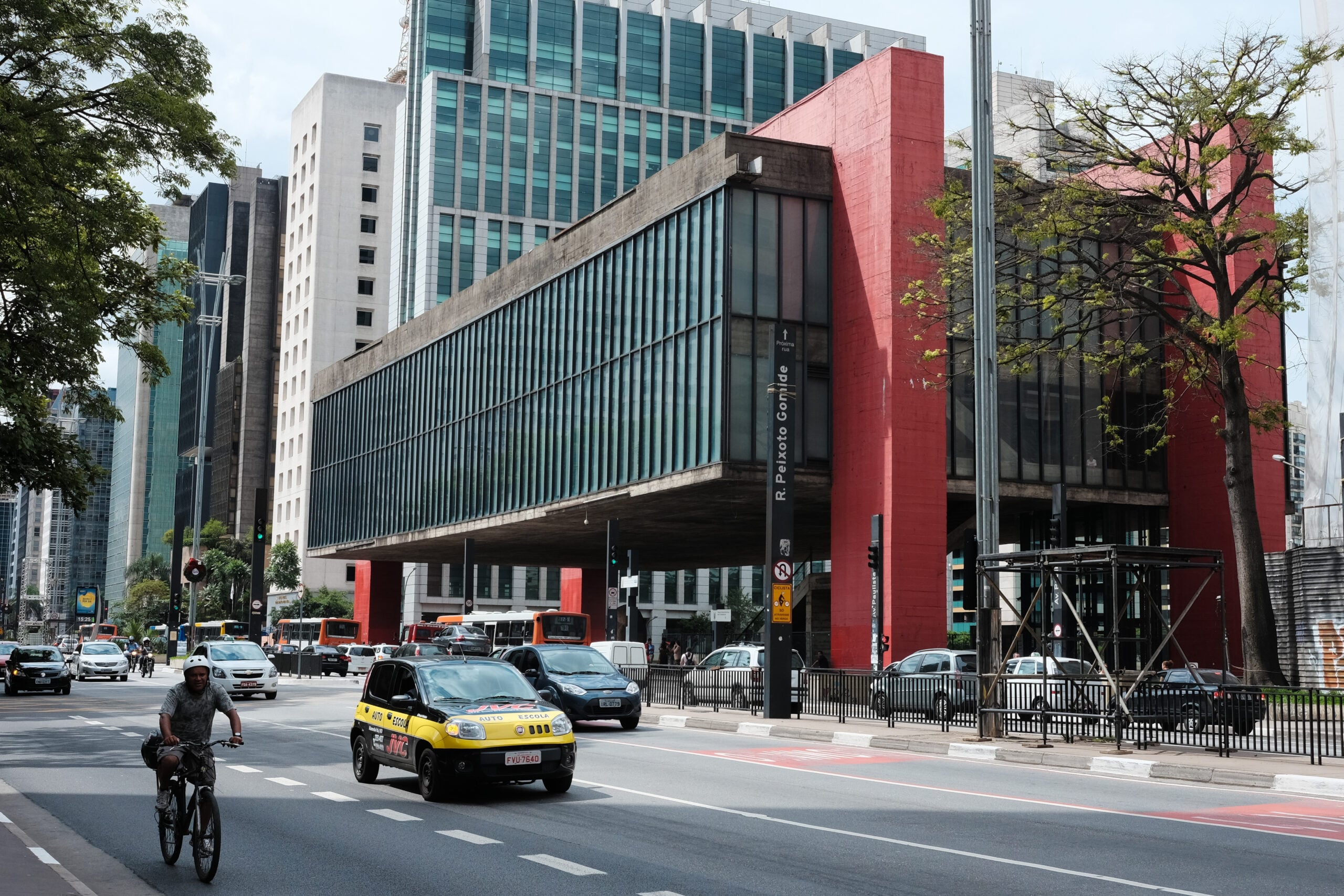 (Photo internet reproduction)
What the Damián Ortega MASP survey puts on show
“Damián Ortega: Matter and Energy” is the Mexican artist’s first major survey in South America, on view at the São Paulo Museum of Art, known by its initials MASP. It runs from May 15 to September 13.
The show gathers 35 works made over three decades, moving across sculpture, installation, photography and video. The throughline is an artist who takes ordinary objects apart and asks the viewer to see them anew.
Ortega, born in Mexico City in 1967, is best known abroad for “Cosmic Thing,” a Volkswagen Beetle hung from the ceiling as an exploded diagram of its own parts. The piece made his name as a sculptor of suspended, dismantled machines.
His wider work circles themes of labour, consumption, time and language. The curators frame it as a conceptual language that lifts regional histories into an international conversation about globalisation and the movement of goods.
Much of the appeal is physical. Ortega tends to freeze objects in the act of coming apart, so a visitor walks around a thing mid-explosion and reads it like a diagram rather than a finished sculpture.
That method turns familiar items into puzzles about how they were made and what they cost to make. The everyday tools and machines he favours carry a quiet point about work and value in a globalised economy.
Why MASP gave a whole year to Latin America
The Ortega survey does not stand alone. MASP has dedicated its entire 2026 programme to the art of Latin America, the latest chapter in a long-running curatorial series the museum has built since the middle of the last decade.
That series has previously tackled Afro-Atlantic, feminist, Indigenous and ecological histories, one sweeping theme each year. This is described as the most geographically wide-ranging edition the museum has attempted.
The curators approach the region not as a fixed map but as an identity still being built. Their organising idea is a sense of shared belonging across the histories and visual cultures of the countries that make up Latin America.
Around Ortega sit shows by artists from across the continent, including an Indigenous Peruvian painter, a Chilean collective that defied the Pinochet dictatorship, and artists from Venezuela, Colombia, Guatemala and Puerto Rico.
A landmark building on Avenida Paulista
The setting is part of the draw. MASP sits on Avenida Paulista in a building by the architect Lina Bo Bardi, a glass-and-concrete box raised on red pillars over an open public square, regarded as one of Brazil’s great modern landmarks.
It is also one of the busiest museums anywhere. MASP drew more than one million visitors last year and ranks among the world’s hundred most-visited museums, giving these exhibitions an unusually large audience.
For the past decade the museum has steadily shifted away from its old European focus. The 2026 programme is the clearest statement yet of a museum reframing itself around the region it sits in.
Why it matters beyond Brazil
For a visitor planning a trip, the timing is generous. The Ortega survey then travels to the Centro Cultural La Moneda in Santiago from November, so a traveller can catch it in either Brazil or Chile.
There is a larger signal too. When a museum of MASP’s weight stakes a full year on Latin American art, it shapes how galleries, collectors and other institutions across the region direct their attention and money.
It also sets the stage for what comes next. The São Paulo Biennial, the city’s other great art event, returns in 2027 and will open against the backdrop this year of museum shows has created.
Frequently Asked Questions
What is the Damián Ortega MASP exhibition?
It is “Damián Ortega: Matter and Energy,” the Mexican artist’s first major survey in South America, at the São Paulo Museum of Art. It gathers 35 works across sculpture, installation, photography and video, and runs from May 15 to September 13.
Why is MASP focusing on Latin American art in 2026?
The museum has given its whole 2026 calendar to the art of Latin America, the latest theme in a curatorial series it has run for years. The aim is to explore the region as a shared identity rather than a fixed geographic label.
Will the exhibition travel outside Brazil?
Yes. After closing in São Paulo on September 13, the Ortega survey travels to the Centro Cultural La Moneda in Santiago, Chile, where it is due to run from November into early next year.
The Rio Times · Power Map
See who really holds power in Latin America
Click to open the Power Map →