By The Rio Times | Created at 2026-09-30 15:35:13 | Updated at 2026-09-30 18:01:16
4 hours ago
By The Rio Times | Created at 2026-09-30 15:35:13 | Updated at 2026-09-30 18:01:16
4 hours ago
One-stop reference
Company Intelligence
Every listed company in Latin America — financials, ownership and structure for 1,450+ companies across 26 exchanges, in one place.
Kenya — Lamu breaks ground today on a US$16 billion bet, with three neighbours buying in.
Ethiopia — The army chief names three neighbours, and all three answer.
South Africa — Washington’s ambassador, called in for the third time in nine months.
Burkina Faso — The refinery gets its real numbers: 164 tonnes now, 515 promised.
Africa’s temper this Wednesday is ceremony against a background of sirens. Kenya broke ground on a US$16 billion refinery at Lamu with regional leaders invited and three neighbours buying stakes, while Ethiopia’s army chief spent the same news cycle accusing three neighbours of arming his opposition.
The register is ambition refusing to wait for calm. Lamu’s groundbreaking proceeded under a court’s status-quo order, Pretoria called in Washington’s ambassador for the third time in nine months, and Ouagadougou’s new refinery acquired the numbers that turn a slogan into an industrial plan.
What steadies the continent is institutional muscle memory. Zambia opened its books to an IMF mission that will stay until 10 October, and the Sahel’s three juntas put their joint broadcaster on the air.
The through-line is a continent building and accusing at the same time — pouring concrete on the coast while trading accusations across borders in the north. Africa this morning is a construction site with a war in the background.
Key Facts
—Lamu’s day. The Dangote East Africa Petroleum Refinery breaks ground in Lamu County today, 30 September, with President Ruto leading the ceremony and regional heads of state invited; the project is priced at US$15-17 billion, designed for 700,000 barrels a day, with construction expected to take about three years. Dangote said on Tuesday that American investors “will definitely come” and that three East African countries would take a combined 30 per cent stake, AP reported.
—Jula’s accusations. Ethiopian army chief Birhanu Jula accused Eritrea, Sudan and Egypt of backing armed opposition groups as fighting spread across Tigray, Amhara and Afar; all three rejected the claims, and Sudan accused Ethiopia of supporting the RSF, which Addis Ababa denied, Al Jazeera reported on 29 September.
—The third démarche. South Africa’s foreign ministry called in US Ambassador Leo Brent Bozell III on Tuesday over what it termed undiplomatic conduct — the third such summons in nine months, Reuters reported on 30 September.
—Ouagadougou’s arithmetic. Burkina Faso’s first gold refinery starts with an initial capacity of 164 tonnes a year at a cost above 11 billion CFA francs, with an eventual rise to 515 tonnes planned, AllAfrica reported on 30 September.
—The outbreak’s standing count. Congo’s Ebola outbreak stood at 8,067 confirmed cases and 3,901 deaths in the WHO count as of 28 September, with the epicentre in Ituri and cases rising in North Kivu.
—Lusaka’s visitor. Zambia began talks with a visiting IMF mission that will stay until 10 October; the previous US$1.7 billion arrangement expired in January and Lusaka wants a new programme agreed by year-end, Reuters reported on 30 September.
—The Sahel’s channel. Burkina Faso, Mali and Niger have launched a joint broadcaster, Tafouk TV, with official programming running since 16 September, AllAfrica reported on 30 September — the confederation acquiring a shared voice.
—The qualifying shock. Nigeria lost 3-0 away to Guinea-Bissau and Ghana fell 4-2 at home to Gambia in AFCON qualifiers on Tuesday night, SuperSport reported — Ghana now last in its group after two defeats.
Lamu Breaks Ground On Schedule
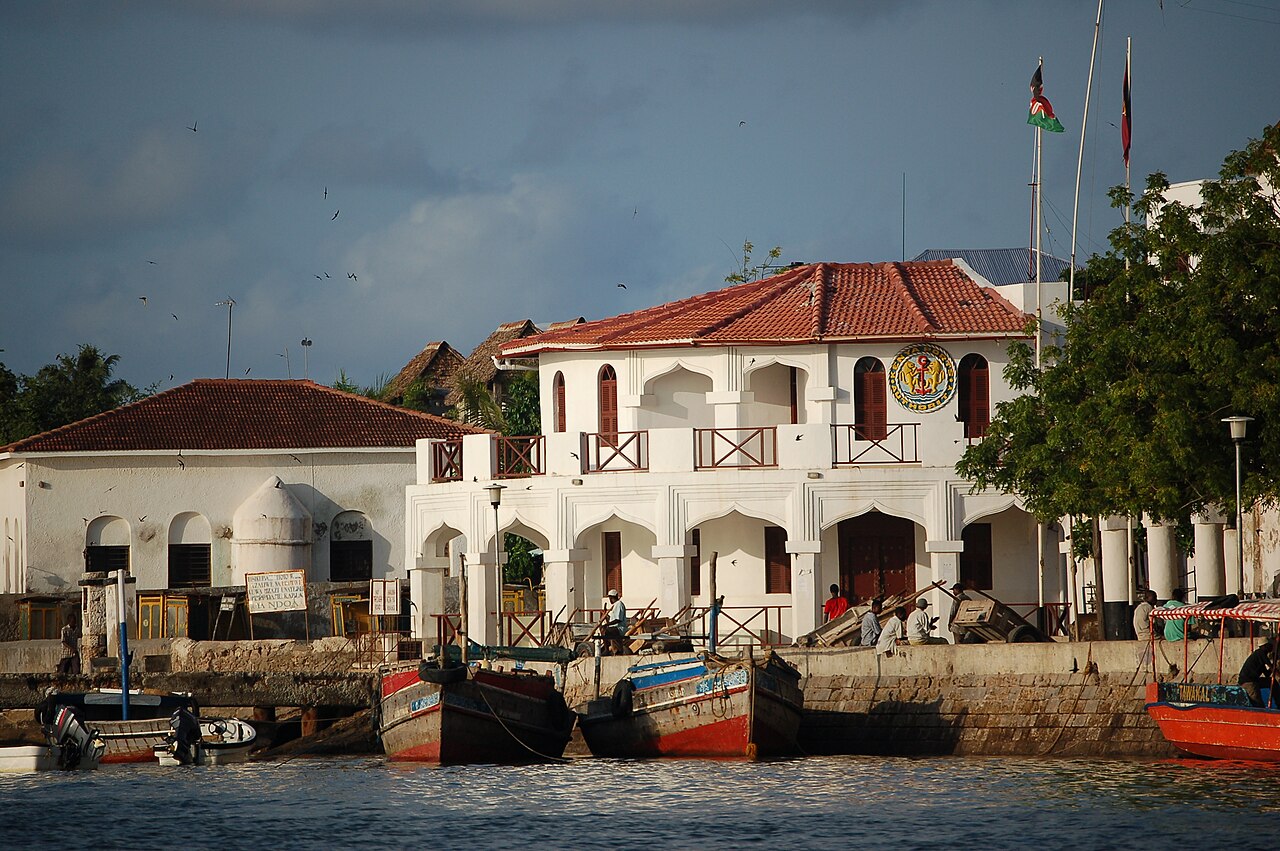
The groundbreaking a Kenyan court declined to stop went ahead on the advertised date. The Dangote East Africa Petroleum Refinery breaks ground in Lamu County today, 30 September, with President Ruto leading the ceremony and regional heads of state invited — a project priced at US$15-17 billion, designed for 700,000 barrels a day, with construction expected to take about three years and completion eyed around 2030.
Dangote spent Tuesday pre-empting the sovereignty argument. American investors “will definitely come”, he told journalists in Kenya, while insisting the project remains African-led; three East African countries — Kenya and two he declined to name — would take a combined 30 per cent stake, AP reported. The plant is meant to process crude from Uganda and other regional producers, with Kenya itself planning to resume exploration in December.
The Malindi Environment and Land Court had ordered the parties to maintain the status quo on disputed land until a hearing on 14 October — an order that did not expressly halt the ceremony, IntelliNews reported on 29 September. Nairobi’s answer was to hold the ceremony first and argue later.
The register on the coast is choreography over unresolved law. The 14 October hearing is now the region’s judicial-risk appointment of the month: a court that let the shovels turn must decide whether it can order them to stop — and every infrastructure investor on the continent is pricing the answer in advance.
Addis Ababa Names Three Neighbours
Ethiopia’s war has acquired a diplomatic front. Army chief Field Marshal Birhanu Jula accused Eritrea, Sudan and Egypt of backing armed opposition groups as fighting spread across Tigray, Amhara and Afar, Al Jazeera reported on 29 September. All three rejected the accusations.
Sudan answered with a mirror charge: that Ethiopia supports the Rapid Support Forces — an allegation Addis Ababa denied. The exchange converts a northern insurgency into a four-country vocabulary, and vocabularies of this kind have preceded worse.
The register in the Horn is accusation as mobilisation. When an army chief names three neighbours in one breath, he is either briefing his public for escalation or billing his rivals for deterrence — and the region cannot yet tell which.
Pretoria’s Third Summons
South Africa’s foreign ministry called in US Ambassador Leo Brent Bozell III on Tuesday for what it termed undiplomatic conduct — the third démarche in nine months, Reuters reported on 30 September. A senior official confirmed the summons without detailing the conduct.
The register in Pretoria is calibrated irritation. Three summonses in nine months is not a dispute; it is a position — the diplomatic equivalent of a country that has decided the relationship will be managed at arm’s length, in writing.
The Refinery Gets Its Numbers
Burkina Faso’s new gold refinery, inaugurated on Monday, now has its industrial arithmetic: an initial capacity of 164 tonnes a year, a cost above 11 billion CFA francs, and a planned eventual rise to 515 tonnes, AllAfrica reported on 30 September.
The register in Ouagadougou is doctrine with a ramp-up curve. The junta’s economic-sovereignty argument — process at home, keep the margin — is now testable against a production figure, which is precisely what makes Tuesday’s ceremony riskier than Monday’s rhetoric.
Lusaka Opens The Books
Zambia began discussions with a visiting IMF mission that will remain until 10 October, the finance ministry said, aiming to agree a new programme by year-end after the previous US$1.7 billion arrangement expired in January, Reuters reported on 30 September.
The register in Lusaka is creditor patience practised as policy. A country that restructured its debt once is back for the second arrangement — the test of whether the first one was a cure or a pause.
What This Means From Latin America
Lamu’s groundbreaking is the emerging-market infrastructure race at full gallop. A US$16 billion, 700,000-barrel-a-day refinery on the Kenyan coast competes for the same frontier capital that Latin America’s own refinery and offshore projects court — and a ceremony staged over a live court case is a data point for every judicial-risk model in the region.
Burkina Faso’s 164-tonne figure is the value-capture argument with a serial number. Brazil’s Vale, Chile’s copper and Bolivia’s lithium live in the same sentence — dig less, refine more — and Ouagadougou has now published the capacity at which the sentence will be judged.
Zambia’s IMF mission is the region’s creditor-calendar mirror. Lusaka negotiating a second programme by year-end while several Latin American treasuries watch their own Fund options is a reminder that the post-restructuring market is a queue, not a club.
The comparison is set out at greater length elsewhere. The dossier carries the leader, the country health check and the outcome table with its Latin America column — open the Africa Intelligence Dossier.
What We Are Watching
- 14 October: the Malindi hearing — The land court that declined to stop today’s ceremony must decide whether it can stop the construction. The answer reprices East African infrastructure risk.
- The coming days: the Horn’s accusations — Eritrea, Sudan and Egypt have rejected Jula’s charges; Sudan’s counter-charge on the RSF stands. A fourth capital joining the exchange would mark escalation.
- Through 10 October: Zambia’s IMF mission — The mission’s departure communiqué will sketch the programme’s shape. Year-end agreement is Lusaka’s stated goal.
- This week: Pretoria and Washington — After a third summons, watch whether the démarche acquires a public subject — or a fourth date.
- The fortnight: Tafouk TV’s build-out — The Sahel’s joint broadcaster has been on air since 16 September. Whether it becomes an institution or a mouthpiece marks how far the AES confederation has consolidated.
- Ongoing: the WHO’s next Ebola count — Monday’s figure stood at 8,067 cases and 3,901 deaths; the next situation report shows whether North Kivu’s rise is a trend.
Background: Ethiopia Explained 2026: The War That Never Officially Ended.
Background: BRICS Just Got Bigger — Who’s In, Who’s Still Out, and Why It Matters.
Frequently Asked Questions
Did the Lamu refinery groundbreaking actually happen?
It was scheduled for today, 30 September, and went ahead with President Ruto leading the ceremony, Kenyan and international media reported. The project is priced at US$15-17 billion and designed for 700,000 barrels a day; Dangote said on Tuesday that three East African countries would take a combined 30 per cent stake, AP reported. A Malindi court had ordered the parties to keep the status quo pending a 14 October hearing, but did not expressly halt the ceremony.
What did Ethiopia’s army chief accuse its neighbours of?
Birhanu Jula accused Eritrea, Sudan and Egypt of backing armed opposition groups as fighting spread across Tigray, Amhara and Afar, Al Jazeera reported on 29 September. All three rejected the claims, and Sudan countered by accusing Ethiopia of supporting the RSF, which Addis Ababa denied.
Why did South Africa summon the US ambassador again?
The foreign ministry cited undiplomatic conduct by Ambassador Leo Brent Bozell III, Reuters reported on 30 September, without detailing it publicly. It is the third such summons in nine months — a pattern that reads as policy rather than incident.
How big is Burkina Faso’s new gold refinery?
Initial capacity is 164 tonnes of gold a year at a cost above 11 billion CFA francs, with a planned eventual rise to 515 tonnes, AllAfrica reported on 30 September. The plant is the first physical test of the Sahel’s process-at-home doctrine.