By The Rio Times | Created at 2026-10-01 17:51:53 | Updated at 2026-10-01 20:09:49
3 hours ago
By The Rio Times | Created at 2026-10-01 17:51:53 | Updated at 2026-10-01 20:09:49
3 hours ago
The LatAm Brief
One email, every weekday morning. What moved in Latin American markets, politics and expat life.
Yesterday’s subject line: “Banxico has missed its target for 75 months in a row”
Free. We send a confirmation link first — nothing arrives until you click it. Unsubscribe with one click in any edition. If you stop opening us for 30 days we stop sending by ourselves, as we assume the interest is no longer there. See our privacy policy. We never share your email.
TRADE · GUYANA
Key Facts
- —The country Guyana, an English-speaking Caribbean state on South America’s north coast, shares the Corentyne River border with Dutch-speaking Suriname.
- —What happened On Wednesday 30 September 2026, agriculture minister Zulfikar Mustapha said he had ordered a stop to banana imports from Suriname.
- —Who is involved Guyana’s Ministry of Agriculture, Guyanese banana farmers, and the traders who bring Surinamese fruit across the river. No company has been named.
- —What it means for you Shoppers in Guyana should see local bananas on stalls. Surinamese growers lose an informal outlet, not a recorded export channel.
- —Still open How the order will be enforced at the border, and whether Suriname’s government will respond, had not been reported by 1 October.
Guyana has ordered a stop to banana imports from neighbouring Suriname, saying its own farmers already grow enough fruit for the home market. Agriculture minister Zulfikar Mustapha announced the step on Wednesday 30 September 2026.
Free daily brief — no card needed
Get every Latin America story in one morning email
We build you a personalized brief around the topics you follow — free for 7 days. Love it? Your first month after that is US$1.
Yes, email me my free daily brief — I can unsubscribe any time.
The move is small in trade terms but telling in tone. Mustapha said that, officially, no bananas were being imported from Suriname at all.
One-stop reference
Company Intelligence
Every listed company in Latin America — financials, ownership and structure for 1,450+ companies across 26 exchanges, in one place.
What the Minister Said
Mustapha told the Guyanese outlet Demerara Waves Online News that he had heard Surinamese bananas were coming in. “I told them to stop all the importation of bananas because our farmers have enough bananas to supply the system,” he said.
He added that he had received unofficial complaints from several people. “We have enough bananas in the country,” the minister said.
Surinamese media carried the report the same day. The Paramaribo news sites Dagblad Suriname and Waterkant both relayed the minister’s remarks, citing the Guyanese interview.
A Standing Rule, Not a New Tariff
Mustapha framed the step as routine policy rather than a new measure. Once local output of a fruit meets domestic demand, he said, imports of that fruit should not be allowed.
The rule cuts both ways. It shields Guyanese growers in good seasons, yet imports can return if local harvests fall short of demand.
No official notice, tariff schedule or list of affected traders had been published by 1 October. The account so far rests on the minister’s own words in a single interview.
Why the Border Matters
Guyana and Suriname are linked mainly across the Corentyne River, where small boats and a ferry carry people and goods. Much of that produce trade is informal and never shows up in customs data.
In July 2025, Surinamese police stopped a truckload of bananas bound for Guyana across the Corentyne without export permits, Suriname Herald reported. Surinamese Dutch calls sweet bananas “bacoven”, the word used in that report.
That helps explain the minister’s point about unofficial imports. Bananas that cross without paperwork compete with Guyanese fruit but are hard to count or tax.
The crossing has already been under strain this year. The Corentyne ferry was suspended in August and resumed sailing on 28 August 2026.
Who Gains and Who Loses
For Guyanese banana farmers, the order removes cheaper competition at local markets. Mustapha presented it as protection for growers who already meet demand.
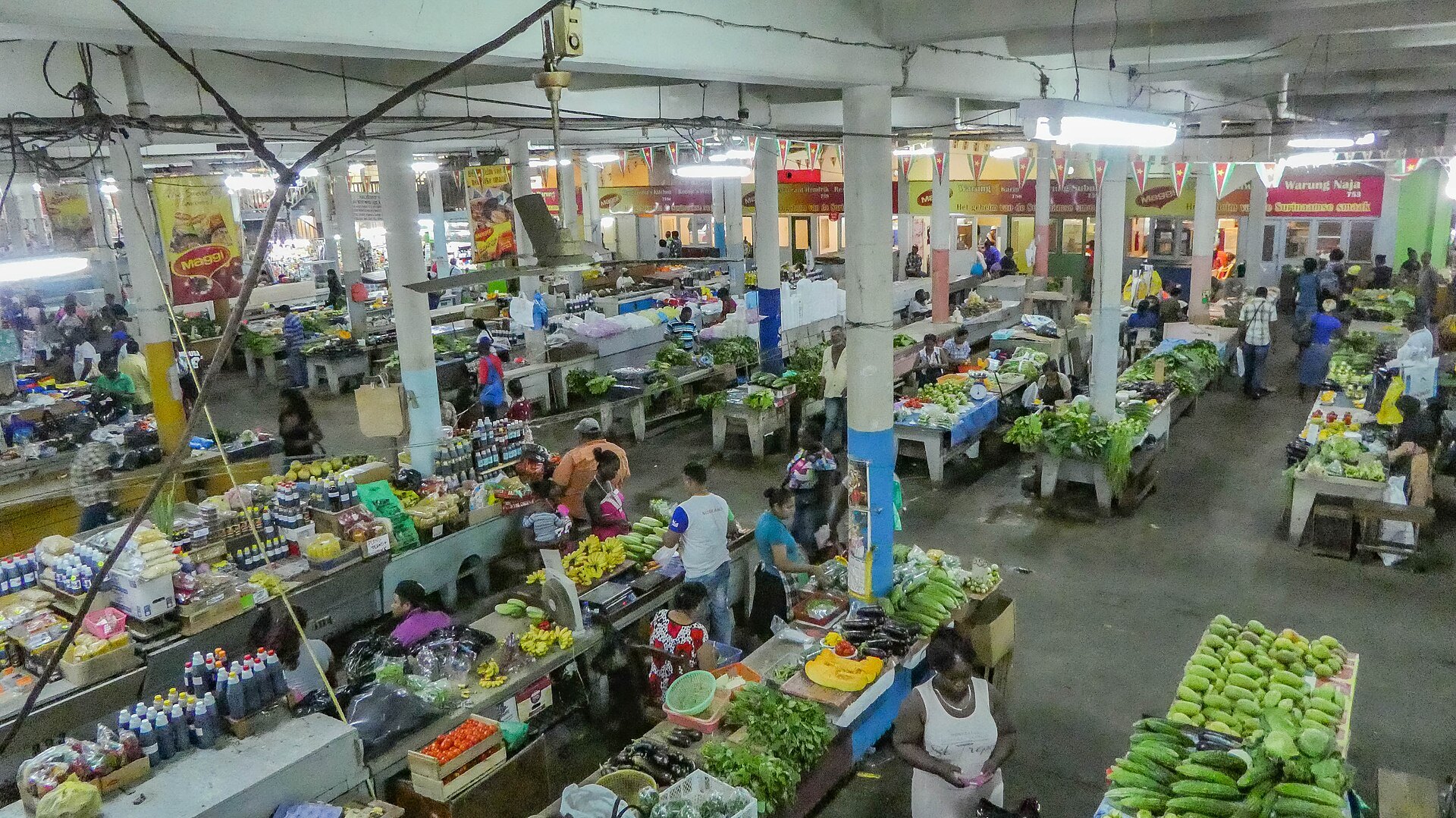
For Surinamese growers and small traders, Guyana is a nearby outlet for surplus fruit. Losing it could push more bananas onto markets at home, such as the stalls in Paramaribo.
Consumers sit in the middle. Local supply may keep shelves full, but fewer sellers can also mean less pressure on prices.
What Is Not Yet Known
It is not clear how border officers will enforce the order on informal river traffic. Nor has any volume or value of Surinamese bananas entering Guyana been published.
Suriname’s government had not publicly responded by 1 October. Whether the step stays a quiet domestic rule or becomes a bilateral issue depends on that reply.
Sources: Demerara Waves Online News (interview with Zulfikar Mustapha, 30 September 2026); Dagblad Suriname (30 September 2026); Waterkant (1 October 2026); Suriname Herald (23 July 2025).
The Rio Times · Power Map
See who really holds power in Latin America
Click to open the Power Map →