By The Rio Times | Created at 2026-10-06 13:06:56 | Updated at 2026-10-06 14:38:14
1 hour ago
By The Rio Times | Created at 2026-10-06 13:06:56 | Updated at 2026-10-06 14:38:14
1 hour ago
GUIDES · COSTA RICA
Key Facts
- —Country A Central American republic of 5,044,197 people, per the 2022 estimate of the statistics office INEC. The capital is San José.
- —Language Spanish is the official language under Article 76 of the constitution. Its 1999 wording obliges the state to maintain the national Indigenous languages.
- —Religion Roman Catholicism is the state religion under Article 75. A May 2021 University of Costa Rica survey found 47.5% Catholic and 27.0% with no religion.
- —Holidays Twelve official public holidays in 2026, nine of them paid by law, per the Labour Ministry (MTSS).
- —Symbol The painted oxcart, a national symbol of work since 1988, on UNESCO’s intangible heritage list since 2008 (proclaimed in 2005).
- —US link US residents made 1,627,807 of the 2,943,991 international arrivals in 2025, according to the tourism board ICT.
Costa Rica culture is easy to meet and harder to explain: a Spanish-speaking, officially Catholic republic with no army, where strangers hear “pura vida”. US residents made 1.6 million arrivals there in 2025. For them, the holidays, the speech habits and the national symbols shape how a trip, a move or a business works.
Costa Rica Culture in Everyday Life: Pura Vida and Tico Spanish
Costa Ricans call themselves ticos and ticas. The phrase a visitor hears first is pura vida, literally “pure life”. It serves as hello, goodbye, thank you and “all is well”.
Where it came from is disputed. The most widespread account traces it to a 1956 Mexican comedy starring Antonio Espino, known as Clavillazo.
A 2023 report in the San José daily La Nación set out a rival account. Researcher Daniel Lorenzo found the Mexican film played in San José for only three days in August 1956. He argues young Costa Ricans took the phrase instead from the 1969 US film Easy Rider, where Peter Fonda says it.
In Lorenzo’s account, two rock festivals in 1971 then spread it beyond the hippie scene. Neither theory is settled. Both describe a borrowed phrase that Costa Ricans made their own.
Costa Rican Spanish has other habits a visitor notices fast. The University of Costa Rica counts mae, a casual way to address someone, and tuanis among the words tied to Costa Rican identity, alongside pura vida.
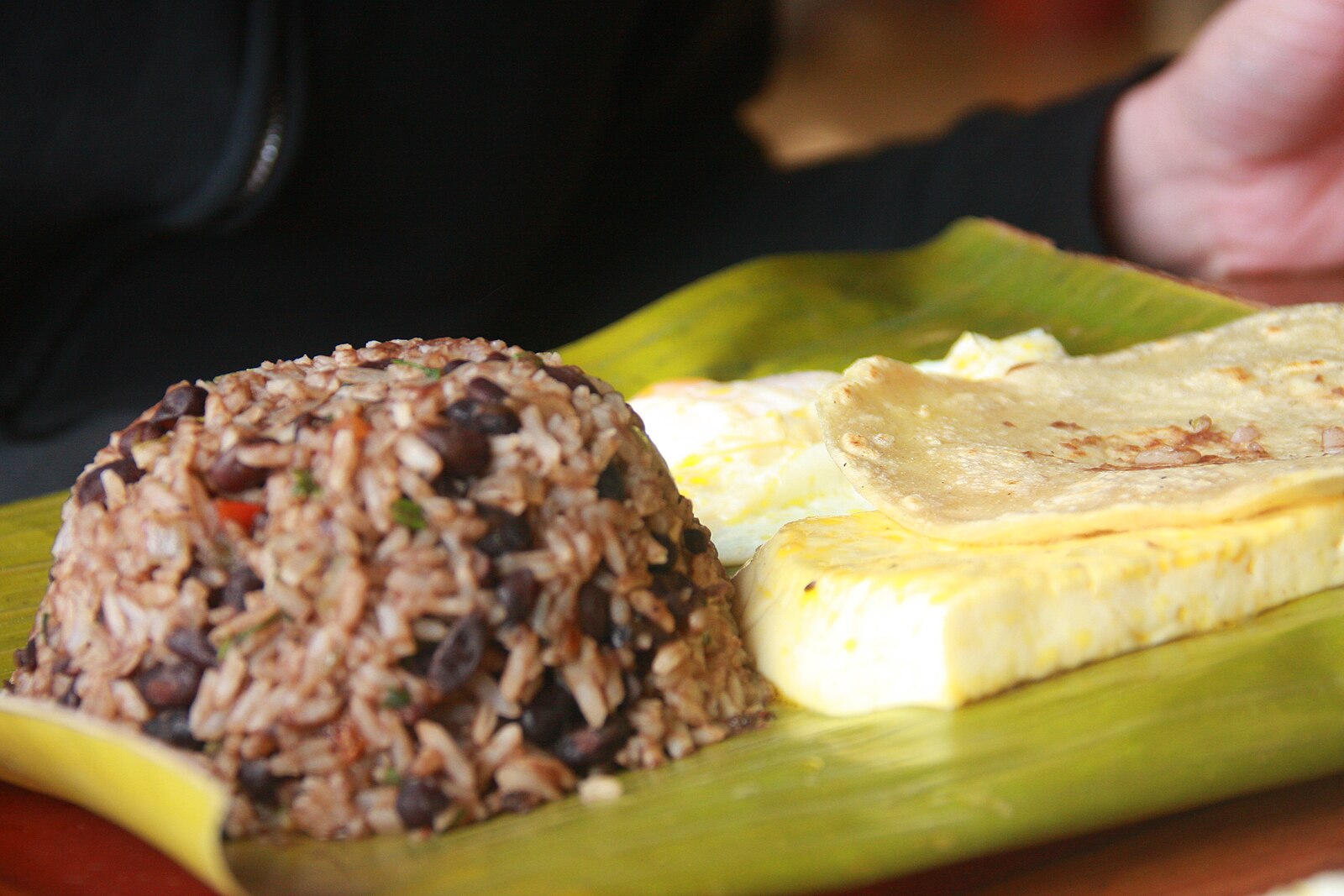
Beans anchor everyday food. A traditional-cookery book from the tourism board ICT names gallo pinto, the casado plate and Caribbean rice and beans as daily staples.
Language: Spanish, Seven Indigenous Languages and Limón Creole
Spanish is the only official language. Article 76, in its 1999 wording, adds that the state will ensure the upkeep and cultivation of national Indigenous languages. Schools, courts, government and business run in Spanish.
Linguists at the University of Costa Rica (UCR) count seven Indigenous languages still present. They are Bribri, Cabécar, Malecu, Ngäbere (Ngöbe), Buglere, Brunca (Boruca) and Naso, the language of the Térraba people.
Only five are still used in daily conversation, UCR said in 2021: Cabécar, Bribri, Malecu, Ngöbe and Buglere. UCR puts the speakers of any Indigenous language at about 32,000, out of just over 104,000 Indigenous people counted in 2011.
On the Caribbean coast, many descendants of migrants, mostly from Jamaica, speak an English-based creole. Their ancestors arrived in the second half of the 19th century. Speakers call it Limón Creole, patois or mekatelyu, and Costa Rican Sign Language (LESCO) completes the country’s language map.
Religion: A Catholic State With a Fast-Changing Faith
Costa Rica has an official religion. Article 75 of the constitution makes Roman Catholicism the religion of the state, which contributes to its upkeep. The same article protects the free exercise of other faiths that do not oppose universal morality or good customs.
Belief is shifting. A May 2021 survey by UCR’s political research centre, CIEP, found 47.5% Catholic, 19.8% evangelical or Pentecostal and 27.0% with no religion. In November 2019 the same centre had measured 50.0% Catholic and 19.9% without religion.
Faith in God remains near universal. An October 2024 survey by the National University (UNA) found that 96% of adults believe in God, a deity or a higher force.
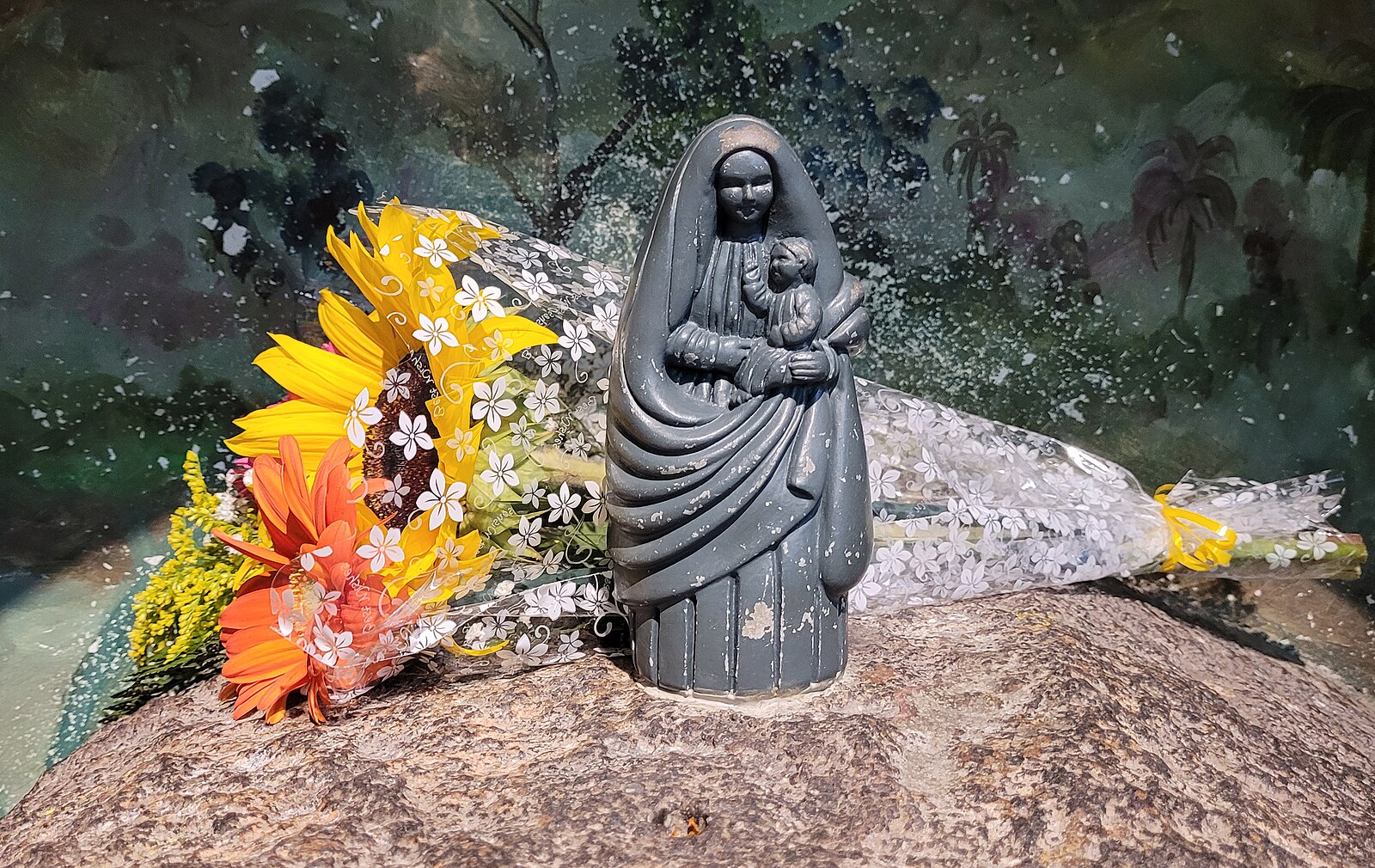
The religious high point of the year is 2 August, the feast of the Virgin of the Angels, known as La Negrita. Pilgrims walk, many through the night, to her basilica in Cartago, the former capital. The day is an official holiday, though its pay is not obligatory.
Holy Thursday and Good Friday are paid holidays by law. In 2026 they fell on Thursday 2 April and Friday 3 April.
Holidays and Traditions Through the Year
Article 148 of the Labour Code sets the calendar. Nine dates are paid holidays, and three more are holidays whose pay is not obligatory. The Labour Ministry confirmed the same twelve for 2026.
- 1 January, New Year’s Day (paid).
- Holy Thursday and Good Friday, which move with Easter (paid).
- 11 April, Juan Santamaría Day (paid). It honours the soldier who died setting fire to the stronghold of US filibuster William Walker’s men at the Battle of Rivas in 1856.
- 1 May, Labour Day (paid).
- 25 July, the Annexation of the Partido de Nicoya, the Guanacaste region (paid).
- 2 August, the Virgin of the Angels (pay not obligatory).
- 15 August, Mother’s Day (paid).
- 31 August, the Day of Black People and Afro-Costa Rican Culture (pay not obligatory).
- 15 September, Independence Day, marking Central America’s 1821 break from Spain (paid).
- 1 December, the Abolition of the Army (pay not obligatory).
- 25 December, Christmas (paid).
The 11 April date carries a direct US link: Walker was an American adventurer who led filibuster troops in Nicaragua. The Juan Santamaría Museum in Alajuela says specialists consider the 1856 to 1857 war against him Costa Rica’s true war of independence. Walker surrendered on 1 May 1857.
Some traditions sit outside the legal calendar. Every year, school students carry an independence torch in a relay across Central America, an idea put to the region’s education ministers in 1964. A 2005 decree made that torch a national symbol.
The second Sunday of March is the National Day of the Costa Rican Oxcart and Oxherding, set by Law 10204 of 2022. At Christmas, families gather for the tamaleada, making tamales wrapped in plantain leaves, the Culture Ministry notes.
National Symbols, From the Oxcart to the Yigüirro
The flag, coat of arms and anthem came first, as marks of the young republic. The flag has five horizontal stripes of blue, white, red, white and blue. The flag and coat of arms were decreed on 29 September 1848, and the arms were revised on 27 November 1906. A 1949 decree, No. 551, fixed the anthem’s official lyrics.
Later symbols, with the dates the government records, are:
- The guaria morada, a purple orchid: national flower since 15 June 1939.
- The guanacaste tree: national tree by decree in 1959.
- The yigüirro, or clay-coloured thrush: national bird under Law 6031, published in January 1977, chosen for its song.
- The painted oxcart: national symbol of work since 1988.
- The white-tailed deer: symbol of wildlife since 1995.
- The marimba: national musical instrument since 1996.
- The independence torch: national symbol since 2005.
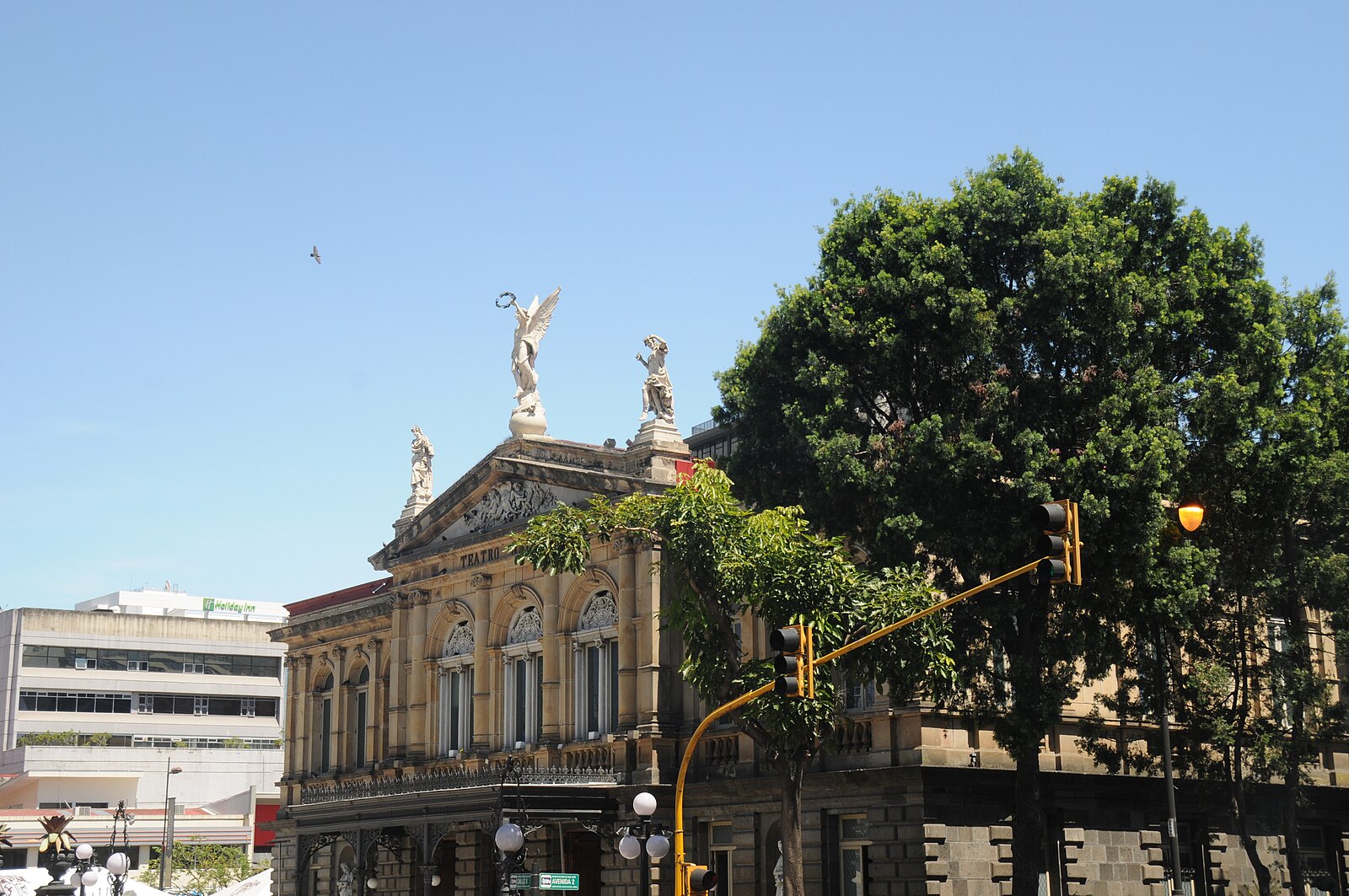
The Imprenta Nacional, the state printer, listed 21 symbols in a 2025 booklet. Newer entries include the manatee, the Crestones rocks of Mount Chirripó and the pre-Columbian stone spheres. Coffee, the sloth, the morpho butterfly, the hummingbird, the Teatro Nacional, the mascaradas festival masks and the adobe house also feature.
UNESCO calls the oxcart Costa Rica’s most famous craft. From the mid-19th century, carts hauled coffee from the Central Valley to Puntarenas on the Pacific, a journey of 10 to 15 days. Painting began in the early 20th century, and each cart was built to make its own “song” as it rolled.
The stone spheres of the Diquís delta, in the south, joined UNESCO’s World Heritage List in 2014. They measure up to 2.57 metres (about 8.4 feet) across. They come from chiefdom societies of AD 500 to 1500, and their meaning and production remain largely a mystery.
The People: Ticos, Indigenous Peoples and Afro-Costa Ricans
INEC estimated the population at 5,044,197 in 2022, up from 4,301,712 in the 2011 census. That is an average rise of just under 1.5% a year.
The 2011 census lists eight Indigenous peoples: Bribri, Cabécar, Brunca (Boruca), Chorotega, Huetar, Maleku, Ngöbe and Teribe (Térraba). INEC counts 24 Indigenous territories. INEC describes disadvantaged conditions across these territories, rooted in historic exclusion and sharpest in Bribri, Cabécar and Ngöbe areas.
Afro-Costa Rican culture is strongest in Limón province on the Caribbean coast. A holiday on 31 August honours Black Costa Ricans and their culture. Their creole language is the clearest living trace of Jamaican migration.
Some Costa Ricans are well known in the United States. Franklin Chang-Díaz, born in San José on 5 April 1950, flew seven Space Shuttle missions for NASA between 1986 and 2002. He later founded the Ad Astra Rocket Company to develop the VASIMR plasma engine.
Schooling is a point of national pride. Article 78 of the constitution makes preschool, basic and secondary education compulsory and, in the public system, free. It also sets public spending on education at no less than 8% of GDP.
A Country Without an Army
Article 12 of the constitution bans the army as a permanent institution. Police forces keep public order. Military forces may be organised only under a continental agreement or for national defence, and must always answer to civilian power.
On 1 December 1948, junta leader José Figueres Ferrer declared the army abolished at the Bellavista barracks, now the National Museum, the Education Ministry records. The 1949 constitution wrote the ban into law, and 1 December is a holiday marking the decision.
What It Means for US Readers
The United States is the largest source of visitors by far. US residents made 1,627,807 of 2,943,991 international arrivals in 2025, about 55%, according to ICT.
Holy Thursday and Good Friday close public offices, schools and many businesses. In 2027 they fall on Thursday 25 March and Friday 26 March. Independence Day falls on Wednesday 15 September 2027.
For expats and retirees, the culture rewards patience and courtesy: greet before asking. The residency guide in the coverage below sets out the visa routes.
For businesses, one legal point matters: in a March 2020 opinion, the Attorney General’s office (PGR) held that private trademarks may not reproduce national symbols. Only the Legislative Assembly can authorise such use. The Crestones image is reserved as a country brand for the tourism board.
What Is Not Known
The origin of pura vida is unresolved. The 1956 film theory and the Easy Rider theory both rest on recollection and old cinema listings, not on a documented first use.
Religious shares come from university surveys, not an official count, and they move with method and timing. The Indigenous figures cited here date from the 2011 census, since INEC’s 2022 figure was an estimate. UCR linguists warn that self-declared speaker counts reflect attitudes as well as fluency.
Frequently Asked Questions
What is Costa Rica culture known for?
Costa Rica culture is known for the greeting pura vida, a Catholic calendar led by the 2 August pilgrimage to Cartago, the painted oxcart as a national symbol and the absence of a standing army under Article 12 of the constitution.
What language is spoken in Costa Rica?
Spanish is the official language under Article 76 of the constitution. University of Costa Rica linguists count seven Indigenous languages still present, and an English-based creole is spoken on the Caribbean coast around Limón.
What is the main religion in Costa Rica?
Roman Catholicism is the state religion under Article 75. A May 2021 University of Costa Rica survey found 47.5% Catholic, 19.8% evangelical or Pentecostal and 27.0% with no religion.
What does pura vida mean?
Pura vida literally means pure life. Costa Ricans use it as hello, goodbye, thank you and all is well. Its origin is disputed between a 1956 Mexican film and the 1969 US film Easy Rider.
What are the national symbols of Costa Rica?
They include the flag, coat of arms and anthem, the guaria morada orchid, the guanacaste tree, the yigüirro bird, the painted oxcart, the white-tailed deer, the marimba and the independence torch. The state printer listed 21 symbols in 2025.
How many public holidays does Costa Rica have?
Costa Rica has twelve official public holidays under Article 148 of the Labour Code. Nine are paid by law, and pay is not obligatory on 2 August, 31 August and 1 December.
Sources: Labour Ministry (MTSS) 2026 holiday calendar, https://www.mtss.go.cr/temas-laborales/feriados/feriados%5Fcalendario%5F2026.pdf; Constitution, Imprenta Nacional edition, https://www.imprentanacional.go.cr/editorialdigital/libros/textos%20juridicos/constitucion_politica_digital_edincr.pdf; Constitution, Judiciary edition, https://pj.poder-judicial.go.cr/images/documentos/normativa/Constitucion_Politica_Costa_Rica.pdf; CIEP-UCR survey, May 2021, https://ciep.ucr.ac.cr/wp-content/uploads/2021/12/Estudio-sobre-percepciones-ideologicas-y-cultura-politica-mayo-2021.pdf; UNA-IDESPO religion survey 2024 (Surcos), https://surcosdigital.com/encuesta-percepcion-de-la-poblacion-costarricense-sobre-valores-y-practicas-religiosas-2024/; Presidency: national symbols, https://www.presidencia.go.cr/simbolos-nacionales; Ministry of Culture heritage centre: national symbols, https://patrimonio.go.cr/patrimonio/simbolos_nacionales.aspx; Imprenta Nacional: Símbolos Nacionales 2025, https://www.imprentanacional.go.cr/editorialdigital/libros/historiaygeografia/simbolos_nacionales_2025_edincr.pdf; PGR opinion 085 of 16 March 2020, https://sinalevi.go.cr/ResultadosPronunciamiento/Informacion?param1=22097¶m2=0; UNESCO: oxherding and oxcart traditions, https://ich.unesco.org/en/RL/oxherding-and-oxcart-traditions-in-costa-rica-00103; UNESCO: Diquís stone spheres, https://whc.unesco.org/en/list/1453/; INEC: 2022 population estimate, https://admin.inec.cr/sites/default/files/2023-07/rePoblacResultadosGenerales_Estimacion_poblacion_vivienda_2022.pdf; INEC: 2011 census, Indigenous territories, https://accionsocial.ucr.ac.cr/sites/default/files/documentos/get_file_0.pdf; UCR Dipalicori: languages of Costa Rica, https://dipalicori.ucr.ac.cr/articulos/lengua/; UCR: Indigenous languages (2021), https://www.ucr.ac.cr/noticias/2021/04/17/lenguas-indigenas-condenadas-a-morir.html; UCR: Indigenous languages (2018), https://www.ucr.ac.cr/noticias/2018/06/07/peligro-de-desaparicion-de-algunas-lenguas-indigenas-impulsa-el-trabajo-de-dos-proyectos-de-accion-social.html; UCR INIL: Indigenous languages, https://inil.ucr.ac.cr/linguistica/lenguas-indigenas-costa-rica/; La Nación: origin of pura vida (2023), https://www.nacion.com/revista-dominical/pura-vida-la-frase-emblema-de-costa-rica-podria/XC5E2CXBFFG5TPQG6NBF6CA4JQ/story/; Juan Santamaría Museum: Campaña Nacional, https://museojuansantamaria.go.cr/campana-nacional/; ICT tourism statistics, https://www.ict.go.cr/es/estadisticas/informes-estadisticos.html; La Nación: 2025 tourist arrivals, https://www.nacion.com/economia/visitacion-turistica-en-costa-rica-cierra-2025-con/XWCETNHXI5GZRFGWEE7SEXD62Q/story/; NASA: Franklin Chang-Díaz biography, https://www.nasa.gov/wp-content/uploads/2016/01/chang-diaz_franklin_0.pdf.; Education Ministry (MEP): Day of the Abolition of the Army, https://www.mep.go.cr/noticias/dia-abolicion-ejercito-0; National Archive: December 1948, https://www.archivonacional.go.cr/index.php/component/content/article/117-un-momento-con-la-historia/236-diciembre-2020?Itemid=437; Juan Santamaría Museum: Battle of Rivas, https://museojuansantamaria.go.cr/wp-content/uploads/materiales/brochure_batalla_de_rivas.pdf; Culture Ministry (MCJ): Christmas food, https://www.mcj.go.cr/sala-de-prensa/noticias/que-comemos-los-ticos-en-navidad; ICT: traditional cookery book, https://www.ict.go.cr/en/documents/desarrollo-tur%C3%ADstico/gastronom%C3%ADa/recetarios-de-cocina/1985-ctc1-guanacaste-y-puntarenas/file.html; UCR: the word mae (2021), https://www.ucr.ac.cr/noticias/2021/08/20/los-majes-de-america-y-el-mae-de-costa-rica-tontos-fulanos-y-amigos.html; Ad Astra Rocket Company: history, https://www.adastrarocket.com/company-history/. All accessed 6 October 2026.