By The Rio Times | Created at 2026-10-06 13:06:57 | Updated at 2026-10-06 14:38:04
1 hour ago
By The Rio Times | Created at 2026-10-06 13:06:57 | Updated at 2026-10-06 14:38:04
1 hour ago
GUIDES · PERU
Key Facts
- —Country Peru is an Andean and Pacific nation whose culture blends Indigenous Quechua and Aymara, Spanish, African and Japanese roots. Lima is the capital; Cusco was the Inca capital.
- —Food Lima’s Maido was named The World’s Best Restaurant 2025. The 2026 ranking will be revealed in Lima on Wednesday 4 November 2026, the first time the ceremony comes to Peru.
- —Literature Nobel laureate Mario Vargas Llosa died in Lima on 13 April 2025, aged 89. Living writers such as Santiago Roncagliolo and Daniel Alarcón carry the field forward.
- —Music Susana Baca holds three Latin Grammys, two for Best Folk Album (2002 and 2020). Gian Marco has won Best Singer-Songwriter Album three times.
- —Sport Sailor Stefano Peschiera’s bronze at Paris 2024 ended a 32-year wait for an Olympic medal. Race walker Kimberly García won two world titles in Eugene, Oregon, in 2022.
- —Festivals The Virgen de la Candelaria in Puno (UNESCO list, 2014) runs every February. Lima’s Señor de los Milagros processions fill October, and Cusco’s Inti Raymi falls on 24 June.
Peru culture is carried by a small group of living chefs, musicians, writers, film-makers and athletes known far beyond the Andes. Many of them have strong ties to the United States, from Philadelphia’s Curtis Institute to NPR and the Latin Grammys. This guide explains who they are, what each is known for, and which festivals and institutions sustain them.
Peru Culture at a Glance
Peru’s cultural reputation abroad rests on food, Andean heritage and a literary tradition crowned by a Nobel Prize. Over the past two decades, Lima’s kitchens have drawn worldwide attention. Music, film and sport have added newer names with large followings in the Americas.
The death of Mario Vargas Llosa on 13 April 2025 closed an era. The Nobel Foundation gave him the 2010 literature prize for his “cartography of structures of power”. He was born in Arequipa in 1936.
The figures below are living and active as of October 2026. Each entry names what the person is known for and any link to the United States.
The Chefs Who Put Lima on the Map
Lima daily El Comercio calls Astrid & Gastón the most influential restaurant in Peru. Gastón Acurio and pastry chef Astrid Gutsche opened Astrid & Gastón in Miraflores on 14 July 1994. The restaurant moved to the Casa Moreyra in San Isidro in 2014.
Virgilio Martínez runs Central, which the 50 Best organisation named The World’s Best Restaurant in 2023. His wife and partner Pía León joined Central in 2009 and rose to head chef. She opened her own restaurant, Kjolle, in 2018 and was named The World’s Best Female Chef in 2021.
Mitsuharu “Micha” Tsumura leads Maido, the Nikkei restaurant that blends Japanese technique with Peruvian ingredients. He comes from a Japanese-Peruvian (Nikkei) family. Born in Lima, he trained in culinary arts in the United States, then in Osaka. Maido opened in 2009 and was named The World’s Best Restaurant 2025 in Turin on 19 June 2025.
Peru on the 2025 World Ranking
- Maido, No. 1, chef Mitsuharu Tsumura
- Kjolle, No. 9, chef Pía León
- Mérito, No. 26
- Mayta, No. 39
- Mil, near Moray in the Cusco region, No. 75 on the extended 51–100 list
Former winners move into a “Best of the Best” group, so Maido will join Central there in 2026. That makes Lima home to two of the group’s members. The awards come to Lima on 4 November 2026 with PromPerú, the state trade and tourism agency. Organisers had first chosen Abu Dhabi.
Writers After Vargas Llosa
Santiago Roncagliolo, born in Lima in 1975, belongs to the generation after Vargas Llosa. His thriller Abril rojo (Red April), set in Ayacucho during the Shining Path insurgency, won the 2006 Alfaguara Novel Prize. Its English translation won the UK’s Independent Foreign Fiction Prize in 2011; he now writes from Barcelona.
Daniel Alarcón bridges Peru and the United States. Born in Peru and raised in Birmingham, Alabama, he co-founded the Spanish-language podcast Radio Ambulante, distributed by NPR since 2016. The MacArthur Foundation named him a 2021 Fellow, and he joined the Columbia Journalism School faculty in 2014.
His novels Lost City Radio (2007) and At Night We Walk in Circles draw on the years of political violence. The second was a finalist for the PEN/Faulkner Award. He has been a contributing writer at The New Yorker since 2018.
Music From Afro-Peruvian Song to Quechua Trap
Susana Baca sings Afro-Peruvian music. The Latin Recording Academy lists three Latin Grammy wins: Best Folk Album in 2002 and 2020, and Record of the Year 2011. The last came as a guest on Calle 13’s “Latinoamérica”; her album Conjuros was nominated in 2025, the year the Academy also gave her its Lifetime Achievement Award.
Gian Marco won Best Singer-Songwriter Album in 2005, 2011 and 2012. In 2024 he shared a Song of the Year nomination with Rubén Blades. Producer Tony Succar won two in 2019: Producer of the Year and Best Salsa Album for Más de Mí.
Juan Diego Flórez, born in Lima in 1973, is an opera tenor who broke through at Italy’s Rossini Opera Festival in 1996. He studied at Philadelphia’s Curtis Institute of Music from 1993 to 1996. He later sang a rare encore at New York’s Metropolitan Opera. In 2011 he founded Sinfonía por el Perú, a youth orchestra network that his biography says reaches more than 7,000 children.
A younger wave sings in Indigenous languages. Renata Flores, from Ayacucho, mixes Quechua lyrics with trap, and PromPerú notes that Billboard called her style “different and promising”. Her songs address social problems faced by women in the high Andes, says PromPerú.
Film-Makers and Visual Artists
Claudia Llosa’s breakthrough came in Berlin. La teta asustada (The Milk of Sorrow), starring Magaly Solier, won Berlin’s Golden Bear on 14 February 2009. It then became the first Peruvian film nominated for the foreign-language Oscar, at the 2010 Academy Awards.
Melina León’s Canción sin nombre (Song Without a Name) premiered in the Directors’ Fortnight at Cannes in 2019. The drama was inspired by a child-trafficking case in Lima investigated in part by her father, a journalist. At home, the Lima Film Festival of the Pontifical Catholic University of Peru (PUCP) held its 30th edition on 6–15 August 2026.
That edition drew more than 33,000 viewers, according to the organisers’ figures reported by Peruvian outlets. Its best Peruvian film award went to Luisa García Alva’s Manuales de supervivencia. In Hollywood, PromPerú highlights actor Isabela Merced, a US citizen with Peruvian roots who began as a child actor on Broadway.
In visual art, Lima-born painter Sandra Gamarra Heshiki represented Spain at the 2024 Venice Biennale with Pinacoteca Migrante. She was the first artist not born in Spain to fill its pavilion in 60 editions. Her work sits in MoMA in New York, Tate Modern in London and Lima’s MALI art museum.
Athletes Who Carry the Flag
Paolo Guerrero is Peru’s all-time leading goalscorer and the face of its 2018 World Cup return. He captains Alianza Lima, the club that trained him, which won the 2026 Apertura tournament. He has told El Comercio that 2026 is his last season, though the club says the decision rests with him.
Kimberly García, from Huancayo, won the 20km and 35km race walks at the 2022 world championships in Eugene, Oregon. Those were the first world championship medals in Peru’s history. World Athletics compared her double with Robert Korzeniowski’s at the Sydney 2000 Olympics.
Stefano Peschiera won bronze in the men’s ILCA 7 dinghy at Paris 2024, sailed off Marseille on 7 August 2024. It was Peru’s first Olympic medal since Juan Giha’s shooting silver in 1992, and its first ever in sailing. Peru did not qualify for the 2026 World Cup in the United States, Mexico and Canada.
Festivals and Institutions
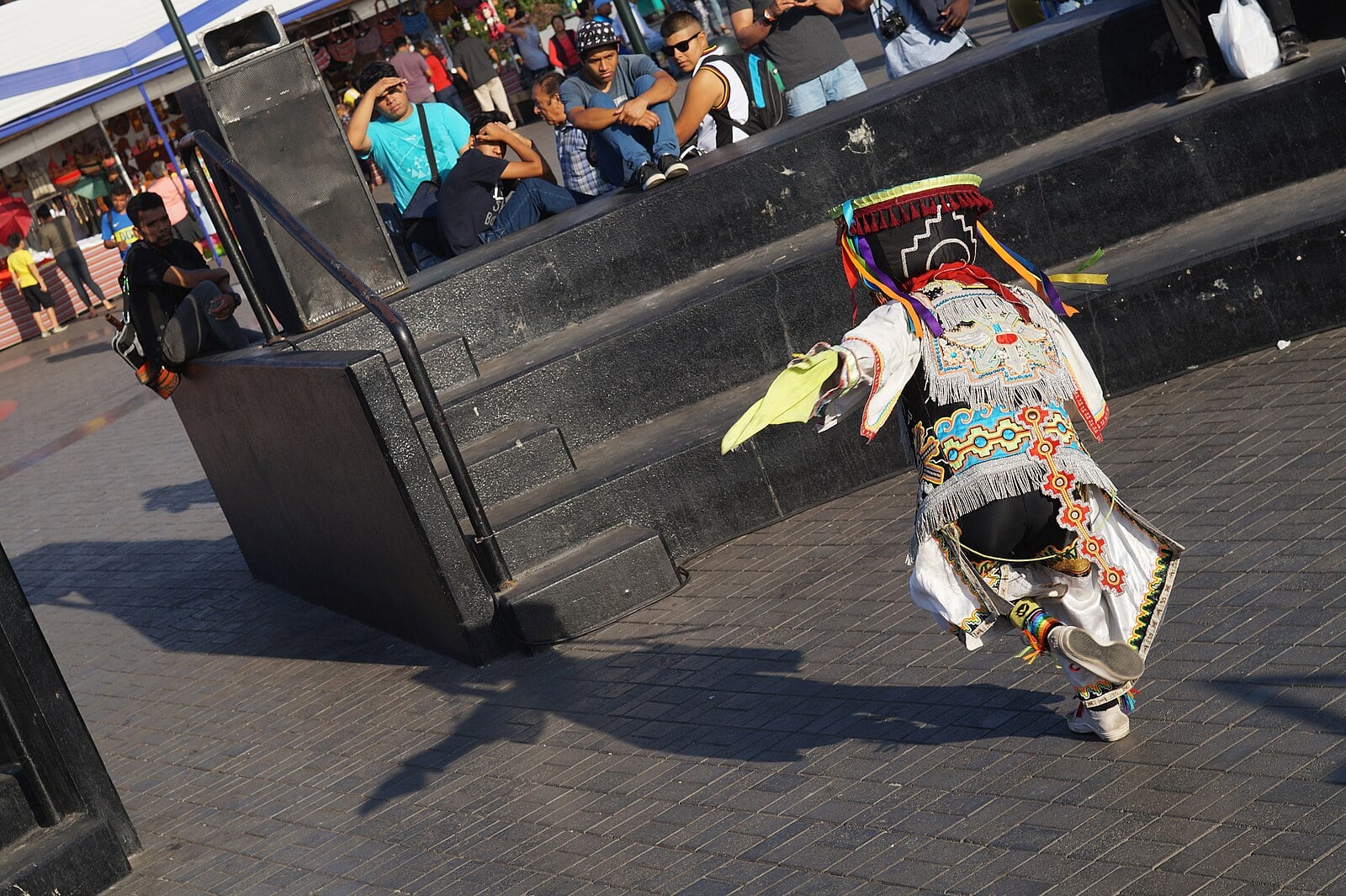
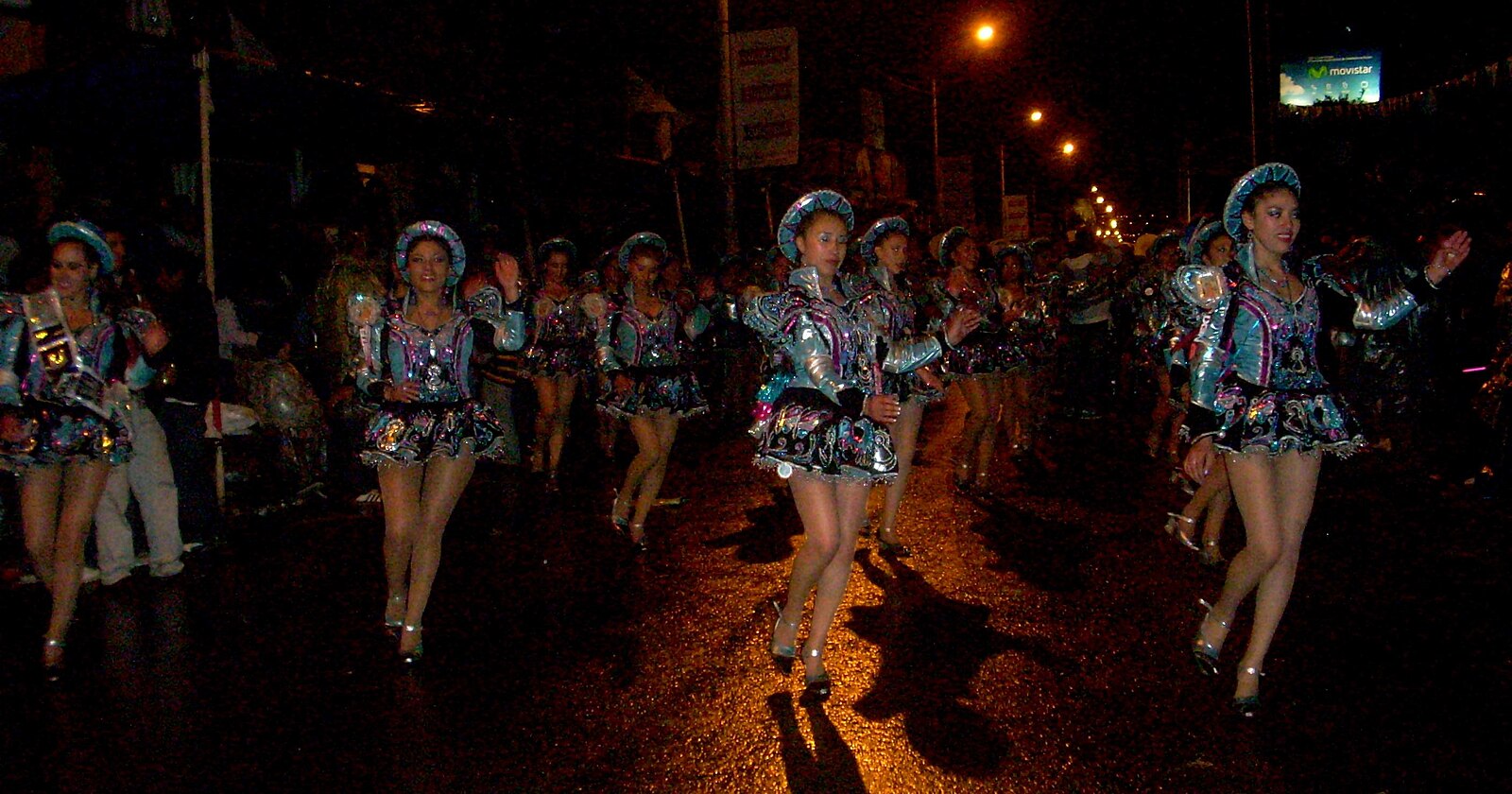
The Festivity of the Virgen de la Candelaria in Puno, each February, joined UNESCO’s intangible heritage list in 2014. UNESCO’s file counts about 170 groups and some 40,000 Quechua and Aymara dancers and musicians in its two contests. The scissors dance of the south-central Andes was listed in 2010.
Inti Raymi, the Inca festival of the sun, is staged every 24 June at the Sacsayhuamán ruins above Cusco. Its modern re-enactment began in 1944, and Peru declared it national cultural heritage in 2001, according to the Peruvian embassy in Sweden.
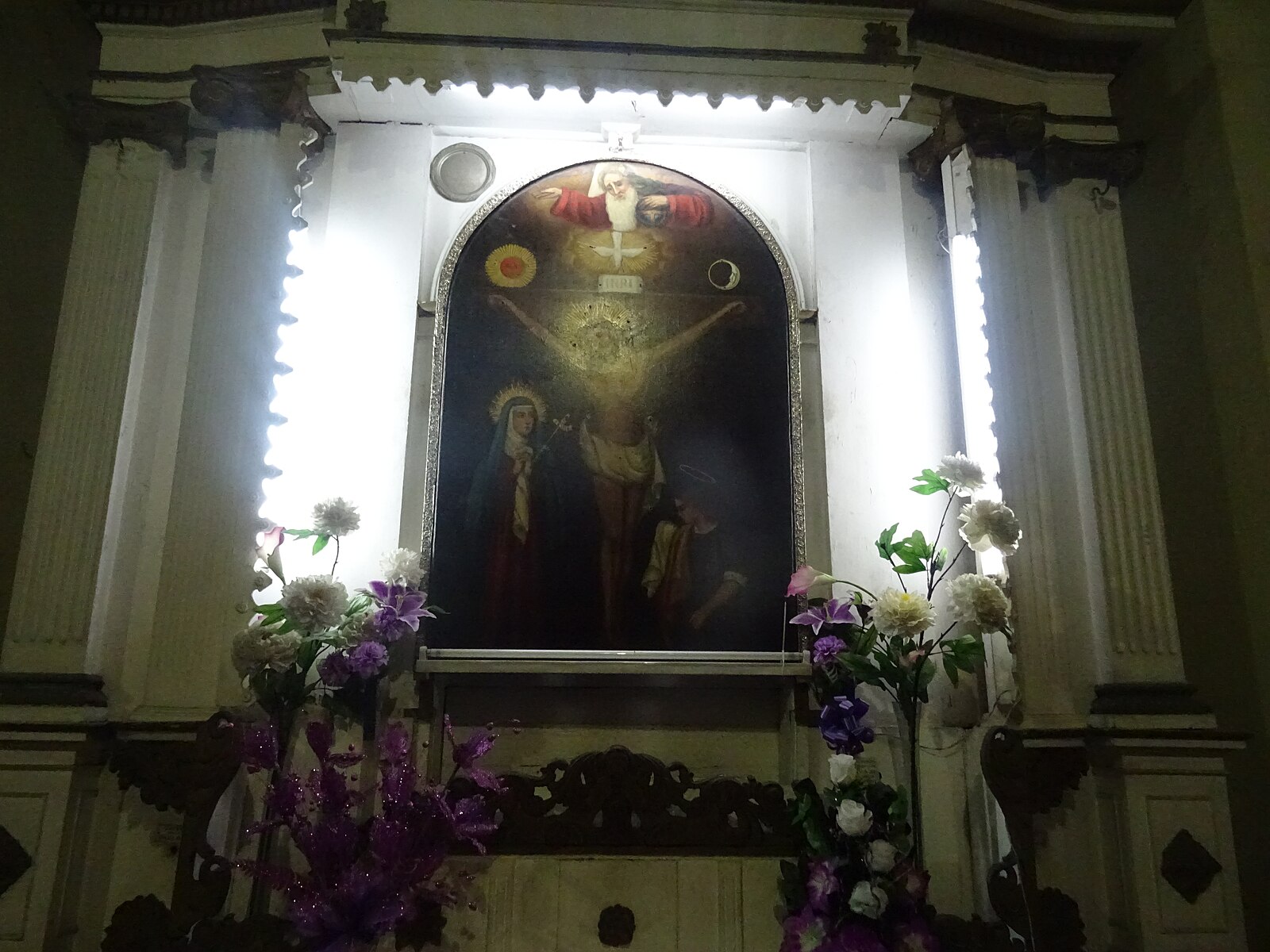
In Lima, October belongs to the Señor de los Milagros, also called the Cristo Moreno. Processions carry the image from the Las Nazarenas sanctuary through the historic centre. The National Library of Peru dates the first procession to 1687. State broadcaster Radio Nacional describes it as national cultural heritage.
The library, attached to the Ministry of Culture, keeps procession photographs from the late 19th century. Universities and private bodies matter too: PUCP runs the film festival, and the MALI museum collects Peruvian art. The Candelaria is organised by three regional federations of dancers, according to UNESCO.
What It Means for US Readers
Travellers. The 50 Best ceremony in Lima on 4 November 2026 brings visiting chefs for ticketed Signature Sessions in local restaurants. October processions follow set routes through central Lima, so check the brotherhood’s schedule. Plan Puno trips around the February Candelaria and Cusco trips around 24 June.
Investors. PromPerú is co-hosting the 50 Best awards, a sign of how Peru uses food to sell itself abroad. The chefs named here run private businesses. For listed companies and the wider economy, see the economy guide linked below.
Expats and families. Many of these figures built careers through US institutions: Curtis, Columbia, NPR, a US culinary school and the Latin Grammys. For Peruvian-Americans, Radio Ambulante and Latin Grammy-winning artists are accessible entry points into the country’s culture from home.
What Is Not Known
Where Lima’s restaurants will land on 4 November 2026. With Maido and Central now ineligible, it is not known whether another Peruvian kitchen, such as Kjolle, can take the top spot.
Whether Paolo Guerrero retires at the end of 2026. He has said this is his final season. Alianza Lima officials say the choice is his, and a Copa Libertadores place could change it.
Who inherits Vargas Llosa’s public role. No living Peruvian writer has comparable global reach, and no single successor is clear. Exact 2026 procession dates for the Señor de los Milagros were not confirmed in an official source at the time of writing.
Frequently Asked Questions
Who are the most famous living figures in Peru culture?
Chefs Gastón Acurio, Virgilio Martínez, Pía León and Mitsuharu Tsumura; singers Susana Baca, Gian Marco and tenor Juan Diego Flórez; writers Santiago Roncagliolo and Daniel Alarcón; and athletes Paolo Guerrero, Kimberly García and Stefano Peschiera.
Is Mario Vargas Llosa still alive?
No. The 2010 Nobel literature laureate died in Lima on 13 April 2025, aged 89. He was born in Arequipa in 1936.
Which Peruvian restaurant is the best in the world?
Maido in Lima, led by Mitsuharu Tsumura, was named The World’s Best Restaurant 2025. Central, run by Virgilio Martínez, held the title in 2023. The 2026 ranking will be revealed in Lima on 4 November 2026.
Which Peruvian musicians have won Latin Grammys?
Susana Baca has three Latin Grammys, Gian Marco has three for Best Singer-Songwriter Album, and producer Tony Succar won two in 2019.
When are Peru’s biggest festivals?
The Virgen de la Candelaria in Puno runs each February, Inti Raymi is staged in Cusco every 24 June, and the Señor de los Milagros processions fill Lima in October.
What is the US connection to Peruvian culture?
Juan Diego Flórez trained at the Curtis Institute in Philadelphia, Daniel Alarcón grew up in Alabama and co-founded the NPR-distributed Radio Ambulante, Tsumura trained in the US, and Kimberly García won her world titles in Eugene, Oregon.
Sources: Nobel Foundation, nobelprize.org/prizes/literature/2010/vargas_llosa/facts/; The 50 Best Restaurants, theworlds50best.com (2025 list, Maido and Pía León pages, 2026 Lima announcement); Latin Recording Academy, latingrammy.com (Susana Baca, Gian Marco, Tony Succar); MacArthur Foundation, macfound.org/fellows/class-of-2021/daniel-alarcon; Columbia Journalism School; juandiegoflorez.com; Berlinale archive, berlinale.de/en/2009/programme/20090090.html; Quinzaine des cinéastes; World Athletics; Olympedia and Andina; UNESCO Intangible Cultural Heritage, ich.unesco.org (Candelaria, scissors dance); Biblioteca Nacional del Perú; Embassy of Peru in Sweden, gob.pe; AECID and Acción Cultural Española; PromPerú, peru.info; El Comercio, La República, RPP and Onda Cero (Lima). All accessed 6 October 2026.