By The Rio Times | Created at 2026-10-06 13:06:56 | Updated at 2026-10-06 14:37:28
1 hour ago
By The Rio Times | Created at 2026-10-06 13:06:56 | Updated at 2026-10-06 14:37:28
1 hour ago
GUIDES · VENEZUELA
Key Facts
- —The country Venezuela, an oil state on South America’s Caribbean coast. Acting president Delcy Rodríguez has led it since US forces seized Nicolás Maduro on 3 January 2026.
- —The US deal On 31 August 2026 the White House announced 100-year concessions over 17 oil fields for NABEP, a private firm. A Pentagon investment office holds a 35% stake.
- —Sanctions Washington removed Rodríguez from its sanctions list on 1 April 2026. The European Union still lists her, and its Venezuela sanctions run to 10 January 2027.
- —China Beijing said on 1 September 2026 that its “lawful rights and interests” in Venezuela must be protected. It spoke after the US-backed NABEP oil deal.
- —The Maduro case A New York judge hears Maduro’s head-of-state immunity motion on 17 November 2026. Trial is set for 1 June 2027, and he denies the charges.
- —Prediction markets Polymarket gives Delcy Rodríguez a 93.5% chance of being Venezuela’s de facto leader at the end of 2026 (6 October, 8:55 a.m. ET).
- —Still open No presidential election date has been set, as of October 2026.
Venezuela geopolitics in 2026 starts in Washington. Since US forces seized Nicolás Maduro on 3 January, the United States has steered Venezuela’s oil money, sanctions relief and diplomacy. China and Russia, its old patrons, are left defending what they can.
The shift touches US oil supply, investment risk, migration cases in US courts and a criminal trial in New York. This guide sets out what each outside power holds in Venezuela, what it wants, and what is still undecided.
From Chavista Bloc to US Sphere
Under Hugo Chávez and then Maduro, Caracas built its foreign policy around Cuba, Russia, China and Iran. A White House fact sheet of 31 August 2026 says most fields in the new oil deal were once run by Russian or Chinese firms. Others, it says, were run by “cronies” of Maduro and Chávez.
That alignment broke on 3 January 2026, when US forces captured Maduro, the US Energy Department says. The White House calls the raid Operation Absolute Resolve. It describes its policy as a three-part plan of stabilisation, reconstruction and democratic transition.
Delcy Rodríguez, Maduro’s former vice-president, now leads what Washington calls the “Venezuelan interim authorities”. In January she told parliament that Venezuela had the right to relations with China, Russia, Iran and Cuba, El País reported. She added: “Also with the United States.”
By the UN General Assembly on 23 September 2026 her tone had moved further. She thanked President Donald Trump for his willingness to restore diplomatic relations, UN News reported. She also criticised economic sanctions and said the Venezuelan people would decide when elections take place.
The same day she met Trump behind closed doors, with Rubio present. They discussed energy, mining, security and bilateral ties, according to the Venezuelan foreign ministry, as reported by Diario de Cuba.
Her foreign minister, Félix Plasencia, accompanied her when she received foreign envoys in late September, the foreign ministry says. For Venezuela’s place among its neighbours, see Venezuela in Latin America, Its Role, Weight and Alliances.
The United States: Oil Money and the NABEP Deal
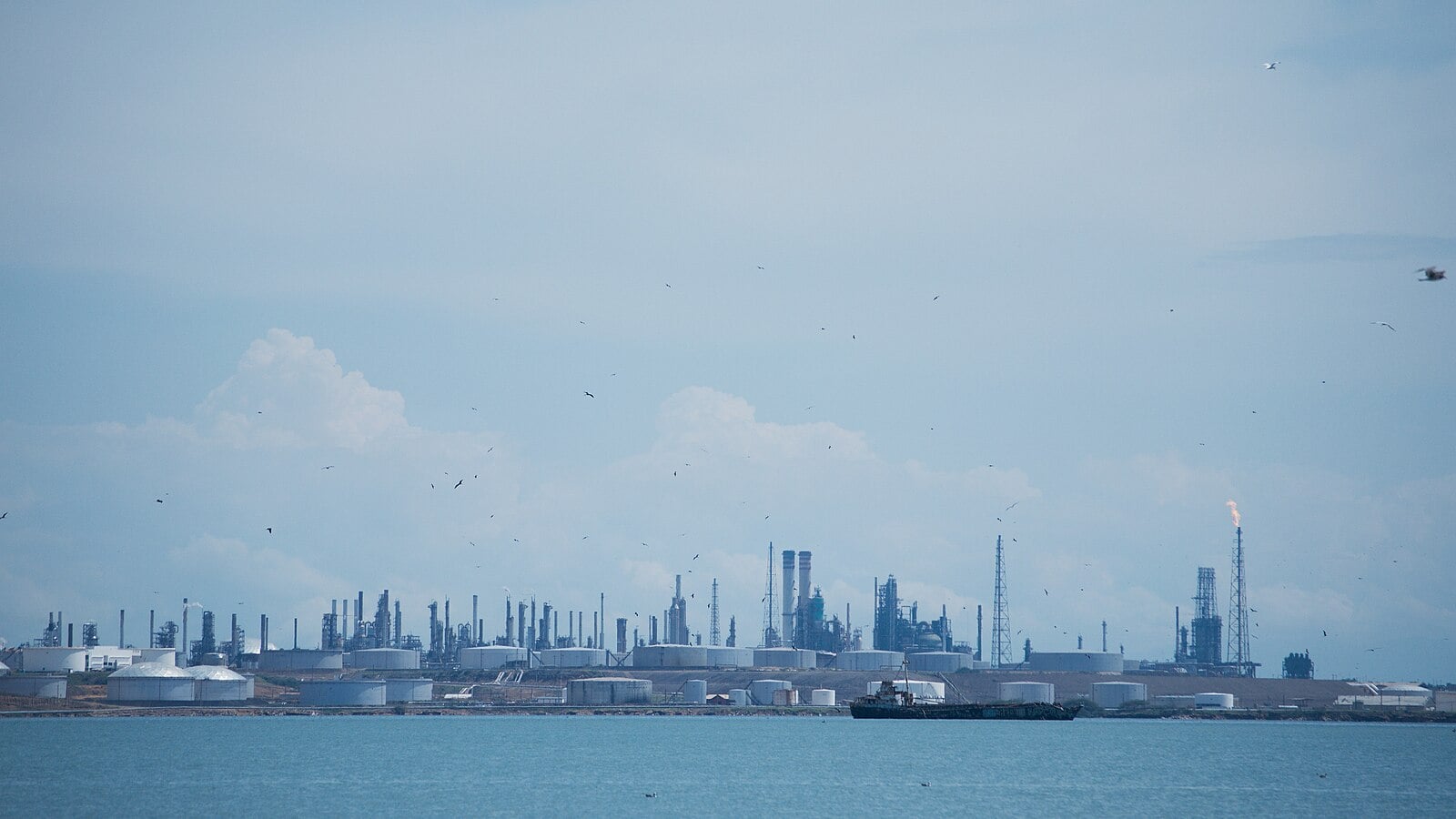
Oil is the core of the new relationship. On 6 January 2026 Trump announced an energy deal, and the US government began marketing Venezuelan crude itself, the Energy Department says. An initial sale of about 30 to 50 million barrels was planned, with sales to “continue indefinitely”.
All proceeds settle first in US-controlled accounts at globally recognised banks, according to the same fact sheet. An executive order of 9 January 2026 shields that money in US Treasury accounts from seizure by private creditors. The White House says the funds remain Venezuela’s sovereign property, held in US custody.
The 31 August Concessions
The biggest step came on 31 August 2026. Venezuela’s interim authorities granted North American Blue Energy Partners (NABEP), a privately held producer, 100-year concessions over 17 oil fields. The White House puts their proven reserves at about 65 billion barrels.
In return, NABEP gave the Pentagon’s Office of Strategic Capital a 35% stake in its parent company. The State Department gained the right to buy 20% of NABEP’s output at production cost, and first refusal on the rest. Washington can veto board members, and most directors must be US citizens.
NABEP plans to invest up to US$100 billion, the White House says. It expects to pay about US$200 billion in royalties and taxes over 25 years. These are projections, not results. The fact sheet frames the deal as reasserting the Monroe Doctrine, the 1823 US policy against outside powers in the Americas.
Sanctions, Licences and Tariffs
US sanctions on Venezuela still exist on paper, but a stack of Treasury licences now carves out most oil business. The Treasury’s Office of Foreign Assets Control (OFAC) removed Rodríguez from its blocked-persons list on 1 April 2026.
General License 52, issued on 18 March 2026, lets established US companies deal with Petróleos de Venezuela (PdVSA), the state oil company. General License 50C, in force since 27 August 2026, lets BP, Chevron, Eni, Maurel & Prom, Repsol and Shell run oil and gas operations. Their contracts must send disputes to the United States, the United Kingdom, France or Singapore.
OFAC refreshed its main oil, diluent and minerals licences on 27 August 2026. On 16 September it authorised dealings in PdVSA’s 2020 bond from 5 November 2026. It has also licensed legal and financial advice for a possible restructuring of Venezuela’s foreign debt.
Tariffs have eased too. Executive Order 14245 of March 2025 had imposed tariffs on countries importing Venezuelan oil. Executive Order 14389 of 20 February 2026 ended the duties imposed under that and other orders using IEEPA, the US emergency-powers law.
Trade is starting to move beyond crude. Bancoex, Venezuela’s state export bank, said in September 2026 that state smelter CVG Venalum had exported more than 15,000 tonnes of primary aluminium to the United States. It called it the first such shipment in almost a decade.
Migration, Security and the Maduro Case
Migration remains the most personal part of the relationship for many Americans. The administration’s move to end Temporary Protected Status (TPS) for Venezuelans, a shield from deportation, reached the Supreme Court as Mullin v. National TPS Alliance. On 5 October 2026 the court vacated a Ninth Circuit ruling against the government and sent the case back, its docket shows. It cited Mullin v. Doe, its June 2026 decision clearing the way to end TPS for Haitians and Syrians.
Deportation flights resumed after the twin earthquakes of 24 June 2026. The first one landed in Barcelona, in Anzoátegui state, on 3 August with 147 Venezuelans, Telemundo reported.
On security, the White House says Trump designated the gang Tren de Aragua a foreign terrorist organisation on his first day. It also says he authorised lethal force against what it calls narcoterrorists.
The Trial in New York
Maduro is charged in the Southern District of New York with offences including narco-terrorism conspiracy. These are allegations; he denies them. His lawyers filed a motion on 2 September 2026 arguing that a head of state is immune from prosecution.
Prosecutors replied on the night of 2 October with a State Department declaration, Inner City Press reported from the docket. Judge Alvin Hellerstein hears arguments on 17 November 2026. A final pre-trial conference is set for 25 May 2027 and the trial for 1 June 2027.
His wife, Cilia Flores, a co-defendant, has a bail hearing set for 8 October 2026. For the full background, see Who Is Nicolás Maduro? Venezuela’s Deposed Leader and His 2027 US Trial Explained.
The US embassy in Caracas resumed operations in March 2026 after seven years, the State Department says. It is led by a chargé d’affaires, John M. Barrett, rather than an ambassador.
China: A Creditor Defending Its Stake
China has existing investments in Venezuela, and Beijing wants them respected. It has not said publicly what its claims there are worth. That gap matters for any future debt deal.
After the NABEP deal, Chinese foreign ministry spokesperson Guo Jiakun was asked whether it would hurt China’s investments. On 1 September 2026 he said China-Venezuela cooperation is “protected by international law”. China’s “lawful rights and interests in Venezuela must be protected”, he added, according to Xinhua.
Caracas keeps the relationship polite. On 30 September 2026 Rodríguez met China’s ambassador, Lan Hu, for the 77th anniversary of the People’s Republic, the foreign ministry says. Venezuela’s ambassador in Beijing, Remigio Ceballos, attended.
Beijing’s stated aim is to protect those existing interests. What it has lost is control. Under the US licence system, Venezuelan oil revenue flows through US-supervised accounts first.
Russia, Iran and Cuba: Old Allies at Arm’s Length
Russia, one of Caracas’s oldest allies, is now visibly unhappy with it. In early October 2026 Deputy Foreign Minister Alexander Alimov said Rodríguez had not met Russia, China, Cuba or Nicaragua at the UN General Assembly. He was quoted by the Russian agency Interfax, as reported by Diario de Cuba.
Foreign Minister Sergey Lavrov met US Secretary of State Marco Rubio in New York that week, Alimov said.
Iran, which helped Caracas with fuel during the pandemic, has cooled further. In late July 2026 Caracas handed Iran’s ambassador a protest note over “derogatory and improper” remarks, El Informador reported. Iran’s foreign minister, Abbas Araghchi, had said in an interview that Iran “is not Venezuela”, El País reported.
Washington treats both Iran and Cuba as adversaries. Its January fact sheet says US control of Venezuelan oil money keeps it from “malign actors like Iran and Hezbollah”.
The European Union and Spain
Europe is split between engagement and pressure. The EU has kept restrictive measures on Venezuela since November 2017: an arms embargo, travel bans and asset freezes. On 15 December 2025 the Council extended them until 10 January 2027, and Rodríguez remains on the list.
Spain wants change. Foreign Minister José Manuel Albares proposed in February 2026 that the EU lift sanctions on Rodríguez, Euractiv reported. In June the European Commission said any delisting needs the unanimous support of all 27 member states, Demócrata reported.
The European Parliament backed a non-binding resolution against lifting sanctions by 507 votes to 31, with 35 abstentions, Brussels Signal reported. Madrid has invited Rodríguez to the Ibero-American Summit on 4 and 5 November 2026. EU rules allow exemptions for meetings of intergovernmental bodies.
European companies are active regardless. Repsol, Eni and Maurel & Prom operate under US licences. The Parliament’s resolution demands the release of all political prisoners and a credible roadmap to free elections.
India, Türkiye, Israel, the Gulf and BRICS
India is the most important new customer outside the West. Rodríguez visited India in early June 2026 and met Prime Minister Narendra Modi, state broadcaster RNV reported. She held talks with Oil Minister Hardeep Singh Puri and heads of ONGC, Indian Oil and ONGC Videsh, the foreign ministry says.
She also toured Reliance Industries’ refinery at Jamnagar, which the ministry calls the largest refining complex on the planet. Indian refiners therefore have a direct stake in whatever licences Washington grants.
In Türkiye, Rodríguez met President Recep Tayyip Erdoğan in Istanbul on 8 June 2026. They reviewed trade, energy, mining, housing and air links, the foreign ministry says. A fifth bilateral joint commission is planned for November 2026.
The sharpest reversal is with Israel. Hugo Chávez broke off relations in January 2009 over the Gaza war. On 11 August 2026 both governments agreed a mechanism for consular services, El Nacional reported. Israel’s foreign minister, Gideon Saar, said it “creates an official channel of coordination”, El País reported.
Gulf ties are mostly humanitarian for now. Qatar and Jordan supported a field hospital in La Guaira after the June earthquakes, the Venezuelan foreign ministry says.
Caracas also sought a place in BRICS, the bloc founded by Brazil, Russia, India, China and South Africa. At the Kazan summit in October 2024, Vladimir Putin said admission required consensus. Brazil blocked Venezuela, El País reported.
What It Means for US Readers
Investors. Venezuelan oil is open to US companies again, but through licences that Washington can change at any time. The NABEP concessions were granted by interim authorities, so an elected government could revisit them. Holders of PdVSA’s 2020 bond should note the 5 November 2026 licence date.
Travellers. The State Department rates Venezuela at Level 3, “Reconsider travel”, in an advisory issued on 9 June 2026. It lists “Do not travel” areas, including the Colombian border region and Apure and Táchira states. Routine consular services for US citizens are still handled in Bogotá.
Venezuelan Americans and employers. The Supreme Court has sent the TPS case back to the lower courts, and deportation flights are running. Anyone affected should follow the federal court case and take legal advice. For the opposition side, see Who Is María Corina Machado? Venezuela’s Nobel Laureate, Her Record and What Comes Next.
Everyone else. Venezuela has become a test of a more direct US policy in the Americas. Its success or failure will shape how other governments in the region deal with Washington, Beijing and Moscow.
What Prediction Markets Say
Bets on Polymarket give Delcy Rodríguez a 93.5% chance of being Venezuela’s de facto leader on 31 December 2026. Prices are as of 8:55 a.m. ET on 6 October. About US$408,000 has been traded across that market’s contracts.
A separate, larger market asks who will officially hold the post of head of state. It prices Maduro at 71.65% and Rodríguez at 24.5%, on about US$98 million traded across all contracts. Maduro gained 6.85 points in a week. The gap reflects resolution rules on formal title, not who governs.
Traders give a 10.5% chance that an election date is set by 31 December. They price a 37.5% chance that María Corina Machado enters Venezuela by then, down 11 points in a week. A 4.5% chance is priced on Trump endorsing her for president in 2026. These are bets, not polls.
Why we show this: prediction markets turn real-money bets into a live probability that moves within minutes of the news, which is why investors, campaigns and newsrooms in the United States now follow them closely. We show them next to polls and official results, never instead of them.
What Is Not Known
No date has been set for a presidential election. María Corina Machado, the opposition leader who won the 2025 Nobel Peace Prize, remains outside the country. It is unclear when or on what terms she could return.
It is not known how Judge Hellerstein will rule on immunity, or whether the June 2027 trial date will hold. What China’s claims are worth, and how they would be treated in a debt restructuring, has not been made public.
Whether the EU renews, eases or ends its Venezuela sanctions before they expire on 10 January 2027 is undecided. So is whether an elected Venezuelan government would honour 100-year oil concessions granted by interim authorities.
Frequently Asked Questions
What is Venezuela geopolitics about in 2026?
It is mainly about the United States. Since US forces seized Nicolás Maduro on 3 January 2026, Washington has controlled how Venezuelan oil is sold, eased sanctions through Treasury licences and backed a 100-year oil concession deal. China and Russia are defending older stakes.
Who governs Venezuela now?
Delcy Rodríguez, Maduro’s former vice-president, leads the interim authorities as acting president. The US removed her from its sanctions list on 1 April 2026, while the European Union still lists her. No presidential election date has been set.
What is the NABEP oil deal?
Announced by the White House on 31 August 2026, it gives the private firm NABEP 100-year concessions over 17 oil fields with about 65 billion barrels of proven reserves. A Pentagon investment office holds a 35% stake in NABEP’s parent company.
What does China say about the US oil deal?
On 1 September 2026, foreign ministry spokesperson Guo Jiakun said China-Venezuela cooperation is protected by international law and that China’s lawful rights and interests in Venezuela must be protected. Beijing has not said publicly what its claims in Venezuela are worth.
When is Nicolás Maduro’s trial?
Trial is set for 1 June 2027 in federal court in New York. Judge Alvin Hellerstein hears arguments on his head-of-state immunity motion on 17 November 2026. Maduro denies the charges, which include narco-terrorism conspiracy.
Is it safe for Americans to travel to Venezuela?
The State Department rates Venezuela at Level 3, Reconsider travel, in an advisory issued on 9 June 2026, with Do not travel warnings for several regions. The US embassy in Caracas offers only limited emergency services, and routine consular services are handled in Bogotá.
Sources: The White House, oil agreement fact sheet, 31 August 2026; The White House, oil revenue fact sheet, 9 January 2026; US Department of Energy, fact sheet, 7 January 2026; OFAC, removal of Delcy Rodríguez, 1 April 2026; Federal Register, Venezuela general licences 52 to 58, 30 September 2026; Federal Register, general licences 46D to 61A, 30 September 2026; Federal Register, general licence 50A, 11 September 2026; OFAC, general licence 5Z, 16 September 2026; Executive Order 14389, 20 February 2026; US District Court SDNY, scheduling order, case 11 Cr. 205, 22 July 2026; Inner City Press, SDNY docket reports, 3 October 2026; US Supreme Court, docket 26-48, order of 5 October 2026; SCOTUSblog, Mullin v. Doe, June 2026; US State Department, Venezuela travel advisory, 9 June 2026; US Embassy Caracas; UN News, Rodríguez at the General Assembly, 23 September 2026; Venezuelan foreign ministry, meeting with China’s ambassador, 30 September 2026; Venezuelan foreign ministry, India oil talks, 4 June 2026; Venezuelan foreign ministry, Jamnagar visit, June 2026; Venezuelan foreign ministry, meeting with Erdoğan, 8 June 2026; Venezuelan foreign ministry, Türkiye joint commission, 22 June 2026; RNV, India visit, 7 June 2026; Xinhua, Chinese foreign ministry briefing, 1 September 2026; Diario de Cuba, Russian deputy foreign minister, 2 October 2026; El Informador, protest note to Iran, 29 July 2026; El País, Venezuela and Israel, 11 August 2026; El Nacional, Venezuela and Israel, 11 August 2026; El País, Rodríguez to parliament, 16 January 2026; Council of the EU, Venezuela timeline; EUR-Lex, Council Decision (CFSP) 2025/2586; Euractiv, Spain on sanctions, 23 February 2026; Demócrata, Commission on unanimity, 22 June 2026; Brussels Signal, European Parliament resolution, 6 May 2026; Interfax, Putin on BRICS consensus, 24 October 2024; El País, Brazil and BRICS, 25 October 2024; Nobel Prize, Peace Prize 2025; Telemundo 51, deportation flight, 4 August 2026; Bancoex, aluminium exports, 21 September 2026. Market data from Polymarket, 6 October 2026, 8:55 a.m. ET. All accessed 6 October 2026.